
 Source:
 Woodland peony (Paeonia obovata) short overview
Woodland peony (Paeonia obovata) is a compact, shade-tolerant herbaceous perennial from temperate East Asia. It forms a clump of divided green foliage and produces solitary cup-shaped flowers in white, rose, pink-red, or purple-red, followed by glossy black seeds. Grow it in rich, well-drained soil with consistent moisture and avoid disturbing established plants. Paeonia obovata is a deciduous, clump-forming herbaceous peony for rich, well-drained woodland soil. Its divided foliage supports solitary, lightly scented flowers in variable colors, followed by glossy black seeds.
Taxonomic classification
Woodland peony (Paeonia obovata) care guide
Light and placement
Give morning sun or bright dappled light with protection from intense afternoon heat, especially in warmer U.S. climates. Cooler locations can support more sun if soil stays evenly moist. Excessive shade may produce foliage without flowers, while hot, exposed sites can scorch leaves and shorten bloom display.
Watering and humidity
Water deeply when the upper inch of soil begins to dry, directing water to the root zone rather than wetting the foliage. Maintain even moisture through spring growth and flowering, then reduce gradually after dieback. Avoid both drought cycles and saturated soil; drainage is especially important in winter.
Soil and growing medium
Use deep, fertile, humus-rich soil that drains freely but does not dry sharply during active growth. Loam is ideal; amended clay can work if drainage is improved. The species tolerates acidic, neutral, and mildly alkaline soils, but persistent winter waterlogging should be avoided.
Feeding
Top-dress with compost or well-rotted organic matter in spring as shoots emerge. If additional fertilizer is needed, use a balanced, low-strength product according to its label rather than high-nitrogen feed, which can produce soft foliage and fewer flowers. Stop routine feeding by midsummer and avoid fertilizing drought-stressed or newly divided plants.
Growth and habit
This long-lived peony emerges from underground storage roots in spring, flowers on upright herbaceous stems, and dies back after frost. Growth is generally slow after planting while the root system establishes. Once settled, it can remain productive for years without regular division; avoid unnecessary transplanting.
Planting and repotting
Plant bare-root divisions in early fall where possible, or container plants in spring or fall. Set the crown buds about 1–2 inches below the soil surface; planting too deeply can suppress flowering. Space plants about 18–24 inches apart and water consistently during establishment.
Container-grown plants can be shifted in early fall or very early spring, but established peonies dislike root disturbance. Use a deep container with excellent drainage and replant at the same shallow crown depth.
Propagation and pruning
Propagation
Sow fresh seed outdoors in fall for natural stratification; germination may take more than one season. Established clumps can be divided in early fall, but divisions may require several years to flower well. Keep crown buds shallow after division.
Pruning
After frost turns the foliage brown, cut stems to ground level and remove the debris from the bed. Deadhead after flowering if seed is not desired, but leave healthy foliage intact through the growing season so the plant can replenish its underground reserves.
Overwintering
Leave the plant outdoors in USDA Zones 5–8. After frost, remove dead stems and apply a light mulch over the root zone, keeping mulch away from the crown. Container plants need extra insulation because roots are more exposed to freezing; avoid warm indoor overwintering, which can disrupt dormancy.
Uses
Useful as a specimen or accent in woodland borders, shaded perennial beds, cottage-style plantings, and informal garden edges. The showy flowers and ornamental black seed pods extend seasonal interest. It may be grown as a specialty container plant, but deep soil and long-term root stability are preferable. Do not use it as food or medicine.
Appearance
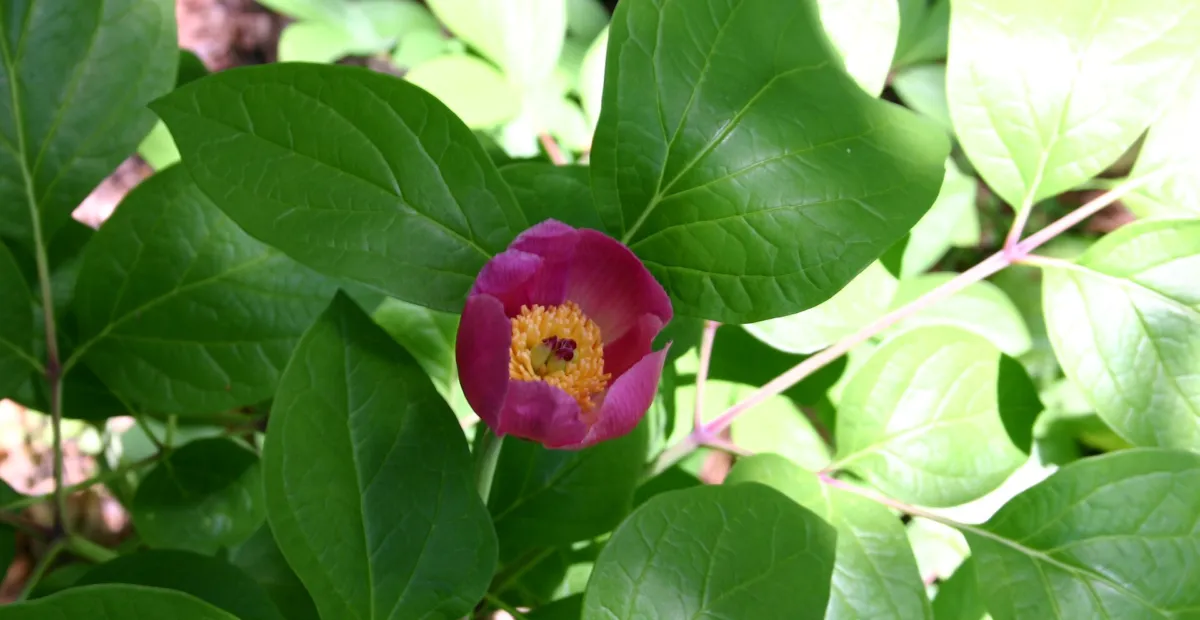
The plant has stout, hairless stems with basal scales and alternately arranged, biternate leaves. Leaflets are broadly oval to obovate, green above, and may be smooth, hairy, or felted beneath. Flowers are held singly at stem tips, followed by recurved follicles containing shiny black seeds.
Flowering
Solitary flowers are borne at the stem tips in late spring. Individual blooms are cup-shaped and generally last about 7–10 days. After flowering, the plant develops recurved follicles that open to reveal glossy black seeds.
Pollination and visitors
The open, pollen-rich flowers are visited by a range of insects, including bees, bumblebees, beetles, and hoverflies. Available evidence supports insect pollination, but a single primary pollinator species is not firmly documented for P. obovata in the United States.
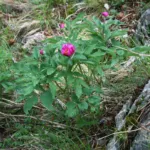
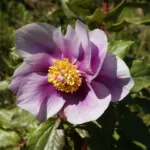
Paeonia obovata photos
Click any photo for a larger view. Source, author and license are shown separately.
Diseases and pests
Diseases
Possible problems include peony leaf blotch, peony wilt, Verticillium wilt, virus diseases, and honey fungus. Reduce risk by providing air circulation, avoiding wet foliage when watering, removing diseased leaves, and cutting spent foliage to the ground after frost. Do not compost visibly diseased material.
Pests
Watch for peony eelworms, caterpillars, aphids, thrips, and other sap-feeding insects. Inspect young shoots and buds, remove heavily affected material, and improve sanitation before using insecticides. Deer and rabbits are generally not major browsing problems in many gardens, though local pressure varies.
Related diseases and pests
Only Plant Doctor profiles whose host data indicate this plant may be affected are shown here.

Toxicity and pollen
Peonies are listed by veterinary poison-control resources as toxic to dogs and cats, with paeonol identified as the toxic principle and gastrointestinal signs such as vomiting or diarrhea reported. The available listing is based on a different peony species, so species-level certainty for P. obovata is limited. Prevent pets from chewing plant material and seek veterinary advice after ingestion.
- Typical season
- May–June in typical U.S. temperate gardens
- Pollination / pollen
- Insect-dispersed floral pollen
This is an insect-pollinated flowering plant, so pollen is mainly presented within the flower rather than released as a large wind-borne cloud. Sensitive people may still react to pollen or flower contact, and individual allergy responses vary. Avoid assuming zero allergy risk solely because insects visit the flowers.
Native habitat
Native populations occur across temperate East Asia, including parts of China, Japan, the Korean Peninsula, and the Russian Far East. It grows from lowlands to montane sites in deciduous broad-leaved, mixed, and coniferous forests, often in woodland soils over varied geological substrates.
Interesting fact
The epithet obovata refers to the inverted-egg shape of the leaflets. Flowers can vary from white to deep red-purple within the species. The fruit opens as a follicle to expose glossy black seeds. Both diploid and tetraploid populations are known. Plants can remain undisturbed for many years once established.
Frequently asked questions (FAQ)
The most relevant questions about this plant, with short and direct answers.
🌱Quick care
What is woodland peony?⌄
Woodland peony is the verified English common name for Paeonia obovata, a clump-forming herbaceous perennial in the Paeoniaceae family. It is valued for its spring flowers, attractive divided foliage, and colorful late-season seed pods.
How big does Paeonia obovata get?⌄
Paeonia obovata typically grows about 1 to 2 feet tall and 1 to 2 feet wide. Its foliage forms a compact mound that dies back to the ground after frost.
What USDA hardiness zones can grow woodland peony?⌄
Woodland peony is generally hardy in USDA Zones 5 through 8. Some references list broader tolerances, but winter survival and flowering are most dependable within this range.
Is Paeonia obovata a perennial?⌄
Yes, Paeonia obovata is a long-lived herbaceous perennial. It returns from dormant underground roots each spring and naturally dies back after autumn frost.
🌤️Environment and placement
Does woodland peony prefer sun or shade?⌄
Woodland peony prefers part shade, especially protection from intense afternoon sun, but it can tolerate full sun where soil remains evenly moist. Morning sun with light afternoon shade is a reliable placement.
Where should I plant Paeonia obovata?⌄
Plant Paeonia obovata in an open woodland garden, shaded border, or site with morning sun and afternoon protection. Choose a location with good air circulation, fertile soil, and no standing water.
What type of soil does woodland peony need?⌄
Woodland peony grows best in rich, fertile, well-drained loam with moderate, even moisture. Improve poor soil with compost, but avoid heavy clay or sites that stay waterlogged.
How much water does Paeonia obovata need?⌄
Paeonia obovata needs moderate, consistent moisture, particularly while establishing and during spring growth. Water deeply when the soil surface begins to dry, but allow excess water to drain away.
Can woodland peony grow under trees?⌄
Yes, woodland peony can grow under trees if it receives enough filtered light and does not have to compete heavily for moisture. Plant it away from dense, aggressive tree roots when possible.
Is Paeonia obovata native to the United States?⌄
No, Paeonia obovata is native to temperate parts of East Asia, including China, Japan, Korea, and the Russian Far East. In the United States it is grown as an ornamental garden perennial.
💧Care and problems
How do I care for woodland peony?⌄
Give woodland peony fertile, well-drained soil, moderate moisture, and part shade to full sun. Remove spent flowers after blooming and cut the foliage to ground level after it has been killed by frost.
Why is my Paeonia obovata not blooming?⌄
Paeonia obovata may fail to bloom because it is too young, recently moved, planted too deeply, receiving excessive shade, or affected by a late frost. Avoid disturbing established plants and keep the crown near the soil surface.
How often should I fertilize woodland peony?⌄
Woodland peony usually needs little fertilizer when planted in fertile soil amended with compost. If growth is weak, apply a light, balanced perennial fertilizer in early spring according to the product label.
Do woodland peonies need staking?⌄
No, woodland peonies generally have compact, self-supporting growth and do not need staking. Excessive shade or overly rich, soft growth can make stems less upright, but this is not usually a problem for the species.
What pests and diseases affect Paeonia obovata?⌄
Paeonia obovata is relatively pest resistant, but it can occasionally develop Botrytis blight, Phytophthora blight, leaf blotch, wilt, or root problems in poorly drained conditions. Remove diseased foliage and improve air circulation and drainage.
Are ants on woodland peony buds harmful?⌄
No, ants on woodland peony buds are usually harmless. They are attracted to sugary secretions and do not normally damage the plant or prevent flowering.
🪴Planting and repotting
When is the best time to plant woodland peony?⌄
The best time to plant woodland peony is in early fall, while the soil is still workable and roots can establish before winter. Spring planting is possible, but plants may take longer to settle and flower.
How deep should I plant Paeonia obovata?⌄
Plant Paeonia obovata with its growth buds only about 1 to 2 inches below the soil surface. Planting the crown too deeply is a common reason peonies produce foliage but few or no flowers.
Can woodland peony be grown in a container?⌄
Woodland peony can be grown temporarily in a large container with drainage holes, but it performs best in the ground. Use a deep, stable pot and protect the roots from severe winter temperature swings.
Should woodland peony be divided or moved?⌄
Woodland peony rarely needs division and can remain undisturbed for many years. If moving or dividing is necessary, do it in early fall and replant promptly at the original depth.
✂️Propagation and pruning
How do you propagate Paeonia obovata from seed?⌄
Propagate Paeonia obovata by collecting mature seeds from split pods in late summer or early fall and sowing them in a prepared bed or cold frame. Germination can be slow and may require more than one season of warm-and-cold conditions.
Can woodland peony be propagated by division?⌄
Yes, established woodland peony clumps can be propagated by careful division in early fall. Each division should retain healthy roots and at least one viable growth bud, although larger divisions generally establish and flower sooner.
How long does woodland peony take to flower from seed?⌄
Woodland peony grown from seed usually takes several years to reach flowering size. Plants from divisions may flower sooner, especially when each division contains several healthy buds.
When should I cut back Paeonia obovata?⌄
Cut Paeonia obovata back to ground level in late fall after frost has yellowed or killed the foliage. Removing the spent leaves helps tidy the planting and may reduce overwintering disease problems.
⚠️Toxicity and safety
Is woodland peony toxic to dogs?⌄
Yes, woodland peony should be considered potentially toxic to dogs because peonies contain paeonol and may cause gastrointestinal upset if eaten. Contact a veterinarian or animal poison-control service if a dog chews the plant.
Is Paeonia obovata toxic to cats?⌄
Paeonia obovata should be kept away from cats because peonies are listed as toxic to cats and may cause vomiting, diarrhea, or depression after ingestion. Seek veterinary advice promptly if exposure occurs.
Can people eat woodland peony?⌄
No, woodland peony should not be eaten or used as a home remedy. Although some Paeonia species have traditional medicinal uses, plant identity, preparation, dose, and safety are not interchangeable, and ingestion may be harmful.
🌸Flowering and special interest
When does woodland peony bloom?⌄
Woodland peony usually blooms in mid to late spring, often around May in temperate U.S. gardens. Individual flowers typically remain attractive for about 7 to 10 days.
What color flowers does Paeonia obovata have?⌄
Paeonia obovata produces single, cup-shaped flowers in white, pink, red, or purple-red shades, depending on the form or plant. The flowers usually have a contrasting center of yellow stamens.
Does woodland peony produce seed pods?⌄
Yes, woodland peony develops distinctive seed receptacles after flowering. In late summer, the pods split open to reveal glossy dark seeds against red or reddish structures, providing ornamental interest after the flowers fade.
Is Paeonia obovata fragrant?⌄
Paeonia obovata flowers are usually mildly fragrant rather than strongly perfumed. Fragrance can vary among individual plants and forms.
Why are woodland peony seed pods not opening?⌄
Woodland peony seed pods may not open until they are fully mature in late summer or early fall. Cool weather, immature pods, poor pollination, or a young plant can delay or reduce seed production.
Similar plants
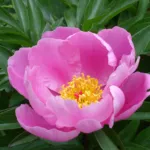 Common Garden Peony (Paeonia lactiflora) care guidePaeonia lactiflora
 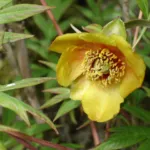 Delavay’s tree peony (Paeonia delavayi) care guidePaeonia delavayi
 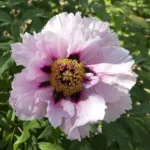 Tree peony (Paeonia suffruticosa) care guidePaeonia suffruticosa
 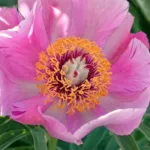 Paeonia anomala veitchii care guidePaeonia anomala veitchii
  Garden Peony (Paeonia officinalis) care guidePaeonia officinalis
  Wild Peony (Paeonia mascula) care guidePaeonia mascula