
 Source:
Provence (Nerium oleander ‘Provence’) short overview
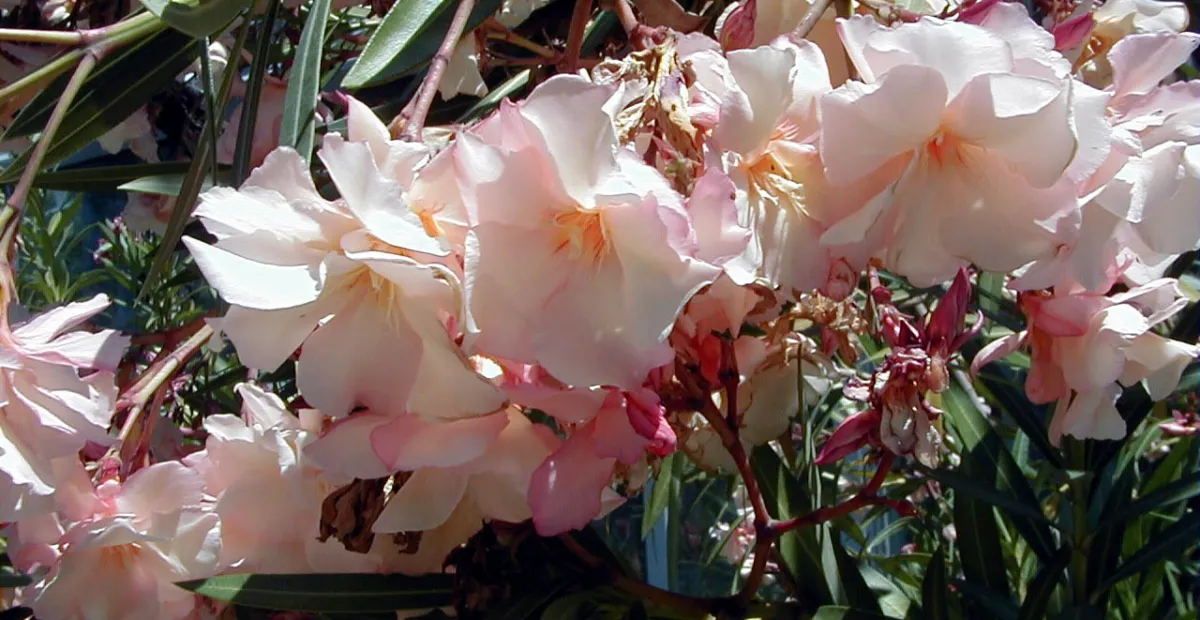
Nerium oleander 'Provence' is a vigorous evergreen shrub valued for its rounded, bushy form and long display of large, very double flowers in pale salmon pink with warm orange throats. The fragrant blooms appear in generous terminal clusters through the warm season, while narrow, leathery leaves remain attractive year-round. Grow it in full sun, well-drained soil, or a large container; protect it from hard freezes and handle every part as highly poisonous if eaten.
Taxonomic classification
Provence (Nerium oleander ‘Provence’) care guide
Light and placement
Give the plant full sun for the strongest flowering, ideally with a south- or west-facing exposure and shelter from cold winter winds. Light partial shade is tolerated in very hot climates, but shade reduces bloom and produces a looser, leggier habit. Pale, stretched growth suggests insufficient light; scorched foliage usually reflects root dryness, reflected heat, or sudden exposure rather than a need for deep shade.
Watering and humidity
Water deeply when the upper few inches of soil dry, then allow excess water to drain. Keep newly planted and container-grown plants more consistently moist during hot weather, especially while establishing; mature shrubs tolerate summer drought but flower better with moisture available at depth. Reduce watering in winter and never leave containers standing in water.
Soil and growing medium
Use deep, well-drained soil or a porous container mix. Ordinary loam, sandy-loam, stony soil, and moderately calcareous ground are suitable if excess water drains freely. A slightly acidic to slightly alkaline reaction is tolerated; avoid persistently waterlogged sites, especially in containers.
Feeding
Feed in spring and again in early to midsummer with a balanced slow-release fertilizer, or use a half-strength liquid feed during active container growth. Water the soil first and follow the product label. Stop feeding in late summer so soft new growth is not encouraged before cold weather; do not fertilize drought-stressed or freshly transplanted plants.
Growth and habit
This cultivar forms a dense, naturally branched, multi-stemmed shrub with a rounded outline and rapid growth in warmth. It can be maintained as a clump or trained to a single trunk. Avoid repeatedly cutting every stem back hard, because flowering depends on suitably developed young shoots; selective renewal pruning preserves both form and bloom.
Planting and repotting
Plant outdoors in spring after the danger of frost has passed. Set the root ball at the same depth it occupied in its nursery container, water deeply, and mulch without touching the stems. Allow generous room for the mature shrub; establish evenly moist roots during the first two growing seasons.
Repot container plants in spring when roots have filled the pot, moving up only one container size. Use a heavy, well-drained mix and ensure large drainage openings. Mature plants can be top-dressed instead of repotted every year; protect the brittle root ball from unnecessary disturbance.
Propagation and pruning
Propagation
Take semi-ripe or current-season cuttings in early summer or just after flowering. Cuttings root readily in water or a light, sterile rooting medium, but water-grown roots are fragile and should be potted carefully. Seed is possible but will not reliably reproduce the named cultivar.
Pruning
Prune in early spring, removing dead, damaged, crossing, or weak stems and selectively thinning crowded growth. Shorten only some long shoots rather than cutting the entire shrub back at once, because severe uniform pruning can remove the season’s flowering wood. Wear gloves, eye protection, and long sleeves, and dispose of cuttings safely.
Overwintering
In Zones 8a–9, protect young plants with a sheltered position, root mulch, and frost cloth during short cold events. In colder regions, grow it in a large container and move it indoors before frost to a bright, cool, frost-free space. Water sparingly indoors, maintain air circulation, and return it outdoors gradually in spring.
Uses
Use as a specimen shrub, informal or clipped hedge, patio container plant, protected border accent, or salt-tolerant coastal ornamental. It is especially effective in Mediterranean-style landscapes and warm urban gardens. Do not use for cooking, herbal preparations, children’s gardens, or animal-accessible areas; the plant is highly poisonous.
Appearance
The plant has long, narrow, leathery evergreen leaves arranged along flexible gray-barked stems. Its base branches freely, creating a dense rounded silhouette. Large terminal clusters of very double pale salmon-pink flowers, often deepening toward an orange throat, distinguish this cultivar from single-flowered oleanders. Broken tissue exudes a milky latex sap.
Flowering
Large, very double flowers are produced in terminal corymbs on sufficiently mature young shoots. In warm climates, flowering can extend from late spring or early summer into early fall, with the strongest display when the plant receives abundant light and does not suffer prolonged root drought.
Pollination and visitors
Research on the species describes insect-mediated pollination with low visitation and limited open-pollinated fruit set. Large bees and other insects have been reported as visitors, while some insects may become trapped in the floral tube. The named cultivar is marketed as pollinator-attracting, but its contribution to wildlife forage should not be overstated.
Nerium oleander 'Provence' photos
Click any photo for a larger view. Source, author and license are shown separately.
Diseases and pests
Diseases
Avoid overhead irrigation and improve air movement to reduce leaf-spot and fungal problems. Scale infestations may lead to sooty mold; prune out badly affected growth, wash foliage where practical, and use a labeled horticultural oil or insecticide according to the product directions. Remove diseased debris and sterilize cutting tools.
Pests
Watch for oleander scale, aphids, spider mites, mealybugs, and caterpillars. Inspect new growth and leaf undersides regularly. Use water sprays, pruning of heavily infested shoots, beneficial-insect conservation, or a labeled low-impact treatment before resorting to stronger controls. Wear gloves because pruning releases toxic sap.
Related diseases and pests
Only Plant Doctor profiles whose host data indicate this plant may be affected are shown here.
 PestObscure mealybugPseudococcus viburni
 DiseaseXylella fastidiosa bacterial diseasesXylella fastidiosa
 PestBlack scaleSaissetia oleae
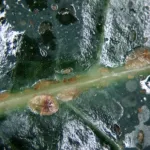 PestBrown Soft ScaleCoccus hesperidum
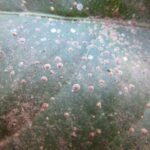 PestCalifornia red scaleAonidiella aurantii
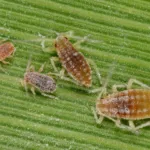 PestMealy Plum AphidHyalopterus pruni (Geoffroy, 1762)
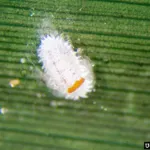 PestCitrus mealybugPlanococcus citri
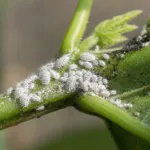 PestCotton mealybugPhenacoccus solenopsis Tinsley
Toxicity and pollen
Oleander contains cardiac glycosides, and ingestion can cause serious gastrointestinal and heart disturbances, including potentially fatal poisoning. Treat leaves, flowers, stems, sap, roots, and seeds as hazardous. Wear gloves when pruning, keep debris away from children and animals, never burn the wood, and seek urgent poison-control or veterinary advice after suspected ingestion.
- Typical season
- Late spring through early fall
- Pollination / pollen
- Sticky, insect-associated pollen
Oleander pollen is associated with insect-pollinated flowers and is relatively sticky rather than adapted for broad wind dispersal, so it is not generally considered a major airborne pollen source. Sensitive people may still react to plant contact or unusual exposure; pollen concern should not be confused with the plant’s severe ingestion toxicity.
Native habitat
The species is associated with warm Mediterranean and subtropical regions, often along rivers, seasonal watercourses, ravines, and other sites where roots can reach moisture despite drought. It tolerates heat, stony ground, alkaline conditions, and salt spray, but prolonged cold and saturated roots are major limitations.
Interesting fact
The cultivar is listed in horticultural references as 'Provence' and is also associated with 'Souvenir de Michel'.
Its flowers are very double and can reach roughly 2.4 inches across.
Oleander flowers can be showy yet offer little or no reliable nectar reward.
The species can produce long pods filled with many tufted, wind-dispersed seeds.
Well-established plants tolerate drought and salt spray better than prolonged cold.
Frequently asked questions (FAQ)
The most relevant questions about this plant, with short and direct answers.
🌱Quick care
How do you care for Nerium oleander 'Provence'?⌄
Grow Nerium oleander 'Provence' in full sun, well-drained soil, and water moderately during establishment. Once established, it tolerates drought, but regular watering during prolonged heat supports stronger growth and flowering.
Is Nerium oleander 'Provence' evergreen?⌄
Yes, Nerium oleander 'Provence' is generally evergreen in frost-free climates. In colder areas, freezing temperatures can cause leaf drop, dieback, or complete loss of the aboveground growth.
How large does Nerium oleander 'Provence' get?⌄
Nerium oleander 'Provence' typically develops into a dense, rounded, multi-stemmed shrub, but its mature size varies with climate, pruning, and whether it is grown in the ground or a container. Allow several feet of width for an established plant.
🌤️Environment and placement
How much sun does Nerium oleander 'Provence' need?⌄
Give Nerium oleander 'Provence' full sun for the strongest growth and most abundant flowering. It can tolerate light partial shade, but too much shade may reduce blooms and produce a less compact plant.
Can Nerium oleander 'Provence' grow in containers?⌄
Yes, Nerium oleander 'Provence' grows well in a large container with drainage holes and a fast-draining potting mix. Container plants need more frequent watering in summer and should be protected from hard freezes.
What USDA hardiness zones are suitable for Nerium oleander 'Provence'?⌄
Nerium oleander 'Provence' is best suited to warm USDA Zones 9–11, although established plants may survive brief temperatures near 18°F in protected conditions. Damage becomes increasingly likely after severe or prolonged freezes.
Can Nerium oleander 'Provence' survive winter outdoors?⌄
It can remain outdoors year-round in mild, frost-free parts of the United States, especially the southern and coastal regions. In colder climates, grow it in a container and move it to a bright, protected location before hard freezes.
Is Nerium oleander 'Provence' drought tolerant?⌄
Yes, established Nerium oleander 'Provence' is drought tolerant, but it performs and flowers better with occasional deep watering during extended dry periods. Newly planted shrubs need consistent moisture until their roots are established.
💧Care and problems
How often should you water Nerium oleander 'Provence'?⌄
Water when the upper few inches of soil begin to dry, applying enough to moisten the root zone thoroughly. Reduce watering in cool weather, but container plants may need water more often than shrubs planted in the ground.
Should Nerium oleander 'Provence' be fertilized?⌄
Light fertilization in spring can support growth and flowering, especially for container plants or shrubs growing in poor soil. Avoid excessive nitrogen, which can produce lush foliage at the expense of flowers.
Why is Nerium oleander 'Provence' not flowering?⌄
Insufficient sunlight is a common reason Nerium oleander 'Provence' fails to bloom, followed by excessive nitrogen, drought stress, or severe pruning at the wrong time. Move or prune only as needed and provide full sun with consistent moisture during active growth.
Why are the leaves on Nerium oleander 'Provence' turning yellow?⌄
Yellow leaves may result from overwatering, poor drainage, drought stress, nutrient deficiency, or normal aging of older foliage. Check soil moisture and roots first, because persistently wet soil is a frequent cause of decline.
Does Nerium oleander 'Provence' have common pests or diseases?⌄
Nerium oleander 'Provence' may be affected by aphids, scale, oleander caterpillars, spider mites, and fungal or bacterial diseases. Good airflow, correct watering, and removal of badly affected growth help reduce problems.
How do you protect Nerium oleander 'Provence' from frost?⌄
Protect the root zone with mulch and cover the plant before a forecast freeze, especially during its first winters. Container plants should be moved into a bright, cool, frost-free space before temperatures approach freezing.
🪴Planting and repotting
What soil is best for Nerium oleander 'Provence'?⌄
Plant Nerium oleander 'Provence' in deep, well-drained loam, sandy loam, stony soil, or calcareous soil. Avoid locations that stay waterlogged, because poor drainage can cause root problems.
When should you plant Nerium oleander 'Provence'?⌄
Plant Nerium oleander 'Provence' in spring after the danger of hard frost has passed, or in fall where winters are mild. Spring planting is safer in areas subject to freezing because it gives the roots a full growing season to establish.
How do you plant Nerium oleander 'Provence' in the ground?⌄
Choose a sunny site with excellent drainage, dig a hole no deeper than the root ball, and set the plant at the same depth it was growing in its container. Water thoroughly after planting and keep the soil moderately moist while roots establish.
✂️Propagation and pruning
How do you propagate Nerium oleander 'Provence' from cuttings?⌄
Take healthy stem cuttings during the warm growing season, remove the lower leaves, and root them in water or a sterile, well-drained propagation medium. Keep the cuttings warm and bright but out of harsh direct sun until roots develop.
Can Nerium oleander 'Provence' be grown from seed?⌄
Yes, oleander can be grown from seed, but seedlings may not retain the exact flower color, form, or other traits of Nerium oleander 'Provence'. Cuttings are preferred when an identical plant is desired.
When should you prune Nerium oleander 'Provence'?⌄
Prune Nerium oleander 'Provence' after its main flowering period or before new spring growth begins, removing dead, damaged, and crossing branches. Avoid unnecessary late-season pruning because it can remove developing flower buds.
How do you prune Nerium oleander 'Provence' to keep it bushy?⌄
Thin crowded stems and lightly shorten selected branches after flowering to encourage a fuller shape. Because this cultivar is naturally dense and multi-stemmed, it usually needs only light maintenance pruning rather than frequent severe cutting.
Can you cut Nerium oleander 'Provence' back hard after frost damage?⌄
Yes, frost-damaged stems can be cut back to healthy green wood after the risk of further freezing has passed. If damage is extensive, the plant may resprout from the base, but recovery depends on the severity and duration of the cold.
⚠️Toxicity and safety
Is Nerium oleander 'Provence' poisonous?⌄
Yes, all parts of Nerium oleander 'Provence' are highly poisonous if eaten, including the leaves, flowers, stems, and seeds. Keep it away from children, pets, and livestock, and contact Poison Control or a veterinarian immediately after suspected ingestion.
Is Nerium oleander 'Provence' safe for dogs and cats?⌄
No, Nerium oleander 'Provence' is toxic to dogs and cats if eaten and can cause serious or potentially fatal poisoning. Prevent access to fallen leaves, flowers, prunings, and water containing plant material.
Can Nerium oleander 'Provence' irritate your skin?⌄
Yes, its sap can irritate skin and eyes, so wear gloves and eye protection when pruning or handling damaged stems. Wash exposed skin promptly and avoid touching your face while working with the plant.
Can you burn Nerium oleander 'Provence' prunings?⌄
No, never burn Nerium oleander 'Provence' prunings because the smoke can contain toxic compounds. Bag and dispose of the debris according to local yard-waste rules, and keep it away from compost used for edible crops.
🌸Flowering and special interest
What color are the flowers on Nerium oleander 'Provence'?⌄
Nerium oleander 'Provence' is known for double salmon-pink flowers that are often fragrant. Flower color and fragrance can vary somewhat with growing conditions and plant provenance.
When does Nerium oleander 'Provence' bloom?⌄
Nerium oleander 'Provence' usually blooms from late spring through summer, with flowering potentially continuing into fall in warm climates. It flowers best with abundant sunlight and active warm-season growth.
Similar plants
 Calypso (Nerium oleander ‘Calypso’)Nerium oleander 'Calypso'
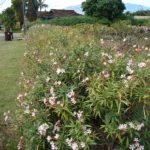 Petite Salmon (Nerium oleander ‘Petite Salmon’)Nerium oleander 'Petite Salmon'
 Apple Blossom oleander (Nerium oleander ‘Apple Blossom’)Nerium oleander 'Apple Blossom'
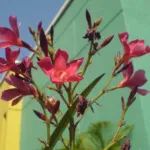 Hardy Red (Nerium oleander ‘Hardy Red’)Nerium oleander 'Hardy Red'
 White Sands (Nerium oleander ‘White Sands’)Nerium oleander 'White Sands'
 Hardy Pink (Nerium oleander ‘Hardy Pink’)Nerium oleander 'Hardy Pink'