
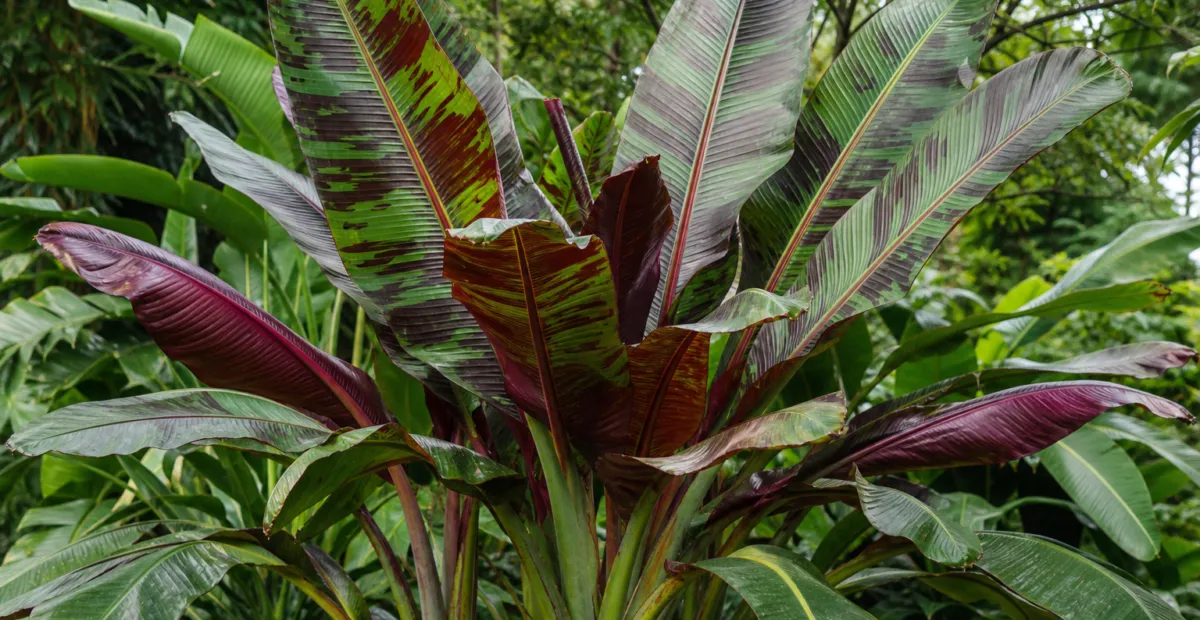
 AI-generated illustration
Red Tiger (Musa sikkimensis ‘Red Tiger’) short overview
Musa sikkimensis 'Red Tiger' is a striking ornamental banana valued for its large, glossy leaves marked with maroon-red striping, a red midrib, and purple shading beneath. This upright, suckering perennial comes from the eastern Himalayas and is notably cold-tolerant for a banana, although frost can destroy its leaves and pseudostem. Grow it in rich, consistently moist but well-drained soil, sheltered from strong wind, as a dramatic garden accent or container specimen.
Taxonomic classification
Red Tiger (Musa sikkimensis ‘Red Tiger’) care guide
Light and placement
Give full sun to partial shade, ideally in a south- or west-facing, sheltered position. Morning sun and afternoon protection can reduce leaf scorch in hot regions. Strong wind shreds the large leaves. Pale, weak growth and elongated petioles suggest insufficient light; bleached patches, crisp margins, or sudden scorching suggest excessive heat, reflected light, or inadequate water.
Watering and humidity
Water deeply whenever the upper inch of soil begins to dry, then allow excess water to drain. During warm spring and summer growth, the plant may require frequent watering, especially in containers. Reduce watering in cool weather and after the plant becomes dormant, but do not let the rhizome or container mix remain bone-dry. Good drainage is essential despite the plant's high moisture demand.
Soil and growing medium
Use fertile loam amended with compost or other stable organic matter. The ideal mix holds moisture while remaining aerated, because stagnant wet soil can damage the rhizome. A peat-free loam-based container mix with added compost and drainage material works well. The species tolerates acidic through mildly alkaline conditions, so routine pH correction is usually unnecessary unless the soil is extreme.
Feeding
Feed generously while the plant is actively producing leaves, using a balanced slow-release fertilizer or a diluted complete liquid fertilizer. Apply compost or well-rotted organic matter in spring. Container plants can be fed monthly during vigorous growth. Stop or greatly reduce fertilizing in late fall and winter, when cool roots cannot use nutrients efficiently.
Growth and habit
This cultivar grows upright from a clumping rhizome and produces suckers around the original pseudostem. It can grow quickly in heat, moisture, fertile soil, and long summer light. Individual pseudostems are temporary and may be replaced by new shoots after flowering or frost damage. Leave enough room for offsets, or remove surplus suckers to maintain a defined clump.
Planting and repotting
Choose a sheltered site with fertile soil and reliable summer moisture. Dig a hole slightly wider than the root ball, incorporate compost, and plant at the original depth. Water thoroughly and mulch around, but not against, the pseudostem. Establishment is fastest when planting is done in warm soil and irrigation is consistent through the first growing season.
Repot container plants in spring when roots fill the pot or growth becomes crowded. Move into a heavy, stable container only one size larger, using a fertile, well-drained loam-based mix. Handle the rhizome and roots gently, keep the pseudostem at the original depth, and water thoroughly after repotting.
Propagation and pruning
Propagation
Propagate by seed or by separating rooted suckers. Seeds generally benefit from soaking and warm, consistently moist conditions. Divide suckers in spring or early summer when they have their own roots and several leaves. Cultivar uniformity is more reliable from vegetative offsets than from seed.
Pruning
Remove torn, browned, or frost-damaged leaves with clean shears. After a hard freeze, cut dead pseudostem tissue back to firm, living tissue once the danger of further severe frost has passed. Avoid removing healthy green stems unnecessarily, since they contribute to recovery and flowering potential.
Overwintering
In zones 8 and colder, mulch the root zone deeply after the first frost and protect the pseudostem with breathable insulating material. In colder areas, cut back frost-killed growth after weather moderates and overwinter the plant in a cool, bright, frost-free space. Container plants can be moved indoors before hard frost; water sparingly in low light.
Uses
Primarily an ornamental foliage plant for tropical-style borders, sheltered courtyards, patios, conservatories, and large containers. It provides architectural texture and dramatic color rather than dependable edible fruit. Fruits, when produced, may contain hard seeds and should not be treated as a typical dessert banana.
Appearance
The most distinctive feature is the foliage: broad, glossy, paddle-shaped leaves carry dark maroon-red transverse stripes or blotches, a reddish midrib, and purple shading on the underside. Leaf sheaths overlap to form a banana-like pseudostem. The plant has a bold tropical silhouette, but wind damage and frost can quickly tear or brown the leaves.
Flowering
Bananas bear separate female and male flowers on the same inflorescence. In this cultivar, mature plants may produce a long-lasting, pendent inflorescence with yellow-brown flowers surrounded by purple bracts, generally during the warm season. Fruits may develop afterward but are typically seeded and ornamental rather than useful as dessert bananas.
Pollination and visitors
Banana flowers can be visited by insects and, in some regions and species, nectar-feeding bats. Reliable records specifically identifying visitors to Musa sikkimensis 'Red Tiger' were not found, so no stronger cultivar-specific pollinator claim is made.
Diseases and pests
Diseases
Usually trouble-free when drainage and air movement are adequate. Root and rhizome rots are encouraged by saturated soil, while leaf spotting can worsen under prolonged wet foliage and poor circulation. Remove severely affected leaves, avoid overhead watering, sanitize tools, and correct drainage or crowding before considering fungicides.
Pests
Watch for spider mites, mealybugs, aphids, scale, and occasional thrips, especially on indoor plants. Inspect leaf undersides and pseudostem joints regularly. Rinse foliage, isolate infested containers, and use insecticidal soap or horticultural oil according to the product label when monitoring shows treatment is justified.
Related diseases and pests
Only Plant Doctor profiles whose host data indicate this plant may be affected are shown here.
 PestCitrus mealybugPlanococcus citri
 DiseaseFusarium wiltFusarium oxysporum species complex
 PestBrown Soft ScaleCoccus hesperidum
 PestCalifornia red scaleAonidiella aurantii
 Environmental stressChilling injury
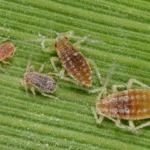 PestMealy Plum AphidHyalopterus pruni (Geoffroy, 1762)
 DiseaseRhizoctonia DiseasesRhizoctonia solani Kühn
 Environmental stressUnderwatering
Toxicity and pollen
No authoritative source specifically evaluating Musa sikkimensis 'Red Tiger' for human toxicity was located. The related banana Musa acuminata is listed as non-toxic to dogs and cats by ASPCA, but that evidence should not be treated as a definitive assessment of this exact cultivar. Avoid consuming ornamental plant material or unidentified fruit, and seek medical or veterinary advice after unusual exposure.
- Typical season
- Warm-season flowering, when flowers are produced
- Pollination / pollen
- Pollen is produced by the male flowers within the banana inflorescence; dispersal and fertility vary by flower position and cultivar.
This is a flowering, seed-producing plant, so mature flowers produce pollen, but the airborne allergy importance of Musa sikkimensis 'Red Tiger' has not been well established. Banana flowers are generally associated with animal-assisted pollination rather than prolific wind dispersal. People with strong pollen sensitivity should avoid handling flowers during bloom and monitor personal symptoms.
Native habitat
The species occurs in subtropical environments from Sikkim and the eastern Himalayas through parts of northeastern India, Bangladesh, and Myanmar. It is associated with warm, seasonally moist conditions and can experience cooler upland temperatures than many cultivated bananas. Garden plants perform best in fertile, moisture-retentive soils with protection from drying wind.
Interesting fact
The cultivar name refers to its tiger-like red striping rather than fruit color. Musa sikkimensis is notable for being a banana from relatively cool Himalayan regions. Its above-ground pseudostems can be cut back by frost while the rhizome may resprout in spring. Seed-grown plants can vary in vigor and leaf marking intensity.
Frequently asked questions (FAQ)
The most relevant questions about this plant, with short and direct answers.
🌱Quick care
How do you care for Musa sikkimensis 'Red Tiger'?⌄
Grow Musa sikkimensis 'Red Tiger' in full sun to partial shade, rich evenly moist soil, and a sheltered location. Water regularly during active growth and protect the rhizome and pseudostem from hard frost.
Is Musa sikkimensis 'Red Tiger' a banana plant?⌄
Yes, Musa sikkimensis 'Red Tiger' is an ornamental banana plant in the Musaceae family. It is grown mainly for its large leaves with red or maroon striping rather than for dependable edible fruit.
🌤️Environment and placement
How much sunlight does Musa sikkimensis 'Red Tiger' need?⌄
Musa sikkimensis 'Red Tiger' grows best in full sun to partial shade. Provide more afternoon protection in very hot climates or when moving a container-grown plant suddenly into intense sun.
Where should I plant Musa sikkimensis 'Red Tiger' outdoors?⌄
Plant it in a warm, sheltered spot protected from strong winds, such as near a south- or west-facing wall. Wind can shred the large leaves, while rich, moisture-retentive soil supports faster growth.
What USDA hardiness zone is Musa sikkimensis 'Red Tiger'?⌄
Musa sikkimensis 'Red Tiger' is best treated as a frost-tender-to-cold-hardy ornamental whose outdoor survival depends on winter protection and local conditions. In the United States, rhizome survival is most realistic in mild USDA Zone 8 areas and warmer, while colder zones generally require container culture or substantial protection.
💧Care and problems
How often should I water Musa sikkimensis 'Red Tiger'?⌄
Water Musa sikkimensis 'Red Tiger' whenever the soil surface begins to dry, keeping the root zone evenly moist during spring and summer. Do not leave the plant in saturated soil, especially during cool weather.
What type of soil does Musa sikkimensis 'Red Tiger' need?⌄
Use rich, humus-containing, moisture-retentive but well-drained soil. Incorporating compost can improve fertility and moisture retention, but drainage must remain good enough to prevent waterlogged roots.
How often should I fertilize Musa sikkimensis 'Red Tiger'?⌄
Feed Musa sikkimensis 'Red Tiger' regularly during active growth with a balanced fertilizer or a fertilizer formulated for bananas. Stop or greatly reduce feeding in fall and winter when growth slows.
Why are the leaves of my Musa sikkimensis 'Red Tiger' turning brown?⌄
Brown leaves commonly result from drought, low humidity, wind damage, cold exposure, or harsh sunlight after a sudden change in conditions. Keep the soil evenly moist, shelter the plant from wind, and remove only fully damaged leaves.
Why is my Musa sikkimensis 'Red Tiger' not showing red stripes?⌄
The red markings can be strongest on young leaves and may fade or vary with light, temperature, plant age, and growing conditions. Plain green growth can also indicate an incorrectly labeled plant, so mature foliage alone is not always conclusive for identification.
What pests affect Musa sikkimensis 'Red Tiger'?⌄
Musa sikkimensis 'Red Tiger' can be affected by spider mites, mealybugs, aphids, and other sap-feeding pests, particularly indoors or in dry air. Inspect leaf undersides regularly and improve humidity and air circulation while treating infestations promptly.
Can Musa sikkimensis 'Red Tiger' grow indoors?⌄
Yes, Musa sikkimensis 'Red Tiger' can be grown indoors in a very bright room, sunroom, or greenhouse. Indoor plants need adequate humidity, regular watering during growth, and less water and fertilizer during a cooler, lower-light winter.
How do I overwinter Musa sikkimensis 'Red Tiger' outdoors?⌄
After frost damages the foliage, remove dead leaves and protect the crown with a thick layer of dry mulch, while wrapping or shielding the remaining pseudostem if needed. Keep winter protection from becoming waterlogged and uncover gradually after the threat of hard frost has passed.
Should I cut back Musa sikkimensis 'Red Tiger' after frost?⌄
Yes, cut away frost-killed leaves and shorten a badly damaged pseudostem to healthy tissue once freezing weather has passed. Leave firm green stem tissue in place when possible because it may help the plant resume growth in spring.
🪴Planting and repotting
When is the best time to plant Musa sikkimensis 'Red Tiger' in the ground?⌄
Plant Musa sikkimensis 'Red Tiger' in spring after the danger of hard frost has passed and the soil has warmed. This gives the rhizome and roots a full growing season to establish before winter.
Can Musa sikkimensis 'Red Tiger' grow in a container?⌄
Yes, it grows well in a large container with drainage holes and rich potting mix. Choose a heavy pot to reduce tipping, keep the soil evenly moist in summer, and move the container to a protected frost-free location before hard freezes.
When should I repot Musa sikkimensis 'Red Tiger'?⌄
Repot Musa sikkimensis 'Red Tiger' in spring when roots fill the container or growth becomes noticeably restricted. Move it into a pot only moderately larger than the current one and use a fertile, well-drained mix.
✂️Propagation and pruning
How do you propagate Musa sikkimensis 'Red Tiger'?⌄
The most practical method is separating rooted suckers, or pups, from the parent plant in spring or early summer. Each offset should have its own roots and a growing point before it is potted separately.
Can Musa sikkimensis 'Red Tiger' be grown from seed?⌄
Yes, Musa sikkimensis 'Red Tiger' can be grown from seed, but germination may be slow and unreliable because seed age, viability, and temperature affect results. Seed-grown plants may also vary from the named cultivar, so rooted offsets are preferred for maintaining its traits.
How do I prune Musa sikkimensis 'Red Tiger'?⌄
Prune only dead, frost-damaged, or badly torn leaves, cutting them close to the pseudostem with clean tools. Avoid removing healthy leaves unnecessarily because each leaf contributes to growth and rhizome strength.
⚠️Toxicity and safety
Is Musa sikkimensis 'Red Tiger' toxic to dogs or cats?⌄
There is no cultivar-specific toxicity classification establishing Musa sikkimensis 'Red Tiger' as toxic to dogs or cats. Nevertheless, prevent pets from chewing large quantities of any ornamental plant and contact a veterinarian if illness follows ingestion.
🌸Flowering and special interest
Does Musa sikkimensis 'Red Tiger' produce flowers?⌄
Yes, mature Musa sikkimensis 'Red Tiger' can produce banana-type inflorescences with colorful bracts and pale flowers. Flowering is more likely when the plant has a long, warm growing season and is protected from repeated winter dieback.
Does Musa sikkimensis 'Red Tiger' produce edible bananas?⌄
It may produce small, seed-filled banana-like fruits in favorable conditions, but fruiting is not dependable in many U.S. gardens. The fruits are generally considered ornamental rather than desirable eating bananas because the hard seeds make them difficult to consume.
Similar plants
 Azure Monkshood (Aconitum carmichaelii) care guideAconitum carmichaelii
 Monkshood (Aconitum ‘Stainless Steel’)Aconitum 'Stainless Steel'
 Monkshood (Aconitum ‘Bressingham Spire’)Aconitum 'Bressingham Spire'
 Golden full moon maple (Acer shirasawanum ‘Aureum’)Acer shirasawanum 'Aureum'
 Globosum (Acer platanoides ‘Globosum’)Acer platanoides 'Globosum'
 Striped maple (Acer pensylvanicum) care guideAcer pensylvanicum