
 Source:
 Geranium ‘Summer Skies’ short overview
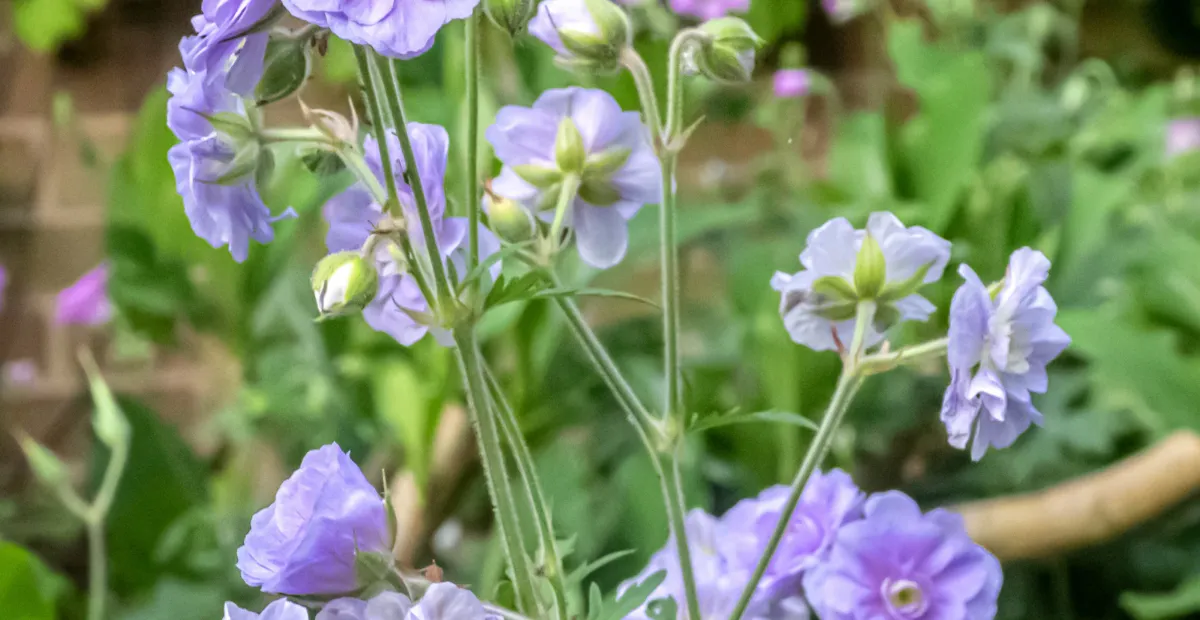
Geranium 'Summer Skies' is a compact, clump-forming hardy cranesbill valued for its finely divided gray-green foliage and profuse double violet-blue flowers with darker veins. The long flowering display is especially effective in sunny borders, cottage gardens, containers and rock gardens. Give it moderately fertile, well-drained soil that does not become dry during active growth, and trim spent stems after flowering to encourage fresh foliage and possible rebloom.
Taxonomic classification
Geranium ‘Summer Skies’ care guide
Light and placement
Grow in full sun for the heaviest flowering, ideally with at least 6 hours of direct light. In hot-summer areas, morning sun with light afternoon shade can reduce heat stress and flower fading. Too little light produces weak, leaning stems and fewer flowers; excessive reflected heat combined with dry soil can scorch foliage and shorten bloom.
Watering and humidity
Water deeply when the upper inch of soil begins to dry, then allow excess water to drain. Keep plants evenly but not constantly wet during establishment and flowering; mature clumps tolerate brief dry spells once rooted. Container plants need more frequent checks in summer. Good airflow is more important than artificially high humidity.
Soil and growing medium
Use moderately fertile, well-drained loam, sandy loam or chalky soil. The plant tolerates neutral, mildly acidic and mildly alkaline conditions, provided drainage is reliable. Improve poor soil with compost, but avoid heavy, waterlogged ground. In containers, use a quality multipurpose mix amended with grit or perlite rather than dense garden soil.
Feeding
Apply a balanced slow-release fertilizer or a modest layer of compost in spring as growth begins. If plants are vigorous, additional feeding is usually unnecessary and may produce softer foliage with fewer flowers. Do not fertilize drought-stressed, newly divided or dormant plants; water first and feed only when active growth has resumed.
Growth and habit
This cultivar forms a mounded, bushy clump and remains comparatively compact for a meadow-cranesbill selection. Stems may lean or trail slightly under the weight of flowers, particularly in lower light or fertile soil. Removing spent flowering stems keeps the plant tidier and may encourage fresh basal foliage and a second flush.
Planting and repotting
Plant in spring or fall, setting the crown at soil level and firming the surrounding soil gently. Space plants about 18–24 inches apart to allow the clump to broaden without crowding. Water deeply after planting and maintain even moisture through the first growing season while roots establish.
Repot container plants in early spring when roots fill the pot, moving them into only one slightly larger container. Refresh part of the mix, preserve the crown at its original depth, and water thoroughly after planting. Containers dry and freeze faster than garden soil, so use a frost-resistant pot with generous drainage.
Propagation and pruning
Propagation
Propagate by division in spring or by basal cuttings in early to mid-spring. Division is practical for established clumps, while cuttings are preferred when retaining the cultivar exactly. Seed is not a dependable way to reproduce a named cultivar because seedlings may not match the parent.
Pruning
After the main flowering flush, cut flowered stems and tired foliage back near the base. This can encourage fresh leaves and, where the season is long enough, some later flowering. Remove damaged foliage at any time and avoid hard pruning during drought or immediately before severe heat.
Overwintering
Plants in the ground generally overwinter outdoors in USDA Zones 5–8. After frost blackens the foliage, remove it and leave the crown undisturbed. In colder or exposed sites, apply a light mulch after the ground begins to freeze, keeping mulch away from the crown. Container plants benefit from shelter near a building or insulation around the pot.
Uses
Use 'Summer Skies' in sunny mixed borders, cottage gardens, informal plantings, rock gardens, patio containers and wildlife-friendly beds. Its mounding habit can soften the front or middle of a border, while the double flowers provide ornamental color. It is not documented here as an edible or medicinal plant.
Appearance
The plant has finely cut, divided gray-green leaves and upright to slightly lax flowering stems arising from a compact clump. Its most distinctive feature is the profusion of fully double, pale violet-blue flowers with darker reddish-violet veining and a lighter central area. The foliage provides useful texture before and after bloom.
Flowering
The flowers are fully double and borne in succession on branched stems. Bloom generally begins in June and can continue into July or early August, with the longest display in cooler climates. In hot-summer regions, flowering may pause during peak heat; cutting the plant back after the first flush can stimulate fresh foliage and limited late-season rebloom.
Pollination and visitors
Geranium pratense is documented as an insect-pollinated plant visited by bumblebees, solitary bees, hoverflies and butterflies. The double flowers of this cultivar may offer less accessible floral reward than single forms, so visitor frequency can vary with local insect populations and flower accessibility.
Diseases and pests
Diseases
Watch for powdery mildew, downy mildew, rusts, leaf spots and occasional virus symptoms. Reduce risk by providing airflow, watering at the soil line and removing diseased foliage promptly. Avoid overhead irrigation late in the day and do not compost severely infected plant material.
Pests
Possible pests include vine weevil larvae, geranium sawfly larvae, capsid bugs, slugs and snails. Inspect new growth and leaf undersides, hand-pick larger pests, remove hiding places and use targeted controls only when damage is significant. Avoid routine broad-spectrum insecticides during bloom to reduce harm to flower visitors.
Related diseases and pests
Only Plant Doctor profiles whose host data indicate this plant may be affected are shown here.
 DiseaseBacterial blight of geraniumXanthomonas hortorum pv. pelargonii
 DiseaseCucumber mosaic virusCucumber mosaic virus
 DiseaseMaple powdery mildewSawadaea bicornis
 DiseaseCucurbit Downy MildewPseudoperonospora cubensis (Berk. & M.A. Curtis) Rostovzev
 PestBlack Vine WeevilOtiorhynchus sulcatus
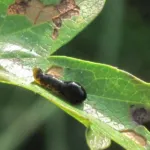 PestPear sawfly (pear slug)Caliroa cerasi
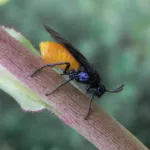 PestLarge rose sawflyArge rosae (taxonomic name variably treated; often associated with Arge ochropus, while Arge pagana is also called large rose sawfly in some references)
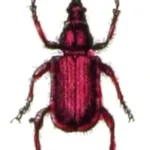 PestPeach weevilRhynchites bacchus
Toxicity and pollen
Reliable sources specifically addressing this cultivar are limited, and the name “geranium” is often confused with Pelargonium in pet-toxicity lists. No strong evidence of serious toxicity for this hardy Geranium cultivar was located. Prevent chewing of plant material, especially by children and pets, and seek professional advice if ingestion causes symptoms.
- Typical season
- June through August in much of the United States
- Pollination / pollen
- Insect-dispersed pollen
This is an insect-pollinated flowering perennial rather than a strongly wind-pollinated plant. Its pollen is mainly presented to flower visitors, so widespread airborne exposure is expected to be low, although individual pollen sensitivity cannot be ruled out. People with known plant allergies should avoid rubbing eyes after handling flowers and foliage.
Native habitat
The species background is associated with temperate meadow and grassland habitats across Europe and into Asia, commonly on nutrient-rich, free-draining soils ranging from weakly acidic to weakly alkaline. This named cultivar is a garden plant rather than a wild population, and its performance depends on sun, drainage and summer moisture.
Interesting fact
The cultivar was raised from a cross involving Geranium pratense 'Striatum' and 'Spinners'. Its double flowers are a defining feature, and the plant is also known by the breeder designation 'Gernic'. The name appeared in U.S. plant-patent documentation in the late 1990s.
Frequently asked questions (FAQ)
The most relevant questions about this plant, with short and direct answers.
🌱Quick care
What is Geranium 'Summer Skies'?⌄
Geranium 'Summer Skies' is a hardy, clump-forming cranesbill perennial grown for its double violet-blue to mauve flowers and finely divided gray-green foliage. It is also sold under the name Geranium pratense 'Summer Skies' and the cultivar name 'Gernic'.
How much sunlight does Geranium 'Summer Skies' need?⌄
Geranium 'Summer Skies' grows best in full sun to partial shade. In hot U.S. climates, morning sun with afternoon shade can help maintain flowering and reduce heat stress.
How often should I water Geranium 'Summer Skies'?⌄
Water Geranium 'Summer Skies' moderately, keeping the soil evenly moist while it is establishing and flowering. Allow excess water to drain, because consistently soggy soil can damage the roots.
Is Geranium 'Summer Skies' an annual or perennial?⌄
Geranium 'Summer Skies' is a hardy herbaceous perennial that returns from its crown each year. Its foliage is deciduous and may die back in fall or after a hard freeze.
🌤️Environment and placement
What USDA hardiness zones are suitable for Geranium 'Summer Skies'?⌄
Geranium 'Summer Skies' is generally treated as a cold-hardy perennial for approximately USDA Zones 4 through 8 or 9, depending on the supplier and local conditions. Winter survival is best in well-drained soil.
Where should I plant Geranium 'Summer Skies' in the garden?⌄
Plant Geranium 'Summer Skies' in a border, cottage garden, pollinator planting, slope, or container where it receives sun to partial shade. Leave enough room for a mature clump roughly 18 to 24 inches wide, although size varies by growing conditions.
What type of soil is best for Geranium 'Summer Skies'?⌄
Use well-drained loam, sandy soil, or chalky soil enriched with organic matter. The plant tolerates neutral to alkaline conditions and can adapt to a range of well-drained garden soils.
Can Geranium 'Summer Skies' grow in containers?⌄
Yes, Geranium 'Summer Skies' can grow in a container with drainage holes and a quality, well-drained potting mix. Choose a container wide enough for its clumping habit and water when the upper layer of mix begins to dry.
Does Geranium 'Summer Skies' tolerate afternoon shade?⌄
Yes, Geranium 'Summer Skies' tolerates partial shade and often benefits from afternoon shade in hot regions. Too much shade, however, may produce weaker stems and fewer flowers.
💧Care and problems
Why are the leaves of my Geranium 'Summer Skies' turning yellow?⌄
Yellow leaves on Geranium 'Summer Skies' are most commonly associated with overly wet soil, aging foliage, or insufficient moisture. Check drainage and watering first, and remove leaves that are naturally declining late in the season.
Why is Geranium 'Summer Skies' wilting?⌄
Geranium 'Summer Skies' may wilt from drought, transplant stress, heat, or roots sitting in wet soil. Feel the soil several inches down before watering, and improve drainage if it remains saturated.
Does Geranium 'Summer Skies' need fertilizer?⌄
Geranium 'Summer Skies' usually needs only modest feeding in average garden soil. Apply a light layer of compost or a balanced slow-release perennial fertilizer in spring rather than overfertilizing, which can encourage foliage at the expense of flowers.
What pests affect Geranium 'Summer Skies'?⌄
Geranium 'Summer Skies' may occasionally be affected by vine weevils, capsid bugs, or sawfly larvae. Inspect foliage and stems regularly and use an integrated pest-management approach appropriate for the pest identified.
What diseases can affect Geranium 'Summer Skies'?⌄
Geranium 'Summer Skies' can be susceptible to powdery mildew and downy mildew, especially in crowded or poorly ventilated conditions. Provide adequate spacing, avoid wetting the foliage late in the day, and remove badly affected leaves.
🪴Planting and repotting
When is the best time to plant Geranium 'Summer Skies' in the United States?⌄
Plant Geranium 'Summer Skies' in spring after the soil is workable or in early fall while roots can establish before the ground freezes. In very hot areas, fall or early spring planting usually reduces transplant stress.
How far apart should I plant Geranium 'Summer Skies'?⌄
Space Geranium 'Summer Skies' about 18 to 24 inches apart for individual clumps. Use the wider spacing in fertile, moist soil or where you want better air circulation.
How deep should I plant Geranium 'Summer Skies'?⌄
Plant Geranium 'Summer Skies' with the crown at the soil surface and the root ball level with, or just slightly above, the surrounding soil. Planting the crown too deeply can contribute to rot and poor establishment.
✂️Propagation and pruning
How do I propagate Geranium 'Summer Skies'?⌄
Propagate Geranium 'Summer Skies' by division or basal cuttings, preferably in spring. Because it is a named cultivar with double flowers, vegetative propagation is the best way to preserve its exact characteristics.
Can Geranium 'Summer Skies' be grown from seed?⌄
Geranium 'Summer Skies' is not usually the best candidate for seed propagation if you want an identical plant. Double-flowered cultivars may produce little viable seed, and seedlings may not retain the parent’s flower form or color.
When should I divide Geranium 'Summer Skies'?⌄
Divide Geranium 'Summer Skies' in spring as new growth begins or in early fall. Lift the clump, separate healthy crown sections with roots and shoots, and replant them promptly at the original depth.
Should I cut back Geranium 'Summer Skies' after flowering?⌄
Yes, cut back spent flowering stems and old foliage after the main bloom period to refresh the plant and encourage new leaves. A hard cutback may produce some rebloom under favorable conditions, but the timing and amount of rebloom vary.
⚠️Toxicity and safety
Is Geranium 'Summer Skies' toxic to dogs or cats?⌄
There is not strong cultivar-specific toxicity evidence establishing Geranium 'Summer Skies' as toxic to dogs or cats. Because plant identification and individual reactions can vary, prevent pets from chewing it and contact a veterinarian or poison-control service if ingestion causes symptoms.
🌸Flowering and special interest
When does Geranium 'Summer Skies' bloom?⌄
Geranium 'Summer Skies' generally blooms from late spring or early summer into mid- or late summer. In favorable conditions, the double violet-blue flowers can continue for several weeks and may produce a lighter second flush after pruning.
What color are the flowers on Geranium 'Summer Skies'?⌄
The flowers of Geranium 'Summer Skies' are double and typically violet-blue, mauve-blue, or pale pinkish-purple with darker veins and a lighter center. Color intensity can change with light, temperature, and growing conditions.
How can I make Geranium 'Summer Skies' flower more?⌄
Give Geranium 'Summer Skies' adequate sunlight, moderate moisture, and well-drained soil, then remove spent flower stems. Avoid excessive nitrogen fertilizer and heavy shade, both of which can reduce flowering.
Does Geranium 'Summer Skies' attract bees and pollinators?⌄
Geranium 'Summer Skies' can provide value to bees and other garden insects when in bloom. Its double flowers may offer less accessible pollen and nectar than single-flowered cranesbills, so it is best combined with simpler open flowers.
Similar plants
 Azure Monkshood (Aconitum carmichaelii) care guideAconitum carmichaelii
 Monkshood (Aconitum ‘Stainless Steel’)Aconitum 'Stainless Steel'
 Monkshood (Aconitum ‘Bressingham Spire’)Aconitum 'Bressingham Spire'
 Golden full moon maple (Acer shirasawanum ‘Aureum’)Acer shirasawanum 'Aureum'
 Globosum (Acer platanoides ‘Globosum’)Acer platanoides 'Globosum'
 Striped maple (Acer pensylvanicum) care guideAcer pensylvanicum