
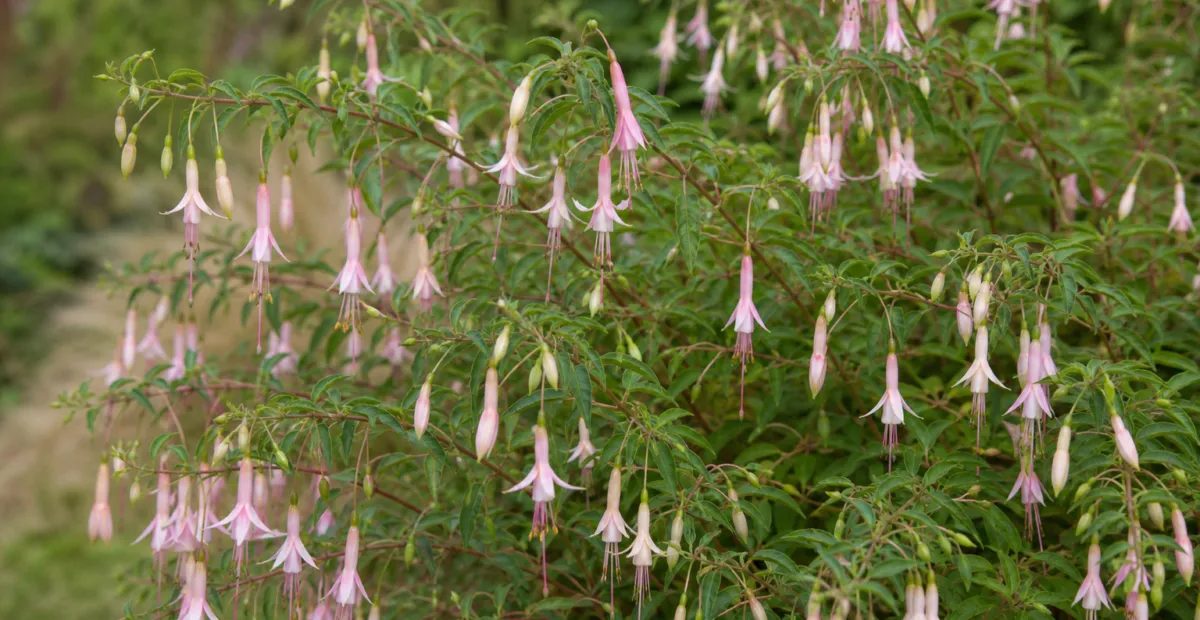
 AI-generated illustration
Molinae (Fuchsia magellanica ‘Molinae’) short overview
Fuchsia magellanica 'Molinae' is a distinctive pale-flowered form of the hardy fuchsia, grown as a graceful deciduous shrub. Its slender, pendent flowers combine almost-white to pale pink sepals and tubes with pale pink corollas, appearing from summer into autumn. In the United States, it performs best in evenly moist, fertile soil with good drainage, morning or filtered sun, and protection from cold, drying winds. Winter mulch helps preserve the crown in colder gardens.
Taxonomic classification
Molinae (Fuchsia magellanica ‘Molinae’) care guide
Light and placement
Provide full sun in cool-summer areas, or morning sun and afternoon shade where summers are hot. East- and west-facing sites are suitable; shelter from strong, drying winds. Too little light produces weak, elongated growth and fewer flowers, while intense hot afternoon sun can scorch leaves and increase water stress.
Watering and humidity
Water deeply when the upper inch of soil begins to dry, aiming for consistent moisture rather than repeated shallow sprinkling. Increase frequency during hot weather and the first growing season; reduce in cool weather, but do not let container plants dry completely. Good drainage is essential because saturated roots decline quickly.
Soil and growing medium
Use fertile soil that holds steady moisture without becoming waterlogged. Loam enriched with compost is suitable, while sandy soil benefits from organic matter and clay needs improved drainage. The plant tolerates a broad pH range, from acidic through alkaline, but performs best in a well-structured, humus-enriched soil.
Feeding
Apply a balanced, half-strength fertilizer during active spring and summer growth, following the product label. Alternatively, top-dress with mature compost in spring. Stop regular feeding by late summer so soft growth can harden before cold weather. Do not fertilize drought-stressed, waterlogged, or dormant plants.
Growth and habit
This is an upright, branching shrub that can become a substantial woody framework in mild climates. In colder areas, stems may die back while the crown resprouts. Maintain a mulch layer, avoid exposed windy sites, and prune selectively so the plant retains a natural arching form.
Planting and repotting
Plant in spring after the danger of severe frost has passed, setting the crown and lower stem slightly deeper than the original soil line where hardy-fuchsia guidance recommends it. Space plants about 3–5 feet apart. Water consistently during the first growing season and mulch after planting, keeping mulch away from the stems.
Repot container plants in spring before vigorous growth begins, moving up only one pot size. Use a moisture-retentive but free-draining mix. Handle the root ball gently, water thoroughly after repotting, and keep the plant shaded from intense afternoon sun while it re-establishes.
Propagation and pruning
Propagation
Take softwood or semi-hardwood cuttings in late spring through summer. Use healthy nonflowering shoots, remove lower leaves, insert into a sterile, lightly moist rooting medium, and keep humid in bright indirect light. Rooting is generally straightforward compared with seed propagation, which may not reproduce the selected form reliably.
Pruning
Prune in late winter or early spring after the worst cold has passed. Remove dead or winter-killed stems to healthy tissue, then shorten remaining branches to shape the shrub and encourage fresh flowering growth. In colder zones, delay hard pruning until new shoots reveal which wood survived.
Overwintering
In Zones 7–8, apply a deep organic mulch over the crown after the first hard frosts and shelter plants from cold drying winds. Expect some stem dieback in colder areas. Container plants are more frost-exposed; move them to a cool, bright, frost-free space and water sparingly while dormant.
Uses
Use as an ornamental shrub in flower borders, cottage gardens, sheltered woodland edges, informal screens, and containers. Its pendent flowers can contribute to hummingbird-focused plantings where hummingbirds occur. Although fuchsia berries are reported as edible, this form is primarily an ornamental and is not a dependable fruit crop.
Appearance
The plant has opposite, small lance-shaped leaves on slender branches and a bushy upright framework. Flowers are characteristically pendent, with a narrow pale tube, spreading sepals, and a paler corolla. Compared with typical red-and-purple Fuchsia magellanica, this form is notable for its soft, washed-out pink and near-white floral coloration.
Flowering
The flowers hang from slender stalks and have the characteristic fuchsia structure: a narrow tubular perianth with spreading sepals and a contrasting corolla. This form is noted for its unusually pale coloration. Flowering normally begins in summer and can continue into autumn, especially where plants receive adequate moisture and are not cut back too late.
Pollination and visitors
Native Fuchsia magellanica forms are associated with hummingbird pollination in Chile. Horticultural references for the species also report visits by bees and butterflies or moths. Visitor activity in the United States will vary with local wildlife and flower availability.
Diseases and pests
Diseases
Watch for fuchsia rust, gray mold, and rarely honey fungus. Improve air circulation, avoid wetting foliage late in the day, remove badly affected leaves, and discard diseased debris. Avoid chronic waterlogging, which weakens roots and increases disease risk.
Pests
Aphids, fuchsia gall mite, capsid bugs, and vine weevil may occur. Inspect new growth and leaf undersides, remove light infestations by hand or with water, and use targeted controls only when monitoring shows they are needed. Avoid bringing infested containers indoors.
Related diseases and pests
Only Plant Doctor profiles whose host data indicate this plant may be affected are shown here.



Toxicity and pollen
No specific toxic effects are reported for Fuchsia magellanica in the horticultural sources reviewed. The berries are described as edible, although they are not generally grown as a fruit crop and may be unappealing. Prevent large quantities of plant material from being eaten and seek medical or veterinary advice if symptoms occur.
- Typical season
- Summer through fall
- Pollination / pollen
- Heavy, animal-transported pollen
Fuchsia flowers are insect- or bird-visited rather than wind-pollinated, so they are not typically considered major airborne pollen sources. Individual sensitivity is still possible, and cutting back flowering plants or handling pollen-bearing tissues may cause irritation in susceptible people.
Native habitat
The species is native to southern Chile and adjacent Argentina, including the Chiloé region, where it occurs in moist habitats and cool maritime climates. It favors fertile soils with reliable moisture and benefits from shelter, conditions that translate well to shaded or partially shaded garden positions.
Interesting fact
The varietal name molinae commemorates Chilean naturalist and writer Juan Ignacio Molina. The form was described from Chiloé and is distinguished by losing much of the red and purple pigmentation typical of the species. In native Chilean habitats, Fuchsia magellanica is pollinated by hummingbirds.
Frequently asked questions (FAQ)
The most relevant questions about this plant, with short and direct answers.
🌱Quick care
What is Fuchsia magellanica 'Molinae' commonly called?⌄
Fuchsia magellanica 'Molinae' is commonly listed as maiden's blush fuchsia. It is a hardy, deciduous fuchsia with very pale pink to nearly white, pendent flowers.
How much light does Fuchsia magellanica 'Molinae' need?⌄
Grow Fuchsia magellanica 'Molinae' in full sun to partial shade. In hot-summer areas, provide afternoon shade to reduce leaf scorch and moisture stress.
How often should I water Fuchsia magellanica 'Molinae'?⌄
Water Fuchsia magellanica 'Molinae' whenever the soil surface begins to dry, keeping the root zone evenly moist. Do not leave it in waterlogged soil, especially during winter.
What soil is best for Fuchsia magellanica 'Molinae'?⌄
Use fertile, moisture-retentive but well-drained loam for Fuchsia magellanica 'Molinae'. Incorporating compost can improve both nutrient availability and moisture consistency.
How large does Fuchsia magellanica 'Molinae' get?⌄
Fuchsia magellanica 'Molinae' can reach about 5 to 8 feet tall and 3 to 5 feet wide in favorable conditions. Growth is usually smaller where winters cause substantial dieback.
🌤️Environment and placement
Can Fuchsia magellanica 'Molinae' grow in full sun?⌄
Yes, Fuchsia magellanica 'Molinae' can grow in full sun if the soil stays consistently moist. Partial shade is safer in regions with intense summer heat.
Is Fuchsia magellanica 'Molinae' hardy in the United States?⌄
Fuchsia magellanica 'Molinae' is one of the hardier fuchsias, but its winter performance varies by site and climate. Protect the crown with a deep mulch and shelter plants from cold, drying winds in colder areas.
Can Fuchsia magellanica 'Molinae' survive frost?⌄
Fuchsia magellanica 'Molinae' tolerates frost better than tender hybrid fuchsias, although stems may die back after severe freezes. Mulch the base heavily and wait until spring to remove winter-damaged growth.
Where should I plant Fuchsia magellanica 'Molinae'?⌄
Plant Fuchsia magellanica 'Molinae' in a moist, fertile border, woodland edge, sheltered courtyard, or large container. A protected position near a wall or among other shrubs can improve winter survival.
Is Fuchsia magellanica 'Molinae' drought tolerant?⌄
No, Fuchsia magellanica 'Molinae' is not reliably drought tolerant. It performs best when the soil remains evenly moist, so use mulch and provide supplemental water during dry spells.
💧Care and problems
Why is my Fuchsia magellanica 'Molinae' wilting?⌄
Wilting is usually caused by dry soil, excessive heat, root damage, or waterlogged conditions. Check soil moisture first, then improve drainage or provide afternoon shade if the roots are staying wet or the foliage is overheating.
Why are the leaves of Fuchsia magellanica 'Molinae' turning yellow?⌄
Yellow leaves can result from overwatering, poor drainage, nutrient deficiency, or normal seasonal leaf drop. If yellowing occurs while the soil is wet, improve drainage before adding fertilizer.
What pests affect Fuchsia magellanica 'Molinae'?⌄
Fuchsia magellanica 'Molinae' may be affected by aphids, fuchsia gall mites, capsid bugs, and vine weevils. Inspect new growth and leaf undersides regularly, particularly during active growth.
What diseases affect Fuchsia magellanica 'Molinae'?⌄
Possible diseases include fuchsia rust and gray mold, while honey fungus is reported more rarely. Good air circulation, careful watering, and removal of infected foliage can reduce disease pressure.
Should I fertilize Fuchsia magellanica 'Molinae'?⌄
Feed Fuchsia magellanica 'Molinae' in spring with a balanced, slow-release fertilizer or compost. Avoid heavy late-season fertilizing, which can encourage tender growth before winter.
🪴Planting and repotting
When is the best time to plant Fuchsia magellanica 'Molinae'?⌄
Plant Fuchsia magellanica 'Molinae' in spring after the risk of severe frost has passed, or in early fall where winters are mild. Spring planting gives roots more time to establish before cold weather.
Can Fuchsia magellanica 'Molinae' grow in a container?⌄
Yes, Fuchsia magellanica 'Molinae' can grow in a large container with fertile, well-drained potting mix. Choose a pot with drainage holes and water more often than an in-ground plant during hot weather.
How deep should I plant Fuchsia magellanica 'Molinae'?⌄
Plant Fuchsia magellanica 'Molinae' with the base of the stem about 2 inches below the soil surface. This deeper planting can help protect the crown and lower stems from winter cold.
✂️Propagation and pruning
How do you propagate Fuchsia magellanica 'Molinae'?⌄
Propagate Fuchsia magellanica 'Molinae' from softwood or semi-hardwood cuttings. Take healthy nonflowering shoots, remove the lower leaves, and root them in a clean, evenly moist medium.
When should I prune Fuchsia magellanica 'Molinae'?⌄
Prune Fuchsia magellanica 'Molinae' in late winter or early spring before strong new growth begins. Remove dead wood and shorten remaining stems to shape the plant and encourage bushier growth.
Should I cut back Fuchsia magellanica 'Molinae' in fall?⌄
Avoid hard fall pruning unless necessary, because the stems provide some winter protection. In colder regions, leave the framework until spring, then cut back winter-killed growth after new shoots appear.
⚠️Toxicity and safety
Is Fuchsia magellanica 'Molinae' poisonous to people or pets?⌄
No specific toxicity is widely reported for Fuchsia magellanica 'Molinae'. Its berries are generally described as edible, but they are not considered a major fruit crop and plant material should not be consumed in quantity.
🌸Flowering and special interest
When does Fuchsia magellanica 'Molinae' bloom?⌄
Fuchsia magellanica 'Molinae' generally blooms from summer into fall. Flowering is strongest when the plant receives adequate moisture, moderate temperatures, and regular removal of fading blooms.
What do the flowers of Fuchsia magellanica 'Molinae' look like?⌄
The flowers of Fuchsia magellanica 'Molinae' are slender and pendent, with very pale pink to nearly white tubes and sepals and pale pink petals. They hang from the leaf axils in a delicate, airy display.
How can I make Fuchsia magellanica 'Molinae' flower more?⌄
Keep Fuchsia magellanica 'Molinae' evenly watered, provide bright light without excessive heat, and prune lightly in late winter or early spring. Removing spent flowers can also help maintain a longer display.
Is Fuchsia magellanica 'Molinae' attractive to pollinators?⌄
Yes, the pendent flowers of Fuchsia magellanica 'Molinae' can provide nectar for hummingbirds and other flower-visiting pollinators. Its value will vary with the pollinators present in your region.
Similar plants
 Azure Monkshood (Aconitum carmichaelii) care guideAconitum carmichaelii
 Monkshood (Aconitum ‘Stainless Steel’)Aconitum 'Stainless Steel'
 Monkshood (Aconitum ‘Bressingham Spire’)Aconitum 'Bressingham Spire'
 Golden full moon maple (Acer shirasawanum ‘Aureum’)Acer shirasawanum 'Aureum'
 Globosum (Acer platanoides ‘Globosum’)Acer platanoides 'Globosum'
 Striped maple (Acer pensylvanicum) care guideAcer pensylvanicum