
 Source:
 Echinocereus ‘Pentalophus’ short overview
Echinocereus 'Pentalophus' is a horticultural identity linked to Echinocereus pentalophus, a low, branching cactus from northeastern Mexico and southern Texas. Its cylindrical, ribbed stems form spreading clumps, while large funnel-shaped flowers are typically vivid pink to magenta with a contrasting throat. Because the quoted cultivar name is not clearly established in major taxonomic references, exact clone characteristics should be verified from the supplying nursery or collection.
Taxonomic classification
Echinocereus ‘Pentalophus’ care guide
Light and placement
Give full sun for sturdy stems and reliable flowering, ideally in a south- or west-facing position with protection from prolonged cold rain. Acclimate greenhouse or indoor plants gradually to intense sun to prevent scorch. Too little light causes stretched, pale growth and fewer flowers; harsh reflected heat can cause bleached patches or sunburn.
Watering and humidity
Water thoroughly only after the mix has dried well, then let excess drain completely. During spring and summer, the interval may be roughly 1–3 weeks depending on heat, pot size, and airflow. Reduce sharply in fall and keep nearly dry in winter, especially below 50°F. Never leave the pot standing in water.
Soil and growing medium
Use a sharply drained mineral cactus mix with substantial pumice, perlite, grit, or coarse sand. A slightly acidic to neutral reaction is suitable. Avoid dense peat-heavy composts that stay wet around the roots, especially in cool weather.
Feeding
Feed only during active growth, typically from spring through midsummer. Use a diluted, low-nitrogen cactus fertilizer or a balanced fertilizer at quarter strength. Do not fertilize a stressed, freshly repotted, dormant, or winter-dry plant.
Growth and habit
Stems branch from the base and may recline or spread outward, eventually forming a low colony. Strong light helps maintain compact, sturdy growth; insufficient light can produce elongated, weaker stems. Keep the plant stable as the clump expands.
Planting and repotting
Plant outdoors after the danger of prolonged cold and wet weather has passed. Set the root ball at its original depth and surround it with mineral grit. Give ample space for the clump to spread, and establish gradually with restrained watering.
Repot in spring or early summer only when growth is active. Use a shallow, stable pot with a drainage hole, allow damaged roots to dry before watering, and avoid burying the stem deeper than its previous level.
Propagation and pruning
Propagation
Seed is the most reliable documented method for maintaining the species, though seedlings are variable. Stem cuttings can be rooted during warm, bright weather after the cut surface has fully callused. Keep newly rooted material nearly dry until roots develop.
Pruning
Little pruning is normally needed. Remove dead, damaged, or rotted stems with sterile tools, cutting back to healthy tissue. Let fresh cuts dry and callus before watering. Wear gloves and use tongs to avoid the spines.
Overwintering
Keep completely protected from freezing rain and prolonged cold. In containers, overwinter in a bright, cool, dry space around 40–50°F when possible. Resume watering gradually in spring after active growth begins; cold wet roots are more dangerous than brief dry cold.
Uses
Best used as a specimen or small clumping accent in containers, rock gardens, xeric beds, and sheltered cactus collections. Its showy flowers make it valuable for ornamental displays. Keep away from paths and handling areas because of the spines.
Appearance
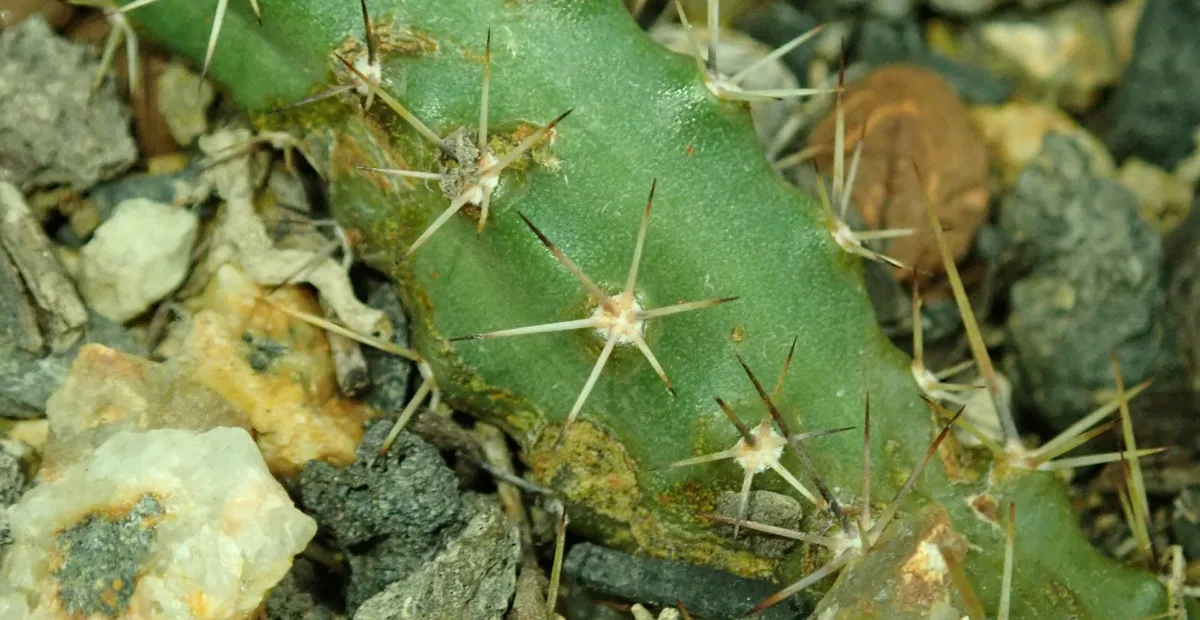
The plant has cylindrical, firm-fleshed green to gray-green stems divided into a few prominent ribs. Areoles carry short pale to yellowish spines, sometimes with a central spine. Stems branch freely and may recline, creating a low, splayed clump. Flowers arise laterally on mature stems and are conspicuously larger than the stem width.
Flowering
The species produces large, broadly funnel-shaped flowers on the sides of mature stems rather than only at the shoot tips. Colors are commonly bright pink, magenta, or lilac, sometimes with a pale throat. Flowers may close at night or during cold conditions.
Pollination and visitors
The species' large, open, colorful flowers fit a bee-pollination syndrome, with floral structures accessible to bees. Evidence for a particular named pollinator species or for this exact cultivar was not located.
Echinocereus 'Pentalophus' photos
Click any photo for a larger view. Source, author and license are shown separately.
Diseases and pests
Diseases
The main risk is root or stem rot from persistently wet soil, especially in winter. Use porous media, clean tools, good airflow, and prompt removal of soft tissue. Isolate plants showing blackening, collapse, or foul-smelling rot.
Pests
Watch for mealybugs, scale, spider mites, and root-feeding pests. Inspect areoles and roots during repotting, quarantine new plants, remove isolated infestations, and use a labeled treatment when necessary. Avoid routine overwatering, which often causes more damage than insects.
Related diseases and pests
Only Plant Doctor profiles whose host data indicate this plant may be affected are shown here.
 DiseaseBlack Root RotBerkeleyomyces basicola
 DiseaseRhizopus soft rotRhizopus stolonifer
 DiseaseBacterial soft rotPectobacterium carotovorum
 DiseaseBlack Rot of GrapePhyllosticta ampelicida (formerly Guignardia bidwellii)
 PestObscure mealybugPseudococcus viburni
 PestCitrus mealybugPlanococcus citri
 PestCotton mealybugPhenacoccus solenopsis Tinsley
Toxicity and pollen
No species-specific toxic principle was identified in the consulted references. The principal practical hazards are spines and possible irritation from sap or plant fragments. Do not allow children or pets to chew the plant, and handle with gloves.
- Typical season
- During flowering, typically May–June in much of the United States
- Pollination / pollen
- Insect-dispersed pollen
This is an insect-pollinated cactus, so pollen is not generally released as a large airborne cloud. However, individual sensitivity cannot be ruled out, and flowering plants should not be assumed completely allergy-free.
Native habitat
The accepted species is native mainly to eastern and northeastern Mexico, with related material extending toward southern Texas. It occurs in dry shrubland and desert-edge environments, where mineral soils, intense light, seasonal rainfall, and rapid drainage shape its growth.
Interesting fact
The epithet pentalophus refers to the species' commonly five-ribbed stems.
Frequently asked questions (FAQ)
The most relevant questions about this plant, with short and direct answers.
🌱Quick care
What is Echinocereus 'Pentalophus'?⌄
Echinocereus 'Pentalophus' is a clumping, low-growing hedgehog cactus with cylindrical, finger-like stems and large pink to magenta flowers. Published horticultural information is usually filed under the species name Echinocereus pentalophus, so cultivar-specific differences may be undocumented.
How much light does Echinocereus 'Pentalophus' need?⌄
Give Echinocereus 'Pentalophus' full sun, with gradual acclimation after purchase or overwintering indoors. In extremely hot climates, light afternoon shade can help prevent sunscald while preserving strong growth and flowering.
How often should I water Echinocereus 'Pentalophus'?⌄
Water thoroughly only after the sharp-draining mineral mix has dried completely. Water more regularly during warm active growth and keep it nearly dry during cool winter dormancy.
What soil is best for Echinocereus 'Pentalophus'?⌄
Use a very fast-draining, mineral-rich cactus mix containing materials such as pumice, perlite, coarse sand, or fine gravel. Avoid heavy garden soil and peat-rich mixes that stay wet around the roots.
Is Echinocereus 'Pentalophus' easy to grow?⌄
Echinocereus 'Pentalophus' is generally manageable for beginners if it receives strong light, excellent drainage, and restrained watering. The main cultivation risk is root or stem rot caused by persistently wet soil.
🌤️Environment and placement
Can Echinocereus 'Pentalophus' grow outdoors in the United States?⌄
It can grow outdoors year-round only in warm, dry locations where hard freezes are uncommon and drainage is excellent. In colder parts of the United States, grow it in a container and protect it before freezing weather.
What USDA hardiness zone is suitable for Echinocereus 'Pentalophus'?⌄
A precise cultivar-specific USDA hardiness range is not well established, so treat Echinocereus 'Pentalophus' as frost-sensitive and protect it from hard frost. Short, dry cold exposure may be tolerated by some plants, but prolonged freezing is unsafe.
Can Echinocereus 'Pentalophus' tolerate heat?⌄
Echinocereus 'Pentalophus' tolerates high heat when its soil drains rapidly and air circulation is good. During extreme heat, especially in containers, filtered afternoon light may reduce sunburn and heat stress.
Is Echinocereus 'Pentalophus' suitable for a hanging basket?⌄
Yes, Echinocereus 'Pentalophus' can be grown in a wide hanging basket because its stems may creep or cascade as the clump expands. Use a stable container with large drainage holes and a gritty mix.
Can Echinocereus 'Pentalophus' grow indoors?⌄
Echinocereus 'Pentalophus' can grow indoors beside the brightest sunny window or under a strong grow light. Indoor plants need excellent airflow, careful watering, and a cool, dry winter rest to support flowering.
💧Care and problems
Why is my Echinocereus 'Pentalophus' turning purple or reddish?⌄
Purple or reddish coloration can result from strong light, cold temperatures, drought stress, or seasonal dormancy. If the stems remain firm, improve conditions gradually; soft, dark, or collapsing tissue indicates a more serious problem.
Why is Echinocereus 'Pentalophus' becoming thin or stretched?⌄
Thin, elongated stems usually indicate insufficient light or overly warm growth during a low-light season. Move the plant toward stronger light gradually and avoid heavy watering or high-nitrogen feeding while it is stretched.
Why is my Echinocereus 'Pentalophus' soft at the base?⌄
A soft, dark, or yellowing base most often indicates rot from excess moisture, poor drainage, cold wet conditions, or an injury. Stop watering, inspect the roots, and remove only healthy tissue if the rot has spread.
What pests affect Echinocereus 'Pentalophus'?⌄
Mealybugs and scale insects are the main pests reported for Echinocereus pentalophus, and root mealybugs can remain hidden below the soil. Inspect areoles, stem joints, and roots during repotting, treating infestations promptly with a cactus-safe method.
Should I fertilize Echinocereus 'Pentalophus'?⌄
Feed Echinocereus 'Pentalophus' sparingly during warm active growth with a diluted, low-nitrogen cactus fertilizer. Do not fertilize during winter dormancy or when the plant is stressed, recently repotted, or suffering from rot.
Does Echinocereus 'Pentalophus' need winter dormancy?⌄
A cool, bright, nearly dry winter rest is strongly beneficial for Echinocereus 'Pentalophus' and may improve bud formation. Keep it protected from hard frost and avoid watering when temperatures are low.
🪴Planting and repotting
When should I repot Echinocereus 'Pentalophus'?⌄
Repot Echinocereus 'Pentalophus' in late spring or early summer when active growth is beginning, or sooner if the mix has deteriorated or drainage is poor. Choose a slightly wider container rather than an excessively deep pot.
What type of pot is best for Echinocereus 'Pentalophus'?⌄
Use a shallow, stable pot with generous drainage holes to support the plant’s spreading stems and clumping habit. Unglazed terracotta can help the mix dry faster, but any well-drained container is suitable.
How do I plant Echinocereus 'Pentalophus' in the ground?⌄
Plant Echinocereus 'Pentalophus' in a raised or naturally rocky bed filled with sharp-draining mineral soil and full sun. In regions with wet winters, container culture or overhead rain protection is safer than ordinary garden soil.
How long should I wait to water after repotting Echinocereus 'Pentalophus'?⌄
Wait several days after repotting before watering, allowing any damaged roots to dry and seal. Resume with a light watering only when the new mix is completely dry and the plant is positioned in bright, airy conditions.
✂️Propagation and pruning
How do I propagate Echinocereus 'Pentalophus' from cuttings?⌄
Separate a healthy stem or offset with a clean, sharp blade, then let the cut surface callus in a dry, shaded, well-ventilated place before planting. Set the callused cutting on gritty cactus mix and water only cautiously after rooting begins.
Can Echinocereus 'Pentalophus' be propagated from offsets?⌄
Yes, offsets are one of the simplest ways to propagate Echinocereus 'Pentalophus' because the plant commonly branches and forms clumps. Separate an offset during active growth and allow any wound to callus before potting.
Can I grow Echinocereus 'Pentalophus' from seed?⌄
Yes, Echinocereus 'Pentalophus' can be grown from seed, although seedlings develop more slowly than rooted cuttings or offsets. Sow fresh seed on a sterile, gritty medium and keep it warm, bright, and lightly but consistently moist until germination.
Does Echinocereus 'Pentalophus' need pruning?⌄
Routine pruning is not needed for Echinocereus 'Pentalophus'. Remove only dead, diseased, or badly damaged stems with sterilized tools, and allow cuts to dry fully before watering.
⚠️Toxicity and safety
Is Echinocereus 'Pentalophus' poisonous to people or pets?⌄
Species-specific toxicity information for Echinocereus 'Pentalophus' is not well established, so do not allow people or pets to chew it. The confirmed practical hazard is its spines, which can puncture skin and irritate the eyes or mouth.
How should I handle Echinocereus 'Pentalophus' safely?⌄
Handle Echinocereus 'Pentalophus' with thick gloves, folded newspaper, or cactus tongs, and keep it away from children and pets. Wear eye protection when cutting, repotting, or removing damaged stems.
🌸Flowering and special interest
When does Echinocereus 'Pentalophus' bloom?⌄
Echinocereus 'Pentalophus' commonly blooms in spring or early summer, often producing flowers large enough to nearly cover the low-growing stems. Exact timing varies with light, winter rest, temperature, and plant maturity.
What color are Echinocereus 'Pentalophus' flowers?⌄
The flowers are typically bright pink, magenta, or lilac-pink with a contrasting pale or whitish throat. Color intensity can vary among plants and cultivated forms.
How large are Echinocereus 'Pentalophus' flowers?⌄
Flowers of Echinocereus 'Pentalophus' are unusually large compared with the stems and may reach about 4 inches across. Well-established clumps can produce many blooms at the same time.
Why is my Echinocereus 'Pentalophus' not flowering?⌄
Insufficient light, lack of a cool dry winter rest, immaturity, excessive nitrogen, or watering at the wrong time can suppress flowering. Give the plant strong light during growth and a cool, nearly dry winter period without exposing it to hard frost.
How can I encourage Echinocereus 'Pentalophus' to flower?⌄
Encourage flowering with full sun, excellent drainage, moderate summer watering, restrained fertilizer, and a cool, dry winter rest. Avoid moving or overwatering the plant once flower buds have formed.
Similar plants
 Azure Monkshood (Aconitum carmichaelii) care guideAconitum carmichaelii
 Monkshood (Aconitum ‘Stainless Steel’)Aconitum 'Stainless Steel'
 Monkshood (Aconitum ‘Bressingham Spire’)Aconitum 'Bressingham Spire'
 Golden full moon maple (Acer shirasawanum ‘Aureum’)Acer shirasawanum 'Aureum'
 Globosum (Acer platanoides ‘Globosum’)Acer platanoides 'Globosum'
 Striped maple (Acer pensylvanicum) care guideAcer pensylvanicum