
 AI-generated illustration
Midori Sour (Colocasia esculenta ‘Midori Sour’) short overview
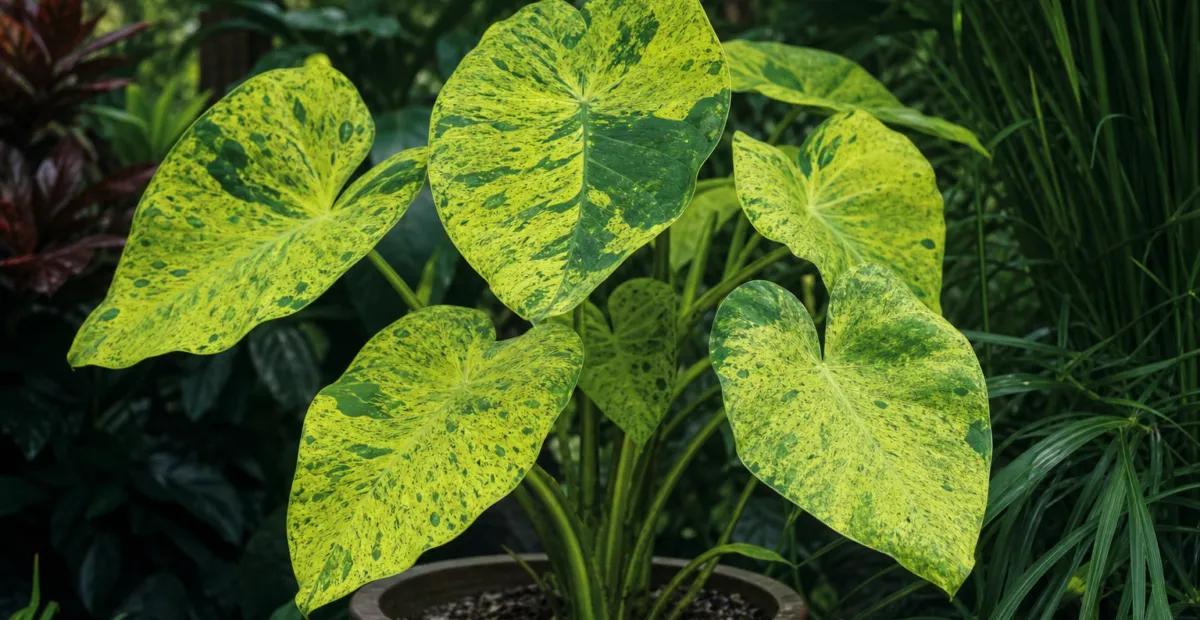
Colocasia esculenta 'Midori Sour' is a distinctive elephant ear cultivar grown for its broad, heart-shaped leaves in chartreuse and lime green, marked with irregular dark-green marbling or sponging. Its green, lightly variegated petioles add to the effect. Treat it as a tender perennial in most of the United States: give it warmth, rich moisture-retentive soil, regular feeding, and protection from freezing weather.
Taxonomic classification
Midori Sour (Colocasia esculenta ‘Midori Sour’) care guide
Light and placement
Give bright filtered light, partial shade, or gentle morning sun. In hot climates, protect from intense afternoon sun, which can scorch or bleach tender chartreuse tissue, while very deep shade may reduce vigor and make the color less vivid. A sheltered east- or southeast-facing position, or filtered light beneath high trees, is often effective. Protect the large leaves from strong wind, which causes tearing.
Watering and humidity
Keep the soil consistently moist, watering deeply when the surface begins to dry rather than relying on frequent shallow sips. Containers may need water daily during hot weather, while outdoor plants need less in cool or cloudy conditions. Do not allow the corm to sit in stagnant water unless the plant is intentionally grown as a pond marginal. Reduce watering during cool dormancy or after leaf dieback.
Soil and growing medium
Use fertile, humus-rich soil or a moisture-retentive container mix that still drains freely. A slightly acidic to neutral reaction is suitable. The plant tolerates wet conditions better than most ornamentals, but stagnant, oxygen-poor soil around a container corm can encourage rot. Add compost or well-rotted organic matter before planting, while avoiding compacted clay unless drainage is improved.
Feeding
Feed during active spring and summer growth with a balanced, water-soluble fertilizer at half to full label strength every two to four weeks, or use a controlled-release product according to its label. Rich compost can supplement but should not replace balanced nutrition in containers. Stop or greatly reduce feeding when growth slows in cool weather or after the plant is brought indoors.
Growth and habit
A warm-season, corm-forming perennial that develops a dense clump of upright succulent petioles. Growth is rapid when temperatures, moisture, and fertility are high, while cool conditions can stop expansion and trigger dormancy. The irregular variegation means some leaves may emerge greener or more heavily marked than others. Shelter plants from strong wind, which can shred the large blades.
Planting and repotting
Plant outdoors after the danger of frost has passed and soil temperatures are reliably warm, ideally above 65°F. Set the corm with the growing point upward and cover it with roughly 1–2 inches of soil. Allow enough room for a broad clump, with about 3–4 feet between substantial plants; use closer spacing only for a temporary seasonal display. Water thoroughly after planting and keep evenly moist while shoots establish.
Repot in spring when active growth resumes, moving the corm or root mass into a container only modestly larger. Use fresh, rich mix and keep the corm near the same depth. Handle the roots and foliage carefully because petiole damage can cause prolonged wilting. Container-grown plants may need refreshing every one to two years if the mix collapses or salts accumulate.
Propagation and pruning
Propagation
Division of the parent corm and separation of cormels or offsets are the practical methods. Divide in spring as growth begins, ensuring each piece has a viable bud. Keep newly divided pieces warm and lightly moist until shoots and roots develop. Seed is not a dependable way to reproduce a named cultivar because seedlings may not retain its foliage pattern.
Pruning
Remove yellowing, damaged, or collapsed leaves at the base with clean shears. Cut foliage back after frost damage or before dormant corm storage, leaving only enough petiole to handle the plant safely. Do not routinely trim healthy leaves, since the plant depends on its foliage to build corm reserves. Wear gloves when cutting because sap and tissues may irritate skin and are harmful if eaten.
Overwintering
In Zones 8–10, corms may remain outdoors in a protected site with mulch, though severe freezes can still cause losses. In colder regions, dig the corm after frost damages the foliage, let it dry briefly, and store it in barely dry peat, vermiculite, or similar material at about 45–55°F. Container plants can be moved indoors before nights fall near 50°F and kept growing in bright light or allowed to rest.
Uses
Use as a bold foliage specimen in containers, mixed tropical plantings, shaded borders, rain gardens, and pond margins where the soil stays moist. It can also be grown indoors near a bright window or under grow lights, provided there is adequate space and humidity. Do not use this named ornamental cultivar as a food crop; all parts contain irritating calcium oxalates unless properly processed, and cultivar edibility is not established.
Appearance
This cultivar forms a dramatic clump of long, succulent petioles topped by broad, heart-shaped to arrowhead-like peltate leaves. The blades are primarily chartreuse or lime green and are irregularly marked with dark-green flecks, sponging, and marbled patches; individual leaves can differ in pattern intensity. Petioles are reported as green with lighter green variegation. A reddish area may occur where the petiole joins the leaf, but this is not consistent enough for identification.
Flowering
As with the species, flowering is uncommon in cultivation and generally secondary to the foliage display. When produced, the inflorescence is a typical arum structure with a pale yellowish-white spathe surrounding a spadix, often partly hidden among the leaves. Reliable cultivar-specific flowering dates and flower traits have not been documented.
Pollination and visitors
Reliable cultivar-specific pollinator records were not found. The species produces infrequent aroid inflorescences that may be visited by small insects, but animal attraction for 'Midori Sour' is not sufficiently documented to assign a visitor group or attraction level.
Diseases and pests
Diseases
Prevent corm and root problems with warm conditions, clean containers, and drainage that removes excess water without allowing prolonged drought. Watch for softening at the corm base, yellowing with collapse, or foul odor, which suggest rot. Remove affected tissue, discard badly diseased material, and avoid reusing contaminated potting mix. Good air movement helps limit foliar spotting.
Pests
Inspect undersides of leaves for spider mites, aphids, whiteflies, thrips, and mealybugs, especially on overwintered indoor plants. Maintain steady moisture and humidity without crowding plants, rinse foliage periodically, and isolate infested containers. Use insecticidal soap or horticultural oil only according to the label and test first on a small area, since stressed or tender leaves may spot.
Related diseases and pests
Only Plant Doctor profiles whose host data indicate this plant may be affected are shown here.
 PestMealy Plum AphidHyalopterus pruni (Geoffroy, 1762)
 PestOnion thripsThrips tabaci Lindeman
 PestMelon thripsThrips palmi Karny
 PestChilli thripsScirtothrips dorsalis Hood
 DiseaseAster yellows‘Candidatus Phytoplasma asteris’
 Environmental stressDrought stress
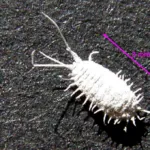 PestObscure mealybugPseudococcus viburni
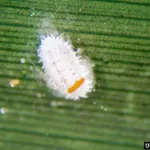 PestCitrus mealybugPlanococcus citri
Toxicity and pollen
Colocasia esculenta contains insoluble calcium oxalate crystals that can cause intense irritation and burning of the mouth, drooling, vomiting, and difficulty swallowing if plant material is chewed or swallowed. The exact risk profile of this cultivar has not been independently established, so treat all parts as irritating and keep away from children and pets. Taro is edible only after appropriate cooking; this ornamental cultivar should not be harvested for food.
- Pollination / pollen
- Limited release because flowering is uncommon
This plant rarely flowers in cultivation, so seasonal airborne pollen exposure is expected to be limited. No cultivar-specific allergy studies were found, and the available evidence does not justify calling exposure risk zero. The better-known hazard is contact with or ingestion of calcium oxalate-containing tissues, not airborne pollen.
Native habitat
The species is associated with tropical and subtropical Asia and commonly grows in moist, fertile sites such as stream edges, marshes, ditches, wet clearings, and other disturbed ground. It favors warmth, abundant water, and organic soils, although cultivated forms can be maintained in containers with a porous, moisture-retentive medium. In the United States, outdoor behavior depends strongly on winter temperature and local invasiveness concerns.
Interesting fact
The cultivar is often described as a painted elephant ear because its chartreuse leaves are overlaid with dark-green markings. Unlike many variegated foliage plants, its pattern can vary noticeably from leaf to leaf. Colocasia leaves are peltate, meaning the petiole attaches to the blade inside the margin rather than at the edge. The underground storage organ is a corm, not a true bulb.
Frequently asked questions (FAQ)
The most relevant questions about this plant, with short and direct answers.
🌱Quick care
What is Colocasia esculenta 'Midori Sour'?⌄
Colocasia esculenta 'Midori Sour' is a variegated elephant ear cultivar grown for large chartreuse leaves marked with darker green spotting or marbling. It is a tropical-looking aroid typically grown as a perennial in warm climates or as a seasonal container plant in colder areas.
How much light does Colocasia esculenta 'Midori Sour' need?⌄
Give Colocasia esculenta 'Midori Sour' full sun to partial shade, with gradual acclimation to stronger sunlight. Bright light generally helps maintain its vivid foliage color, while deep shade may cause paler coloration and weaker growth.
How often should I water Colocasia esculenta 'Midori Sour'?⌄
Water Colocasia esculenta 'Midori Sour' whenever the soil surface begins to dry, keeping the root zone consistently moist. Do not let the pot sit in stagnant water unless it is intentionally grown in a suitable water-garden setting.
Is Colocasia esculenta 'Midori Sour' an indoor or outdoor plant?⌄
Colocasia esculenta 'Midori Sour' can be grown indoors in very bright light or outdoors during warm weather. Outdoor plants must be protected from frost and brought inside or overwintered before freezing temperatures arrive.
🌤️Environment and placement
Where should I plant Colocasia esculenta 'Midori Sour' outdoors?⌄
Plant Colocasia esculenta 'Midori Sour' in a warm, sheltered location with full sun to partial shade and evenly moist soil. A spot protected from cold wind is especially helpful because this cultivar is frost-sensitive.
Can Colocasia esculenta 'Midori Sour' grow in full sun?⌄
Yes, Colocasia esculenta 'Midori Sour' can grow in full sun when moisture is reliable and the plant is acclimated gradually. In hot, dry conditions, partial afternoon shade can reduce leaf scorch and water stress.
Can Colocasia esculenta 'Midori Sour' grow in shade?⌄
Colocasia esculenta 'Midori Sour' tolerates partial shade but may lose some intensity of color in overly dim conditions. Bright filtered light or gentle morning sun is usually a better compromise than deep shade.
Can Colocasia esculenta 'Midori Sour' grow near a pond?⌄
Yes, Colocasia esculenta 'Midori Sour' suits moist planting beds and can be used near ponds or in water gardens. Keep the crown and container conditions well aerated rather than permanently burying the plant in stagnant, oxygen-poor water.
💧Care and problems
What soil is best for Colocasia esculenta 'Midori Sour'?⌄
Use fertile, humus-rich soil that holds moisture but drains excess water freely. A high-organic-matter mix is useful, but dense or continually stagnant soil can lead to root and corm problems.
Why are the leaves of my Colocasia esculenta 'Midori Sour' turning yellow?⌄
Yellow leaves on Colocasia esculenta 'Midori Sour' can result from normal aging, underwatering, overwatering, poor drainage, or insufficient nutrition. Check soil moisture and roots first, because soggy soil and root stress are common causes.
Why is my Colocasia esculenta 'Midori Sour' drooping?⌄
Drooping usually means Colocasia esculenta 'Midori Sour' is thirsty, root-stressed, too cold, or receiving unsuitable light. Check the soil before watering, and inspect for soft roots if the soil remains wet for long periods.
How do I keep the variegation bright on Colocasia esculenta 'Midori Sour'?⌄
Provide strong bright light, consistent moisture, and regular warm growing conditions to help Colocasia esculenta 'Midori Sour' maintain vivid chartreuse and green markings. Avoid sudden exposure to intense sun, which can scorch leaves.
Does Colocasia esculenta 'Midori Sour' need fertilizer?⌄
Colocasia esculenta 'Midori Sour' benefits from fertile soil and can be fed lightly during active warm-season growth. Avoid heavy fertilization in cold weather or when roots are stressed, and follow the product label rather than applying concentrated fertilizer.
How large does Colocasia esculenta 'Midori Sour' get?⌄
Colocasia esculenta 'Midori Sour' can become a substantial elephant ear, with reported mature growth around 5 feet tall and 3 feet wide under favorable conditions. Actual size varies with climate, container size, moisture, nutrition, and length of the growing season.
🪴Planting and repotting
When should I plant Colocasia esculenta 'Midori Sour' outside?⌄
Plant Colocasia esculenta 'Midori Sour' outdoors after the danger of frost has passed and the soil has warmed. In colder parts of the United States, start it indoors or grow it in a container so it can be moved before fall freezes.
Can Colocasia esculenta 'Midori Sour' grow in a container?⌄
Yes, Colocasia esculenta 'Midori Sour' grows well in a container with drainage holes and fertile, moisture-retentive potting soil. Choose a stable pot large enough for its expanding root system and monitor moisture more often during hot weather.
How do I repot Colocasia esculenta 'Midori Sour'?⌄
Repot Colocasia esculenta 'Midori Sour' when roots fill the container, growth becomes crowded, or the plant dries out unusually quickly. Move it into a slightly larger pot with fresh fertile mix, keeping the corm and crown at approximately their original depth.
✂️Propagation and pruning
How do I propagate Colocasia esculenta 'Midori Sour'?⌄
Propagate Colocasia esculenta 'Midori Sour' primarily by dividing offsets or cormels from the parent plant. Make divisions only when they have viable roots or growing points, then pot them in warm, lightly moist, well-draining soil.
Can I propagate Colocasia esculenta 'Midori Sour' from a leaf cutting?⌄
No, a leaf cutting alone normally cannot produce a new Colocasia esculenta 'Midori Sour' plant because viable propagation requires part of the corm, crown, or an offset with a growth bud. Use division instead.
Should I prune Colocasia esculenta 'Midori Sour'?⌄
Prune Colocasia esculenta 'Midori Sour' only to remove yellow, damaged, or declining leaves. Cut unwanted foliage at the base with clean tools, while avoiding damage to the crown and emerging leaves.
⚠️Toxicity and safety
Is Colocasia esculenta 'Midori Sour' toxic to pets?⌄
Yes, Colocasia esculenta 'Midori Sour' is moderately toxic if chewed or swallowed and should be kept away from dogs, cats, and other pets. Ingestion can cause mouth irritation and digestive symptoms, so contact a veterinarian or poison-control service if exposure occurs.
Is Colocasia esculenta 'Midori Sour' poisonous to people?⌄
Yes, Colocasia esculenta 'Midori Sour' should not be chewed or swallowed because its tissues contain irritating compounds. Keep it away from children, and seek medical or poison-control advice after ingestion or significant contact.
🌸Flowering and special interest
Does Colocasia esculenta 'Midori Sour' flower?⌄
Colocasia esculenta 'Midori Sour' can produce the small, hooded arum-type flowers typical of Colocasia, but it is grown mainly for its foliage and flowering is not guaranteed. Warm conditions, maturity, adequate moisture, and strong growth make flowering more likely.
Does Colocasia esculenta 'Midori Sour' go dormant in winter?⌄
Colocasia esculenta 'Midori Sour' may enter dormancy when temperatures fall, especially outdoors in areas with cool winters. Reduce watering after growth stops, keep the corm frost-free, and resume warmer, brighter conditions in spring.
Similar plants
 Azure Monkshood (Aconitum carmichaelii) care guideAconitum carmichaelii
 Monkshood (Aconitum ‘Stainless Steel’)Aconitum 'Stainless Steel'
 Monkshood (Aconitum ‘Bressingham Spire’)Aconitum 'Bressingham Spire'
 Golden full moon maple (Acer shirasawanum ‘Aureum’)Acer shirasawanum 'Aureum'
 Globosum (Acer platanoides ‘Globosum’)Acer platanoides 'Globosum'
 Striped maple (Acer pensylvanicum) care guideAcer pensylvanicum