
 Source:
 Aubrieta cultorum short overview
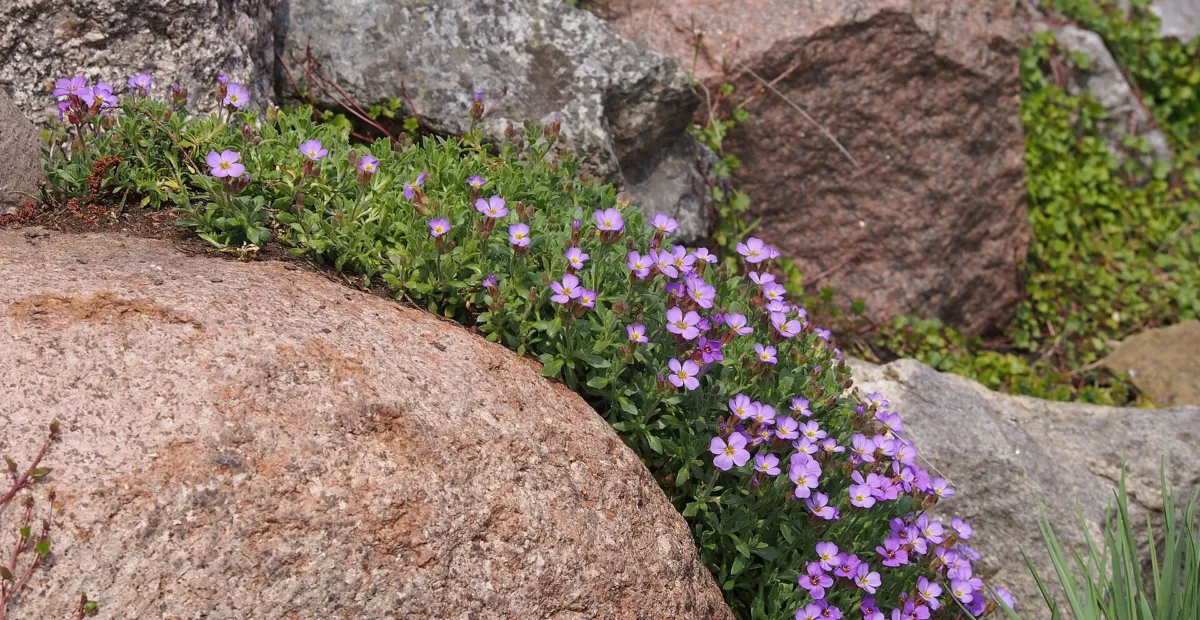
Aubrieta cultorum is a garden-origin hybrid aubretia grown for its low, spreading evergreen mats and abundant spring flowers. It is especially effective in rock gardens, gravel beds, wall crevices, slopes, and sunny containers. Give it sharply drained soil, strong light, and careful winter moisture management. Flower colors vary among cultivated selections, commonly ranging from violet and purple to pink, rose, and blue-purple.
Taxonomic classification
Aubrieta cultorum care guide
Light and placement
Plant in an open south- or west-facing position with at least 6 hours of direct sun. Strong light keeps the mat compact and improves flowering. In too little light, stems become loose and flower production declines. In very hot climates, bright morning sun with some late-afternoon protection can reduce scorch, but heavy shade usually produces weak growth.
Watering and humidity
Water deeply after planting and whenever the upper few inches of soil become dry during the first growing season. Once rooted, allow the soil to dry moderately between waterings. Reduce irrigation in fall and winter, especially in heavy or cold soils, because crown and root loss is more likely from persistent wetness than from ordinary summer dryness.
Soil and growing medium
Use a sharply drained soil amended with grit, coarse sand, or fine gravel where necessary. Aubrieta performs well in lean alpine or rock-garden conditions and can tolerate calcareous soil. Avoid compacted clay and sites that remain saturated through winter. In containers, use a gritty perennial or alpine mix with a drainage hole rather than moisture-retentive potting soil.
Feeding
Aubrieta does not need rich fertility. Incorporate a small amount of finished compost when planting, then apply a balanced, slow-release fertilizer at a restrained rate in early spring if growth is weak. Avoid repeated high-nitrogen feeding, which can encourage soft, open foliage at the expense of a compact flowering mat. Do not fertilize drought-stressed or waterlogged plants.
Growth and habit
This hybrid forms a low, slowly spreading cushion or mat that can cascade over stones and wall edges. Older plants may become woody or open in the center after several seasons. Cutting back after the main bloom helps preserve a dense outline, while replacing tired plants by cuttings can be more reliable than trying to rejuvenate a very old crown.
Planting and repotting
Choose a sunny, raised, or sloping site that drains quickly. Set plants with the crown level with the soil surface and avoid burying the central crown under mulch. Water regularly during establishment, then gradually reduce irrigation as roots spread. A thin gravel top-dressing can protect the crown and improve drainage around the base.
Repot container plants in spring when roots fill the pot or the crown begins to decline. Move into only a slightly larger container with a gritty alpine mix and excellent drainage. Replant at the original depth, keep the crown exposed, and water sparingly until new roots establish.
Propagation and pruning
Propagation
Propagate named selections by softwood or semi-hardwood cuttings taken around late spring or summer, using a free-draining medium and steady moisture. Seed is suitable for species-like or mixed garden material, but seedlings may not reproduce the parent plant consistently. Division is less dependable because the mats can have woody centers.
Pruning
Trim lightly immediately after flowering to keep the mat compact and encourage branching. Remove damaged or winter-burned material in spring. Avoid cutting deeply into old, bare woody centers, because regrowth may be limited.
Overwintering
Outdoor plants are generally winter hardy in suitable zones, but winter wet is a major risk. Keep crowns above saturated soil, avoid thick moisture-holding mulch, and use gravel around the base. In colder containers, protect the pot from repeated freeze-thaw cycles or move it to a sheltered, unheated location while retaining good ventilation.
Uses
Use Aubrieta cultorum for rock gardens, gravel gardens, alpine troughs, sunny borders, retaining walls, slopes, balcony containers, and dry garden edges. Its trailing mats soften stonework and provide early-season color. It is an ornamental plant rather than a documented culinary or medicinal crop; do not use it as food without verified species-specific guidance.
Appearance
The plant has small, gray-green to medium-green leaves, often slightly hairy and spoon-shaped to oval, on short branching stems. Its evergreen foliage forms a close mat. In spring, numerous short racemes rise just above the leaves, each carrying small, four-petaled crucifer-type flowers. The low profile and wall-cascading habit are useful identification features.
Flowering
The main display is a concentrated spring flush. Small flowers are held in short racemes above the evergreen mat and may cover much of the foliage when the plant is growing strongly. Flower color is variable across the hybrid group, and individual cultivars may repeat lightly after trimming, but the principal ornamental value is the spring bloom.
Pollination and visitors
The open, four-petaled flowers provide accessible floral resources for small bees, bumblebees, and hoverflies during the spring bloom period. Visitor abundance depends on weather, nearby nesting habitat, cultivar flower form, and the availability of other flowers. The plant is suitable for mixed pollinator-oriented rock and gravel gardens.
Aubrieta cultorum photos
Click any photo for a larger view. Source, author and license are shown separately.
Diseases and pests
Diseases
White blister can produce pale or blistered pustules on leaves and stems. Reduce overhead irrigation, improve spacing and airflow, remove badly affected debris, and avoid working among wet plants. Root and crown rots are more likely in compacted or waterlogged soil, so drainage is the primary preventive measure.
Pests
Aphids may cluster on young shoots, while flea beetles can leave small shot holes in leaves. Inspect plants regularly, wash off light infestations, protect young plants with fine mesh where pressure is high, and encourage natural predators. Avoid broad-spectrum insecticides during bloom whenever possible.
Related diseases and pests
Only Plant Doctor profiles whose host data indicate this plant may be affected are shown here.
 PestCabbage Stem Flea BeetlePsylliodes chrysocephala
 PestTurnip flea beetlePhyllotreta nemorum (Linnaeus, 1758)
 PestTurnip Flea BeetlePhyllotreta atra (Fabricius, 1775)
 Environmental stressWaterlogging
 PestJapanese beetlePopillia japonica
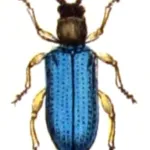 PestCereal leaf beetleOulema melanopus
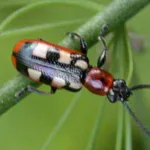 PestAsparagus BeetleCrioceris asparagi
Toxicity and pollen
A reliable, species-specific human or companion-animal toxicity assessment for Aubrieta cultorum was not located in the reviewed authoritative sources. It should therefore not be described as proven safe or edible. Prevent children and pets from eating ornamental plant material, and seek medical or veterinary advice if substantial ingestion causes symptoms.
- Typical season
- Spring, mainly April–May in much of the United States
- Pollination / pollen
- Insect-dispersed pollen; not typically released in large airborne clouds
Aubrieta flowers are insect-pollinated, and the pollen is generally presented to visiting insects rather than dispersed in large quantities by wind. That does not guarantee zero allergy risk: sensitive people may react to plant contact or localized pollen exposure. Avoid handling flowering plants with known individual sensitivities and wash hands after gardening.
Native habitat
The horticultural hybrid has no single natural habitat or native range. Its parentage is associated with rocky, mountainous and open habitats of southeastern Europe and western Asia, where plants experience strong light, rapid drainage, lean soils, and periodic summer dryness. Garden performance declines in low, wet, poorly aerated ground.
Interesting fact
The hybrid name refers to cultivated garden material rather than a naturally occurring wild species. Kew treats Aubrieta × cultorum as an artificial hybrid, with Aubrieta deltoidea × Aubrieta intermedia given as the hybrid formula. The genus name honors French botanical artist Claude Aubriet. Aubrieta is also widely used as a wall and crevice plant because its stems can spill over hard surfaces.
Frequently asked questions (FAQ)
The most relevant questions about this plant, with short and direct answers.
🌱Quick care
How do you care for Aubrieta cultorum?⌄
Grow Aubrieta cultorum in full sun, well-drained soil, and water sparingly once established. Avoid persistently wet conditions, especially during winter.
Is Aubrieta cultorum a perennial?⌄
Yes, Aubrieta cultorum is a cold-hardy, mat-forming perennial. It may behave as a short-lived perennial where summers are excessively hot, humid, or wet.
How much sun does Aubrieta cultorum need?⌄
Aubrieta cultorum grows best in full sun, meaning at least 6 hours of direct sunlight daily. Light shade is tolerated, but flowering is usually reduced.
How often should I water Aubrieta cultorum?⌄
Water Aubrieta cultorum when the soil has dried somewhat, then allow excess water to drain away. Established plants are drought-tolerant and generally need supplemental water only during prolonged dry spells.
🌤️Environment and placement
What type of soil is best for Aubrieta cultorum?⌄
Use sandy, loamy, rocky, or calcareous soil that drains quickly. Heavy or poorly drained soil should be amended or raised to reduce the risk of root and crown problems.
Can Aubrieta cultorum grow in a rock garden?⌄
Yes, Aubrieta cultorum is well suited to rock gardens because its low, spreading growth and drought tolerance fit rocky, sharply drained sites. Place it where surrounding plants will not shade or overcrowd it.
Can Aubrieta cultorum grow in a stone wall?⌄
Yes, Aubrieta cultorum can grow in wall crevices or pockets containing a small amount of gritty, well-drained soil. The planting site must still retain enough moisture for roots to establish.
Is Aubrieta cultorum suitable for slopes and banks?⌄
Yes, Aubrieta cultorum works well on sunny slopes and banks with good drainage. Its spreading habit can help cover open ground, but it is not suited to waterlogged locations.
What USDA Hardiness Zones can grow Aubrieta cultorum?⌄
Aubrieta cultorum is commonly grown as a hardy perennial in roughly USDA Zones 4 through 9, although performance varies by cultivar and local summer conditions. Excellent drainage is particularly important in colder or wetter regions.
Can Aubrieta cultorum grow in containers?⌄
Yes, Aubrieta cultorum grows well in containers with drainage holes and a gritty, well-drained potting mix. Containers dry out faster than garden soil, so check moisture during hot, dry weather.
💧Care and problems
Why is my Aubrieta cultorum turning yellow in the center?⌄
Yellowing or dieback in the center often indicates aging, crowding, excess moisture, or poor air circulation. Remove dead material, improve drainage, and cut the plant back after flowering to encourage fresh growth.
Why is my Aubrieta cultorum flopping or splitting open?⌄
Aubrieta cultorum may flop or split when it becomes crowded, overwatered, shaded, or woody with age. Shear it lightly after flowering and replant or replace older sections if the crown has deteriorated.
Why is my Aubrieta cultorum not flowering?⌄
Insufficient sun, excessive fertilizer, immature plants, or inadequate winter chilling can reduce flowering. Move it to full sun, avoid high-nitrogen feeding, and maintain cool, well-drained conditions through winter.
Does Aubrieta cultorum need fertilizer?⌄
Aubrieta cultorum usually needs little fertilizer when grown in reasonably fertile soil. If growth is weak, apply a light, balanced fertilizer in spring rather than encouraging soft growth with heavy nitrogen.
What pests affect Aubrieta cultorum?⌄
Aphids, flea beetles, and some leaf or bud eelworms may affect Aubrieta cultorum. Inspect new growth regularly and use an appropriate control method if damage becomes significant.
What diseases affect Aubrieta cultorum?⌄
Poor drainage and wet foliage can contribute to crown or root problems, gray mold, white blister, or downy mildew. Space plants well, water at the soil line, and remove diseased debris promptly.
🪴Planting and repotting
When should I plant Aubrieta cultorum in the United States?⌄
Plant Aubrieta cultorum in spring after the soil is workable or in early fall while roots can establish before freezing. In warmer regions, fall planting is often especially effective.
How far apart should I plant Aubrieta cultorum?⌄
Space Aubrieta cultorum about 12 to 18 inches apart, depending on the cultivar and how quickly you want the plants to form a mat. Allow enough room for air circulation around the crown.
How do I plant Aubrieta cultorum in the ground?⌄
Set Aubrieta cultorum at the same depth it was growing in its container and place it in full sun with sharply drained soil. Water thoroughly after planting, then reduce watering as the roots establish.
Can Aubrieta cultorum be grown indoors as a houseplant?⌄
Aubrieta cultorum is not a good long-term houseplant because it needs strong light, cool seasonal conditions, and excellent drainage. Use it outdoors in a rock garden, wall, border, or container instead.
✂️Propagation and pruning
How do you propagate Aubrieta cultorum from seed?⌄
Sow Aubrieta cultorum seeds on the surface of a moist, well-drained seed-starting mix because light can be important for germination. Keep them evenly moist and cool, and do not bury the seed deeply.
Can Aubrieta cultorum be propagated from cuttings?⌄
Yes, Aubrieta cultorum can be propagated from softwood or semi-hardwood cuttings. Cuttings are preferable when you want to preserve the exact characteristics of a particular cultivar.
Can Aubrieta cultorum be divided?⌄
Aubrieta cultorum can sometimes be divided or separated when young rooted sections are present, but division may disturb its shallow, spreading crown. Cuttings are generally a more reliable way to duplicate a named cultivar.
Does Aubrieta cultorum self-seed?⌄
Aubrieta cultorum may produce seedlings, but named hybrids may not come true from seed. Remove spent flowers if you want to limit self-seeding or preserve a tidy appearance.
When should Aubrieta cultorum be pruned?⌄
Cut Aubrieta cultorum back lightly immediately after flowering to maintain a compact, dense shape. Avoid cutting deeply into old, bare wood because older stems may regenerate slowly.
⚠️Toxicity and safety
Is Aubrieta cultorum toxic to dogs, cats, or people?⌄
There is no verified species-specific toxicity classification for Aubrieta cultorum in the supplied botanical evidence. Do not allow people or pets to eat ornamental plants, and contact a medical or veterinary professional if ingestion causes symptoms.
🌸Flowering and special interest
When does Aubrieta cultorum bloom?⌄
Aubrieta cultorum typically blooms in early to mid-spring, with flowers in purple, violet, pink, red, or white depending on the cultivar. Bloom timing varies with climate and winter temperatures.
How long does Aubrieta cultorum flower?⌄
Aubrieta cultorum usually provides several weeks of spring color, with the display lasting longer in cool conditions. Deadheading or shearing after bloom improves its appearance but does not guarantee a second major flowering.
How do I encourage more flowers on Aubrieta cultorum?⌄
Give Aubrieta cultorum full sun, excellent drainage, and restrained fertilization. Keeping the plant compact with a post-bloom trim also helps maintain healthy flowering growth for the following season.
Similar plants
 Azure Monkshood (Aconitum carmichaelii) care guideAconitum carmichaelii
 Monkshood (Aconitum ‘Stainless Steel’)Aconitum 'Stainless Steel'
 Monkshood (Aconitum ‘Bressingham Spire’)Aconitum 'Bressingham Spire'
 Golden full moon maple (Acer shirasawanum ‘Aureum’)Acer shirasawanum 'Aureum'
 Globosum (Acer platanoides ‘Globosum’)Acer platanoides 'Globosum'
 Striped maple (Acer pensylvanicum) care guideAcer pensylvanicum