
 Source:
 He mountain aloe or the flat-flowered aloe) is a large (Aloe marlothii) short overview
Aloe marlothii, listed here as he mountain aloe or the flat-flowered aloe) is a large, is a large southern African succulent with a dramatic solitary rosette, heavily spined leaves, and branched winter flower displays. It needs intense light, sharply drained soil, careful watering, and protection from freezing conditions in most US gardens. Mature specimens can become substantial architectural features in warm, dry landscapes or bright conservatories.
Taxonomic classification
He mountain aloe or the flat-flowered aloe) is a large (Aloe marlothii) care guide
Light and placement
Give the strongest available light, ideally unobstructed southern or western exposure outdoors, with gradual acclimation after greenhouse or indoor growth. Inadequate light produces stretched growth, weaker leaf color, and poor flowering. Harsh reflected heat can scorch recently acclimated leaves, so increase sun exposure over several weeks rather than moving a shaded plant directly into all-day sun.
Watering and humidity
Water deeply only after the mix has dried substantially, then let excess drain completely. In warm active growth, check the pot every few weeks; in winter or cool, low-light conditions, water sparingly or not at all until the mix is dry. Never leave the crown or container standing in water. Humidity is not a substitute for root-zone drainage.
Soil and growing medium
Use a very porous succulent mix containing mineral grit, pumice, coarse sand, or small gravel. In the ground, choose sharply drained sandy or rocky soil; amend heavy clay substantially or grow in a raised bed. A slightly acidic to slightly alkaline reaction is tolerated, but prolonged waterlogging is more dangerous than moderate pH variation.
Feeding
Feed during active spring and summer growth with a balanced fertilizer diluted to one-quarter or one-half strength, no more often than monthly. Alternatively, top-dress lightly with mature compost in the ground. Do not fertilize dry, stressed, newly repotted, dormant, or cold plants, and flush accumulated salts periodically.
Growth and habit
This is a long-lived, usually solitary succulent that develops a dense crown above a simple or sometimes decumbent stem. It may occasionally sucker and form a small group. Large plants can become top-heavy, so choose a stable container or site and avoid frequent relocation.
Planting and repotting
Plant outdoors after the last expected frost once nights are reliably warm, setting the root ball at the same depth as before. Do not bury the stem or pack soil around the crown. Leave ample space for the mature rosette and use a gravel mulch that keeps the crown dry. Establish with occasional deep watering, then lengthen the interval as roots develop.
Repot container plants in spring or early summer, only when the root system has filled the pot or drainage has declined. Use a heavy, stable container with generous drainage holes because mature rosettes become top-heavy. Handle the spined leaves with thick gloves and allow damaged roots to dry before watering.
Propagation and pruning
Propagation
Sow fresh seed in a sterile, gritty, well-drained medium with warmth, bright light, and restrained moisture; transplant seedlings after they develop several leaves. Offsets can be removed when well rooted and large enough to handle, then rooted in dry mix before light watering. Offset propagation is more practical for single-headed specimens than damaging a mature crown.
Pruning
Remove only dead, damaged, or diseased leaves and spent flower stalks. Cut close to the base with a sterile blade without injuring the crown. Wear thick gloves and eye protection because leaf spines are formidable. Do not routinely trim healthy leaves or remove the natural skirt of dried stem leaves.
Overwintering
Move container plants indoors, into a greenhouse, or under reliable frost protection before freezing weather. Keep them in the brightest location available, reduce watering sharply, and provide ventilation. In marginal outdoor climates, cover during brief cold events only if the plant and soil remain dry; prolonged cold and wet conditions are more damaging than dry cold.
Uses
A striking ornamental for dry gardens, rock gardens, large containers, conservatories, and frost-free public landscapes. Its architectural form works well as a focal plant. It has documented southern African ethnobotanical uses, but those uses do not establish modern medical safety; avoid home remedies and ingestion. Commercial international trade is regulated under CITES Appendix II.
Appearance
The plant forms a dense rosette of broad, succulent leaves that taper to sharp tips. Brown spines occur irregularly across the upper and lower leaf surfaces as well as along the margins. Older leaves persist in a dry skirt around the stem, creating a distinctive trunked silhouette.
Flowering
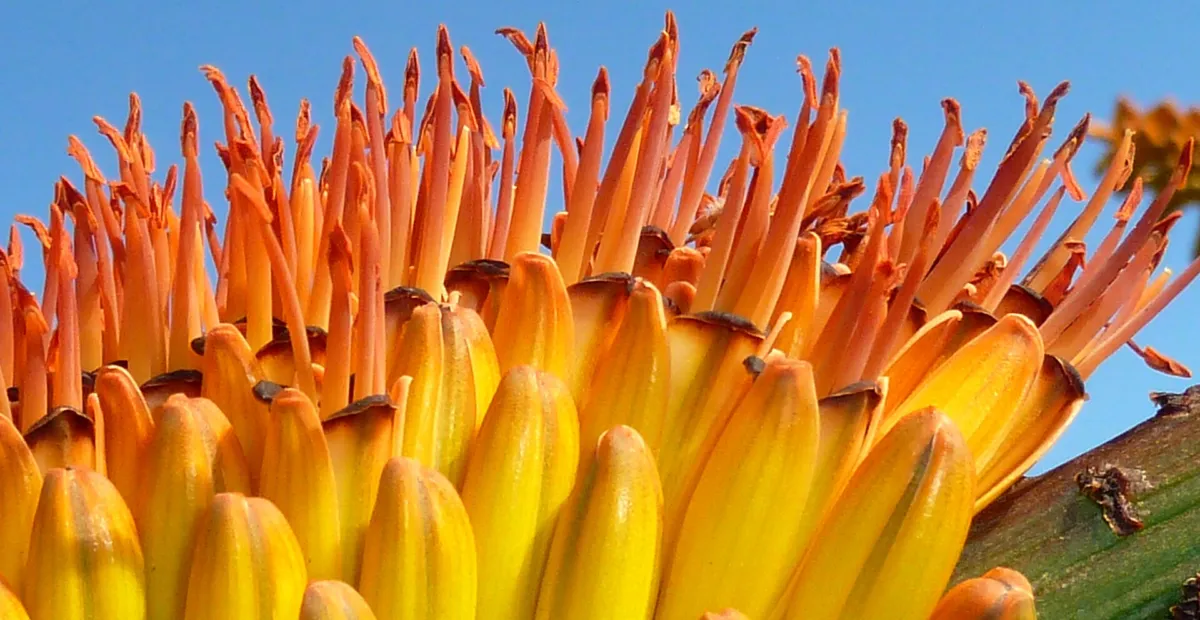
The inflorescence is a spreading, branched panicle with numerous racemes held roughly horizontally. Tubular flowers range from rich yellow to red and may become lighter as they open. Mature plants flower seasonally, with the principal display generally occurring during the cooler months in its native southern African range.
Pollination and visitors
The conspicuous tubular flowers are associated with bird visitation, with bees and other insects also documented or reported as visitors. Evidence for the relative contribution of each visitor group is not equally strong, so a specific primary pollinator species is not assigned.
Aloe marlothii photos
Click any photo for a larger view. Source, author and license are shown separately.
Diseases and pests
Diseases
The main preventive measure is fast drainage and a dry crown. Excess moisture can encourage root or stem rot, especially in cool weather. Remove collapsed tissue, cut back to healthy material with a sterile blade, let wounds callus, and replant only in dry, porous mix. Improve airflow and avoid overhead watering.
Pests
Inspect flower stalks for aphids and foliage or leaf bases for mealybugs and thrips. Isolate affected containers, wash accessible pests away, and use horticultural soap or a labeled succulent-safe treatment according to the product label. Avoid routine broad-spectrum spraying when unnecessary.
Related diseases and pests
Only Plant Doctor profiles whose host data indicate this plant may be affected are shown here.
 DiseasePhytophthora cactorum crown, collar, root and fruit rotPhytophthora cactorum
 PestMealy Plum AphidHyalopterus pruni (Geoffroy, 1762)
 DiseasePhytophthora root and crown rotPhytophthora nicotianae
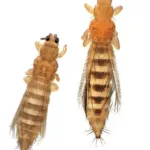 PestOnion thripsThrips tabaci Lindeman
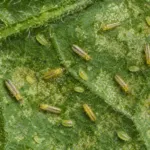 PestMelon thripsThrips palmi Karny
 PestChilli thripsScirtothrips dorsalis Hood
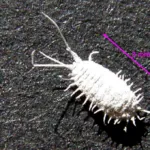 PestObscure mealybugPseudococcus viburni
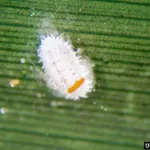 PestCitrus mealybugPlanococcus citri
Toxicity and pollen
Reliable sources reviewed for this profile do not establish a clear, species-specific human or pet toxicity classification for Aloe marlothii. Its leaves contain bitter latex-like exudates and the foliage is sharply spined, so prevent chewing, ingestion, and skin or eye contact with sap. Do not use it medicinally or ingest preparations without expert identification and medical guidance.
- Typical season
- Exposure is mainly associated with flowering during the cool season; exact US timing varies by climate and greenhouse conditions.
- Pollination / pollen
- Pollen exposed at tubular flowers; airborne relevance not well quantified
Aloe marlothii is an insect- and bird-visited flowering succulent, but the reviewed sources do not provide a validated US airborne-pollen ranking or strong species-specific clinical allergy evidence. Treat pollen exposure as potentially low rather than absent, particularly when flowering indoors; ventilation and avoiding direct contact with flowering sprays are sensible precautions.
Native habitat
Native from southeastern Botswana through Eswatini, Mozambique, and South Africa, including KwaZulu-Natal and northern provinces. It occurs on rocky hillsides and across dry savanna and bushveld habitats, where rapid drainage, strong sun, seasonal rainfall, and dry intervals shape its growth.
Interesting fact
The species honors southern African botanist H.W.R. Marloth. It can form a trunk-like stem covered with persistent dried leaf bases. Kew records two accepted subspecies, including a clumping, sand-tolerant subspecies orientalis. The species is listed in CITES Appendix II.
Frequently asked questions (FAQ)
The most relevant questions about this plant, with short and direct answers.
🌱Quick care
How much sunlight does Aloe marlothii need?⌄
Aloe marlothii needs full sun for strong growth and the best leaf color. Acclimate plants gradually when moving them from shade to prevent sunscald.
How often should I water Aloe marlothii?⌄
Water Aloe marlothii deeply, then let the soil dry out completely before watering again. Reduce watering during cool, cloudy, or dormant periods, because consistently wet soil can cause root rot.
🌤️Environment and placement
Is Aloe marlothii drought tolerant?⌄
Yes, Aloe marlothii is highly drought tolerant once established. Occasional deep watering during prolonged heat and drought can support growth, but frequent shallow watering is unnecessary.
Can Aloe marlothii grow outdoors in the United States?⌄
Aloe marlothii can grow outdoors year-round in warm, frost-free parts of the United States, especially mild desert and coastal climates. In areas with freezing weather, grow it in a container or protect it during cold snaps.
What USDA hardiness zone is best for Aloe marlothii?⌄
Aloe marlothii is best suited to warm USDA Zones 9b through 11, although established plants may tolerate brief, light freezes when kept dry. Protect it whenever temperatures are expected to reach 32°F or lower.
Can Aloe marlothii tolerate frost?⌄
Aloe marlothii does not reliably tolerate freezing temperatures, so protect it from frost and hard freezes. Cold damage is more likely when the plant is wet or exposed to prolonged low temperatures.
How large does Aloe marlothii get?⌄
Aloe marlothii is a large, usually solitary aloe that can reach roughly 6 to 13 feet tall in favorable landscapes, with an even wider spread from its leaves and flower stalks. Container plants generally remain smaller.
Can Aloe marlothii grow indoors?⌄
Aloe marlothii can be grown indoors while young, but it eventually becomes too large for most homes. Place it in the brightest available window and use a container with excellent drainage.
💧Care and problems
How fast does Aloe marlothii grow?⌄
Aloe marlothii grows at a moderate rate when given strong light, warmth, drainage, and occasional water. Growth slows substantially in containers, low light, cold weather, or during drought stress.
Why are the leaves of my Aloe marlothii turning yellow?⌄
Yellow leaves on Aloe marlothii most often indicate overwatering, poor drainage, or cold stress. Check the roots and soil moisture before watering again, and remove only leaves that are fully dead or rotting.
Why is Aloe marlothii becoming soft at the base?⌄
A soft or collapsing base usually indicates stem or root rot caused by excessive moisture, poor drainage, or cold wet conditions. Remove the plant from the soil, cut away diseased tissue, and allow healthy cuts to dry before replanting in dry, gritty mix.
What pests attack Aloe marlothii?⌄
Aloe marlothii may occasionally be affected by aphids on flower stalks, mealybugs, scale, thrips, or stem-boring larvae. Inspect the crown, leaf bases, and inflorescences regularly and isolate affected plants promptly.
Should I fertilize Aloe marlothii?⌄
Fertilize Aloe marlothii lightly during active growth with a diluted cactus or balanced fertilizer. Avoid heavy feeding, especially in winter, because excess fertilizer can produce weak growth and salt buildup.
🪴Planting and repotting
What soil is best for Aloe marlothii?⌄
Use sandy or rocky succulent soil that drains sharply and does not retain water. A commercial cactus mix amended with extra pumice, perlite, or coarse grit is suitable for containers.
How do I plant Aloe marlothii in the ground?⌄
Plant Aloe marlothii in full sun with the root crown at the same level it was growing previously. Choose a raised or naturally sloped site if drainage is slow, and leave ample room for the mature rosette and spiny leaves.
Does Aloe marlothii need a drainage hole?⌄
Yes, Aloe marlothii should be planted in a container with at least one unobstructed drainage hole. Empty excess water from saucers so the roots never sit in water.
When should I repot Aloe marlothii?⌄
Repot Aloe marlothii when roots fill the container, the plant becomes unstable, or the soil breaks down. Move it only one container size larger and repot during warm, active growth when possible.
✂️Propagation and pruning
Does Aloe marlothii need pruning?⌄
Aloe marlothii generally needs little pruning. Remove dead flower stalks and completely dried leaves with clean tools, while avoiding healthy leaves and the sharp spines.
How do I propagate Aloe marlothii from seed?⌄
Sow Aloe marlothii seeds on the surface of a sterile, sharply draining mix and cover them only lightly with sand. Keep the medium lightly and evenly moist in a warm, bright, ventilated location until germination, then gradually reduce watering.
Can Aloe marlothii be propagated from offsets?⌄
Yes, Aloe marlothii can be propagated from offsets when they are large enough to have their own roots. Separate them carefully, let damaged surfaces dry briefly, and plant them in gritty mix without overwatering.
Can I propagate Aloe marlothii from a leaf cutting?⌄
Leaf-cutting propagation is not the most dependable method for Aloe marlothii. Seed or rooted offsets are preferable because detached aloe leaves commonly rot before producing a new plant.
⚠️Toxicity and safety
Is Aloe marlothii poisonous to dogs and cats?⌄
Aloe marlothii should be treated as potentially harmful if eaten by dogs, cats, rabbits, or people because species-specific toxicity information is limited and aloe sap may cause gastrointestinal upset. Keep pets and children away from the leaves and sap.
Are Aloe marlothii leaves dangerous to touch?⌄
The leaves are not usually dangerous to touch, but their marginal and surface spines can puncture skin. Wear gloves and long sleeves when planting, repotting, pruning, or moving the plant.
Can Aloe marlothii sap irritate skin?⌄
Aloe marlothii sap may irritate sensitive skin, and its effects are not as well documented for household use as those of common Aloe vera. Avoid contact with eyes and wash exposed skin promptly with soap and water.
Is Aloe marlothii suitable for a small garden?⌄
Aloe marlothii is usually unsuitable for a small garden because it becomes a large, heavily spined specimen. Choose a smaller aloe unless you can provide generous clearance from paths, patios, pets, and children.
🌸Flowering and special interest
When does Aloe marlothii flower?⌄
Aloe marlothii commonly flowers in winter to early spring in many United States landscapes, although timing varies with climate and growing conditions. Mature, well-lit plants are more likely to bloom reliably.
What do Aloe marlothii flowers look like?⌄
Aloe marlothii produces branched flower panicles with racemes that spread almost horizontally, creating a candelabra-like form. Flowers may range from yellow to orange or reddish tones and often lighten as they open.
How old does Aloe marlothii need to be before flowering?⌄
Aloe marlothii usually needs to reach substantial maturity before flowering, and seedlings may take several years. Maximum sun, a warm growing season, and avoiding excessive nitrogen can improve the chance of bloom.
Do Aloe marlothii flowers attract hummingbirds?⌄
Yes, the tubular flowers of Aloe marlothii can attract hummingbirds and other nectar-feeding wildlife when grown outdoors. Flowering is most abundant when the plant receives full sun and is not overwatered.
How can I tell Aloe marlothii apart from Aloe ferox?⌄
Aloe marlothii typically has broad leaves with spines on both surfaces and flower racemes that spread more horizontally, while Aloe ferox commonly has a more upright inflorescence. Mature plants can vary, so flower structure and overall form are more reliable than leaf color alone.
Similar plants
 Azure Monkshood (Aconitum carmichaelii) care guideAconitum carmichaelii
 Monkshood (Aconitum ‘Stainless Steel’)Aconitum 'Stainless Steel'
 Monkshood (Aconitum ‘Bressingham Spire’)Aconitum 'Bressingham Spire'
 Golden full moon maple (Acer shirasawanum ‘Aureum’)Acer shirasawanum 'Aureum'
 Globosum (Acer platanoides ‘Globosum’)Acer platanoides 'Globosum'
 Striped maple (Acer pensylvanicum) care guideAcer pensylvanicum