 Source:
 Arrow-wood (Viburnum dentatum) short overview
Arrow-wood is a hardy, deciduous North American shrub valued for its reliable white flower clusters, glossy toothed leaves, blue-black drupes, and adaptable nature. It grows best in full sun to partial shade with evenly moist, well-drained soil and works well in native plantings, shrub borders, informal screens, and wildlife gardens. The species is generally easy to establish and offers spring flowers, seasonal fruit, and variable yellow, orange, or reddish fall color.
Taxonomic classification
Arrow-wood (Viburnum dentatum) care guide
Light and placement
Plant in full sun for the densest growth, strongest flowering, and best fruiting, or use morning sun and afternoon shade in hot, dry sites. Light shade is tolerated, but deep shade can make the shrub thinner and reduce flowers and fruit. Scorched margins, faded foliage, or midday wilt suggest excessive heat or drought rather than insufficient light.
Watering and humidity
Water deeply when the upper few inches of soil begin to dry during establishment, then reduce frequency as roots spread. Maintain more consistent moisture in summer, especially in sandy soil or prolonged heat; established plants tolerate some drought but perform better without repeated drying. Apply mulch over the root zone while keeping it away from the stems.
Soil and growing medium
Use a moisture-retentive but well-drained soil containing loam, organic matter, or amended clay. The species tolerates a broad soil range, including clay, but stagnant winter water can damage roots. Slightly acidic through slightly alkaline conditions are acceptable; avoid highly compacted ground and improve drainage before planting.
Feeding
Spread a thin layer of finished compost around the root zone in spring, or use a balanced slow-release shrub fertilizer according to its label. Feed only after the plant is established and actively growing. Avoid heavy nitrogen applications, which can produce weak, overly leafy growth and reduce the balance between flowering, fruiting, and woody development.
Growth and habit
This shrub develops several stems and a rounded to upright crown, with arching branches and a tendency to sucker or broaden when conditions are favorable. Its adaptable growth makes it useful in naturalized plantings, but renewal pruning or removal of unwanted suckers may be needed in formal spaces. Plants can flower and fruit more heavily when genetically different individuals grow nearby.
Planting and repotting
Plant during mild spring or fall weather in a hole two to three times wider than the root ball and no deeper than the root system. Backfill with native soil, water thoroughly, and mulch 2–3 inches deep without touching the stems. Keep the root zone evenly moist through the first growing season, especially after late-spring or summer planting.
Usually grown in the ground rather than as a long-term container plant. If container-grown, move it into a larger pot when roots fill the existing container, using a moisture-retentive but well-drained woody-plant mix. Transplant during cool spring or fall weather, disturb roots as little as possible, and water consistently during recovery.
Propagation and pruning
Propagation
Propagate from seed, softwood or semi-ripe cuttings, or layering. Fresh seed generally requires a long period of warm and cold stratification, so seed propagation is slower and less predictable. Root cuttings under humid conditions during active growth, or layer flexible low branches in spring and detach them after roots form. Named cultivars should be propagated clonally.
Pruning
Prune immediately after flowering if shaping is needed, because later pruning can remove developing flower buds. Remove dead, damaged, or crossing stems at any time. For rejuvenation, remove a portion of the oldest stems at ground level over successive years rather than shearing the entire shrub. Remove unwanted suckers when they appear outside the intended planting area.
Overwintering
Outdoor plants are generally hardy through severe winter cold in USDA Zones 2–8. Mulch the root zone before winter in exposed locations, especially during the first year. Protect young plants from drying winter winds and sudden freeze-thaw cycles with adequate soil moisture and a loose mulch layer; do not wrap the crown tightly or keep the soil saturated.
Uses
Useful for native shrub borders, informal hedges, screens, woodland edges, rain-garden margins, naturalized plantings, and wildlife gardens. Its flowers support insect visitors, while the blue-black drupes are eaten by birds and other wildlife. It is also valued for winter hardiness, adaptability, and seasonal foliage color. Do not promote the fruit for human eating without reliable preparation and species-specific safety guidance.
Appearance
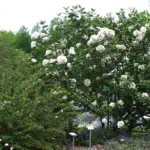
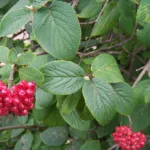
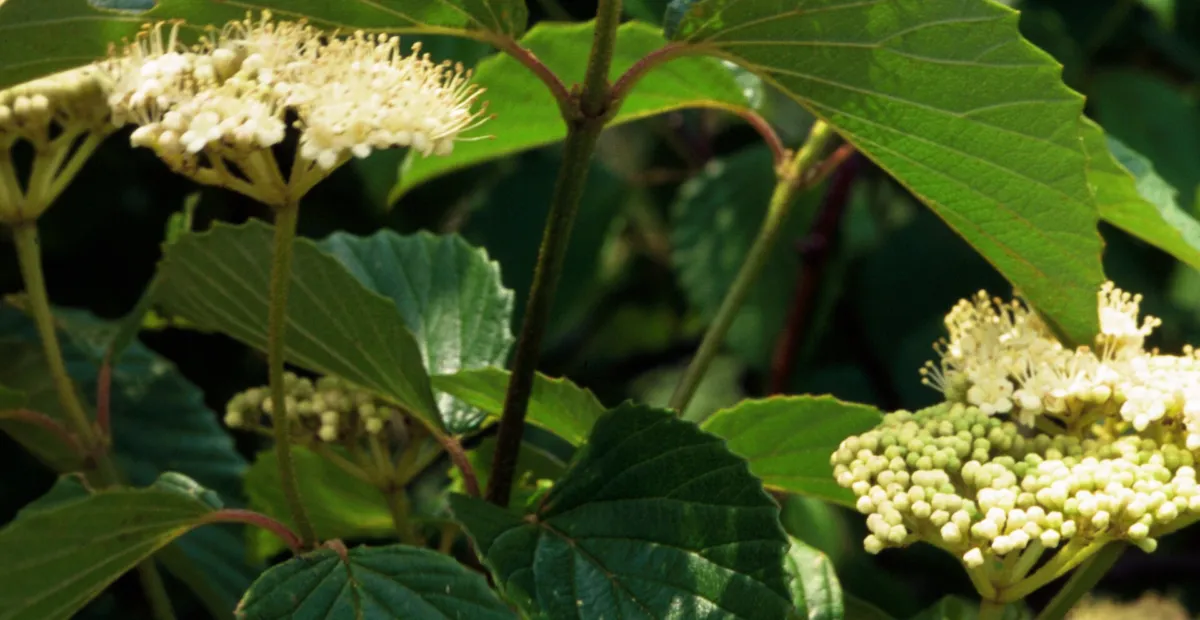
Leaves are opposite, simple, glossy dark green, and oval to elliptic with coarse, regular teeth. Young twigs are slender and ridged; older bark becomes gray to gray-brown. The shrub is recognized by flat-topped white clusters, blue-black one-seeded drupes, and foliage that may turn yellow, orange, red, or reddish-purple in fall.
Flowering
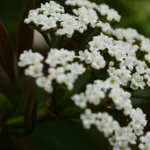
Numerous small white flowers open in flat-topped clusters near branch ends and short side shoots in late spring. The open cluster structure makes the flowers accessible to several insect visitors. Fruit production can be inconsistent when only one genetically uniform plant is present; a compatible, genetically different plant with overlapping bloom is more likely to improve fruit set.
Pollination and visitors
The open white flower clusters are documented as resources for bees, butterflies, beetles, and flies or other small insects. These visitors may transfer pollen between shrubs, and cross-pollination between genetically different plants can improve fruit production. Viburnum foliage also supports larvae of some Lepidoptera associated with native viburnums.
Viburnum dentatum photos
Click any photo for a larger view. Source, author and license are shown separately.
Diseases and pests
Diseases
Usually trouble-free, but leaf spot, powdery mildew, and occasional root problems can occur under crowded, damp, or poorly drained conditions. Provide air circulation, water at the soil surface, remove fallen diseased foliage, and avoid unnecessary overhead irrigation. Improve drainage rather than relying on routine fungicide use.
Pests
Whiteflies may occur, and aphids, scale, or viburnum-specific leaf-feeding insects can occasionally cause damage. Inspect new growth and leaf undersides, encourage natural enemies, and use a strong water spray for light infestations. Treat only when damage is significant, following a product label and avoiding insecticide applications during bloom.
Related diseases and pests
Only Plant Doctor profiles whose host data indicate this plant may be affected are shown here.
Toxicity and pollen
Reliable veterinary and human toxicology information for the exact species is limited, and published accounts conflict about the safety of Viburnum dentatum fruit. Wildlife consume the drupes, but that does not establish human or pet safety. Avoid eating raw fruit, bark, or leaves; keep children and pets from consuming plant material, and contact a poison-control or veterinary professional after a suspected ingestion.
- Typical season
- Usually May–June in the United States
- Pollination / pollen
- Insect-carried pollen from exposed anthers
Arrow-wood is insect-pollinated, so its pollen is mainly released and transported locally by flower visitors rather than carried broadly by wind. A low airborne-pollen classification is appropriate, but it is not a guarantee of zero allergy risk. People with strong seasonal sensitivities should avoid handling flowering branches closely and monitor their own symptoms.
Native habitat
Arrow-wood occurs in eastern and east-central North America in deciduous woods, wooded slopes, bottomlands, stream banks, and moist woodland margins. It favors soils with dependable moisture but can adapt to upland garden conditions once established. Natural populations often form part of the shrub layer and provide cover, nesting structure, and seasonal food for wildlife.
Interesting fact
The specific epithet dentatum refers to the toothed leaf margins. Straight young stems were traditionally associated with arrow shafts, giving rise to the common name. The fruit is a drupe rather than a true berry, with a single grooved seed enclosed in fleshy tissue. Plants can show considerable geographic variation in leaf shape and surface hairs.
Frequently asked questions (FAQ)
The most relevant questions about this plant, with short and direct answers.
🌱Quick care
What is Arrow-wood (Viburnum dentatum)?⌄
Arrow-wood is a hardy, deciduous native shrub in the Viburnaceae family. It typically grows about 6–10 feet tall and wide, with white spring flowers, blue-black fruit, and variable red, orange, or yellow fall color.
How fast does Arrow-wood grow?⌄
Arrow-wood is a vigorous, moderately fast-growing shrub when planted in suitable soil and moisture. Growth is usually strongest in full sun with consistent moisture, although established plants tolerate a wider range of conditions.
Is Arrow-wood evergreen?⌄
No, Arrow-wood is deciduous and loses its leaves in fall. It returns in spring with fresh foliage and flowers.
Is Arrow-wood native to the United States?⌄
Yes, Viburnum dentatum is native to much of the eastern United States. Its natural habitats commonly include moist woods, stream edges, and other sites with dependable soil moisture.
🌤️Environment and placement
How much sun does Arrow-wood need?⌄
Arrow-wood grows best in full sun to partial shade. More sun generally produces denser growth and better flowering and fruiting, while partial shade is tolerated.
Can Arrow-wood grow in shade?⌄
Yes, Arrow-wood can grow in partial shade and even tolerate fairly shady conditions. Heavy shade may reduce flowering, fruit production, and compact growth.
What USDA hardiness zones are suitable for Arrow-wood?⌄
Arrow-wood is very cold hardy and is generally suited to USDA Zones 2–8. Cultivar hardiness can vary, so check the label for named selections.
What type of soil does Arrow-wood prefer?⌄
Arrow-wood prefers moist, well-drained loam but adapts to clay, sand, and other ordinary garden soils. Avoid sites that remain permanently waterlogged unless drainage is improved.
Can Arrow-wood tolerate clay soil?⌄
Yes, Arrow-wood tolerates clay soil better than many ornamental shrubs. Improve compacted clay with organic matter and avoid planting where water stands around the roots for long periods.
Is Arrow-wood tolerant of wet soil?⌄
Arrow-wood tolerates moist soil and occasional flooding, especially once established. It performs best when the soil is moisture-retentive but still drains reasonably well.
Is Arrow-wood drought tolerant?⌄
Established Arrow-wood has some drought tolerance, but it grows best with average to evenly moist soil. Water newly planted shrubs during dry periods, especially through the first growing season.
How much space does Arrow-wood need?⌄
Allow approximately 6–10 feet of mature width for the species, although some cultivars are smaller. Give it enough room to develop its naturally upright, rounded, multi-stemmed form.
💧Care and problems
How often should I water Arrow-wood?⌄
Water Arrow-wood when the top few inches of soil begin to dry, keeping the root zone evenly moist rather than saturated. Newly planted shrubs need more frequent watering than established plants.
Does Arrow-wood need fertilizer?⌄
Arrow-wood usually does not need regular fertilizer when grown in reasonably fertile soil. If growth is weak, test the soil before applying a slow-release, balanced fertilizer in spring.
Why are the leaves on my Arrow-wood being eaten?⌄
Chewed or skeletonized leaves may be caused by viburnum leaf beetle, a serious pest of some Arrow-wood plantings. Inspect twigs for rows of egg-laying scars and manage infestations promptly with locally appropriate extension guidance.
What pests affect Arrow-wood?⌄
Arrow-wood generally has few serious pest problems, but viburnum leaf beetle and whiteflies can damage the foliage. Monitor plants regularly, particularly in regions where viburnum leaf beetle is established.
Is Arrow-wood deer resistant?⌄
Arrow-wood is often considered relatively deer resistant, but deer may browse its twigs and leaves when preferred food is scarce. Protection may still be needed in areas with heavy deer pressure.
🪴Planting and repotting
When is the best time to plant Arrow-wood?⌄
Plant Arrow-wood in spring or fall when temperatures are moderate and soil moisture is reliable. Fall planting is often effective in colder regions, provided the shrub is established before the ground freezes.
How do I plant Arrow-wood?⌄
Plant Arrow-wood at the same depth it grew in its container, with the root flare level with or slightly above the soil surface. Water thoroughly, apply a light mulch layer, and keep mulch away from the stems.
Can Arrow-wood be used as a hedge or privacy screen?⌄
Yes, Arrow-wood works well as an informal hedge, screen, shrub border, or wildlife planting. Its mature size and multi-stemmed habit make it better suited to a naturalistic screen than a tightly clipped hedge.
✂️Propagation and pruning
How can I propagate Arrow-wood?⌄
Arrow-wood can be propagated from seed, softwood cuttings, or root suckers. Softwood cuttings are commonly taken during active growth, while seed propagation may require patience because viburnum seeds can have dormancy.
Can Arrow-wood be transplanted?⌄
Yes, Arrow-wood transplants reasonably well, especially when young or when moved during dormancy. Water it carefully after transplanting and maintain even soil moisture while new roots develop.
Does Arrow-wood spread by suckers?⌄
Arrow-wood can produce root suckers as it matures. Suckers may be removed to maintain a tidier clump or dug and transplanted when small.
When should I prune Arrow-wood?⌄
Prune Arrow-wood immediately after flowering. Its next season’s flower buds develop on old growth, so pruning later in summer, fall, or winter can reduce the following spring’s bloom.
How do I rejuvenate an overgrown Arrow-wood?⌄
Rejuvenate an overgrown Arrow-wood by removing some of the oldest stems at ground level after flowering. Renewal pruning over several years is usually less stressful than cutting the entire shrub back at once.
⚠️Toxicity and safety
Are Arrow-wood berries poisonous to humans?⌄
The safety of raw Arrow-wood fruit is uncertain, even though some references describe the fruit as edible or report traditional cooked uses. Do not eat the raw berries, and contact Poison Control or a medical professional if a child or pet consumes an unknown amount.
Can dogs or cats eat Arrow-wood berries?⌄
Do not intentionally feed Arrow-wood berries to dogs or cats because reliable species-specific pet-safety information is limited. If a pet eats the fruit, contact a veterinarian or an animal poison service for guidance.
🌸Flowering and special interest
When does Arrow-wood bloom?⌄
Arrow-wood usually blooms in late spring, commonly from May into June in much of the United States. The flowers are small, white, and arranged in broad, flat-topped clusters.
Why is my Arrow-wood not flowering?⌄
Insufficient light, excessive pruning, drought stress, or immature growth can reduce flowering. Because Arrow-wood blooms on old growth, pruning after midsummer may remove next year’s flower buds.
Does Arrow-wood produce berries?⌄
Yes, Arrow-wood produces blue to blue-black, berry-like drupes after flowering. The fruit typically develops in summer and early fall and is highly valuable to birds and other wildlife.
Does Arrow-wood need another plant to produce fruit?⌄
Yes, more than one genetically different Arrow-wood plant is generally needed for reliable fruit production. Plant compatible plants of the same species rather than relying on two clones of a single cultivar.
Does Arrow-wood attract birds and pollinators?⌄
Yes, Arrow-wood attracts pollinating insects to its flowers and provides fruit and cover for birds and other wildlife. It also serves as a host plant for some butterfly larvae, including the Spring Azure.