David Viburnum (Viburnum davidi) short overview
David Viburnum is a compact, rounded evergreen shrub valued for its glossy, deeply veined leaves, spring clusters of white flowers, and blue-black drupes on female plants when a compatible pollinator is nearby. Native to western China, it performs best in USDA Zones 7–9 with evenly moist, well-drained soil and full sun to partial shade. It is especially useful as a low hedge, foundation shrub, or foliage plant in mild climates.
Taxonomic classification
David Viburnum (Viburnum davidi) care guide
Light and placement
Grow in full sun to partial shade, with afternoon shade preferred in hot-summer regions. An east-facing or lightly shaded south- or west-facing position suits it well. Too little light can produce a looser habit and reduce flowering and fruiting; intense reflected heat or harsh afternoon sun may scorch foliage, especially when soil is dry.
Watering and humidity
Water deeply when the upper 1–2 inches of soil begin to dry, then allow excess water to drain. Maintain consistent moisture during establishment and summer heat, but avoid saturated soil. Reduce frequency during cool or rainy periods while keeping evergreen plants from drying out during winter thaws and prolonged wind.
Soil and growing medium
Use fertile, well-drained soil that still holds moderate moisture. Loam enriched with compost is suitable; compacted clay should be amended or planted on a raised mound to improve drainage. A slightly acidic to neutral reaction is appropriate. Mulch the root zone with organic matter, keeping mulch away from the stems.
Feeding
Apply a balanced slow-release shrub fertilizer or a thin layer of finished compost in early spring as growth begins. Avoid heavy nitrogen feeding, which can produce soft, overly leafy growth and reduce flowering. Do not fertilize drought-stressed, newly transplanted, or actively dormant plants; water first if the soil is dry.
Growth and habit
This species forms a dense, rounded mound and is usually maintained as a low evergreen shrub. Growth is generally moderate. Its compact habit makes it useful where year-round structure is wanted, while the separate-sex flowering system means fruit production depends on compatible plants and successful cross-pollination.
Planting and repotting
Plant in spring or fall, avoiding frozen or waterlogged soil. Set the root ball level with the surrounding soil and water thoroughly after planting. Add a 2–3-inch organic mulch layer over the root zone without touching the stems. Keep plants evenly watered through their first growing season while roots establish.
Container plants should be repotted in spring when roots have filled the current pot. Move up only one pot size and use a fertile, well-drained shrub mix. Keep the root ball intact, set it at the original depth, water thoroughly, and provide temporary protection from intense sun and drying wind while it re-establishes.
Propagation and pruning
Propagation
Propagation is possible from seed or semi-ripe cuttings. Fresh seed may require a lengthy period of dormancy treatment and is slower than vegetative methods. Take semi-ripe cuttings in summer, use a well-drained rooting medium, maintain high humidity without waterlogging, and expect rooting to require patience.
Pruning
Prune after flowering if shaping or size control is needed. Remove dead, damaged, crossing, or weak branches first, then shorten selected shoots to maintain the rounded form. Avoid severe routine shearing, which can remove flower-producing wood and reduce the plant’s natural texture. Rejuvenation pruning should be gradual rather than a single drastic cut.
Overwintering
In USDA Zone 7, place plants in a sheltered site protected from drying wind and sudden temperature swings. Apply mulch over the root zone before severe cold, but keep it clear of stems. Container specimens are more vulnerable than in-ground plants; move them to a protected, unheated location during prolonged hard freezes rather than into warm indoor conditions.
Uses
Use David Viburnum as a low evergreen hedge, foundation shrub, woodland-edge accent, or container specimen in mild climates. Its foliage provides year-round structure, while flowers and fruit add seasonal interest. Fruit production is ornamental and should not be treated as a culinary use because species-specific human edibility evidence is insufficient.
Appearance
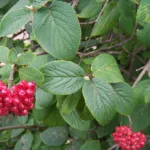
The leaves are thick, glossy, dark green, and broadly oval to elliptic, with prominent veins and a leathery texture. Young stems are green to reddish before becoming woody. The plant’s dense evergreen foliage and rounded habit distinguish it from many deciduous viburnums. Female plants may carry contrasting blue-black drupes after flowering.
Flowering
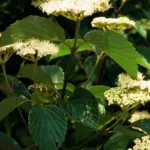
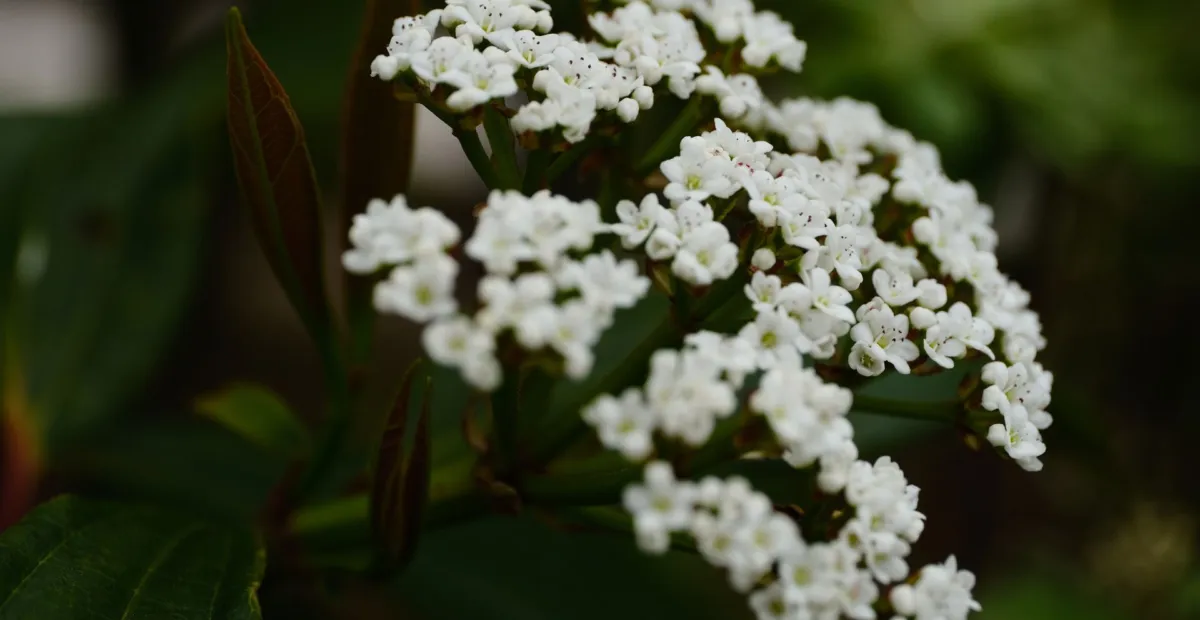
Small white flowers are produced in terminal clusters in spring, typically during April and May in much of the United States. The flowers are not the plant’s primary ornamental feature; the glossy evergreen foliage and subsequent fruit display often provide greater visual value. Plants are dioecious, with male and female flowers on separate plants.
Pollination and visitors
The spring flower clusters are visited by insects, including bees, hoverflies, and butterflies, although species-specific visitor records are limited. A separate male and female plant are generally needed for reliable fruit production, making cross-pollination important for the blue-black drupes.
Diseases and pests
Diseases
Good drainage, adequate spacing, and watering at the soil surface help prevent common shrub problems such as leaf spots and root diseases. Remove affected foliage, improve air circulation, and avoid wetting leaves late in the day. Declining plants in persistently wet soil should be checked for root damage before additional watering or feeding.
Pests
Watch for aphids, scale insects, and viburnum-associated leaf-feeding insects, especially on stressed plants. Inspect new growth and leaf undersides regularly. Begin with pruning of heavily infested shoots, strong water sprays, and protection of beneficial insects; use a labeled horticultural oil or insecticidal soap only when needed and according to the product label.
Related diseases and pests
Only Plant Doctor profiles whose host data indicate this plant may be affected are shown here.
Toxicity and pollen
Reliable species-specific human and pet toxicity information was not located in the reviewed authoritative sources. Do not assume the blue-black fruit is edible, and prevent children and pets from consuming berries or plant material. Seek medical or veterinary advice after ingestion, particularly if vomiting, diarrhea, lethargy, or other symptoms occur.
- Typical season
- Typically April–May in the United States
- Pollination / pollen
- Insect-dispersed pollen from spring flowers
David Viburnum produces pollen during spring flowering, but reliable species-specific airborne pollen and allergy data are limited. The flowers are insect-pollinated, which generally reduces long-distance pollen dispersal compared with wind-pollinated plants, but it does not establish zero allergy risk. Sensitive gardeners should avoid prolonged direct contact with flowers if symptoms occur.
Native habitat
The species is native to western Sichuan, China, where it occurs as a temperate shrub. In cultivation it favors fertile, well-drained soils with reliable moisture and protection from severe winter exposure. It is evergreen in milder parts of its range but may become semi-evergreen or lose foliage near the cold edge of cultivation.
Interesting fact
David Viburnum is dioecious, so male and female flowers occur on separate plants. Female plants need pollen from a compatible male plant to set fruit reliably. Its blue-black drupes are less commonly seen in cultivation than its evergreen foliage because cross-pollination is required.
Frequently asked questions (FAQ)
The most relevant questions about this plant, with short and direct answers.
🌱Quick care
What is David Viburnum?⌄
David Viburnum (Viburnum davidi) is a compact, broadleaf evergreen shrub grown for glossy, three-veined foliage, spring flowers, and blue fruit. It typically reaches about 2 to 3 feet tall and 3 to 4 feet wide.
Is David Viburnum evergreen?⌄
David Viburnum is usually evergreen in USDA Zones 7–9, but it may become semi-evergreen or deciduous at the colder edge of its range. Winter exposure and unusually cold temperatures can increase leaf loss.
How big does David Viburnum get?⌄
David Viburnum generally grows about 2 to 3 feet tall and 3 to 4 feet wide, forming a dense, rounded mound. Growth is typically slow, so it is useful where a compact shrub is needed.
Can David Viburnum be used as a hedge?⌄
David Viburnum works well as a low hedge, foundation planting, border shrub, or compact screen. Its naturally dense, rounded growth usually requires only light pruning to maintain a neat form.
🌤️Environment and placement
What USDA zones can grow David Viburnum?⌄
David Viburnum is generally hardy in USDA Zones 7–9. In colder areas, winter damage or seasonal leaf loss may occur, especially in exposed locations.
Does David Viburnum grow in full sun?⌄
David Viburnum grows in full sun to partial shade, but afternoon shade is helpful in hot parts of the United States. Strong heat and reflected sunlight can cause leaf scorch.
How much shade does David Viburnum tolerate?⌄
David Viburnum tolerates partial shade and often performs well with morning sun and afternoon shade. Too much deep shade can reduce flowering and produce a less compact plant.
What is the best soil for David Viburnum?⌄
Plant David Viburnum in well-drained, moisture-retentive loam enriched with organic matter. It can tolerate several soil textures, but persistent waterlogging can damage the roots.
💧Care and problems
How often should I water David Viburnum?⌄
Water David Viburnum regularly enough to keep the soil moderately and evenly moist, especially during its first growing season. Once established, it can tolerate brief dry periods but may scorch during prolonged heat or drought.
Why are the leaves of my David Viburnum turning brown?⌄
Brown leaf edges on David Viburnum are commonly associated with heat, drought, strong afternoon sun, wind, or root stress. Keep the soil evenly moist, improve drainage, and provide afternoon shade in hot locations.
Why is my David Viburnum losing leaves?⌄
Some leaf loss can be normal near the colder edge of its growing range, where the shrub may act semi-evergreen or deciduous. Sudden or extensive loss can also result from drought, winter injury, poor drainage, or severe leaf scorch.
Does David Viburnum need fertilizer?⌄
David Viburnum usually needs little fertilizer when grown in reasonably fertile soil. If growth is weak, apply a balanced slow-release shrub fertilizer in spring according to the product label rather than overfertilizing.
What pests affect David Viburnum?⌄
David Viburnum has no consistently serious pest problems, but viburnums can occasionally be affected by aphids, scale, thrips, mites, or beetles. Inspect new growth and treat only when damage is significant.
What diseases affect David Viburnum?⌄
David Viburnum can develop leaf spot, root or crown rot, and other moisture-related problems, although serious disease is not usually common. Good air circulation, well-drained soil, and careful watering help reduce risk.
🪴Planting and repotting
When should I plant David Viburnum?⌄
Plant David Viburnum in spring or fall when temperatures are mild and the soil is workable. Fall planting is suitable in USDA Zones 7–9 if the shrub has time to establish before severe cold.
How far apart should I plant David Viburnum?⌄
Space David Viburnum about 3 to 4 feet apart for a continuous hedge, adjusting the distance for the mature width of the cultivar. Allow more space when growing individual shrubs as rounded specimens.
Can David Viburnum grow in a container?⌄
David Viburnum can grow in a large container with drainage holes, but its slow growth does not eliminate the need for adequate root space. Use a quality potting mix, water when the surface begins to dry, and protect the container from severe winter cold.
How do you plant David Viburnum?⌄
Plant David Viburnum with the root flare level with or slightly above the surrounding soil, then backfill with the excavated soil and water deeply. Mulch the root zone without piling mulch against the stems.
✂️Propagation and pruning
How do you prune David Viburnum?⌄
Prune David Viburnum lightly after flowering to remove damaged, crossing, or overlong branches and maintain its shape. Avoid unnecessary pruning because the next season’s flowers develop on older growth.
Can David Viburnum be cut back hard?⌄
David Viburnum can tolerate rejuvenation pruning, but hard cutting is best reserved for an overgrown or poorly shaped shrub. Remove older stems selectively rather than shearing the entire plant unless renovation is necessary.
How do you propagate David Viburnum?⌄
David Viburnum is commonly propagated from semi-ripe cuttings taken from mid-summer through early fall. Rooting is most successful in a warm, humid propagation environment using clean, well-drained rooting media.
Can you grow David Viburnum from seed?⌄
David Viburnum can produce seeds inside its fruit, but seed propagation is less predictable and generally slower than taking cuttings. Seedlings may also differ from the parent plant.
⚠️Toxicity and safety
Are David Viburnum berries edible?⌄
Species-specific evidence is insufficient to recommend David Viburnum berries for human consumption. Do not eat the fruit, and prevent children and pets from consuming unidentified plant material.
Is David Viburnum toxic to dogs and cats?⌄
Species-specific toxicity evidence for David Viburnum is insufficient, so it should not be considered confirmed safe for dogs or cats. Contact a veterinarian or animal poison-control service if a pet eats the berries or plant material and develops symptoms.
Is David Viburnum poisonous to humans?⌄
Species-specific evidence is insufficient to confirm the safety or toxicity of David Viburnum for humans. Keep berries and plant parts away from children, and seek medical advice after ingestion, especially if symptoms occur.
🌸Flowering and special interest
Why does my David Viburnum flower but produce no berries?⌄
David Viburnum may flower without producing berries when compatible pollen from a genetically different plant is unavailable. Nurseries often describe the plant as needing male and female plants, while some horticultural sources characterize it as functionally dioecious; planting unrelated plants improves fruiting prospects.
Does David Viburnum need a male and female plant for fruit?⌄
For reliable fruit, grow plants with compatible reproductive types or different genetic backgrounds rather than relying on a single clone. One plant may flower alone but still fail to produce the showy blue fruit.
When does David Viburnum bloom?⌄
David Viburnum usually blooms in spring, often from April into May in temperate US gardens. The small white flowers are held in rounded clusters above the foliage.
What color are David Viburnum berries?⌄
David Viburnum fruit develops from green to pink or red and then becomes blue to blue-black, often held on reddish stems. The fruit can persist into fall and winter when pollination is successful.
Does David Viburnum attract pollinators?⌄
The spring flowers of David Viburnum can be visited by insect pollinators, including bees and other small flower-visiting insects. Planting it near other flowering shrubs can support a broader pollinator-friendly landscape.