
 Source:
 Lady’s Mantle (Alchemilla mollis) short overview
Lady's mantle is a hardy, clump-forming perennial grown for its softly hairy, rounded leaves and airy sprays of tiny yellow-green flowers. The scalloped foliage often holds raindrops as bright beads, giving the plant lasting ornamental interest from spring through summer. It performs best in evenly moist, well-drained soil with sun to partial shade and is useful for edging, woodland-style plantings, ground cover, and cut-flower arrangements.
Taxonomic classification
Lady’s Mantle (Alchemilla mollis) care guide
Light and placement
Grow in morning sun, bright open shade, or partial shade. In hot-summer regions, afternoon shade protects the foliage from scorch and premature collapse; in cooler climates it can take full sun if moisture is reliable. Pale, sparse growth usually indicates too little light, while bleached or crisp leaf edges suggest excessive heat, direct afternoon sun, or drought.
Watering and humidity
Water deeply when the top inch of soil begins to dry, keeping the root zone consistently moist but never waterlogged. Newly planted clumps need regular watering through their first growing season; established plants need more during hot or dry periods. Water at the soil line when possible, especially where dense foliage could remain wet overnight.
Soil and growing medium
Use fertile soil that holds moisture without staying saturated. Loam enriched with compost is ideal, while heavy clay should be improved with organic matter and drainage must be maintained. The plant tolerates a broad pH range, including chalky or alkaline soils, but growth is usually strongest in moisture-retentive, well-aerated ground.
Feeding
In spring, top-dress with compost or apply a balanced slow-release perennial fertilizer according to its label. A second light feeding is rarely necessary unless growth is weak or the soil is poor. Avoid heavy nitrogen applications, which can produce soft foliage and reduce the plant's tidy form; do not fertilize drought-stressed or waterlogged plants.
Growth and habit
This perennial develops a rounded basal clump and sends up branched flower stems above the foliage. It can broaden gradually and may self-seed when flowers are left to mature. Cutting the plant back after flowering encourages fresh leaves and helps prevent unwanted seedlings, making it easier to maintain as a neat edging or ground-cover planting.
Planting and repotting
Plant into loosened, compost-enriched soil with the crown level with the surrounding ground. Water thoroughly after planting and keep the root zone evenly moist during establishment. Allow enough room for the clump to broaden, and avoid sites that remain saturated in winter or become extremely dry in summer.
For container plants, repot in spring when roots fill the pot or the clump becomes crowded. Use a moisture-retentive but freely draining potting mix and a container with drainage holes. Lift and divide crowded clumps rather than repeatedly moving an oversized root mass into a much larger pot.
Propagation and pruning
Propagation
Divide established clumps in spring or early fall, replanting vigorous sections with healthy crowns and roots. Seed can be sown in containers in spring and grown on in a protected setting; seedlings may vary somewhat and may take longer to reach flowering size.
Pruning
Shear the plant to near the base after flowering or when the foliage becomes untidy in late summer. Removing spent flower stems also reduces self-seeding. In areas with a long growing season, the plant may produce a fresh flush of leaves after cutting back.
Overwintering
Leave the plant dormant outdoors in USDA Zones 3–7. After frost, remove collapsed foliage if desired and apply a light mulch in exposed or unusually cold sites, keeping mulch away from the crown. In warm regions, winter protection is unnecessary, but summer heat and drought are more important concerns.
Uses
Use Lady's Mantle for perennial borders, path edging, cottage gardens, woodland-style beds, underplanting around roses and shrubs, slopes, and informal ground cover. The airy flower sprays are useful in fresh or dried arrangements. It is also included in some pollinator plantings, although its ecological value is generally more modest than that of plants with abundant nectar or pollen.
Appearance
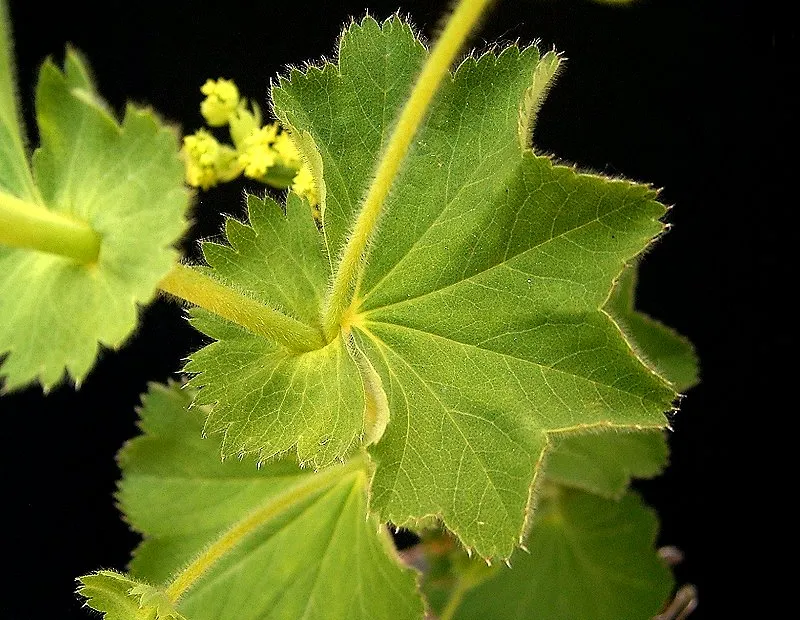
The most distinctive features are large, rounded, palmately lobed leaves with scalloped, toothed margins and a soft, velvety surface. Leaf veins radiate from the center, and water droplets often remain beaded on the slightly water-resistant foliage. Slender branched stems carry loose, frothy clusters of minute yellow-green flowers.
Flowering
The minute flowers are grouped into airy, branched sprays held above the leaves. Their yellow-green color creates a soft haze rather than a bold floral display. Flowering is concentrated in late spring and summer, and spent sprays can be removed to refresh the clump and reduce self-seeding.
Pollination and visitors
The small open flowers are visited by bees and other small insects, including hoverflies, according to horticultural pollinator-plant listings. Evidence for a consistently dominant single pollinator species is limited, so a visitor group is more appropriate than a named insect species.
Alchemilla mollis photos
Click any photo for a larger view. Source, author and license are shown separately.
Diseases and pests
Diseases
Usually disease-free, but poor drainage and persistently wet foliage can encourage crown or root problems and occasional foliar disease. Provide air movement, avoid overhead watering late in the day, remove damaged leaves, and correct drainage before using fungicides. Divide only healthy clumps.
Pests
Generally resistant to slugs, snails, rabbits, and deer because of its downy foliage. Occasional mealybugs or other sap-feeding insects may occur. Inspect stems and leaf undersides, improve plant vigor, and use a strong water spray or hand removal for light infestations; reserve labeled insecticides for persistent problems.
Toxicity and pollen
Reliable species-specific human and pet toxicity data were not located in the reviewed authoritative sources. Do not assume that this makes the plant edible or risk-free. Avoid intentional ingestion, wash hands after handling, and contact a medical professional or veterinarian if a substantial amount is eaten or symptoms develop.
- Typical season
- Late spring through summer
- Pollination / pollen
- Insect-released pollen from small open flowers
Lady's Mantle has small insect-pollinated flowers, so pollen is not typically released in large airborne clouds. Individual sensitivity is still possible, and handling flowering plants can expose a person to pollen or flower debris. People with known plant allergies should use ordinary precautions during bloom.
Native habitat
In its native range, Alchemilla mollis occurs in temperate mountain regions from Romania through the Caucasus. It is associated with cool climates and soils that retain moisture while remaining aerated. In gardens it adapts to sun or shade, but hot, dry exposure can cause decline even where winter hardiness is excellent.
Interesting fact
The species name mollis means soft, referring to the texture of the foliage. The leaves commonly retain rounded droplets after rain or dew. Its flowers are individually small but become conspicuous when gathered into large, airy sprays. The plant is widely used as a foliage and edging perennial rather than for bold floral color.
Frequently asked questions (FAQ)
The most relevant questions about this plant, with short and direct answers.
🌱Quick care
How do you care for Lady's Mantle (Alchemilla mollis)?⌄
Grow Lady's Mantle in evenly moist, well-drained soil with sun to shade, and remove faded flower stems to keep the plant tidy. It is a cold-hardy, low-maintenance perennial once established, but it does not tolerate prolonged drought well.
Is Lady's Mantle a perennial?⌄
Yes, Lady's Mantle is a cold-hardy herbaceous perennial that dies back in colder climates and regrows from the crown in spring. Its foliage may remain attractive into fall where winters are mild.
How big does Lady's Mantle get?⌄
Lady's Mantle typically grows about 12–18 inches tall and 18–30 inches wide. Flower stems can rise somewhat above the rounded foliage mound in late spring or early summer.
🌤️Environment and placement
What USDA zones can grow Lady's Mantle?⌄
Lady's Mantle is generally hardy in USDA Zones 3–8. In warmer areas, afternoon shade and consistently moist soil help prevent leaf scorch.
Does Lady's Mantle grow in full sun?⌄
Yes, Lady's Mantle can grow in full sun when the soil stays evenly moist. In hot or dry parts of the United States, partial shade or morning sun is usually better for the foliage.
Can Lady's Mantle grow in full shade?⌄
Lady's Mantle tolerates full shade, although it may flower less heavily and develop a looser habit. Bright or dappled shade with reliable soil moisture usually gives the best balance of foliage and flowers.
What is the best location for Lady's Mantle?⌄
Plant Lady's Mantle in a border edge, cottage garden, path-side bed, or beneath shrubs and trees where the soil remains moist but drains well. Leave enough space for its spreading mound to expand.
What type of soil does Lady's Mantle need?⌄
Lady's Mantle grows in moist but well-drained loam, clay, sand, or chalk-based soil. Improve very compact or poorly drained ground with organic matter, but do not plant it where water remains stagnant.
💧Care and problems
How often should you water Lady's Mantle?⌄
Water Lady's Mantle whenever the top inch of soil begins to dry, especially during hot weather and its first growing season. Keep the root zone evenly moist without creating soggy conditions.
Is Lady's Mantle drought tolerant?⌄
No, Lady's Mantle is not reliably drought tolerant. Extended dryness can cause wilting, brown leaf edges, or foliage scorch, particularly when the plant grows in full sun.
Why are my Lady's Mantle leaves turning brown?⌄
Brown Lady's Mantle leaves are commonly caused by dry soil, hot sun, or heat stress. Water deeply, add a mulch layer, and provide afternoon shade if the problem continues.
Why is my Lady's Mantle floppy?⌄
Lady's Mantle flower stems may flop after heavy rain or as blooms mature. Cut the plant back after flowering to encourage fresh foliage, or use discreet support if the stems are falling onto nearby plants.
Does Lady's Mantle have common pest or disease problems?⌄
Lady's Mantle usually has few serious pest or disease problems when grown in suitable conditions. Persistent wet foliage, poor air circulation, or waterlogged soil can still encourage general fungal problems.
🪴Planting and repotting
How do you plant Lady's Mantle?⌄
Plant Lady's Mantle at the same depth as it was growing in its nursery container, then water thoroughly and keep the soil consistently moist while it establishes. Space plants about 18–24 inches apart for individual mounds.
When is the best time to plant Lady's Mantle?⌄
The best times to plant Lady's Mantle are spring or early fall, when temperatures are moderate and soil moisture is easier to maintain. Avoid planting during extreme summer heat unless regular irrigation is available.
Can Lady's Mantle grow in containers?⌄
Yes, Lady's Mantle can grow in a container that has drainage holes and holds evenly moist, well-drained potting mix. Containers dry out faster than garden soil, so check moisture frequently during warm weather.
✂️Propagation and pruning
Does Lady's Mantle need to be divided?⌄
Lady's Mantle does not require frequent division, but dividing an older clump can restore vigor or provide new plants. Divide in spring or early fall, keeping several shoots and roots in each section.
How do you propagate Lady's Mantle?⌄
Propagate Lady's Mantle most reliably by dividing established clumps in spring or early fall. It can also be grown from seed, although seedlings may vary and may appear wherever mature plants have self-sown.
Does Lady's Mantle spread by seed?⌄
Yes, Lady's Mantle can self-seed freely, especially in moist, favorable garden conditions. Remove spent flower stems before seeds mature if you want to limit unwanted seedlings.
How do you stop Lady's Mantle from spreading?⌄
Stop Lady's Mantle from spreading by deadheading the flower stems before seed ripens and by removing volunteer seedlings while they are small. Established unwanted clumps may require careful digging to remove the crown and roots.
When should you cut back Lady's Mantle?⌄
Cut Lady's Mantle back after flowering when the foliage becomes tired or the flower stems flop, often in early or mid-summer. It can also be cut to the ground in fall or left until late winter for added habitat cover.
⚠️Toxicity and safety
Is Lady's Mantle deer resistant?⌄
Lady's Mantle is generally considered resistant to browsing by deer and rabbits, although no plant is completely immune when wildlife pressure is high. Young plants may still need protection in heavily browsed gardens.
Is Lady's Mantle toxic to dogs, cats, or people?⌄
There is no confirmed species-specific toxicity classification for Alchemilla mollis. Because plant material can still cause individual digestive or allergic reactions, prevent pets and children from eating large quantities and consult a veterinarian or poison center if symptoms occur.
🌸Flowering and special interest
Will Lady's Mantle bloom again after being cut back?⌄
Lady's Mantle may produce a lighter second flush of flowers after a post-bloom cutback, provided it has adequate moisture and time to regrow. The main bloom usually occurs in late spring or early summer.
When does Lady's Mantle flower?⌄
Lady's Mantle generally flowers from late spring into early summer, with timing varying by USDA zone and weather. Its tiny chartreuse to yellow-green flowers appear in airy clusters above the foliage.
Why does Lady's Mantle hold water on its leaves?⌄
Lady's Mantle leaves naturally repel and collect rain or dew into rounded droplets near their centers and edges. This water-beading effect is a characteristic ornamental feature of the plant and is not a sign of disease.
Can Lady's Mantle be used as a cut flower?⌄
Yes, Lady's Mantle makes a useful filler for fresh arrangements, and its flower stems can also be dried. Cut stems when the chartreuse flowers are fresh and hang them upside down in a cool, ventilated place for drying.