
 Source:
 False Acacia (Robinia pseudoacacia) short overview
False Acacia is a fast-growing, deciduous tree native to the Appalachian and Ozark regions of the eastern and central United States. It bears fragrant white, pea-shaped flowers in drooping clusters during late spring, followed by flat brown seed pods. Deeply furrowed bark, paired spines, pinnate blue-green leaves, nitrogen fixation, and vigorous root suckering make it both useful and potentially troublesome in landscapes.
Taxonomic classification
False Acacia (Robinia pseudoacacia) care guide
Light and placement
Plant in full sun for the strongest flowering, denser branching, and best crown development; an open south- or west-facing site is suitable. Light partial shade is tolerated, especially in hot climates, but deep shade produces weak, open growth and reduced flowering. Avoid planting where the mature crown or vigorous suckers will crowd structures, paths, or nearby plantings.
Watering and humidity
Water deeply when the upper few inches of soil become dry during establishment, usually weekly during the first growing season depending on rainfall. Once established, False Acacia tolerates periodic drought, but prolonged dryness can trigger premature yellowing and leaf drop. Do not keep the root zone saturated; consistently wet soil increases decline and root problems.
Soil and growing medium
Use a loose, well-drained soil with moderate fertility. Deep, moist loam gives the best growth, while the tree also tolerates sandy soils, clay, thin soils, and limestone-derived ground. Improve compact sites with structural organic matter, but do not create a permanently wet planting pocket. Poor drainage and compacted, plastic soils are substantially less suitable than dry, freely draining ground.
Feeding
Usually no routine fertilizer is needed after establishment, particularly because the species fixes nitrogen through root symbiosis. Apply a thin layer of compost or mulch in spring if the soil is poor, keeping it away from the trunk. Avoid high-nitrogen feeding, which can encourage lanky shoots and excessive suckering. Do not fertilize drought-stressed, recently transplanted, or diseased trees until they recover.
Growth and habit
Young trees grow rapidly, commonly adding about 2–3 feet per year under favorable conditions. Mature specimens develop an open, irregular crown and may form colonies through root suckers and stump sprouts. This vigorous regeneration can stabilize disturbed ground but may become invasive in gardens or natural areas. Site the tree where suckers can be removed or tolerated, and inspect the surrounding lawn and beds regularly.
Planting and repotting
Choose a sunny, well-drained site and keep the root flare visible at planting. Water deeply after planting and maintain even moisture through the first growing season. Mulch 2–3 inches deep over the root zone without touching the trunk. Because the species spreads by suckers and stump sprouts, avoid small beds, septic fields, pavement edges, and natural areas where control would be difficult.
This is primarily a landscape tree rather than a container plant. If grown temporarily in a container, use a deep, well-drained pot and transplant before roots circle or the plant becomes root-bound. Handle the root system carefully and move it while dormant or during mild weather. Expect rapid growth and avoid prolonged container culture.
Propagation and pruning
Propagation
Propagate from seed after scarification or hot-water treatment followed by suitable sowing conditions; seeds have a hard coat and may remain dormant. Root cuttings and root suckers can also produce plants, while softwood or hardwood cuttings are less consistently successful. Collect seed from mature pods in fall and protect young plants from drying out during establishment.
Pruning
Prune during dormancy to remove dead, damaged, crossing, or weakly attached branches and to establish a strong central structure when desired. Avoid topping, which promotes weak shoots. Remove root suckers at their point of origin while they are young; repeated cutting alone can stimulate more suckering. Do not prune heavily during drought, active disease, or periods of severe heat.
Overwintering
Established trees generally need no winter protection in suitable USDA Zones 4–8. Water newly planted specimens before the ground freezes, apply a moderate mulch layer over the root zone, and protect young trunks from rodent injury where needed. Avoid late-season nitrogen fertilizer and heavy pruning, which can stimulate tender growth before hard freezes.
Uses
Used as a flowering shade tree, reclamation species, erosion-control planting, shelterbelt component, fuelwood tree, and nectar source. Its durable wood has been used for posts and other outdoor applications. It can naturalize aggressively, so check local invasive-plant guidance before planting outside its native range or near conservation land. Do not use bark, leaves, or seeds as food.
Appearance
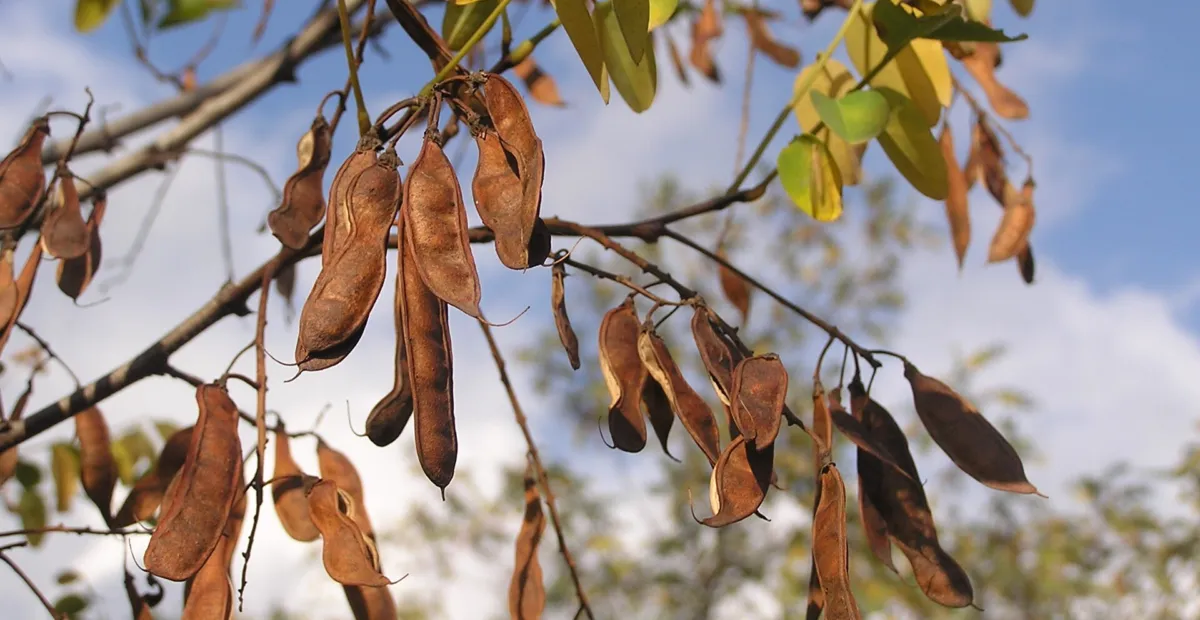
Leaves are alternate and pinnately compound, generally 6–14 inches long, with about 7–19 smooth, oval leaflets. The foliage is blue-green in summer and turns yellow-green before falling. Dark twigs are zigzagged and often carry paired, short, stiff spines. Older bark becomes dark gray-brown, deeply furrowed, and interlaced. Flat, brown seed pods often remain attached into winter.
Flowering
The flowers are papilionaceous and arranged in pendant racemes commonly 4–8 inches long. Blooming follows leaf emergence in much of the United States and lasts roughly two to three weeks, though timing varies by latitude and spring temperatures. Fragrance is conspicuous, and the flowers are followed by smooth, flattened pods that mature from summer into fall.
Pollination and visitors
The fragrant, nectar-rich flowers are insect-pollinated and are especially associated with honey bees; hymenopteran visitors are characteristic. Flowering can be locally pollinator-limited where bee activity is low. This ecological attraction is separate from the plant’s airborne pollen risk and from the toxicity of its vegetative tissues and seeds.
Robinia pseudoacacia photos
Click any photo for a larger view. Source, author and license are shown separately.
Diseases and pests
Diseases
Potential problems include cankers, wood rots, powdery mildew, leaf spots, and verticillium wilt. Improve airflow, avoid trunk wounds, remove dead or infected material during dry weather, and prevent chronic root-zone saturation. Declining branches or repeated dieback may indicate structural failure, borer injury, or root problems; have large hazardous trees assessed professionally.
Pests
Locust borer can seriously weaken or kill trees, especially those stressed by drought or poor sites. Locust leaf miner may turn foliage brown, while caterpillars, scales, weevils, and whiteflies can occur. Maintain tree vigor with correct siting and watering, monitor trunks and foliage, and use targeted management only when damage is significant. Remove and dispose of badly infested wood where practical.
Related diseases and pests
Only Plant Doctor profiles whose host data indicate this plant may be affected are shown here.
 PestEuropean red mitePanonychus ulmi
 PestSpongy mothLymantria dispar dispar
 PestBorsó-levéltetűAcyrthosiphon pisum
 DiseaseMaple powdery mildewSawadaea bicornis
 DiseaseCucurbit Powdery MildewPodosphaera xanthii (Castagne) U. Braun & Shishkoff
 DiseaseRose powdery mildewPodosphaera pannosa
 DiseaseApple Powdery MildewPodosphaera leucotricha
 PestBrown Soft ScaleCoccus hesperidum
Toxicity and pollen
Bark, leaves, and seeds contain toxalbumins including robin, robitin, and phasin. Ingestion can cause gastrointestinal illness, weakness, breathing difficulty, and potentially severe poisoning; serious exposures should receive prompt medical or veterinary advice. Wear gloves when pruning, prevent children and animals from chewing plant material, and never use the seeds, bark, or leaves as food.
- Typical season
- Spring, usually April–June in the United States
- Pollination / pollen
- Heavy, insect-carried pollen released within the flower
False Acacia is primarily insect-pollinated, so its pollen is generally released within the flower rather than dispersed abundantly by wind. That limits, but does not eliminate, airborne exposure. Sensitive people may still encounter pollen around flowering trees, and fragrance can be irritating independently of pollen allergy. Avoid assuming that insect pollination means zero allergy risk.
Native habitat
In its native range, False Acacia occurs in Appalachian and Ozark forests, cove forests, open slopes, forest edges, old fields, roadsides, thickets, and other disturbed sites. It grows best on rich, moist, well-drained soils but tolerates a broad range of substrates, including limestone-influenced ground. It readily colonizes openings through root suckering and stump sprouting.
Interesting fact
False Acacia fixes atmospheric nitrogen through root-nodule symbiosis. The species was introduced to Europe in the early seventeenth century and is now widely naturalized there. Its flowers are a major nectar source for honey production in some regions. The common name reflects its superficial resemblance to true acacias, which belong to different genera.
Frequently asked questions (FAQ)
The most relevant questions about this plant, with short and direct answers.
🌱Quick care
What is False Acacia (Robinia pseudoacacia)?⌄
False Acacia is a deciduous flowering tree in the pea family, Fabaceae. It is also widely known in the United States as black locust, but its accepted scientific name is Robinia pseudoacacia.
How large does False Acacia get?⌄
False Acacia commonly becomes a medium to large tree, often reaching about 40 to 70 feet tall with a broad, open crown. Size varies substantially by site and cultivar.
Is False Acacia a fast-growing tree?⌄
Yes, False Acacia often grows quickly when young, particularly in sunny, disturbed, or open sites. Fast growth is accompanied by vigorous root-suckering, which can make the tree difficult to contain.
🌤️Environment and placement
How much sun does False Acacia need?⌄
False Acacia grows best in full sun, receiving at least 6 hours of direct sunlight daily. It tolerates light partial shade, but reduced light can produce weaker growth and fewer flowers.
What USDA hardiness zones are suitable for False Acacia?⌄
False Acacia is a cold-hardy tree suitable for much of the United States, generally growing in USDA Zones 3 through 8. Exact performance depends on cultivar, exposure, soil, and local climate.
What type of soil does False Acacia prefer?⌄
False Acacia prefers well-drained loam but tolerates sandy, clay, thin, and limestone-influenced soils. Avoid sites that remain saturated because poor drainage can weaken the tree and encourage root problems.
Is False Acacia invasive in the United States?⌄
False Acacia is native to parts of the eastern and central United States but can be invasive or weedy outside portions of its native range. Check your state and local invasive-plant lists before planting it.
Can False Acacia fix nitrogen?⌄
Yes, False Acacia is a legume capable of forming nitrogen-fixing associations with soil bacteria. This trait helps it establish on poor or disturbed soils but can also give it an ecological advantage where it becomes invasive.
💧Care and problems
How often should I water False Acacia?⌄
Water False Acacia regularly while it is becoming established, then allow the soil to dry somewhat between deep waterings. Mature trees usually tolerate dry to medium-moisture conditions, but prolonged drought can reduce vigor.
Can False Acacia tolerate drought?⌄
Yes, established False Acacia is relatively drought tolerant. Water deeply during extended hot, dry periods, especially if the tree is young or planted in sandy soil.
Does False Acacia spread by suckers?⌄
Yes, False Acacia commonly spreads by root suckers and can form dense colonies after disturbance or cutting. Remove suckers promptly and avoid planting it near natural areas, pavement, or structures where spread would be difficult to manage.
Why is my False Acacia producing root suckers?⌄
Root suckers are a normal growth habit of False Acacia, especially after root injury, drought, soil disturbance, or cutting. Mow or dig out new shoots while they are small, although repeated removal may be necessary.
What pests commonly affect False Acacia?⌄
Common pests include locust borers and locust leaf miners. Healthy trees in suitable sites tolerate some damage, but severe borer injury can weaken or kill branches and trees.
Why are my False Acacia leaves turning brown?⌄
Brown False Acacia leaves may result from drought, locust leaf miner activity, heat stress, transplant shock, or disease. Inspect leaves and branches, check soil moisture, and look for premature leaf drop or tunneling damage.
What diseases affect False Acacia?⌄
False Acacia can be affected by heart rot, cankers, witches’ broom, and other fungal or viral problems. Reduce stress, avoid trunk and root injuries, and remove badly damaged branches with clean pruning tools.
🪴Planting and repotting
Can False Acacia grow in clay soil?⌄
False Acacia can grow in clay soil if drainage is adequate. Amend the planting area only when necessary, and avoid placing the tree where compacted clay stays wet after rain.
When should I plant False Acacia?⌄
Plant False Acacia in spring or fall when temperatures are mild and soil moisture is available. Avoid planting into frozen, waterlogged, or excessively hot, dry soil.
How do I plant a False Acacia tree?⌄
Plant False Acacia at the same depth it grew in its nursery container, with the root flare level with or slightly above the soil surface. Backfill with native soil, water deeply, and apply a thin mulch layer without touching the trunk.
Can False Acacia be grown in a container?⌄
The species is generally unsuitable for long-term container culture because it becomes a large, vigorous tree with an aggressive root system. Only compact cultivars may be manageable temporarily in very large containers.
Can False Acacia damage sidewalks or foundations?⌄
False Acacia can become problematic near hardscape because its vigorous roots and suckers may emerge through disturbed soil and narrow planting spaces. Give it ample room and avoid planting it close to foundations, sidewalks, utilities, or septic systems.
✂️Propagation and pruning
When should I prune False Acacia?⌄
Prune False Acacia during dormancy, typically in late winter, to remove dead, damaged, crossing, or poorly attached branches. Avoid heavy spring pruning because the tree may bleed sap and excessive pruning can reduce flowering.
Can False Acacia be kept as a shrub?⌄
False Acacia can be cut back periodically and maintained at shrub size, but it responds with vigorous regrowth and root suckers. This approach requires repeated maintenance and may not be suitable near buildings or natural areas.
How do I propagate False Acacia?⌄
False Acacia is commonly propagated from root cuttings, root suckers, or seed. Seeds have a hard coat and generally require scarification followed by suitable warmth and moisture for reliable germination.
⚠️Toxicity and safety
Does False Acacia have thorns?⌄
Many False Acacia trees develop paired thorns on young branches and twigs, although some cultivars are thornless or have reduced thorns. Place thorny forms away from walkways, play areas, and livestock access.
Is False Acacia poisonous to humans?⌄
Yes, False Acacia is toxic if ingested, with the bark, seeds, leaves, young shoots, and roots considered hazardous. Keep children and pets from chewing plant material, and contact Poison Control or a medical professional after ingestion.
Is False Acacia poisonous to horses and livestock?⌄
Yes, bark, leaves, seeds, roots, twigs, and young shoots can poison horses and other livestock. Do not allow animals to browse the tree or consume fallen branches, bark, or seed pods.
Is False Acacia safe to touch?⌄
Routine contact is generally manageable, but the tree has thorns and its wood may cause skin irritation or splinters. Wear gloves and protective clothing when pruning, handling branches, or removing suckers.
🌸Flowering and special interest
Why is my False Acacia not flowering?⌄
False Acacia may fail to flower because of insufficient sun, young age, excessive nitrogen, drought stress, or heavy pruning. It flowers best in full sun and often blooms on mature growth in late spring or early summer.
When does False Acacia bloom?⌄
False Acacia usually blooms in late spring to early summer, often around May or June in much of the United States. Fragrant white flower clusters hang from the branches, while some cultivars have pink or purple flowers.
Are False Acacia flowers fragrant?⌄
Yes, the flowers of False Acacia are typically fragrant and appear in hanging clusters several inches long. Flowering is usually strongest in full sun on mature, healthy trees.
Is False Acacia good for pollinators?⌄
Its fragrant flowers provide nectar and pollen for bees and other insects during the spring flowering period. However, its invasive potential and toxicity should be considered before planting it for wildlife value.
Does False Acacia produce seed pods?⌄
Yes, False Acacia produces flat, bean-like seed pods that mature in fall. The seeds can contribute to regeneration, although vegetative spread by root suckers is often more important in landscapes.
Similar plants
 Azure Monkshood (Aconitum carmichaelii) care guideAconitum carmichaelii
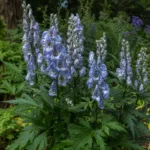 Monkshood (Aconitum ‘Stainless Steel’)Aconitum 'Stainless Steel'
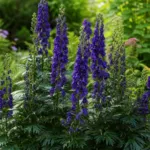 Monkshood (Aconitum ‘Bressingham Spire’)Aconitum 'Bressingham Spire'
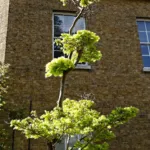 Golden full moon maple (Acer shirasawanum ‘Aureum’)Acer shirasawanum 'Aureum'
 Globosum (Acer platanoides ‘Globosum’)Acer platanoides 'Globosum'
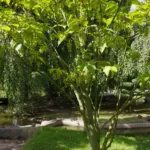 Striped maple (Acer pensylvanicum) care guideAcer pensylvanicum