
 Source:
 Krantz aloe or the candelabra aloe (Aloe arborescens) short overview
Krantz aloe or the candelabra aloe is a branching, evergreen succulent shrub from southern Africa. Its blue-green, toothed leaves form multiple rosettes on woody stems, while vivid red-orange tubular flower clusters brighten sunny gardens in winter and early spring. In the United States it is best grown outdoors in frost-free climates or in a container that can be protected from freezing weather. It needs sharp drainage, restrained watering and abundant light.
Taxonomic classification
Krantz aloe or the candelabra aloe (Aloe arborescens) care guide
Light and placement
Give this aloe at least 6 hours of direct sun where possible, ideally in a south- or west-facing position outdoors or beside a bright south- or west-facing window indoors. In very hot inland sites, provide light afternoon shade to prevent bleaching and scorch. Weak, stretched growth and sparse rosettes indicate insufficient light; bleached patches, crispy tan leaf edges or sudden sunburn indicate excessive exposure after a change in conditions.
Watering and humidity
Water thoroughly only after the growing medium has dried well through the root zone, then let excess drain completely. During warm active growth, container plants may need water every 2–3 weeks depending on heat and pot size; reduce sharply in cool weather and keep nearly dry during prolonged winter dormancy. Never leave the pot standing in water. Humidity is not a significant requirement.
Soil and growing medium
Use a porous cactus or succulent mix amended with extra pumice, perlite or coarse mineral grit. In the ground, plant on a slope, raised bed or other site where rain drains rapidly. The species tolerates acidic, neutral and alkaline soils, but compacted or persistently wet soil can cause root and stem rot regardless of pH.
Feeding
Feed in spring and summer with a balanced fertilizer diluted to about one-quarter to one-half the label strength, no more than monthly. A small amount of finished compost may be used outdoors in poor soil, but avoid rich amendments that hold moisture. Do not fertilize newly rooted cuttings, recently repotted plants or plants kept cool and nearly dry in winter.
Growth and habit
This species gradually develops several branching stems, each ending in a rosette, and can form a broad, multi-headed clump. Older stems may become woody and expose a short trunk-like framework. It is generally forgiving once established, but crowded clumps can become top-heavy; remove selected old stems or offsets to maintain balance and access for watering.
Planting and repotting
Plant after the soil has warmed and freezing weather has passed, except in reliably frost-free climates where fall planting is also suitable. Dig no deeper than the root ball and keep the stem base above grade. Establish with a few careful soakings spaced apart, then transition to deep but infrequent watering. Use extra spacing in humid regions to improve airflow.
Repot container plants in spring when roots have filled the pot or the plant has become unstable. Use a heavy pot with drainage holes and a fast-draining cactus mix. Move up only one pot size, keep the stem base above the mix, and wait several days before watering after any major root disturbance.
Propagation and pruning
Propagation
The easiest method is to root offsets or stem cuttings in late spring or early summer. Let cut surfaces dry and callus for several days, then place cuttings in a barely moist, sharply drained medium. Water sparingly until roots form. Seed can be sown fresh with warmth, but seedlings are slower and may vary from the parent.
Pruning
Pruning is usually limited to removing spent flower stalks, dead leaves and damaged stems. Cut flower stalks close to their base after flowering. To reduce height or rejuvenate an old clump, remove selected mature stems with a clean saw, allowing cut surfaces to dry before prolonged watering. Wear gloves because leaf margins are toothed and sap may irritate skin.
Overwintering
Move container plants indoors before frost, placing them in the brightest available window and keeping them cool, dry and well ventilated. Reduce watering substantially in winter. Outdoor plants in marginal climates need protection from frost, cold rain and wet soil; a rain shelter and frost cloth can help, but freezing temperatures may still cause damage.
Uses
Useful as an architectural accent, drought-tolerant border plant, rock-garden specimen, warm-climate hedge or large container plant. Flowering stems can be used as cut flowers. The foliage and sap should not be treated as a home remedy; do not ingest plant material, and avoid confusing this species with Aloe vera products.
Appearance
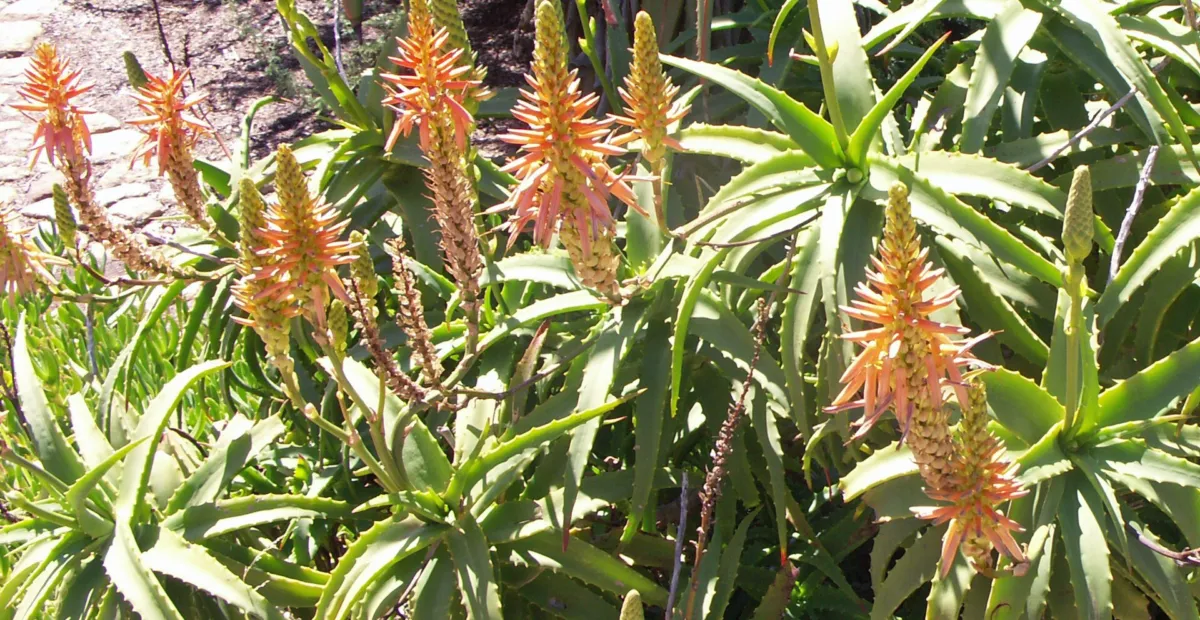
The plant is recognized by its many narrow, curved blue-green leaves arranged in rosettes on branching stems. Each leaf has small pale teeth along the margins. Mature plants form a rounded, candelabra-like silhouette, with upright flower racemes rising above the foliage in the cool season.
Flowering
Mature rosettes produce upright, usually unbranched racemes packed with tubular flowers. Blooming commonly begins in winter and may continue into early spring, with timing shifting according to climate. Flowering is strongest when plants receive abundant light and experience a cool, relatively dry rest period. Yellow-flowered forms can occur, but the usual garden display is orange-red to red.
Pollination and visitors
The bright tubular racemes are documented as attractive to nectar-feeding birds and are also visited by bees and bumblebees. In California-style gardens, winter flowers can provide useful nectar when fewer other ornamentals are blooming. Visitor abundance depends on local climate, surrounding habitat and whether the plant is flowering heavily.
Aloe arborescens photos
Click any photo for a larger view. Source, author and license are shown separately.
Diseases and pests
Diseases
The main preventable problem is root or stem rot caused by wet soil, poor drainage or cool, frequent watering. Use a porous medium, avoid overhead irrigation in cool weather and remove rotted tissue promptly. Good airflow helps reduce fungal spotting. Isolate affected containers and repot healthy tissue into fresh, dry medium if rot is localized.
Pests
Scale insects and mealybugs may colonize leaf bases, stems or crowded rosettes. Inspect regularly, especially on indoor plants. Remove small infestations with a cotton swab dipped in isopropyl alcohol, or use a labeled horticultural oil or insecticidal soap according to the product directions. Correct weak light, excess nitrogen and poor airflow that encourage pest buildup.
Related diseases and pests
Only Plant Doctor profiles whose host data indicate this plant may be affected are shown here.
Toxicity and pollen
Aloe species contain bitter latex compounds and anthraquinone-related constituents that can cause gastrointestinal upset when plant tissue is ingested. The exact risk from Aloe arborescens is less specifically documented than for Aloe vera, so treat leaves, sap and latex as unsafe to consume. Wear gloves when handling cut tissue and keep clippings away from children and pets.
- Typical season
- Winter to early spring during flowering
- Pollination / pollen
- Heavy pollen presented within insect- and bird-visited tubular flowers
This is a showy, animal-visited flowering succulent rather than a major wind-pollinated plant. Its pollen is generally contained within tubular flowers and is less readily dispersed through the air than pollen from wind-pollinated trees and grasses. Sensitive individuals can still react to flower pollen or plant contact, so avoid handling flowers during symptoms and improve ventilation indoors.
Native habitat
In its native southern African range, Aloe arborescens occurs in dry shrubland, rocky slopes, cliffs, forest margins and other well-drained sites. It tolerates seasonal drought and exposure, often rooting among rocks or on steep terrain where water drains quickly. Its native distribution spans warm temperate to subtropical regions with summer rainfall in many areas.
Interesting fact
The species name arborescens means tree-like and refers to its branching, stem-forming habit. It can develop a candelabra silhouette from numerous rosettes. Its winter flowering makes it especially valuable in mild-climate gardens. Kew recognizes two accepted subspecies within Aloe arborescens.
Frequently asked questions (FAQ)
The most relevant questions about this plant, with short and direct answers.
🌱Quick care
What is Aloe arborescens called in the United States?⌄
Aloe arborescens is commonly called krantz aloe or the candelabra aloe. It is a branching succulent in the Aloe genus and the Asphodelaceae family.
How big does Aloe arborescens get?⌄
A mature Aloe arborescens can form a large, branching shrub roughly 6 to 10 feet tall and several feet wide in a suitable outdoor climate. Container plants usually remain smaller, but they still need room to spread.
🌤️Environment and placement
How much light does Aloe arborescens need?⌄
Give Aloe arborescens full sun to partial shade, with about 6 or more hours of bright light when possible. Acclimate plants gradually to intense outdoor sun to reduce scorching.
Can Aloe arborescens grow indoors?⌄
Yes, Aloe arborescens can grow indoors beside a very bright window, preferably one receiving direct sun. Rotate the pot occasionally and use a grow light if the plant becomes stretched or pale.
Can Aloe arborescens grow outside in the United States?⌄
Aloe arborescens grows best outdoors in warm, relatively dry parts of the United States, especially USDA Zones 9 and warmer. In colder areas, grow it in a container and bring it under cover before freezing weather.
Is Aloe arborescens frost hardy?⌄
Aloe arborescens should be protected from freezing weather. Brief, light frost may be tolerated by established plants in sheltered locations, but freezing temperatures can damage leaves and stems.
💧Care and problems
How often should I water Aloe arborescens?⌄
Water Aloe arborescens thoroughly, then allow the soil to dry before watering again. The schedule varies with temperature, light, pot size, and soil, so do not water by the calendar alone.
Should Aloe arborescens be watered in winter?⌄
Water Aloe arborescens sparingly in winter, only when the potting mix is dry and the plant is actively growing. Reduce watering during cool, cloudy, or dormant periods because wet roots are prone to rot.
Why are the leaves of my Aloe arborescens turning yellow?⌄
Yellow, soft, or translucent leaves on Aloe arborescens often indicate excess moisture or poor drainage. Check the roots and potting mix before watering again, and remove any rotting tissue with sterile tools.
Why is my Aloe arborescens turning brown?⌄
Brown patches can result from sunburn, cold injury, physical damage, or prolonged wetness. Consider recent changes in light and temperature, and ensure the soil dries adequately between waterings.
Why is my Aloe arborescens becoming tall and floppy?⌄
Tall, weak, or widely spaced growth usually means Aloe arborescens is not receiving enough light. Move it gradually to a brighter location and prune or re-root overly stretched stems if necessary.
Does Aloe arborescens need fertilizer?⌄
Aloe arborescens needs little fertilizer and usually grows well without frequent feeding. If growth is weak, apply a diluted succulent fertilizer during active growth, following the product label and avoiding application to dry roots.
🪴Planting and repotting
What soil is best for Aloe arborescens?⌄
Use a sharply draining succulent or cactus mix for Aloe arborescens. Amending ordinary potting soil with extra pumice, perlite, or coarse mineral material can improve drainage, but the final mix should not remain soggy.
What type of pot is best for Aloe arborescens?⌄
Choose a pot with a drainage hole that is stable enough for the plant’s spreading, top-heavy growth. Unglazed terracotta can help the soil dry more quickly, while a wide container suits mature clumps.
How often should Aloe arborescens be repotted?⌄
Repot Aloe arborescens when roots fill the container, drainage slows, or the plant becomes unstable rather than on a fixed schedule. Move it into only a slightly larger pot and repot when conditions are warm and dry.
✂️Propagation and pruning
How do I propagate Aloe arborescens from pups?⌄
Separate rooted offsets from the parent plant when they are large enough to handle and have their own roots. Let fresh cuts dry briefly, then pot the offsets in a well-drained succulent mix and water lightly until established.
Can Aloe arborescens be propagated from stem cuttings?⌄
Yes, Aloe arborescens can be propagated from healthy stem cuttings. Allow the cut end to callus, place it in a dry, well-drained mix, and begin cautious watering after roots have had time to develop.
How should I prune Aloe arborescens?⌄
Prune Aloe arborescens by removing dead leaves, spent flower stalks, and damaged or overcrowded stems with clean, sharp tools. Wear gloves because the leaf margins are toothed and the sap may irritate sensitive skin.
⚠️Toxicity and safety
Is Aloe arborescens toxic to pets and people?⌄
Aloe arborescens is harmful if eaten and should be kept away from children and pets. Do not treat its sap as food or medicine, and seek professional guidance if ingestion causes symptoms.
Can Aloe arborescens cause skin irritation?⌄
Yes, the sap of Aloe arborescens may irritate sensitive skin, especially around cuts or when handled repeatedly. Wear gloves when pruning, wash exposed skin, and avoid contact with the eyes.
Is Aloe arborescens deer resistant?⌄
Aloe arborescens is often less attractive to deer because of its succulent leaves and toothed margins, but no plant is reliably deer-proof. Use additional protection where deer pressure is high.
🌸Flowering and special interest
When does Aloe arborescens flower?⌄
Aloe arborescens commonly flowers in winter or early spring, producing tall spikes of orange, red, or occasionally yellow tubular flowers. Mature plants in bright outdoor conditions are more likely to bloom reliably.
Why is my Aloe arborescens not flowering?⌄
Insufficient light, a young plant, excessive shade, or unsuitable winter temperatures can prevent Aloe arborescens from flowering. Give it strong light, avoid overfertilizing, and allow the plant time to mature.
Similar plants
 Azure Monkshood (Aconitum carmichaelii) care guideAconitum carmichaelii
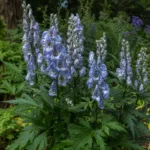 Monkshood (Aconitum ‘Stainless Steel’)Aconitum 'Stainless Steel'
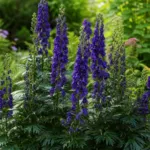 Monkshood (Aconitum ‘Bressingham Spire’)Aconitum 'Bressingham Spire'
 Golden full moon maple (Acer shirasawanum ‘Aureum’)Acer shirasawanum 'Aureum'
 Globosum (Acer platanoides ‘Globosum’)Acer platanoides 'Globosum'
 Striped maple (Acer pensylvanicum) care guideAcer pensylvanicum