 Source:
 Arrowwood (Viburnum carlesii) short overview
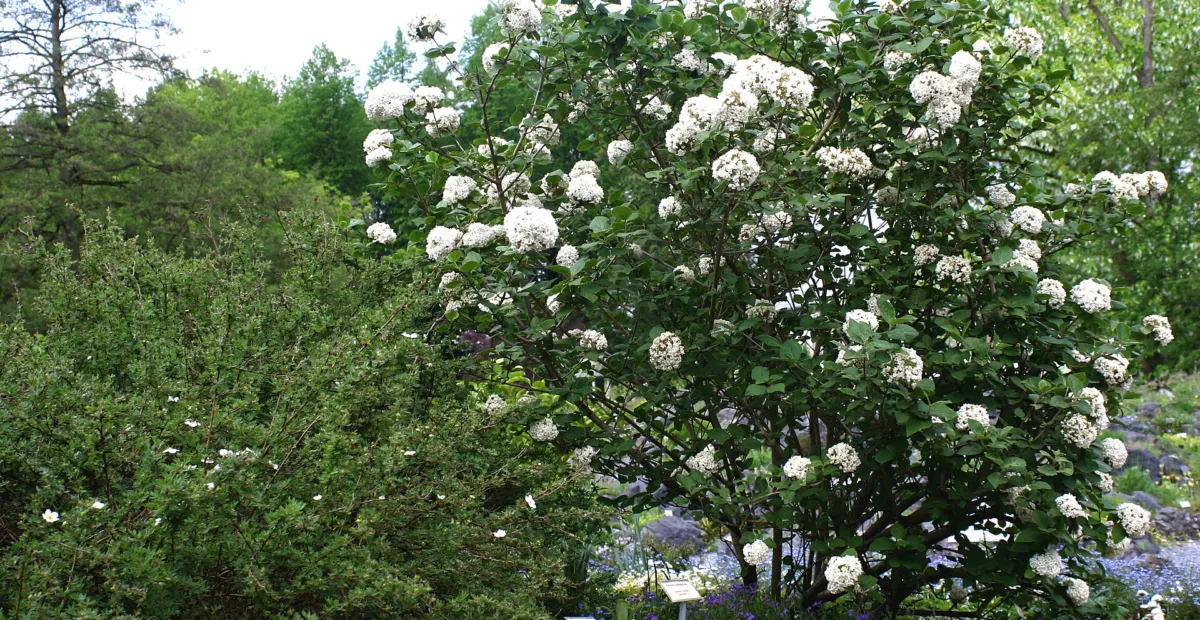
Arrowwood, Viburnum carlesii, is a compact deciduous shrub valued for its rounded clusters of intensely fragrant flowers. Pink-tinted buds open to pale pink and white blooms in spring, followed by small fruits that mature dark. Its dense branching, coppery young foliage, red autumn color, and manageable size make it useful near patios, woodland edges, mixed borders, and foundation plantings in much of the United States.
Taxonomic classification
Arrowwood (Viburnum carlesii) care guide
Light and placement
Grow in full sun for the best flowering and autumn color, or give it morning sun with afternoon shade in hot-summer regions. An east- or south-facing border is suitable; avoid dense shade beneath evergreen trees. Sparse flowering and stretched growth indicate insufficient light, while scorched leaf margins can signal excessive reflected heat or drought.
Watering and humidity
Water deeply when the upper 2 inches of soil begin to dry during the first growing season. Thereafter, maintain even moisture during spring growth, flowering, and summer heat, but allow excess water to drain. Apply a 2- to 3-inch organic mulch layer without touching the stems. Extra humidity is generally unnecessary outdoors.
Soil and growing medium
Use fertile, moisture-retentive soil that still drains freely. Loam amended with compost is suitable; avoid persistently waterlogged clay and very dry, nutrient-poor sand. A slightly acidic to neutral reaction supports dependable growth. Improve heavy soil with organic matter and plant slightly high rather than leaving the root crown buried.
Feeding
Spread compost around the root zone in late winter or early spring, or apply a balanced slow-release shrub fertilizer according to its label. Do not overfeed with high-nitrogen products, which can encourage leafy growth at the expense of flowering and may produce weak, soft shoots. Avoid routine fertilizing during drought or late summer.
Growth and habit
This shrub develops a dense, rounded, multi-stemmed habit and usually branches naturally from near the base. It is generally well behaved in a mixed border, but its mature spread should be allowed rather than repeatedly sheared. Mulching and consistent moisture during establishment help it form a fuller framework with less corrective maintenance.
Planting and repotting
Plant in spring or fall when the soil is workable. Dig a hole about twice the root-ball width and no deeper than the root system. Set the root flare level with, or slightly above, surrounding soil, backfill with native soil, water thoroughly, and mulch broadly. Keep turf and mulch away from the stems while roots establish.
For container culture, move the shrub into a slightly larger container in early spring before active growth. Use a sturdy, well-drained shrub or patio-tree mix and ensure generous drainage holes. Repot only when roots are crowded; overly large containers stay wet. Container plants need more frequent watering and greater winter root protection than plants in the ground.
Propagation and pruning
Propagation
Propagate from semi-ripe summer cuttings or by layering. Rooting cuttings requires consistent moisture, a porous medium, and protection from drying. Seeds can be used but may require extended dormancy treatment and patience, so vegetative methods are usually more practical for preserving a selected plant’s characteristics.
Pruning
Prune immediately after flowering, before next year’s flower buds develop. Remove dead, damaged, crossing, or weak stems first, then thin older branches at the base to maintain a natural outline. Avoid routine shearing, which removes flower-bearing wood and weakens the informal habit. Severe rejuvenation is best done gradually over several seasons.
Overwintering
Plants established in the ground generally need no special winter treatment in Zones 4–7. Water thoroughly before the ground freezes and maintain a 2- to 3-inch mulch layer over the root zone, keeping it away from stems. In colder exposed sites, protect young shrubs from drying wind with a temporary screen. Containers should be insulated or moved to a sheltered location.
Uses
Use as a specimen, foundation shrub, informal screen, mixed-border plant, or woodland-edge accent. Place it near walkways, entrances, or patios where the spring fragrance can be noticed. Fruits add seasonal ornamental interest and may be used by wildlife, but they should not be treated as a reliably edible crop without authoritative identification and preparation guidance.
Appearance
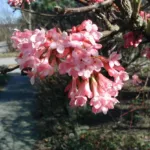
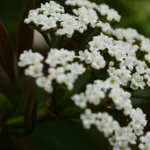
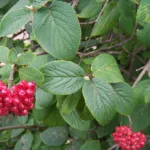
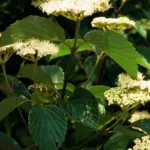
Leaves are opposite, oval to broadly elliptic, finely toothed, and often coppery or bronze when unfolding before becoming green. The shrub has slender woody stems and rounded flower clusters held near the branch tips. Spring buds are pinkish, flowers pale pink to white, and developing fruits change from red toward dark coloration.
Flowering
Rounded clusters emerge from pink buds in spring. Individual flowers open pale pink and fade toward white, producing the shrub’s characteristic sweet, spicy fragrance. Flowering is strongest in good light and on established plants; nearby compatible viburnums may improve fruit set where cross-pollination is needed.
Pollination and visitors
The fertile flowers are primarily insect-pollinated. Bees and other small flower-visiting insects may visit the spring clusters for floral resources; documented evidence is stronger for the general insect-pollination pattern than for one consistently recorded visitor species.
Viburnum carlesii photos
Click any photo for a larger view. Source, author and license are shown separately.
Diseases and pests
Diseases
Good air circulation, correct planting depth, and watering at the soil line help reduce leaf spots and powdery mildew. Remove fallen diseased leaves and avoid prolonged wet foliage. Root or crown problems are more likely in poorly drained sites, so improve drainage rather than relying on repeated treatments. Confirm the diagnosis before applying a fungicide.
Pests
Watch for aphids, scale insects, viburnum leaf beetle, and occasional caterpillars. Inspect new growth and leaf undersides, hand-remove small infestations, and use a strong water spray for aphids when practical. Preserve beneficial insects and avoid broad-spectrum insecticides during bloom. Escalate treatment only when damage is persistent or threatens plant establishment.
Related diseases and pests
Only Plant Doctor profiles whose host data indicate this plant may be affected are shown here.
Toxicity and pollen
Reliable species-specific human and pet toxicity information is limited. Do not encourage eating the fruits, leaves, or other parts, especially because viburnum fruits can be confused with those of other species. Keep unidentified berries away from children and pets; seek Poison Control or veterinary advice after ingestion or concerning symptoms.
- Typical season
- Spring, typically April–May in much of the United States
- Pollination / pollen
- Heavy, insect-carried pollen that is not readily airborne
This species is insect-pollinated, and its pollen is relatively heavy and not readily dispersed through the air compared with wind-pollinated trees, grasses, and weeds. Individual sensitivity remains possible, and contact with plant material may bother some people. Avoid handling flowering branches if symptoms occur and consult an allergist for persistent reactions.
Native habitat
In its native range, this temperate shrub occurs in East Asian regions with seasonal climates. It favors fertile soils with dependable moisture but adequate drainage and commonly suits woodland margins, open thickets, and sunny-to-partly shaded garden conditions.
Interesting fact
The species was named for William Richard Carles, a British official and plant collector associated with Korea. Its pink buds and fading white flowers create a two-tone spring display. The strong fragrance is one of its principal ornamental traits, while the compact habit distinguishes it from many larger viburnums.
Frequently asked questions (FAQ)
The most relevant questions about this plant, with short and direct answers.
🌱Quick care
What is Viburnum carlesii commonly called in the United States?⌄
Viburnum carlesii is documented here under the common name arrowwood and belongs to the viburnum group. It is a deciduous ornamental shrub grown especially for its fragrant spring flowers.
How big does Viburnum carlesii get?⌄
Viburnum carlesii typically reaches about 4 to 6 feet tall and 4 to 7 feet wide. Compact cultivars may stay closer to 3 to 4 feet in height and width.
Is Viburnum carlesii evergreen?⌄
No, Viburnum carlesii is a deciduous shrub. It loses its leaves in fall and may show reddish or burgundy foliage before leaf drop, although fall color can be inconsistent.
🌤️Environment and placement
How much sun does Viburnum carlesii need?⌄
Viburnum carlesii grows best in full sun to partial shade. More sun generally supports stronger flowering, while partial shade is tolerated if the soil stays reasonably moist.
What USDA hardiness zones can grow Viburnum carlesii?⌄
Viburnum carlesii is generally hardy in USDA Zones 4 through 7. Local exposure, winter wind, and cultivar selection can affect performance near the range limits.
Can Viburnum carlesii grow in shade?⌄
Viburnum carlesii can grow in partial shade, but flowering is usually better with several hours of direct sun. Dense shade may produce a thinner shrub with fewer blooms.
Can Viburnum carlesii grow near black walnut trees?⌄
Yes, Viburnum carlesii is reported to tolerate black walnut toxicity. It still needs adequate light, moisture, and root space to perform well near a mature walnut.
Does Viburnum carlesii tolerate wet soil?⌄
Viburnum carlesii does not perform well in extremely wet or poorly drained sites. Choose a location with reliable drainage and improve compacted soil before planting if necessary.
💧Care and problems
How often should I water Viburnum carlesii?⌄
Water Viburnum carlesii moderately, especially during its first growing season and during prolonged summer drought. Allow the soil surface to dry slightly between waterings, but do not let the root zone remain dry for long periods.
When should Viburnum carlesii be pruned?⌄
Prune Viburnum carlesii immediately after flowering finishes. This timing preserves the new summer growth that will carry next year’s flower buds.
Does Viburnum carlesii need regular pruning?⌄
No, regular pruning is not required for the shrub’s health when it has adequate space. Prune mainly to remove dead or damaged wood, improve structure, or manage size.
What are common problems with Viburnum carlesii?⌄
Occasional problems include bacterial leaf spot, powdery mildew, viburnum crown borers, and Armillaria root rot. Good air circulation, well-drained soil, and removal of badly damaged wood can reduce stress-related problems.
Is Viburnum carlesii resistant to viburnum leaf beetle?⌄
Viburnum carlesii is generally considered less affected by viburnum leaf beetle than several other viburnum species. It can still experience damage, so inspect leaves and twigs if skeletonized foliage appears.
🪴Planting and repotting
What soil is best for Viburnum carlesii?⌄
Plant Viburnum carlesii in well-drained, humus-rich loam that holds moderate moisture without staying waterlogged. It can tolerate some clay when drainage is adequate.
Is Viburnum carlesii suitable for a small yard?⌄
The species can fit a small yard if its mature width is allowed, but compact cultivars are usually better choices for limited space. ‘Compactum’ is commonly listed at roughly 3 to 4 feet tall and wide.
Can Viburnum carlesii be used as a hedge?⌄
Yes, Viburnum carlesii can be used as an informal hedge or screen. Its rounded form and mature width make it better suited to a naturalistic hedge than a tightly clipped formal hedge.
How far apart should Viburnum carlesii be planted?⌄
Space standard Viburnum carlesii plants about 5 to 7 feet apart, measured center to center, for a loose hedge or grouped planting. Use the cultivar’s mature width to refine spacing for compact selections.
✂️Propagation and pruning
Can I hard-prune Viburnum carlesii to reduce its size?⌄
Yes, Viburnum carlesii can tolerate substantial pruning, but hard pruning may remove the next season’s flowers and cause vigorous regrowth. For gradual size control, remove selected older stems at the base after flowering rather than shearing the whole shrub.
How can I propagate Viburnum carlesii?⌄
Viburnum carlesii is most practically propagated from cuttings or by layering, although success can vary. Seed propagation is possible but is slower and may require specialized dormancy treatment.
Can Viburnum carlesii be grown from seed?⌄
Yes, Viburnum carlesii can be grown from seed, but germination may be slow and irregular because viburnum seeds commonly have dormancy. Named cultivars are usually better propagated vegetatively to preserve their traits.
⚠️Toxicity and safety
Is Viburnum carlesii toxic to dogs, cats, or people?⌄
The toxicity of Viburnum carlesii is not well established, so do not assume that its berries or other parts are safe to eat. Keep children and pets from chewing the plant and contact a poison-control or veterinary professional if ingestion occurs.
🌸Flowering and special interest
When does Viburnum carlesii bloom?⌄
Viburnum carlesii usually blooms in spring, commonly from March through April depending on local climate. Flower buds open pink or reddish-pink and mature toward white.
Are Viburnum carlesii flowers fragrant?⌄
Yes, Viburnum carlesii has strongly fragrant flowers, often described as sweet, spicy, or clove-like. Plant it near a patio, walkway, or window where the scent can be enjoyed.
Why is my Viburnum carlesii not flowering?⌄
The most common causes are insufficient light, excessive pruning, plant immaturity, or winter damage to flower buds. Because it blooms on old wood, pruning after midspring can remove the following season’s buds.
Does Viburnum carlesii produce berries?⌄
Yes, flowers may be followed by blue-black, berry-like drupes in late summer. Fruit production can be inconsistent and is usually less ornamental than the spring flowers.
Does Viburnum carlesii attract wildlife?⌄
Viburnum carlesii flowers can attract butterflies, and its fruits may be used by birds. Wildlife value is generally secondary to its fragrance and ornamental flowering.