 Source:
 Fragrant viburnum (Viburnum farreri) short overview
Fragrant viburnum is a deciduous shrub from northern China valued for exceptionally fragrant flowers that can open on bare branches in late winter or early spring. Pink buds fade to white as the tubular blooms expand, often before the leaves emerge. It grows best in full sun to partial shade, evenly moist well-drained soil, and a sheltered site where late frosts are less likely to damage its early display.
Taxonomic classification
Fragrant viburnum (Viburnum farreri) care guide
Light and placement
Plant in full sun for the heaviest flowering, or partial shade where summers are hot. An east- or south-facing position with protection from strong winter winds is useful. Sparse flowering and stretched growth suggest insufficient light; scorched foliage or premature wilt can indicate excessive reflected heat or drought.
Watering and humidity
Water deeply when the upper few inches of soil begin to dry, then allow excess water to drain. Maintain more consistent moisture during the first two growing seasons and during summer drought. Reduce watering after leaf fall, but do not allow the root zone to remain dry for prolonged periods.
Soil and growing medium
Use fertile soil that drains freely while retaining moderate moisture. Loam enriched with organic matter is suitable. The shrub tolerates a broad pH range, but growth is less satisfactory in poor, dry soil. Improve heavy clay with organic matter and avoid permanently waterlogged ground.
Feeding
Spread compost or apply a balanced, slow-release fertilizer in early spring as growth begins. Follow the product label and avoid heavy nitrogen applications, which can encourage leafy growth at the expense of flowering. Do not fertilize drought-stressed, newly transplanted or dormant plants.
Growth and habit
This species forms an upright to somewhat open, densely branched shrub with arching mature stems. Early flowering can be damaged by late freezes, and warm autumn or winter spells may trigger premature bloom and reduce the spring display. Use periodic thinning to preserve air movement and a balanced outline.
Planting and repotting
Plant in spring or fall in a sheltered, well-drained bed. Dig a broad hole no deeper than the root ball, loosen circling roots, and keep the root flare at grade. Mulch over the root zone without touching the stems. Water thoroughly after planting and maintain even moisture while roots establish.
Usually grown in the ground rather than as a long-term container shrub. If container-grown, transplant in early spring or fall when temperatures are moderate. Move to a pot only modestly larger than the root ball, use a well-drained woody-plant mix, and water carefully while roots recover.
Propagation and pruning
Propagation
Propagate from seed or cuttings. Sow fresh seed when available and expect dormancy or variable germination; a period of cold, moist stratification may be needed. Softwood or semi-ripe cuttings taken during active growth can be rooted under humid conditions, though success varies by timing and technique.
Pruning
Prune immediately after flowering if shaping or size control is needed, because flower buds may form on older wood for the next display. Remove dead, damaged or crossing branches first, then thin selected older stems at the base. Avoid hard late-season pruning, which can remove developing flower wood.
Overwintering
Outdoor plants in USDA Zones 5–8 generally need no special winter treatment once established. Protect young shrubs with a thick organic mulch over the root zone, keeping mulch away from stems. In colder exposed sites, shelter from drying winds and avoid late pruning that could stimulate tender growth.
Uses
Use as a specimen, foundation shrub, informal screen, hedge, border planting or seasonal focal point near paths and entrances where its fragrance can be noticed. It also fits mixed woodland-style plantings and wildlife-oriented gardens. The fruits are ornamental, but should not be eaten unless a reliable edible-use source specifically confirms preparation and safety.
Appearance
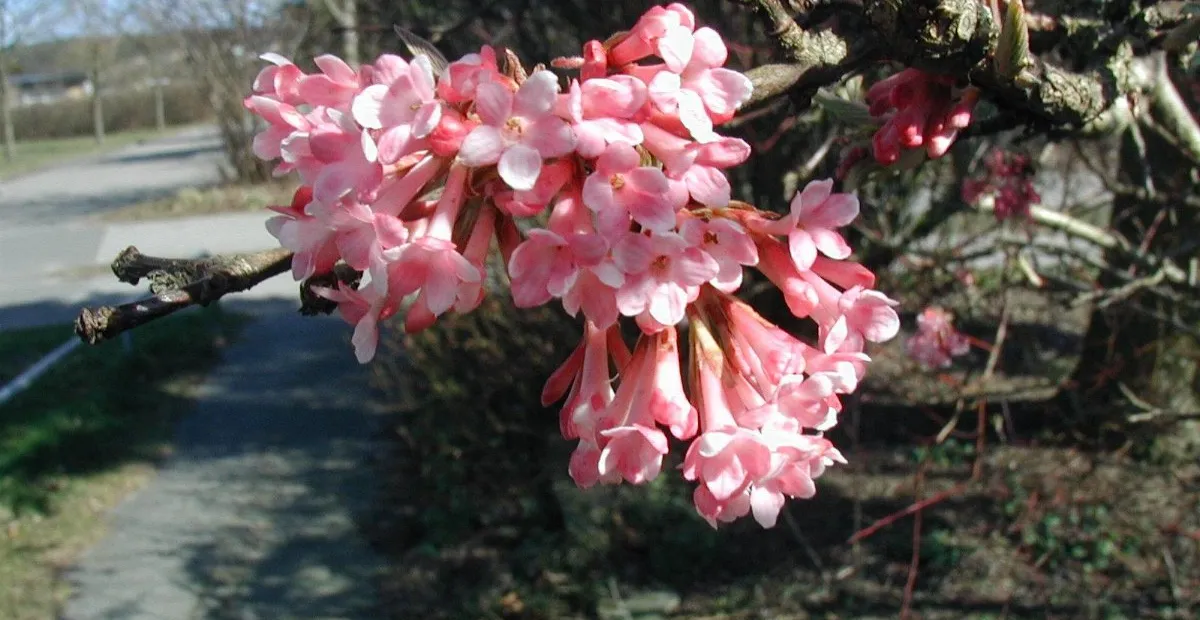
Opposite leaves are simple, oval to obovate, dark green and somewhat rough on the upper surface, with young foliage often bronze-tinged. Young stems are red-brown and petioles may be purplish. Pink buds open to white tubular flowers before or around the time the foliage emerges; fruit changes from red to black.
Flowering
Flowers are borne in dense clusters on leafless or nearly leafless branches. Buds are pink and open to white, strongly scented blooms. In colder parts of the United States, the principal display is usually in March or April, while warm spells can bring sporadic flowering in fall or winter. Late frosts may spoil open flowers.
Pollination and visitors
The early, fragrant flower clusters provide access to nectar and pollen for insects active during mild late-winter and early-spring weather. Available horticultural records also report wildlife interest in the broader plant, including butterflies and birds, but a species-specific primary pollinator has not been firmly documented in the sources reviewed.
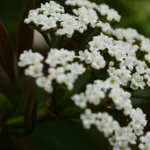
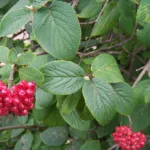
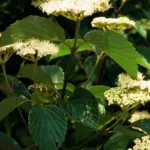
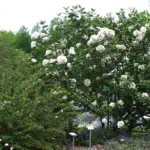
Viburnum farreri photos
Click any photo for a larger view. Source, author and license are shown separately.
Diseases and pests
Diseases
Provide good air circulation, avoid overhead watering and remove fallen diseased foliage. Viburnums may develop leaf spot, powdery mildew or stem cankers, especially under prolonged wetness or crowding. Prune out infected wood into healthy tissue and disinfect tools between cuts; use labeled fungicides only when diagnosis and local recommendations justify treatment.
Pests
Inspect new growth and leaf undersides for aphids, scale and viburnum leaf beetle damage. Encourage beneficial insects, wash light infestations from foliage and prune out heavily affected shoots. Keep shrubs vigorous with adequate moisture and avoid unnecessary broad-spectrum insecticides that can harm beneficial insects.
Related diseases and pests
Only Plant Doctor profiles whose host data indicate this plant may be affected are shown here.
Toxicity and pollen
Reliable species-specific human and pet toxicity information was not confirmed in the sources reviewed. The red-to-black fruits should therefore be treated as ornamental rather than edible, and children and pets should be discouraged from chewing berries, leaves or stems. Seek professional medical or veterinary advice after ingestion or concerning symptoms.
- Typical season
- Late winter to early spring in much of the United States
- Pollination / pollen
- Insect-dispersed pollen from early-season flowers
This is an insect-pollinated flowering shrub, so its pollen is not primarily dispersed by wind. However, species-specific airborne pollen and allergy data were not located, and insect pollination does not prove that exposure is impossible. People with known pollen sensitivity should avoid direct contact with abundant flowers and monitor personal reactions.
Native habitat
In nature, Viburnum farreri is a temperate Chinese shrub associated with cool continental mountain regions. It prefers soils that retain some moisture but drain well and performs poorly in impoverished, drought-prone ground. In cultivation it tolerates a broad soil reaction and adapts to sheltered temperate landscapes.
Interesting fact
The species can flower before its leaves appear, making it valuable for winter interest. Its fruit ripens from red to black in early summer. The specific epithet honors Reginald J. Farrer. Viburnum farreri is one parent of the widely grown hybrid Viburnum × bodnantense.
Frequently asked questions (FAQ)
The most relevant questions about this plant, with short and direct answers.
🌱Quick care
What is Viburnum farreri?⌄
Viburnum farreri, commonly called fragrant viburnum, is a deciduous flowering shrub grown for intensely fragrant pink-to-white flowers and reddish-purple fall foliage. It is native to mountainous regions of northern China and is hardy in USDA Zones 5–8.
How much sun does fragrant viburnum need?⌄
Fragrant viburnum grows best in full sun to partial shade. More sun generally supports better flowering, while partial shade can help protect it from heat and drying conditions.
How often should I water Viburnum farreri?⌄
Water Viburnum farreri moderately and keep the soil evenly moist, especially during establishment and dry spells. Avoid constantly saturated soil because the plant needs good drainage.
Is Viburnum farreri evergreen or deciduous?⌄
Viburnum farreri is deciduous, so it loses its leaves in fall. New foliage emerges bronze-green in spring and may turn reddish or purplish in autumn.
🌤️Environment and placement
What USDA zones are suitable for fragrant viburnum?⌄
Fragrant viburnum is generally hardy in USDA Zones 5–8. In colder parts of Zone 5, a sheltered planting site can reduce winter damage and protect early flower buds.
Where should I plant Viburnum farreri?⌄
Plant Viburnum farreri in a protected spot with full sun to partial shade and moist, well-drained loam. A location near a walkway, patio, or entry is useful because its early flowers are highly fragrant.
What type of soil does fragrant viburnum prefer?⌄
Fragrant viburnum prefers moist, well-drained loam and performs especially well in slightly acidic soil. It can tolerate a broader soil-pH range if drainage and moisture are adequate.
Can Viburnum farreri grow in partial shade?⌄
Yes, Viburnum farreri can grow in partial shade. It may flower less heavily than a plant grown in full sun, particularly if the shade is dense.
How large does Viburnum farreri get?⌄
The species commonly reaches about 8–12 feet tall and wide at maturity, although size varies by cultivar and growing conditions. Its natural form is often upright, open, and somewhat vase-shaped.
💧Care and problems
Why is my fragrant viburnum not flowering?⌄
Fragrant viburnum may fail to flower because of insufficient light, excessive pruning, young age, or flower-bud damage from late freezes. Warm spells can also trigger premature flowering that is later lost to cold.
When should I prune Viburnum farreri?⌄
Prune Viburnum farreri immediately after flowering. It flowers on older wood, so pruning later in the season can remove next year’s flower buds.
How do I prune an overgrown fragrant viburnum?⌄
Thin an overgrown fragrant viburnum by removing selected older or crossing stems at the base after flowering rather than shearing the entire shrub. Rejuvenation can be spread over several seasons to preserve flowering.
Does Viburnum farreri need regular fertilizing?⌄
Viburnum farreri usually does not need regular fertilizing when planted in reasonably fertile soil. If growth is weak, test the soil before applying a balanced, slow-release fertilizer in spring.
What problems affect fragrant viburnum?⌄
Fragrant viburnum is generally low-maintenance, but it can be affected by stem dieback, gray mold, verticillium wilt, wood rot, and borers. Poor drainage, drought stress, and exposed winter conditions can increase problems.
Why are the flower buds on my Viburnum farreri turning brown?⌄
Flower buds on Viburnum farreri can turn brown after a late freeze or sharp temperature drop. Early flowering is a feature of the plant, but it also makes the buds vulnerable to winter and spring frost.
Can fragrant viburnum tolerate drought?⌄
Fragrant viburnum tolerates short periods of dry soil once established, but it performs best when soil moisture remains consistent. Water deeply during prolonged summer drought and apply mulch to reduce evaporation.
🪴Planting and repotting
When is the best time to plant Viburnum farreri?⌄
The best time to plant Viburnum farreri is in spring or fall when temperatures are moderate and soil moisture is easier to maintain. Water thoroughly after planting and keep the root zone evenly moist during establishment.
How far apart should fragrant viburnum be planted?⌄
Space fragrant viburnum according to its mature size and intended use, generally about 6–10 feet apart for individual shrubs or a loose screen. Compact cultivars such as ‘Nanum’ require much less room.
Can Viburnum farreri be grown as a hedge?⌄
Yes, Viburnum farreri can be used as an informal hedge or screen. Its naturally open, arching habit is usually better suited to a loose hedge than a tightly clipped formal hedge.
Can fragrant viburnum be grown in a container?⌄
Fragrant viburnum can be grown in a large container when provided with adequate drainage, consistent moisture, and winter protection. Compact cultivars are more practical for containers than the full-sized species.
✂️Propagation and pruning
How can I propagate Viburnum farreri?⌄
Viburnum farreri can be propagated from suitable stem cuttings, although success depends on timing and careful moisture control. Named cultivars are often propagated vegetatively so the new plants retain their characteristics.
Can fragrant viburnum be grown from seed?⌄
Fragrant viburnum can produce red-to-black fruit and seed, but seed propagation is less predictable and may require patience because viburnum seeds can have dormancy. Cuttings are generally more practical for preserving a particular plant.
⚠️Toxicity and safety
Is Viburnum farreri toxic to people or pets?⌄
The toxicity of Viburnum farreri is not established, so it should not be treated as confirmed safe for people or pets. Keep children and animals from consuming the berries or other plant parts, and contact a poison-control or veterinary professional if ingestion occurs.
🌸Flowering and special interest
When does Viburnum farreri bloom?⌄
Viburnum farreri typically blooms from late winter to early spring, often before the leaves emerge. In mild weather or warm spells, some flowers may open in fall or during winter.
Are fragrant viburnum flowers really fragrant?⌄
Yes, fragrant viburnum produces intensely sweet-smelling flowers. The pink buds open to white or pinkish-white tubular flowers arranged in clusters.
Why does my fragrant viburnum bloom in fall?⌄
Fragrant viburnum may bloom in fall when warm weather or a late-season warm spell breaks dormancy. This unusual flowering can reduce the number of flowers available for the following spring.
Does Viburnum farreri produce berries?⌄
Viburnum farreri can produce fruits that change from red to black as they mature, but fruiting is often sparse. Pruning immediately after flowering can also remove developing fruiting wood.
Does fragrant viburnum have good fall color?⌄
Yes, fragrant viburnum can develop reddish to reddish-purple fall foliage. The intensity varies with cultivar, weather, sunlight, and overall plant health.