
 Source:
 Tephrocactus molinensis short overview
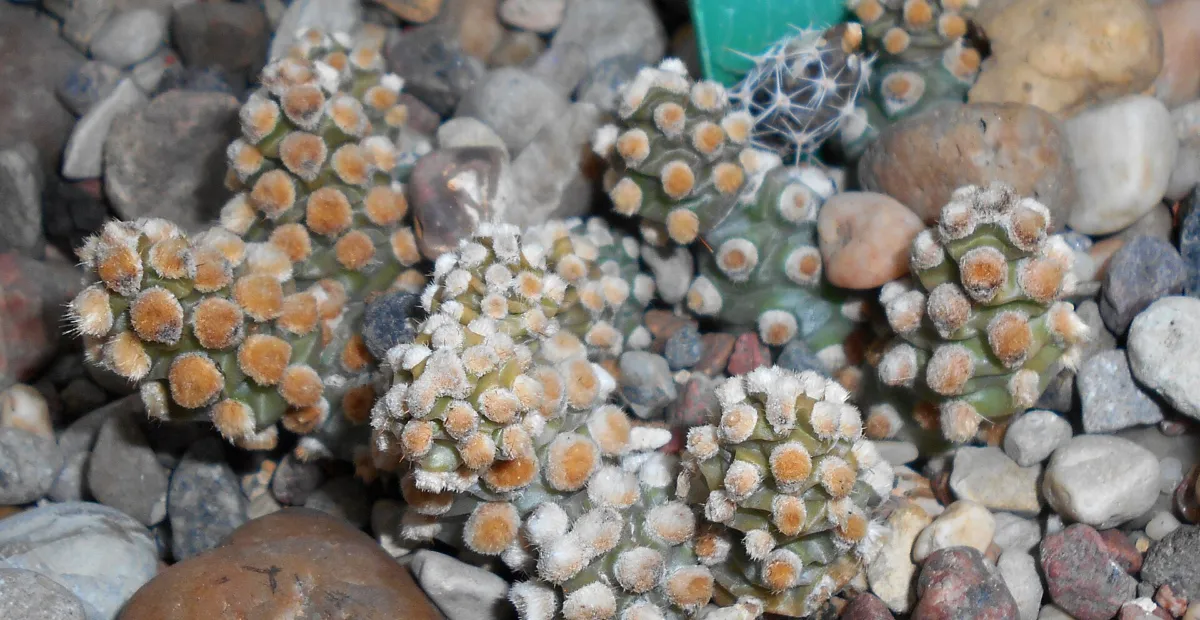
Tephrocactus molinensis is a diminutive, segmented cactus native to dry landscapes in Salta, Argentina. Its gray-green to brownish joints form loose clumps, while white-felted areoles carry conspicuous cream, yellow-brown, or reddish glochids. In warm-season growth it may produce white to very pale pink flowers with green centers. Give it strong sun, porous mineral soil, careful watering, and a cool, dry winter rest; handle with gloves because the glochids are irritating.
Taxonomic classification
Tephrocactus molinensis care guide
Light and placement
Provide full sun with several hours of direct light, ideally in a south- or west-facing window, greenhouse, or rain-sheltered outdoor position. Acclimate gradually when moving from shade into intense sun. Too little light produces thinner, weaker joints and reduced flowering; sudden extreme exposure can scorch the epidermis.
Watering and humidity
Water thoroughly only after the mix has dried completely, then let excess drain away. During spring and summer growth, the interval may be roughly 2–4 weeks depending on pot size, heat, and airflow. Reduce sharply in fall and keep nearly dry in winter, especially below 50°F. Never leave the pot standing in water.
Soil and growing medium
Use a predominantly mineral cactus substrate with excellent drainage, such as coarse pumice, lava rock, grit, and a modest amount of organic potting material. Sandy and rocky structure suits its native dry habitat. A neutral to slightly alkaline reaction is appropriate; avoid dense, peat-heavy mixes that remain wet around the roots.
Feeding
Feed only during active spring and summer growth, using a balanced or low-nitrogen cactus fertilizer diluted to about one-quarter to one-half strength once every 4–6 weeks. Do not fertilize dry, stressed, newly repotted, or dormant plants. Avoid rich compost and heavy nitrogen, which can produce weak, easily detached growth.
Growth and habit
A slow-growing, perennial cactus that forms small clumps or short erect chains of detachable joints. Growth is concentrated in spring and may resume briefly in fall under suitable conditions. Because segments separate easily, avoid rough handling and use a stable pot; loose joints can also serve as propagation material.
Planting and repotting
Plant outdoors only after frost danger has passed, in a raised, sharply drained bed or rock garden. Set the root collar at the same depth as before and keep joints above the soil line. Space plants about 8–12 inches apart where a small clump is desired, then water lightly after several dry days to encourage establishment.
Repot in spring or early summer only when the container is crowded or the mix has degraded. Let the substrate dry, use thick gloves or tools to avoid glochids, and allow damaged roots to dry before watering. Choose a stable, shallow pot with a drainage hole rather than a large moisture-holding container.
Propagation and pruning
Propagation
Propagate mainly from detached stem segments or offsets during the warm growing season. Allow a segment to callus for several days, then place its base on barely moist, gritty substrate. Water only after roots begin forming. Seed propagation is possible but slower and less commonly used for routine production.
Pruning
No routine pruning is needed. Remove dead, diseased, or badly damaged joints with clean tools during active growth. Handle detached pieces as potential cuttings and keep cut surfaces dry until callused. Avoid unnecessary reshaping because the natural segmented chain is part of its ornamental character.
Overwintering
Keep completely protected from frost and prolonged cold wet conditions. A cool, bright winter rest around 40–50°F is useful when the plant is kept nearly dry. In colder US climates, overwinter indoors or in a frost-free greenhouse. Resume watering gradually in spring as new growth begins.
Uses
Primarily grown as a collector’s cactus, container specimen, greenhouse plant, or accent in a dry rock garden. Its segmented form and contrasting glochids provide strong architectural interest. It is not documented here as a food or medicinal plant. Use gloves and keep it away from high-traffic areas because glochids are difficult to remove.
Appearance
This small opuntioid cactus has fragile, globose to ovoid joints rather than conventional leaves. Segments are commonly gray-green, dark green, or brownish and may be spineless in the usual sense, yet areoles carry dense cream, yellow-brown, gray, or reddish glochids over white felt. The joints detach easily and form short chains or low clumps.
Flowering
Flowers arise from the upper portions of mature joints and are reported as white to very pale pink, sometimes translucent, with a green center or throat and green filaments. They are relatively small, up to about 1.2 inches across or long depending on measurement. Flowering is most likely after a bright growing season and a cool, dry rest.
Pollination and visitors
RHS lists the species among plants providing nectar and pollen for bees and other pollinating insects. No dependable species-specific pollinator record was located, so visitor identification is kept broad. Flowering plants should be treated as potential insect resources rather than as a heavily documented pollinator specialist.
Tephrocactus molinensis photos
Click any photo for a larger view. Source, author and license are shown separately.
Diseases and pests
Diseases
The main preventable problem is root or basal rot caused by wet soil, poor drainage, or watering during cold conditions. Use a porous mix, inspect the base for soft discoloration, and remove affected tissue promptly with a sterile blade. Keep wounds dry until callused before replanting.
Pests
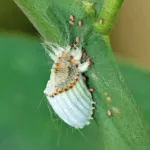
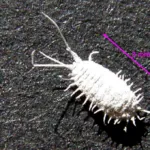
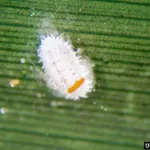
Watch for mealybugs, scale, and root-feeding insects, especially in sheltered collections. Inspect areoles and root collars regularly. Remove small infestations with a targeted cotton-swab treatment or an appropriate labeled product, while correcting poor airflow or excessive organic moisture that encourages recurring problems.
Related diseases and pests
Only Plant Doctor profiles whose host data indicate this plant may be affected are shown here.
Toxicity and pollen
No reliable species-specific evidence establishes systemic toxicity to people, dogs, or cats. The practical hazard is mechanical: glochids can lodge in skin, eyes, clothing, or mouths and cause irritation. Handle with gloves and tools, keep away from children and pets, and seek medical advice for persistent eye or skin exposure.
- Typical season
- Late spring through summer when flowering
- Pollination / pollen
- Insect-carried pollen
This is an insect-pollinated flowering cactus, and no reliable US airborne-pollen monitoring data specific to the species was found. Its flowers are usually few and localized in cultivation, so airborne allergy exposure is expected to be low, but this is an evidence-limited assessment rather than proof of zero risk.
Native habitat
The species is native to Salta in northwestern Argentina, where it occurs in desert or dry shrubland conditions. Reports describe sandy soils and open settings, including areas among tall columnar cacti. Seasonal drought can cause severe contraction and dehydration of the joints, followed by re-expansion when growth conditions improve.
Interesting fact
The upper segments detach readily, helping the plant remain close to the ground in habitat. During the dry season, the joints can become strongly dehydrated and retract almost to soil level. Older corky segments may regenerate dense glochid tufts. Although commonly called spineless, its areoles carry irritating glochids.
Frequently asked questions (FAQ)
The most relevant questions about this plant, with short and direct answers.
🌱Quick care
How do you care for Tephrocactus molinensis?⌄
Grow Tephrocactus molinensis in full sun, a gritty mineral cactus mix, and water sparingly only after the soil dries completely. Keep it protected from frost and avoid leaving the roots wet.
Is Tephrocactus molinensis a good indoor cactus?⌄
Tephrocactus molinensis can grow indoors only in a very bright, sunny window or under a strong grow light. Poor light and frequent watering commonly cause weak, stretched growth and root problems.
How often should you water Tephrocactus molinensis?⌄
Water Tephrocactus molinensis thoroughly, then wait until its soil is completely dry before watering again. The interval may be every few weeks during active growth but should be much longer in cool, dim winter conditions.
Does Tephrocactus molinensis need a winter rest?⌄
Yes, a cool, dry winter rest is beneficial for Tephrocactus molinensis and may improve flowering. Keep it nearly or completely dry while temperatures are cool, especially when light levels are low.
🌤️Environment and placement
How much light does Tephrocactus molinensis need?⌄
Tephrocactus molinensis needs full sun or the brightest light available. Acclimate it gradually to intense outdoor sunlight to reduce the risk of sunburn.
Can Tephrocactus molinensis grow outside in the United States?⌄
Tephrocactus molinensis can grow outdoors year-round only where winters remain frost-free and drainage is excellent. In most of the United States, grow it in a container and move it under cover before freezing weather.
What USDA hardiness zone is suitable for Tephrocactus molinensis?⌄
Tephrocactus molinensis is generally treated as a frost-tender cactus suited to about USDA Zone 9 and warmer, though local exposure and winter moisture also matter. Protect it whenever temperatures may reach freezing.
What temperatures can Tephrocactus molinensis tolerate?⌄
Tephrocactus molinensis prefers warm, bright conditions during growth and cool, dry conditions in winter. It should be protected from frost and freezing temperatures, particularly when the soil is damp.
Can Tephrocactus molinensis tolerate humidity?⌄
Tephrocactus molinensis tolerates ordinary indoor humidity when air circulation and drainage are good, but it does not tolerate persistently wet conditions. Avoid placing it in a humid, poorly ventilated spot.
💧Care and problems
Why is my Tephrocactus molinensis turning soft?⌄
Soft, collapsing segments usually indicate excess moisture, root loss, or rot rather than thirst. Remove it from wet soil, inspect the roots and base, cut away decay with a sterile blade, and allow healthy tissue to dry before re-rooting.
Why is my Tephrocactus molinensis shriveling?⌄
Mild wrinkling can occur during a dry rest, but severe shriveling may indicate prolonged drought or damaged roots. Check that the roots are alive and provide one thorough watering only when the plant is warm and the soil can dry quickly.
Why is Tephrocactus molinensis dropping its segments?⌄
Tephrocactus molinensis has naturally fragile, jointed segments that can detach when disturbed, handled, overwatered, or weakened by root problems. Healthy detached segments can often be dried and rooted as cuttings.
How do you prevent rot in Tephrocactus molinensis?⌄
Prevent rot by using a fast-draining mineral mix, a pot with drainage holes, strong light, and a dry period between waterings. Keep the plant especially dry during cool weather and never let water collect in the pot or saucer.
Does Tephrocactus molinensis need fertilizer?⌄
Tephrocactus molinensis needs little fertilizer, but a diluted, low-nitrogen cactus fertilizer can be applied once or twice during active growth. Do not fertilize a stressed, dormant, recently repotted, or rootless plant.
🪴Planting and repotting
What soil is best for Tephrocactus molinensis?⌄
Use a very gritty, fast-draining cactus mix made mostly from mineral materials such as pumice, perlite, lava rock, coarse sand, or grit. A small amount of organic potting material is acceptable, but the mix should not stay wet for long.
What type of pot is best for Tephrocactus molinensis?⌄
Choose a shallow or moderately sized pot with a drainage hole, sized only slightly larger than the root system. Unglazed terracotta can help the mix dry faster, especially in humid areas or for careful indoor growers.
When should you repot Tephrocactus molinensis?⌄
Repot Tephrocactus molinensis at the start of active growth or when the soil has degraded, the roots are crowded, or drainage has declined. Handle it carefully because the jointed segments and glochids make routine repotting difficult.
How do you repot Tephrocactus molinensis safely?⌄
Wear thick protective gloves, use folded cardboard or tongs, and avoid gripping the segments directly. Keep the plant dry after repotting and wait several days before watering so damaged roots can seal.
✂️Propagation and pruning
How do you propagate Tephrocactus molinensis?⌄
Propagate Tephrocactus molinensis mainly from detached segments or seed. For a segment cutting, let the break dry and callus, then place it on dry gritty mix until roots form before watering lightly.
Can Tephrocactus molinensis grow from a single segment?⌄
Yes, a healthy Tephrocactus molinensis segment can often root and produce new growth. Use a firm, undamaged segment, allow it to callus fully, and provide warmth, bright light, and very restrained moisture.
Can you grow Tephrocactus molinensis from seed?⌄
Yes, Tephrocactus molinensis can be grown from seed, but seedlings are slow and need careful moisture management. Use a sterile, gritty sowing medium, bright filtered light, warmth, and ventilation while avoiding stagnant wetness.
Should you prune Tephrocactus molinensis?⌄
Routine pruning is not needed for Tephrocactus molinensis. Remove only dead, rotting, or severely damaged segments, and allow any fresh cut surface to dry before it contacts moist soil.
⚠️Toxicity and safety
Is Tephrocactus molinensis poisonous to people or pets?⌄
Systemic toxicity for Tephrocactus molinensis is not well established, so it should not be treated as harmless to people or pets. Its glochids can cause painful mechanical irritation, and ingestion of any cactus material should be avoided.
Does Tephrocactus molinensis have spines?⌄
Tephrocactus molinensis is commonly described as spineless or nearly spineless, but its areoles carry dense glochids. These tiny, barbed structures can penetrate skin and are easy to overlook.
How do you handle Tephrocactus molinensis without getting glochids?⌄
Handle Tephrocactus molinensis with tongs, folded cardboard, thick sleeves, and eye protection rather than bare hands. Inspect clothing and work surfaces afterward because glochids can remain embedded and spread easily.
🌸Flowering and special interest
Does Tephrocactus molinensis flower?⌄
Yes, mature Tephrocactus molinensis can produce flowers, reportedly white and sometimes pale-toned in cultivation. Flowering is more likely when the plant receives strong light, a cool dry winter rest, and steady growth during the warm season.
When does Tephrocactus molinensis bloom?⌄
Tephrocactus molinensis generally flowers after its winter rest during the active growing season, often in late spring or summer under Northern Hemisphere cultivation. Exact timing varies with light, temperature, maturity, and growing conditions.
Why is my Tephrocactus molinensis not flowering?⌄
Lack of strong light, insufficient maturity, year-round warmth, or winter watering can prevent Tephrocactus molinensis from flowering. Provide brighter light, keep it cooler and drier in winter, and allow time for the plant to mature.
How large does Tephrocactus molinensis get?⌄
Tephrocactus molinensis is a small, segmented cactus that forms compact clumps or low mounds rather than a tall column. Individual segments are small, but older plants can broaden as joints accumulate.
Similar plants
 Azure Monkshood (Aconitum carmichaelii) care guideAconitum carmichaelii
 Monkshood (Aconitum ‘Stainless Steel’)Aconitum 'Stainless Steel'
 Monkshood (Aconitum ‘Bressingham Spire’)Aconitum 'Bressingham Spire'
 Golden full moon maple (Acer shirasawanum ‘Aureum’)Acer shirasawanum 'Aureum'
 Globosum (Acer platanoides ‘Globosum’)Acer platanoides 'Globosum'
 Striped maple (Acer pensylvanicum) care guideAcer pensylvanicum