
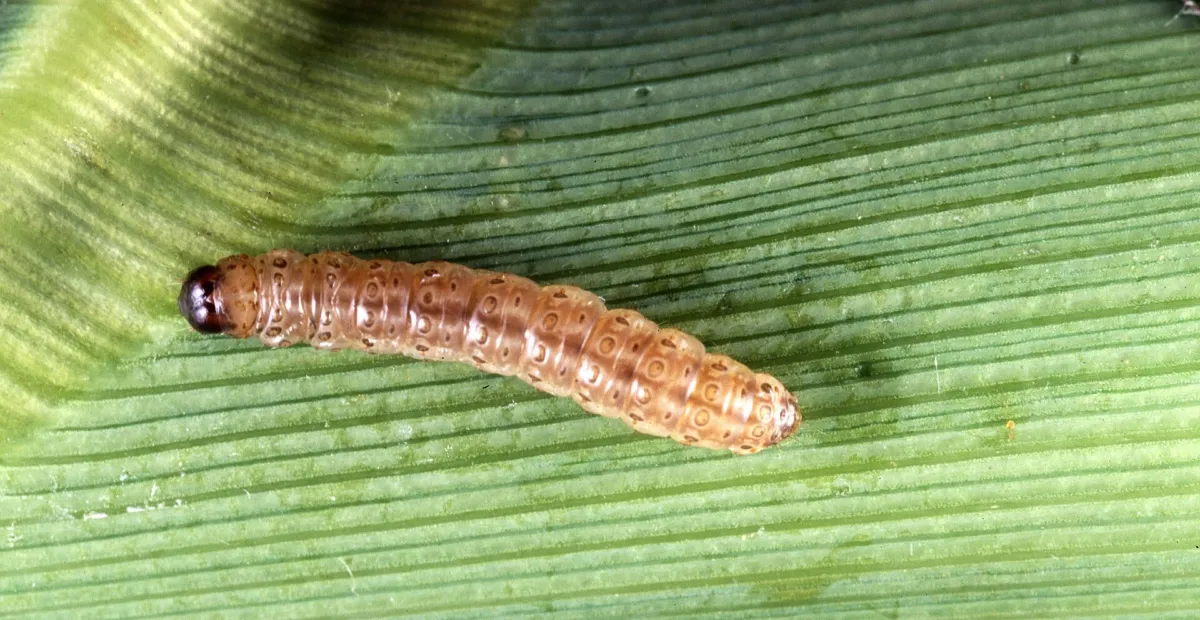
European Corn Borer
Ostrinia nubilalisEuropean Corn Borer overview
The European corn borer is a moth whose larvae tunnel into corn stalks, ears and cobs, weakening plants and causing lodging, ear damage and secondary fungal infection. It can also injure peppers, beans, potatoes, tomatoes and other crops. Early detection of egg masses and young larvae is essential because control becomes much less effective after caterpillars enter stems or fruit.
Typical conditions
Overview
European corn borer damage is caused by larvae of Ostrinia nubilalis, not by the adult moth. Adults are tan to brown moths; eggs are flattened, pale and overlapping in clusters, often on leaf undersides. Larvae are pale pink, grayish or brownish caterpillars with a brown head and dark spots. Corn is the most important host, but peppers, beans, potatoes, tomatoes, wheat, sorghum and numerous weeds can support development.
In corn, larvae may feed in the whorl, midrib, leaf axils, tassel, stalk, ear shank and ear tip. Injury is often localized, so scouting several areas of a planting is more useful than inspecting only the field edge.
Symptoms and identification
- Small shot holes or windowpane feeding in young corn leaves.
- Frass resembling sawdust around pinholes in stalks, leaf axils, ear shanks, husks or fruit.
- Wilting, broken midribs, weak stalks and lodging after internal tunneling.
- Chewed kernels and tunnels at the tip or side of sweet corn ears.
- In peppers and beans, pinholes with frass at fruit or pod entry sites, internal feeding and premature fruit loss.
- In potatoes and tomatoes, occasional leaf, stem or fruit boring.
Several other caterpillars can produce similar holes and frass. Confirmation is stronger when the larva, egg mass or characteristic tunnel is found.
Causes and spread
Larvae enter plants after hatching from egg masses laid by adult moths. Adults are mobile and commonly aggregate in grassy or weedy areas near fields before mating and returning to suitable host plants for egg-laying. Infested stalks, cobs and weed stems allow larvae to survive between seasons. Nearby corn, volunteer plants, grassy margins and unmanaged host weeds can therefore maintain local populations.
The pest is especially damaging when young larvae are abundant during susceptible crop stages. Once larvae bore into stalks or fruit, sprays and contact treatments are much less reliable.
Life cycle and persistence
European corn borer usually overwinters as a mature larva in corn stalks, cobs or other host stems. In spring, larvae pupate inside plant residue and adults emerge. Females lay flattened egg masses, commonly on the underside of leaves. Eggs generally hatch in about 4–14 days depending on temperature.
Most central and eastern US production areas have two generations per year, while some northern areas have one and warmer regions may have three or more. First-generation larvae often feed in whorls and young stalks. Later-generation larvae commonly attack leaf axils, stalks, ear shanks and ears. Generation timing varies with latitude, temperature, crop growth and local strain; pheromone traps, scouting and regional degree-day advisories are more reliable than calendar dates alone.
Treatment and control
Management is most effective against newly hatched larvae before they enter stalks, ears, pods or fruit. Remove and destroy infested stems or fruit in garden plantings when practical. In corn, base intervention on crop stage, fresh injury, larval presence, trap data and local thresholds rather than moth sightings alone. Once a larva is inside a stalk or ear, rescue treatment is difficult and may not prevent structural injury.
For commercial crops, use current crop-specific recommendations from the state Cooperative Extension service. Treatments must be timed to egg hatch or early larval activity and rotated among effective modes of action to reduce resistance selection. Avoid unnecessary broad-spectrum applications that disrupt predators and parasitoids.
Low-impact and biological control
- Use microbial products containing Bacillus thuringiensis var. kurstaki only while larvae are young and exposed; efficacy falls sharply after boring into plant tissue.
- Conserve natural enemies, including egg parasitoids, predatory bugs, lacewings and spiders, by maintaining flowering habitat and avoiding unnecessary broad-spectrum insecticides.
- Destroy infested residue, stalks and weeds that can harbor overwintering larvae.
- Inspect and hand-remove egg masses or infested plant parts in small gardens.
- Use resistant or Bt crop varieties where legally available and appropriate, following seed stewardship and refuge requirements.
Organic certification, approved product lists and crop labels vary. Confirm that any microbial or other input is allowed for the specific crop and production system.
Prevention
- At harvest, mow or shred corn stalks and incorporate or remove residue where practical; this destroys or exposes overwintering larvae.
- Remove volunteer corn and heavily infested stems from vegetable gardens and small plantings.
- Rotate crops when feasible and avoid placing susceptible peppers, beans or other vegetables immediately beside heavily infested corn residue.
- Use locally adapted cultivars with good stalk strength and documented European-corn-borer resistance where available.
- Scout leaf undersides for egg masses and whorls, leaf axils, stalks and ears for fresh feeding and frass.
- Use pheromone or black-light monitoring and local Cooperative Extension alerts to identify flight periods.
- In Bt corn, follow the current US EPA insect-resistance-management requirements, including any applicable refuge provisions.
Interesting facts
- The species was introduced into North America and was first identified in the United States in Massachusetts in 1917.
- Egg masses often resemble overlapping fish scales and darken before hatching as the larval heads become visible.
- Adults do not cause the tunneling injury; the larval stage is responsible for crop damage.
- European corn borer has more than 200 reported host plants, but host suitability and economic importance vary greatly among crops and regions.
- Two pheromone strains, commonly called E and Z, occur in the United States and can differ in their pheromone communication patterns.
- Larval tunnels can weaken corn stalks and also provide entry points for secondary fungi.
Use chemical insecticides only when monitoring shows a need and only products legally authorized for European corn borer on the specific crop in the United States. Follow the current EPA-approved label for rate, timing, crop, personal protective equipment, reentry interval, preharvest interval, pollinator precautions and resistance-management instructions. Do not apply a product solely because it is labeled for another borer or another crop.
Affected plants
The plants below are linked to this problem by structured host-plant data. The list updates automatically as new plant profiles are added.
 He tepary bea (Phaseolus acutifolius) care guidePhaseolus acutifolius
 Snap bean (Phaseolus coccineus) care guidePhaseolus coccineus
 Butter bea (Phaseolus lunatus) care guidePhaseolus lunatus
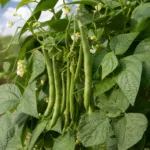 String Bean (Phaseolus vulgaris) care guidePhaseolus vulgaris
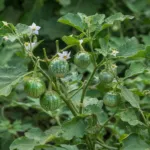 Solanum aethiopicum care guideSolanum aethiopicum
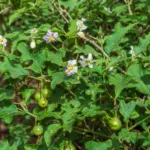 Solanum macrocarpon care guideSolanum macrocarpon
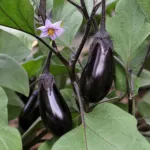 Eggplant (Solanum melongena) care guideSolanum melongena
 Garden Huckleberry (Solanum scabrum) care guideSolanum scabrum