Nutrient Deficiency Caused by Root Damage
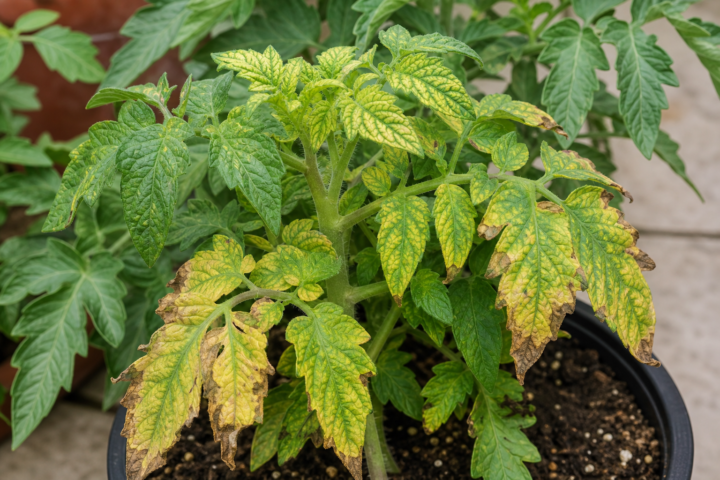
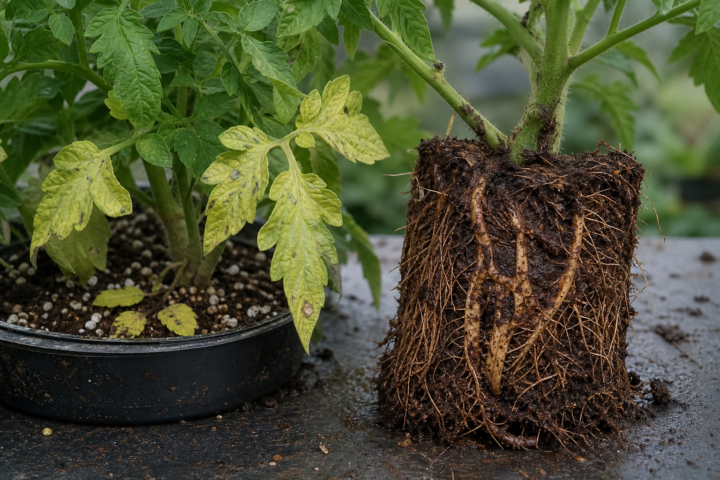
Root damage can make a plant look nutrient-starved even when the soil contains adequate nutrients. Injured, rotted, compacted, drought-stressed, or poorly distributed roots cannot…
DetailsDetailed profiles of common plant diseases, pests, nutrient deficiencies and environmental problems.
Root damage can make a plant look nutrient-starved even when the soil contains adequate nutrients. Injured, rotted, compacted, drought-stressed, or poorly distributed roots cannot…
Details
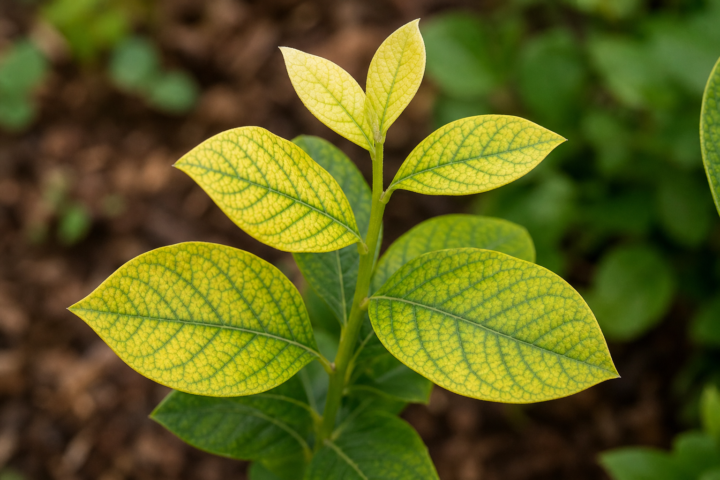
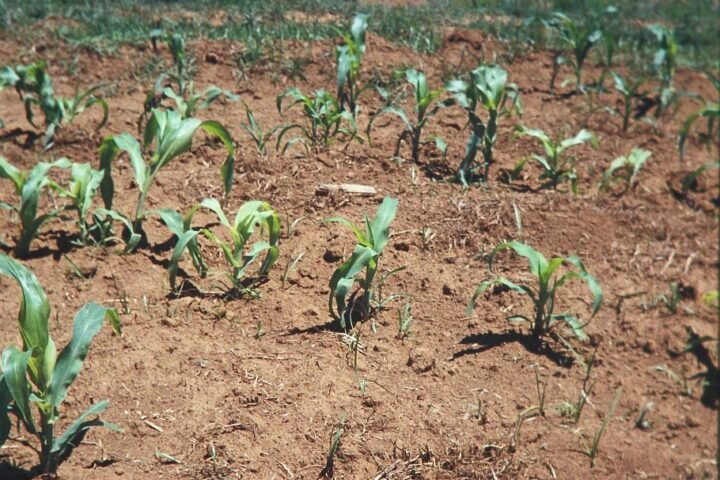
Cold-soil phosphorus deficiency is a temporary nutrient-uptake disorder that affects young plants when cool, wet soil slows root growth and limits phosphorus absorption. Seedlings…
Details
High-pH-induced iron deficiency, commonly called lime-induced iron chlorosis, is a nutrient-availability disorder rather than an infectious disease. Plants may contain ample total iron in…
Details
Multiple nutrient deficiency is a complex plant nutrition disorder in which two or more essential elements are unavailable or insufficient at the same time.…
Details
Nickel deficiency is a rare plant nutritional disorder involving impaired urease activity and nitrogen metabolism. The clearest signs are necrotic leaf tips, yellowing, stunted…
Details
Chlorine deficiency is an uncommon nutritional disorder caused by inadequate chloride, the plant-available form of chlorine. Affected plants may show reduced growth, wilting, chlorosis,…
Details
Molybdenum deficiency is an uncommon nutritional disorder caused by inadequate plant-available molybdenum, most often in strongly acidic soil. Symptoms vary by crop but may…
Details
Copper deficiency is an uncommon but potentially serious micronutrient disorder caused by inadequate plant-available copper. It is most likely in high-organic-matter or sandy soils…
Details
Boron deficiency is a nutrient disorder caused by inadequate boron reaching actively growing tissues. It can stunt roots and shoots, kill terminal buds, deform…
Details
Zinc deficiency is a physiological nutrient disorder caused by insufficient plant-available zinc or poor root uptake. It is especially important in fruit trees, vines,…
Details
Manganese deficiency is a nutrient disorder that commonly affects young leaves, causing yellowing between the veins while the veins remain green. It is most…
Details
Iron deficiency, often called iron chlorosis, is an environmental nutrient disorder in which young leaves turn yellow between the veins while the veins remain…
Details