
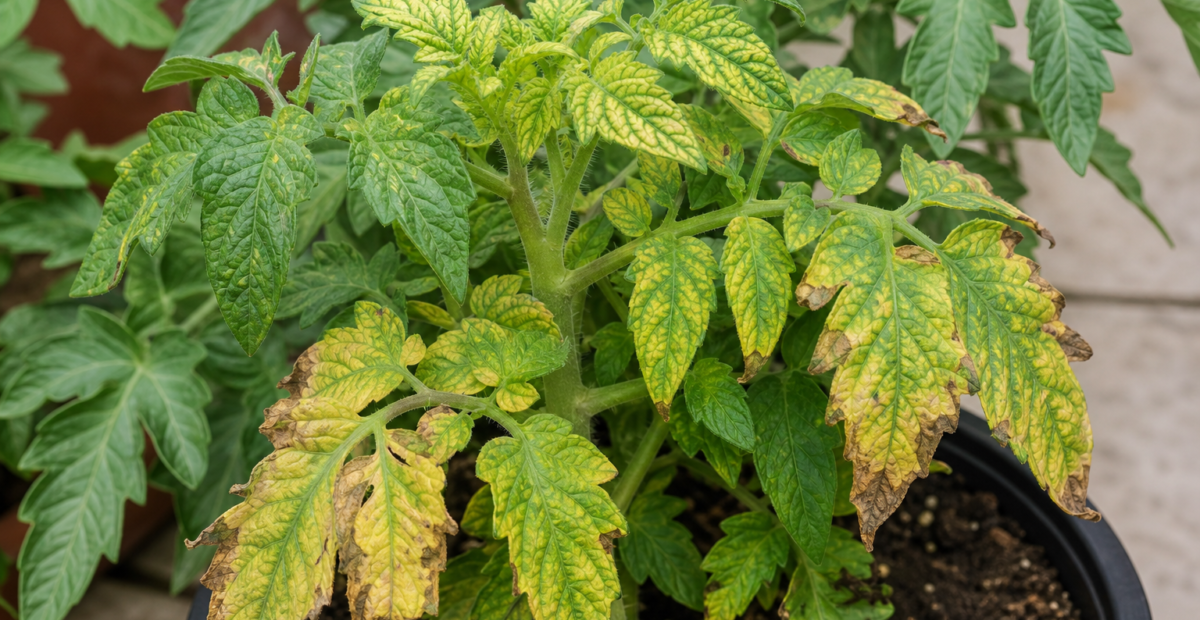
Multiple Nutrient Deficiency
Multiple Nutrient Deficiency overview
Multiple nutrient deficiency is a complex plant nutrition disorder in which two or more essential elements are unavailable or insufficient at the same time. Plants may show general stunting, pale or uneven foliage, poor flowering, weak stems, marginal scorch, or interveinal chlorosis. Because symptoms overlap with root damage, drought, salinity, pests, and disease, confirmation requires soil and, when appropriate, plant-tissue testing.
Typical conditions
Overview
Multiple nutrient deficiency occurs when a plant cannot obtain enough of two or more essential elements, or when nutrients are present in the soil but unavailable to roots. The disorder is common in depleted, strongly acidic or alkaline, waterlogged, compacted, saline, or heavily leached soils, and after repeated cropping without nutrient replacement.
Visual diagnosis is unreliable because combined deficiencies can mask one another and resemble drought, root injury, herbicide injury, insect feeding, or disease. Treat the condition as a working diagnosis until a representative soil test and, where useful, plant-tissue analysis support it.
Symptoms and identification
Symptoms vary with the plant, growth stage, soil, and nutrients involved. Common patterns include slow or uneven growth, short internodes, small leaves, pale green to yellow foliage, interveinal chlorosis, purpling or reddish coloration, premature leaf aging, marginal browning or scorch, weak stems, reduced flowering, poor fruit set, and low-quality or undersized harvests.
- Older leaves may yellow or develop marginal scorch when mobile nutrients such as nitrogen, phosphorus, potassium, or magnesium are limiting.
- Young leaves and growing points may be distorted or chlorotic when calcium, iron, boron, zinc, copper, or manganese availability is affected.
- Symptoms across many nearby plants, especially in a consistent soil pattern, favor a nutritional or environmental cause over a localized pest or disease.
Causes and spread
This disorder is not contagious and does not spread from plant to plant like an infectious disease. It develops where nutrient supply or uptake is inadequate. Causes include low-fertility soil, nutrient removal by repeated harvests, leaching from sandy soil or excessive irrigation, unsuitable pH, waterlogged or compacted roots, drought, high soluble salts, excessive compost or manure, antagonism between nutrients, and damaged or poorly developed roots.
High pH can reduce the availability of several micronutrients, while very acidic conditions can restrict root function or increase toxicity risks. Excess phosphorus, salts, or poorly balanced fertilization can also create secondary deficiencies even when total nutrients are abundant.
Life cycle and persistence
There is no biological lifecycle. Symptoms usually develop gradually, often during rapid vegetative growth, flowering, fruiting, or periods of heavy rainfall and irrigation. Mild or hidden deficiency may reduce growth before visible discoloration appears. If the underlying soil, root, or pH problem persists, symptoms progress from reduced vigor to chlorosis, necrosis, premature leaf loss, poor yield, and delayed recovery.
Treatment and control
Confirm the likely cause before applying several products. Obtain a soil test covering pH, organic matter, major nutrients, and any relevant soluble-salt or micronutrient tests. Plant-tissue analysis can help identify multiple shortages, but results must be interpreted for the particular crop, growth stage, and sampled plant part.
Correct the specific limitations identified by the test: apply a balanced, crop-appropriate fertilizer at the recommended rate; adjust pH when indicated; improve drainage or irrigation; relieve compaction without damaging roots; and reduce excess salts through appropriate water management and, where suitable, leaching. Do not expect a single high-rate fertilizer application to repair severe root or pH problems. Remove badly damaged foliage only when it is dead or diseased, and allow new growth to show whether conditions are improving.
Low-impact and biological control
Use a soil-test-guided organic fertility plan rather than adding amendments indiscriminately. Mature compost, well-composted manure, plant-based fertilizers, mineral amendments, and organically approved micronutrient products may help when they supply a confirmed need. Incorporate organic matter gradually, maintain a protective mulch layer, and support healthy roots with consistent moisture and good drainage.
Organic materials release nutrients at different speeds and may contain substantial phosphorus, potassium, salts, or micronutrients. Test the soil periodically and avoid assuming that an organic product is automatically balanced or safe at high rates.
Prevention
Begin with a representative soil test before planting and repeat it according to crop needs or local extension guidance. Sample separate problem areas rather than mixing contrasting soils. Use the laboratory’s crop-specific recommendations, maintain appropriate drainage and irrigation, and avoid routine fertilizer applications based only on leaf color.
- Build fertility with mature organic matter while avoiding repeated heavy applications of manure or compost.
- Maintain the crop’s preferred pH; correct acidity or alkalinity only with a tested recommendation.
- Prevent compaction, protect roots during planting, and use mulch to moderate moisture and temperature.
- Rotate crops where practical and replace nutrients removed by harvests.
- When symptoms are unclear, compare affected and healthy plants of the same variety and growth stage, and submit properly collected tissue samples to a diagnostic laboratory.
Interesting facts
Multiple deficiency is one reason visual diagnosis can be misleading: when several nutrients are limiting, the classic symptom of any single element may be altered or hidden. A plant can also show deficiency symptoms even when a soil test finds abundant total nutrients if pH, salt concentration, drought, compaction, or root injury prevents uptake.
Nitrogen is especially difficult to judge from a single soil snapshot because it changes form and moves readily through soil. For that reason, crop-specific recommendations and properly timed plant-tissue tests are often more useful than guessing from leaf color alone.
No pesticide controls multiple nutrient deficiency. Use only fertilizer, soil-amendment, or micronutrient products legally authorized for the intended crop and use in the United States, and follow the current product label. Do not apply a corrective nutrient or soil amendment at high rates without a soil- or tissue-test-based recommendation; excess nutrients can injure plants and pollute water.