
 Source:
 Monk’s belly bamboo (Phyllostachys aurea) short overview
Monk's belly bamboo is an evergreen, running bamboo from southeastern China and Vietnam, valued for stiff upright culms, fine green foliage, and distinctive shortened, swollen lower internodes on some stems. It is adaptable and tolerant of urban conditions, but its vigorous rhizomes can spread aggressively and have made it invasive in parts of the United States. Grow it only where containment, local regulations, and long-term maintenance can be managed.
Taxonomic classification
Monk’s belly bamboo (Phyllostachys aurea) care guide
Light and placement
Plant in full sun for the strongest culm color and densest growth, or give light afternoon shade in hot, dry climates. East- or south-facing sites generally work well when soil moisture is dependable. Excessive shade produces thinner, weaker culms and a more open screen; intense reflected heat combined with drought can scorch leaf margins. Avoid cramped positions beneath roof overhangs where rainfall is excluded.
Watering and humidity
Water deeply when the upper few inches of soil begin to dry, especially during the first two growing seasons and during summer heat. Soak the root zone rather than making frequent shallow applications. Established plants tolerate short dry periods but look better with even moisture. Reduce irrigation in cool weather while preventing severe winter desiccation, particularly for plants exposed to drying wind or grown in containers.
Soil and growing medium
Use fertile soil with reliable drainage and enough organic matter to hold moisture without remaining waterlogged. Loam amended with compost is suitable; heavy clay should be opened with organic matter and structural improvement rather than placed in a shallow planting pocket. A slightly acidic to neutral reaction is suitable. In containers, use a durable, well-drained potting mix rather than dense garden soil.
Feeding
Apply a thin layer of compost in spring, or use a balanced slow-release fertilizer according to the product label when new shoots begin to expand. A second light application in early summer may support vigorous screens in poor soil, but excessive nitrogen can produce soft growth and increase maintenance. Do not fertilize drought-stressed, freshly divided, or dormant plants until they are actively growing and adequately watered.
Growth and habit
This is a running bamboo that expands by vigorous underground rhizomes and can form dense stands. New culms emerge seasonally and reach their final height in one growing period, while older culms remain as the structural framework. Install a robust rhizome barrier or grow it in a substantial container, inspect edges regularly, and remove unwanted rhizomes before they become woody and difficult to cut.
Planting and repotting
Plant after the soil warms in spring or in early fall where roots can establish before freezing. Set the crown at the same level as in its container and water thoroughly. For in-ground use, install a strong rhizome barrier before planting, with the upper edge slightly above soil level, or choose a large container. Mulch lightly while keeping it away from culms, and inspect the perimeter every season.
Container plants need a heavy, stable pot with ample drainage and enough volume for rhizomes. Repot or divide in spring when active growth begins, removing a portion of the outer rhizome mass if necessary. Refresh compacted mix and water thoroughly after transplanting. Containers restrict spread but do not make the plant non-invasive if discarded divisions or rhizome fragments escape.
Propagation and pruning
Propagation
The practical method is division of established rhizome-and-culm sections in spring or early summer as growth begins. Lift or excavate a vigorous section containing viable rhizomes, roots, and at least one healthy culm, then replant immediately and keep evenly moist. Seed is uncommon in cultivation, and flowering-related seed availability is too irregular for routine propagation.
Pruning
Remove dead, damaged, or weak culms at ground level with a clean saw or loppers. Thin crowded stands after the seasonal culm flush has hardened. Cut screening plants to the desired height only after considering the resulting branching and visual density. Pruning does not stop rhizome spread; remove escaping rhizomes separately and do not discard viable pieces where they can root.
Overwintering
Established plants are generally outdoor hardy in much of USDA Zone 7 and warmer, with older records documenting tolerance near -4°F. Protect young or recently divided plants with a thick, loose mulch over the root zone and shelter containers from drying wind. In colder climates, move containers to an unheated protected space before severe freezes, while maintaining only modest moisture.
Uses
Used as an ornamental screen, hedge, specimen, wind buffer, or container plant where vigorous spread can be controlled. Mature culms have been used for fishing poles, walking sticks, handles, and other craft applications. Young shoots are eaten in parts of Asia, but home harvesting should follow reliable food-safety guidance because preparation practices and plant identification matter. Avoid planting near natural areas or property boundaries where escape would be difficult to manage.
Appearance
Culms are straight, stiff, and usually green when young, becoming more yellow with age and strong sun exposure. Some lower culm nodes are conspicuously shortened and asymmetrically swollen, creating the characteristic monk's-belly or fishpole appearance. Leaves are narrow, evergreen, and often arranged in fan-like sprays. A pale or glaucous ring below nodes can aid identification, but not every culm shows the swollen-node feature.
Flowering
Like other bamboos, this species can produce small, inconspicuous grass flowers rather than showy blossoms. Flowering is rarely observed in ordinary garden culture, and a dependable flowering calendar for United States gardens is not established. Because flowering may be infrequent or episodic, no normal ornamental bloom season is assigned.
Pollination and visitors
The inconspicuous flowers are grass flowers and are wind-pollinated rather than designed to attract bees, butterflies, or other animal visitors. Flowering is rare or irregular in cultivation, so this plant should not be selected as a pollinator-garden resource.
Phyllostachys aurea photos
Click any photo for a larger view. Source, author and license are shown separately.
Diseases and pests
Diseases
No major disease problem is consistently emphasized for this species. Reduce stress by providing drainage, adequate water, and good air movement. Remove badly damaged culms and sanitize cutting tools. Persistent leaf spotting, dieback, or soft rhizomes may indicate site stress or drainage failure and should be investigated rather than treated automatically.
Pests
Serious pest problems are not generally reported, though stressed bamboo may occasionally be affected by scale insects, mites, or sap-feeding insects. Inspect culms and leaf undersides, especially on container plants. Improve irrigation and airflow first; use targeted horticultural soap or oil only when the pest is identified and the label permits use on bamboo.
Related diseases and pests
Only Plant Doctor profiles whose host data indicate this plant may be affected are shown here.




Toxicity and pollen
Authoritative, species-specific human and companion-animal toxicity evidence is limited. The species is cultivated for edible shoots in parts of Asia, but that does not establish that every plant part is safe to eat raw or under all conditions. Avoid consuming unidentified shoots, use careful preparation, and prevent children and pets from chewing treated or contaminated plant material. Mechanical injury from sharp or rigid culms is a more practical garden hazard.
- Typical season
- Irregular flowering; no dependable United States season documented
- Pollination / pollen
- Light, wind-dispersed grass pollen when flowering occurs
This is a flowering grass, so pollen can be released if a rare flowering event occurs, but ordinary garden plants usually do not present a predictable seasonal pollen display. Evidence specific to Phyllostachys aurea airborne allergy is limited. People with grass-pollen sensitivity should avoid handling flowering material during an active event and use normal pollen precautions.
Native habitat
In its native range, this bamboo occurs in temperate and subtropical parts of southeastern China and northern Vietnam. It grows in climates with warm growing seasons and adequate moisture, but its adaptable rhizomes also allow establishment in disturbed habitats. In the United States it is introduced and has escaped cultivation in several regions, where dense stands can suppress native vegetation.
Interesting fact
Some culms develop a chain of shortened, swollen lower internodes.
Frequently asked questions (FAQ)
The most relevant questions about this plant, with short and direct answers.
🌱Quick care
What is Monk's belly bamboo?⌄
Monk's belly bamboo is Phyllostachys aurea, a perennial, running bamboo in the grass family Poaceae. It is grown for evergreen foliage and attractive, sometimes swollen lower stem sections.
Is Phyllostachys aurea a clumping or running bamboo?⌄
Phyllostachys aurea is a running bamboo. Its underground rhizomes can spread well beyond the original planting area, so it should be planted only with effective containment.
How much sun does Monk's belly bamboo need?⌄
Monk's belly bamboo grows in full sun to partial shade. More sun generally supports denser, faster growth, while afternoon shade can reduce stress in hot, dry locations.
How often should I water Phyllostachys aurea?⌄
Water Phyllostachys aurea moderately, keeping the soil evenly and lightly moist while avoiding prolonged drought. Established plants tolerate short dry periods better than newly planted bamboo.
How cold hardy is Monk's belly bamboo?⌄
Monk's belly bamboo is cold hardy to about -4°F when established in the ground. Container plants and exposed specimens may need extra winter protection because their roots experience colder temperatures.
🌤️Environment and placement
What soil is best for Phyllostachys aurea?⌄
Phyllostachys aurea prefers fertile, well-drained loam that retains some moisture. Improve compact or poor soil with organic matter, but do not plant it where water remains stagnant.
Can Monk's belly bamboo grow in shade?⌄
Monk's belly bamboo can grow in partial shade, but dense shade may produce thinner growth and less vigorous foliage. Bright filtered light or several hours of direct sun is usually better.
How tall does Phyllostachys aurea get?⌄
Phyllostachys aurea commonly reaches about 20 to 30 feet in favorable landscapes, although height varies with climate, soil, water, and management. Mature culms are often thinner than those of large timber bamboos.
Can I grow Monk's belly bamboo in a container?⌄
You can grow Monk's belly bamboo in a large, sturdy container, but its running rhizomes require regular division or root pruning. Containers also dry and freeze more quickly than garden soil.
Is Phyllostachys aurea invasive in the United States?⌄
Phyllostachys aurea can spread aggressively and is considered invasive or potentially invasive in parts of the United States. Check state and local regulations before planting, and never allow rhizomes to escape containment.
How far can Monk's belly bamboo spread?⌄
Monk's belly bamboo can send rhizomes many feet from the parent planting under favorable conditions. The exact spread depends on soil, climate, available moisture, and how promptly new rhizomes are removed.
💧Care and problems
How do I stop Phyllostachys aurea from spreading?⌄
Install a proper rhizome barrier and inspect the perimeter regularly for escaping rhizomes and shoots. Removing new growth promptly is essential because an established stand becomes increasingly difficult to control.
What is the best way to prune Monk's belly bamboo?⌄
Remove dead, damaged, weak, or overcrowded culms at ground level, preferably after the main spring shoot growth has hardened. You can also shorten selected culms to control height, but avoid indiscriminate topping.
Why are the leaves on my Phyllostachys aurea turning brown?⌄
Brown leaves commonly result from drought, winter wind, frost injury, or root stress. Check soil moisture and drainage first, then protect the plant from drying winds and wait to assess new spring growth.
Does Monk's belly bamboo need fertilizer?⌄
Monk's belly bamboo benefits from fertile soil and can receive a balanced, slow-release fertilizer in spring. Avoid excessive nitrogen or repeated heavy feeding, which can encourage overly vigorous spread.
When does Phyllostachys aurea produce new shoots?⌄
Phyllostachys aurea usually produces its new culms in spring. Shoots can grow rapidly during favorable weather, so containment inspections should begin before or at the start of the shooting season.
🪴Planting and repotting
When is the best time to plant Monk's belly bamboo?⌄
Plant Monk's belly bamboo in spring or early summer when the soil is workable and active root growth can begin. Avoid planting immediately before severe heat, drought, or deep winter cold.
How do I plant Phyllostachys aurea with a rhizome barrier?⌄
Install a strong barrier around the planting area, extending roughly 30 inches below ground and leaving a small rim above the soil for inspection. Overlap and secure barrier joints so rhizomes cannot pass through gaps.
How far should Monk's belly bamboo be planted from buildings or property lines?⌄
Plant Monk's belly bamboo well away from buildings, paving, drainage features, and property lines, with enough room for barrier installation and inspection. The exact distance depends on the barrier design and local conditions.
Can I plant Phyllostachys aurea near a fence?⌄
Planting Phyllostachys aurea directly beside a fence is risky because rhizomes can travel underneath or through gaps and become difficult to monitor. Leave an accessible inspection strip and use a continuous barrier.
✂️Propagation and pruning
How do I propagate Monk's belly bamboo?⌄
Propagate Monk's belly bamboo by division using a rhizome section with viable buds, roots, and an attached culm or shoot. Division is most successful during active growth when the new section can be kept consistently moist.
Can Phyllostachys aurea be grown from seed?⌄
Phyllostachys aurea can produce seed, but flowering and seed production are rare and unpredictable. Division is the practical propagation method for gardeners.
Can I propagate Monk's belly bamboo from a cutting?⌄
Simple stem cuttings are not a dependable way to propagate Monk's belly bamboo. Use a division that includes rhizome, roots, and viable buds instead.
Can I cut Monk's belly bamboo back to the ground?⌄
You can cut selected culms of Monk's belly bamboo to the ground, and the rhizome may produce new shoots afterward. Repeated cutting can weaken a stand, but it will not reliably prevent underground spread.
⚠️Toxicity and safety
Is Monk's belly bamboo toxic to dogs and cats?⌄
Phyllostachys aurea is listed as non-toxic to dogs, cats, and horses by the ASPCA. Even non-toxic plant material can cause stomach upset if eaten in large amounts.
Are Phyllostachys aurea shoots edible?⌄
Young Phyllostachys aurea shoots are reported as edible when properly prepared. Do not eat raw shoots, and confirm correct identification because bamboo species and preparation requirements can differ.
Is Monk's belly bamboo safe to plant near children?⌄
Monk's belly bamboo is not generally classified as poisonous, but its sharp, woody culms and dense growth can create physical hazards. Keep paths, play areas, and maintenance access clear.
🌸Flowering and special interest
Does Phyllostachys aurea flower?⌄
Phyllostachys aurea flowers rarely, and flowering may occur sporadically or in synchronized events. Reports differ on whether flowering kills the entire plant, because aboveground culms may die while rhizomes survive.
What should I do if Monk's belly bamboo starts flowering?⌄
If Monk's belly bamboo flowers, remove dead or declining culms and maintain normal water and soil care while observing the rhizomes. Flowering is unusual, and the plant's long-term response is not completely consistent.
Similar plants
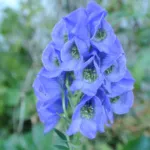 Azure Monkshood (Aconitum carmichaelii) care guideAconitum carmichaelii
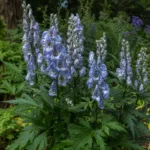 Monkshood (Aconitum ‘Stainless Steel’)Aconitum 'Stainless Steel'
 Monkshood (Aconitum ‘Bressingham Spire’)Aconitum 'Bressingham Spire'
 Golden full moon maple (Acer shirasawanum ‘Aureum’)Acer shirasawanum 'Aureum'
 Globosum (Acer platanoides ‘Globosum’)Acer platanoides 'Globosum'
 Striped maple (Acer pensylvanicum) care guideAcer pensylvanicum