
 Source:
 Tree peony (Paeonia suffruticosa) short overview
Tree peony is a long-lived, deciduous woody peony grown for its large spring flowers and elegant, deeply divided foliage. It forms a branching shrub with persistent stems rather than dying back to the ground each winter. In United States gardens, it performs best in fertile, well-drained soil with morning sun or light afternoon shade, steady moisture, and shelter from strong wind. Taxonomic usage is complex because many plants sold under this name are hybrids.
Taxonomic classification
Tree peony (Paeonia suffruticosa) care guide
Light and placement
Give tree peony full morning sun, with light afternoon shade in hot-summer regions. A site with east or southeast exposure, protection from harsh wind, and bright open light is ideal. Too much shade produces weak, lax growth and fewer flowers; intense reflected heat or prolonged hot afternoon sun can scorch foliage and shorten flower life. Avoid crowded, poorly ventilated positions.
Watering and humidity
Water deeply when the top few inches of soil begin to dry, especially during establishment, flowering, and summer drought. Keep moisture steady rather than alternating between severe dryness and saturation. Reduce supplemental watering after leaf fall, but do not allow newly planted shrubs to dry completely before the ground freezes. Water at soil level and avoid repeatedly wetting the foliage.
Soil and growing medium
Use deep, fertile soil that drains freely but holds moderate moisture. Improve compact ground with organic matter, but do not create a sharply different pocket of rich soil around the roots. Heavy clay should be amended broadly or planted in a raised position. A slightly acidic through mildly alkaline reaction is tolerated; avoid persistently waterlogged soil and highly alkaline rubble or construction fill.
Feeding
Apply a thin layer of finished compost around the root zone in early spring, keeping it away from the stems. If growth is weak, use a balanced slow-release fertilizer at label rates after new growth begins. Avoid high-nitrogen feeding, late-season fertilizing, and heavy applications that encourage soft shoots or excessive foliage at the expense of sturdy flowering wood.
Growth and habit
This shrub develops a permanent woody framework and expands slowly as branching stems mature. It is generally longer-lived than herbaceous peonies but can take several years to settle and flower heavily after planting. Allow room for its broad outline, keep competing roots and dense groundcovers away from the base, and maintain a light mulch layer without burying the stems.
Planting and repotting
Plant while dormant in a broad hole with loosened surrounding soil. Set the crown at nursery depth, keep woody stems above soil, backfill without a compacted amended pocket, and water thoroughly. Mulch lightly over the root zone, leaving a clear gap around the base. Fall planting allows root establishment before spring growth; stake only if wind exposure makes it necessary.
Container-grown tree peonies need a deep, stable pot with excellent drainage and room for a woody root system. Repot or shift plants during dormancy, disturbing roots as little as possible. Choose a container only modestly larger than the existing root ball, use a fertile free-draining mix, and provide winter protection because container roots experience colder temperature swings than roots in the ground.
Propagation and pruning
Propagation
Named cultivars are commonly propagated by grafting onto herbaceous peony roots; division, layering, cuttings, and seed are possible but variable. Seed-grown plants may take years to flower and will not reliably reproduce a selected cultivar. Grafting is best left to experienced propagators and is usually performed during the dormant season or according to the stock’s active-growth timing.
Pruning
Prune sparingly. Remove dead, damaged, or crossing wood in late winter or immediately after flowering, before next year’s buds are fully developed. Do not cut the shrub to the ground as with herbaceous peonies. Remove spent flowers if desired, but preserve healthy leafy stems for continued growth and flower-bud development.
Overwintering
Established plants are generally hardy outdoors in suitable USDA zones. Protect young shrubs from drying winter winds, repeated freeze-thaw exposure, and heavy wet snow that can split branches. Apply a light winter mulch after the ground cools, keeping it away from stems. Do not wrap tightly or keep plants warm indoors; they require a genuine dormant period.
Uses
Used as a specimen shrub, foundation accent, mixed-border plant, woodland-edge subject, or seasonal cut flower. Its persistent woody structure provides garden form outside the flowering period, while the large blooms suit informal arrangements. Flowers and plant parts should not be used as food or medicine without authoritative species-specific guidance.
Appearance
Leaves are alternate, bluish to medium green, and deeply divided into narrow lobes, giving the shrub a finely textured appearance. Stems remain woody through winter and may show tan, gray-brown, or reddish-brown bark. Large solitary flowers open above the divided foliage. The persistent woody framework distinguishes tree peony from herbaceous peonies, which die back to the ground.
Flowering
Flowers are produced on the previous season’s woody growth and open before or around the time the foliage is fully expanded. Individual blooms are large and showy, with flower form ranging from simple open flowers to densely petaled doubles in cultivated selections. Bloom timing is usually in mid to late spring, and flowers may be damaged by hard frost, heavy rain, or strong wind.
Pollination and visitors
Open tree-peony flowers can provide pollen and nectar to visiting bees and bumblebees during spring bloom. Double flowers may be less accessible because dense petals can obstruct floral resources. The main value is as a seasonal flower resource rather than a long-season pollinator plant.
Paeonia suffruticosa photos
Click any photo for a larger view. Source, author and license are shown separately.
Diseases and pests
Diseases
Watch for botrytis blight, leaf spots, stem cankers, and root problems associated with wet soil. Improve air circulation, avoid overhead irrigation, remove diseased foliage and fallen debris, and prune out infected wood into healthy tissue. Good drainage is the most important preventive measure against chronic root decline.
Pests
Common problems may include scale insects, thrips, aphids, mealybugs, and occasional beetle or caterpillar feeding. Inspect new growth and flower buds regularly. Use a strong water spray for light infestations, encourage natural enemies, and reserve labeled horticultural treatments for persistent or damaging outbreaks. Avoid spraying open flowers when bees are active.
Related diseases and pests
Only Plant Doctor profiles whose host data indicate this plant may be affected are shown here.
 DiseaseSouthern blightAthelia rolfsii
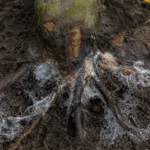 DiseaseWhite Root Rot (Rosellinia Root Rot)Rosellinia necatrix Berl. ex Prill. (synonym: Dematophora necatrix)
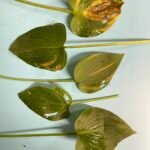 PestStrawberry foliar nematodeAphelenchoides fragariae
 DiseaseCrown gallAgrobacterium tumefaciens (現在 commonly classified as Rhizobium radiobacter)
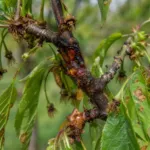 DiseaseBacterial blight and cankerPseudomonas syringae pv. syringae
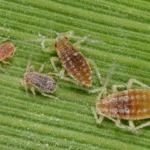 PestMealy Plum AphidHyalopterus pruni (Geoffroy, 1762)
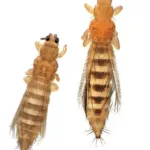 PestOnion thripsThrips tabaci Lindeman
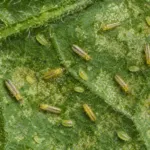 PestMelon thripsThrips palmi Karny
Toxicity and pollen
Peonies are listed by veterinary poison-control resources as toxic to dogs and cats, with paeonol identified as a toxic principle and gastrointestinal signs such as vomiting or diarrhea reported. Evidence is stronger for the peony group than for every named tree-peony cultivar individually. Keep pets from chewing leaves, stems, roots, or flowers and contact a veterinarian after suspected ingestion.
- Typical season
- April–June in much of the United States
- Pollination / pollen
- Heavy, sticky pollen presented at the flower rather than readily wind-dispersed
Tree peony pollen is primarily presented within insect-visited flowers and is relatively heavy and sticky, so it is not typically a major windborne pollen source. That does not guarantee zero allergy risk: sensitive people may react to direct contact with flowers or to pollen carried indoors on clothing or by insects. Remove spent blooms and wash hands after handling if irritation occurs.
Native habitat
The tree-peony complex is associated with temperate regions of China, including forest margins, thickets, rocky slopes, and montane environments. Plants generally favor well-drained mineral soils with seasonal moisture and a pronounced winter rest. Cultivated forms are much more widespread than the wild taxa and are commonly grown in temperate gardens.
Interesting fact
The name Paeonia suffruticosa is widely used in horticulture for tree peonies, although modern taxonomic treatments may recognize a complex of species and hybrids. Unlike herbaceous peonies, tree peonies retain woody stems through winter. Many commercial plants sold under this name are complex hybrids, which explains the wide variation in flower colors and forms.
Frequently asked questions (FAQ)
The most relevant questions about this plant, with short and direct answers.
🌱Quick care
What is Paeonia suffruticosa?⌄
Paeonia suffruticosa, commonly called tree peony, is a deciduous woody shrub in the Paeoniaceae family. Unlike herbaceous peonies, its stems remain woody through winter.
How much sun does tree peony need?⌄
Tree peony grows best in full sun to light shade, with at least several hours of direct sunlight for strong flowering. In hot climates, light afternoon shade can help protect flowers and foliage.
How often should I water a tree peony?⌄
Water tree peony deeply when the soil surface begins to dry, maintaining moderate, even moisture without waterlogging. Established plants are more tolerant of short dry periods than newly planted shrubs.
What soil is best for Paeonia suffruticosa?⌄
Use fertile, well-drained loam enriched with organic matter. Poor drainage and winter-wet soil can cause root or crown problems.
Is tree peony cold-hardy?⌄
Yes, tree peony is cold-hardy outdoors in much of the United States, although hardiness varies among cultivars and climates. Protect young plants from severe wind and extreme winter exposure.
🌤️Environment and placement
Where should I plant a tree peony?⌄
Plant tree peony in a bright, sheltered location with good air circulation and deep, well-drained soil. Avoid sites directly beneath trees, where roots compete for moisture and nutrients.
Can tree peony grow in partial shade?⌄
Tree peony can grow in partial shade or light shade, especially where summers are hot. Too much shade commonly produces weak growth and fewer flowers.
Can tree peony tolerate summer heat?⌄
Tree peony can tolerate summer heat when its roots remain evenly moist and the plant receives some protection from intense afternoon sun. Mulching the root zone can help moderate soil temperature.
What USDA zone is suitable for tree peony?⌄
Many tree peonies perform well in USDA Zones 5 through 8, while some cultivars tolerate colder or warmer conditions. Check the hardiness rating of the specific cultivar before planting.
How large does Paeonia suffruticosa get?⌄
Tree peony commonly reaches about 3 to 6 feet tall and wide, though mature size depends on the cultivar and growing conditions. Give it enough room to develop without crowding.
💧Care and problems
How do I care for a tree peony after planting?⌄
Keep the soil moderately moist, maintain a weed-free root zone, and add a light layer of mulch without covering the stems. Avoid heavy feeding because excessive nitrogen can reduce flowering.
Why is my tree peony not blooming?⌄
Tree peony may fail to bloom because it is newly planted, receives too much shade, is planted too deeply, experiences drought, or has suffered winter or frost damage. Newly transplanted plants may need several years to establish before flowering well.
Why are my tree peony leaves turning brown?⌄
Brown leaves can result from drought, intense heat, late frost, poor drainage, or fungal disease. Check soil moisture and drainage first, then remove badly affected foliage and improve air circulation.
Do tree peonies need fertilizer?⌄
Tree peonies usually need little fertilizer when grown in fertile soil. If growth is weak, use a balanced, low-nitrogen fertilizer according to the label rather than applying large amounts of nitrogen.
Do ants harm tree peony buds?⌄
No, ants on tree peony buds are usually harmless and are attracted to the buds’ sugary exudate. They do not need to be removed unless they are associated with another pest problem.
What pests and diseases affect tree peony?⌄
Tree peony can be affected by scale, nematodes, leaf blotch, wilt, canker, honey fungus, and other root or foliar diseases. Good drainage, clean pruning tools, and adequate spacing help reduce problems.
🪴Planting and repotting
When is the best time to plant a tree peony?⌄
Early fall is generally the best time to plant tree peony because roots can establish before winter. Container-grown plants can also be planted in spring if they are watered carefully during establishment.
How deep should I plant a grafted tree peony?⌄
Plant a grafted tree peony with the graft several inches below the soil surface so the scion can develop its own roots. Exact depth depends on how the plant was propagated and the nursery’s instructions.
Can I grow tree peony in a container?⌄
Tree peony can be grown temporarily in a large container with excellent drainage, but it is usually better planted in the ground. Choose a deep, sturdy pot and protect the roots from severe winter temperature swings.
Can I transplant an established tree peony?⌄
You can transplant an established tree peony, but it has deep roots and may take several years to recover and flower normally. Move it in early fall, preserve as much of the root system as possible, and keep it evenly watered.
✂️Propagation and pruning
How is tree peony propagated?⌄
Tree peony is commonly propagated by grafting, and some plants can be produced from semi-ripe cuttings, layering, or seed. Grafting is often preferred because cuttings can be difficult and slow to root.
Can I grow tree peony from seed?⌄
Yes, tree peony can be grown from seed, but germination is slow and offspring may not resemble the parent cultivar. Seeds commonly require a prolonged period of warm and cold conditions before sprouting.
Can tree peony be divided?⌄
Tree peony is not normally divided like a herbaceous peony because it is a woody shrub. Propagation is generally more successful through grafting, layering, cuttings, or seed.
When should I prune a tree peony?⌄
Prune tree peony in spring as new growth begins, removing dead, damaged, or weak wood back to healthy tissue. Light shaping can be done when needed, but extensive pruning is rarely necessary.
Should I cut tree peony back to the ground in winter?⌄
No, do not cut tree peony to the ground in winter because its branches are woody and carry the plant’s structure. Remove only dead wood, unwanted suckers, or branches needed for shaping.
How do I remove suckers from a tree peony?⌄
Remove suckers that arise below the graft or from the rootstock by cutting or pulling them away at their point of origin. Leaving them in place can weaken the desired tree peony growth.
⚠️Toxicity and safety
Is tree peony toxic to dogs and cats?⌄
Tree peony should be treated as potentially toxic if ingested by pets, and consumption should be prevented. Ingestion may cause gastrointestinal upset; contact a veterinarian or animal poison-control service if a pet eats the plant.
Can people eat tree peony flowers or roots?⌄
Do not eat tree peony flowers, leaves, roots, or seeds unless a qualified expert has specifically identified a safe, properly prepared use. Garden plants may be misidentified or treated with products unsuitable for consumption.
🌸Flowering and special interest
When does tree peony bloom?⌄
Tree peony usually blooms in mid- to late spring, with timing varying by cultivar and local climate. Flowers may appear before or around the same period as many herbaceous peonies.
How long does a tree peony take to bloom after planting?⌄
A newly planted tree peony may take two or more growing seasons to flower reliably, especially after transplanting. Consistent moisture, suitable light, and correct planting depth improve establishment.
How big are tree peony flowers?⌄
Tree peony flowers are among the largest peony blooms and may reach several inches across, depending on the cultivar. Flower forms range from single to semi-double and double, with colors including white, pink, red, purple, and yellow.
Do tree peony flowers need support?⌄
Mature tree peonies usually need less support than herbaceous peonies because their woody stems are stronger. Large double flowers may still benefit from discreet support in exposed locations.
Should I remove spent tree peony flowers?⌄
Yes, remove spent flowers after blooming to improve appearance and prevent energy from going into unwanted seed production. Do not remove large amounts of healthy foliage, which the plant needs for growth.
Similar plants
 Azure Monkshood (Aconitum carmichaelii) care guideAconitum carmichaelii
 Monkshood (Aconitum ‘Stainless Steel’)Aconitum 'Stainless Steel'
 Monkshood (Aconitum ‘Bressingham Spire’)Aconitum 'Bressingham Spire'
 Golden full moon maple (Acer shirasawanum ‘Aureum’)Acer shirasawanum 'Aureum'
 Globosum (Acer platanoides ‘Globosum’)Acer platanoides 'Globosum'
 Striped maple (Acer pensylvanicum) care guideAcer pensylvanicum