
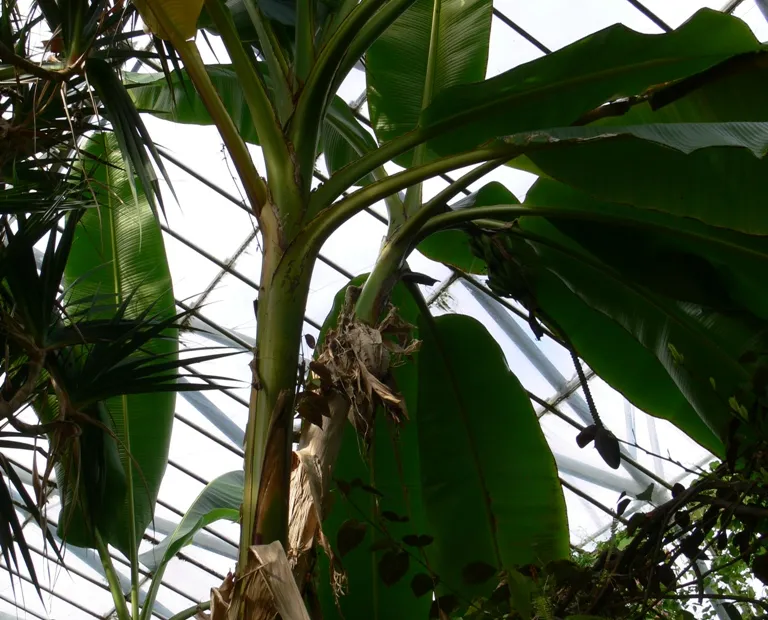
 Source:
 Darjeeling banana (Musa sikkimensis) short overview
Darjeeling banana is a tall, clump-forming banana species from the eastern Himalayan region and northern Myanmar. It is grown in the United States primarily for its bold tropical foliage, red-marked young leaves, and unusual cold tolerance rather than dependable fruit production. Give it full sun, rich moisture-retentive soil with good drainage, regular feeding during active growth, and winter protection where freezes are expected.
Taxonomic classification
Darjeeling banana (Musa sikkimensis) care guide
Light and placement
Plant outdoors in full sun with shelter from strong wind, ideally in a south- or west-facing position. In hot, dry inland areas, light afternoon shade can reduce leaf scorch. Pale, stretched growth and smaller leaves indicate insufficient light; bleached patches, crisp margins, or sudden leaf tearing suggest excessive heat, drought, or wind rather than simple low light.
Watering and humidity
Water deeply whenever the upper 1–2 inches of soil begin to dry, then allow excess water to drain. During hot summer growth, container plants may need water daily, while established beds usually need several thorough waterings each week. Reduce watering in cool weather and keep overwintered rhizomes only lightly moist. Good air movement helps wet foliage dry.
Soil and growing medium
Use fertile loam amended with compost, leaf mold, or other organic matter, but avoid dense soil that remains stagnant around the rhizome. A raised bed or large container with generous drainage is helpful. The species tolerates a broad pH range, but slightly acidic to neutral soil generally supports vigorous growth and efficient nutrient uptake.
Feeding
Apply a balanced slow-release fertilizer at spring emergence, then supplement with a dilute balanced liquid feed every 3–4 weeks during vigorous summer growth. Compost or well-rotted manure can be used as a surface mulch. Do not fertilize after growth has substantially slowed in fall, and avoid concentrated fertilizer in dry soil.
Growth and habit
This banana forms a clump from a rhizome, with new shoots developing around the parent pseudostem. Growth is fast in warm, fertile conditions but slows sharply below about 60°F. Because leaves are easily shredded by wind, place it where buildings, fences, or dense planting provide shelter without eliminating light.
Planting and repotting
Choose a warm, sheltered site and prepare a broad planting area with compost-rich soil. Plant after frost danger has passed and nighttime temperatures are consistently mild. Keep the crown at soil level, water thoroughly, and mulch around—but not directly against—the pseudostem. Early-season protection from wind and cold improves establishment.
Move container plants into a heavier, stable pot when roots fill the container or the clump becomes top-heavy. Repot in spring using rich, well-drained potting soil, keeping the crown at its original depth. Water thoroughly after transplanting and provide bright light while roots re-establish. Divide crowded offsets only when a manageable clump is desired.
Propagation and pruning
Propagation
Propagate from fresh seed or by separating rooted offsets from the rhizomatous clump. Sow seed in a warm, consistently moist medium; germination can be slow and uneven. Divide offsets during warm active growth, keeping a portion of rhizome and functioning roots with each division. Seed-grown plants may vary in leaf markings and vigor.
Pruning
Remove shredded, browned, or frost-damaged leaves at the base with clean loppers. After a hard freeze, cut the pseudostem back only when damage is clear and the tissue has softened; leave healthy lower stem tissue when possible. Remove spent flowering stems after fruit development or decline. Avoid unnecessary cutting during active growth.
Overwintering
In USDA Zones 7–8, protect the rhizome with a thick, dry mulch after frost has ended active growth, and wrap or shelter the pseudostem if preserving height is important. In colder regions, grow it in a container or lift and store the dormant rhizome cool and barely moist. Indoor plants need bright light, reduced watering, and protection from dry heated air.
Uses
Primarily an ornamental foliage plant for tropical borders, sheltered courtyards, conservatories, patios, and large containers. It can provide seasonal structure and nectar- or pollen-bearing flowers for insects when mature. Seeded fruits are not the main horticultural purpose; do not assume a nursery plant will produce dessert-quality fruit.
Appearance
The plant has a banana-like pseudostem made from overlapping leaf sheaths and large, arching, oblong leaves. Young foliage may show reddish-purple undersides, midribs, or stripes that fade as leaves mature, although intensity varies among seedlings and cultivated selections. Pendent purple bracts and angular seeded fruits help distinguish mature flowering plants.
Flowering
The inflorescence hangs from the pseudostem and is composed of persistent, overlapping bracts. Female flowers occur first toward the base, followed by male flowers nearer the distal portion. Mature plants can flower in summer, but flowering depends strongly on age, warmth, plant size, and whether the pseudostem survives winter.
Pollination and visitors
Banana flowers can be visited by insects, but reliable species-specific visitor records for Musa sikkimensis are limited. The flowers produce exposed pollen and occur in a large pendent inflorescence; this supports an insect-associated or mixed pollination interpretation, but the strength and composition of visits should be treated as uncertain.
Musa sikkimensis photos
Click any photo for a larger view. Source, author and license are shown separately.
Diseases and pests
Diseases
Prevent problems by using clean soil, avoiding waterlogged conditions, spacing clumps for airflow, and removing badly damaged foliage. Watch for leaf-spot diseases, soft rhizome or pseudostem rot, and fungal decline after prolonged cool wet weather. Improve drainage and sanitation first; remove severely rotted tissue and avoid overhead watering when disease is active.
Pests
Inspect leaf undersides and leaf axils for spider mites, aphids, mealybugs, scale, thrips, and caterpillars. Dry indoor air favors spider mites, while dense outdoor growth can conceal scale or mealybugs. Rinse foliage, improve humidity without keeping leaves constantly wet, and use insecticidal soap or horticultural oil according to the product label when needed.
Related diseases and pests
Only Plant Doctor profiles whose host data indicate this plant may be affected are shown here.
 PestCitrus mealybugPlanococcus citri
 DiseaseFusarium wiltFusarium oxysporum species complex
 PestBrown Soft ScaleCoccus hesperidum
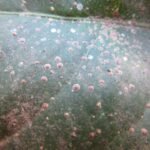 PestCalifornia red scaleAonidiella aurantii
 Environmental stressChilling injury
 DiseaseRhizopus soft rotRhizopus stolonifer
 DiseaseBacterial soft rotPectobacterium carotovorum
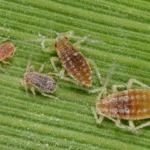 PestMealy Plum AphidHyalopterus pruni (Geoffroy, 1762)
Toxicity and pollen
Direct toxicity data for Musa sikkimensis are limited. Bananas in the genus Musa are generally treated as low-risk ornamentals, but evidence for this exact species is insufficient to certify complete safety. Plant material, sap, and hard-seeded fruit may cause choking or gastrointestinal upset if eaten in quantity. Prevent children and pets from chewing large amounts and wash sap from skin.
- Typical season
- Summer during flowering, where flowering occurs
- Pollination / pollen
- Exposed pollen from male flowers; species-level dispersal data are limited
Musa sikkimensis produces pollen in its male flowers, but reliable measurements of airborne pollen and allergy sensitization for this species were not located. Because the flowers are enclosed within a large inflorescence and the plant is generally associated with animal-mediated pollination, widespread airborne exposure may be limited, but it should not be described as allergy-free.
Native habitat
The species is native to subtropical environments from Assam and Bangladesh through the eastern Himalaya to Myanmar. It occurs in warm, seasonally cool mountain and foothill climates, where fertile soils, regular moisture, and a long growing season support large rhizomatous growth. It is not a desert or drought-adapted banana.
Interesting fact
Musa sikkimensis is an accepted species, not merely a horticultural cultivar. Its young leaves can carry red or reddish-purple markings that often fade with age. The species produces hard-seeded fruits, unlike many familiar seedless cultivated bananas. It is valued as one of the more cold-tolerant ornamental bananas, though the leaves and pseudostem remain frost-sensitive.
Frequently asked questions (FAQ)
The most relevant questions about this plant, with short and direct answers.
🌱Quick care
What is Musa sikkimensis called in English?⌄
Musa sikkimensis is commonly called the darjeeling banana. It is a cold-tolerant banana plant in the Musaceae family.
Is the darjeeling banana a real banana tree?⌄
The darjeeling banana is a herbaceous perennial, not a woody tree. Its trunk-like pseudostem is formed by overlapping leaf bases.
How large does the darjeeling banana get?⌄
The darjeeling banana can reach roughly 8 to 13 feet in favorable garden conditions, with large leaves and a broad spread. Container growth and cold dieback usually keep it smaller.
🌤️Environment and placement
How much sunlight does Musa sikkimensis need?⌄
Musa sikkimensis grows best in full sun to bright filtered light. Provide some protection from intense afternoon heat if leaves scorch or wilt quickly.
Can Musa sikkimensis grow indoors?⌄
Musa sikkimensis can grow indoors near a very bright window or under strong grow lights. Give it ample space, steady moisture, humidity, and protection from cold drafts.
What USDA hardiness zone is the darjeeling banana?⌄
The darjeeling banana is often grown as a hardy or semi-hardy banana in USDA Zones 7 and warmer, but survival depends on winter protection, soil drainage, and local exposure. In colder zones, grow it in a container or overwinter the rhizome indoors.
Can Musa sikkimensis survive winter outdoors?⌄
Musa sikkimensis may survive winter outdoors where the ground does not remain deeply frozen, especially with heavy mulch and protection from wet cold. Freezing temperatures can kill the pseudostem, and severe or prolonged freezes can damage the rootstock.
Does Musa sikkimensis need high humidity?⌄
Musa sikkimensis benefits from moderate to high humidity, especially indoors. Humidity helps limit leaf-edge browning, but good airflow is still necessary to discourage fungal problems.
Can Musa sikkimensis grow in shade?⌄
Musa sikkimensis tolerates bright filtered light and some light shade, but deep shade produces slower growth and smaller, weaker foliage. Aim for bright light with shelter from the harshest afternoon exposure.
💧Care and problems
How do you protect a darjeeling banana from frost?⌄
After the first hard frost, remove damaged foliage, protect the crown with a thick layer of dry mulch, and wrap or enclose the remaining pseudostem in cold regions. Keep winter protection reasonably dry to reduce rot.
How often should you water Musa sikkimensis?⌄
Water Musa sikkimensis whenever the soil surface begins to dry, keeping the root zone evenly moist during active growth. Do not leave the plant in standing water, particularly during cool weather.
Should Musa sikkimensis be fertilized?⌄
Fertilize Musa sikkimensis during active growth with a balanced fertilizer according to the product label. Reduce or stop feeding during cool, low-light winter conditions.
Why are the leaves of my darjeeling banana turning brown?⌄
Brown leaves commonly result from drought, low humidity, wind, cold damage, or excessive fertilizer salts. Check soil moisture and roots first, then protect the plant from harsh conditions.
Why is Musa sikkimensis not growing?⌄
Slow growth is usually caused by cool temperatures, insufficient light, dry soil, root restriction, or winter dormancy. Growth normally accelerates when warmth, moisture, and light improve in spring.
What pests affect the darjeeling banana?⌄
The darjeeling banana may be affected by aphids, mealybugs, and spider mites, particularly indoors or in greenhouses. Inspect leaf undersides regularly and improve airflow before using a labeled treatment if needed.
Why are Musa sikkimensis leaves splitting?⌄
Leaf splitting is normal for banana plants and is often increased by wind, mechanical damage, or rapid leaf expansion. Reduce strong wind exposure, but do not expect every mature leaf to remain intact.
🪴Planting and repotting
What soil is best for the darjeeling banana?⌄
The darjeeling banana prefers rich, moisture-retentive but well-drained loam. Improve compact soil with organic matter while preserving reliable drainage around the rhizome.
Can I grow a darjeeling banana in a container?⌄
Yes, the darjeeling banana grows well in a large, sturdy container with rich, well-drained potting mix. Choose a pot with drainage holes and repot when roots fill the container or growth slows.
When should Musa sikkimensis be repotted?⌄
Repot Musa sikkimensis in spring as new growth begins, usually every one or two years when container-grown. Move it into only a moderately larger pot to avoid a persistently wet root zone.
When should I plant Musa sikkimensis outdoors?⌄
Plant Musa sikkimensis outdoors after the danger of hard frost has passed and the soil has warmed. In much of the United States, late spring is safer than early spring, especially in colder USDA Zones 7 and 8.
✂️Propagation and pruning
How do you propagate Musa sikkimensis?⌄
Propagate Musa sikkimensis mainly by separating rooted suckers from the parent plant in spring. It can also be grown from seed, although seed germination may be slow and uneven.
Can you grow a darjeeling banana from seed?⌄
Yes, the darjeeling banana can be grown from seed, but germination may be slow and seedlings require warmth, moisture, and patience. Fresh, viable seed generally offers the best chance of success.
When should I divide Musa sikkimensis pups?⌄
Divide Musa sikkimensis pups in spring or during warm active growth, selecting offsets with their own roots and a portion of the underground corm. Water the divisions carefully while they establish.
How should Musa sikkimensis be pruned?⌄
Prune Musa sikkimensis by removing dead, torn, or frost-damaged leaves with clean tools. Do not remove healthy green leaves unnecessarily because they supply energy for new growth and flowering.
⚠️Toxicity and safety
Is the darjeeling banana toxic to dogs or cats?⌄
No species-specific toxicity classification is established for Musa sikkimensis. Because banana plants can be confused with other species or cultivars, prevent pets from chewing ornamental plants and contact a veterinarian if ingestion causes symptoms.
Is Musa sikkimensis safe for people to touch?⌄
Musa sikkimensis is not known to have a species-specific poisonous sap or foliage hazard. Its leaves and stems can still cause minor irritation or messy sap exposure in some people, so wash hands after pruning.
🌸Flowering and special interest
Does Musa sikkimensis produce bananas?⌄
Musa sikkimensis can produce flowers and angular yellowish fruits when mature and given a long, warm growing season. Fruit production is less reliable in climates where winter kills the pseudostem, and the fruits may contain large, hard seeds.
How long does it take Musa sikkimensis to flower?⌄
Musa sikkimensis commonly takes several years to reach flowering size, although timing varies with climate, plant age, light, nutrition, and winter survival. Plants that repeatedly freeze to the ground may remain vegetative.
When does the darjeeling banana flower?⌄
The darjeeling banana may flower in summer once it is mature and has retained enough pseudostem growth. Flowers are typically followed by fruit if conditions remain warm long enough.
Similar plants
 Azure Monkshood (Aconitum carmichaelii) care guideAconitum carmichaelii
 Monkshood (Aconitum ‘Stainless Steel’)Aconitum 'Stainless Steel'
 Monkshood (Aconitum ‘Bressingham Spire’)Aconitum 'Bressingham Spire'
 Golden full moon maple (Acer shirasawanum ‘Aureum’)Acer shirasawanum 'Aureum'
 Globosum (Acer platanoides ‘Globosum’)Acer platanoides 'Globosum'
 Striped maple (Acer pensylvanicum) care guideAcer pensylvanicum