
 Source:
 Mammillaria bombycina short overview
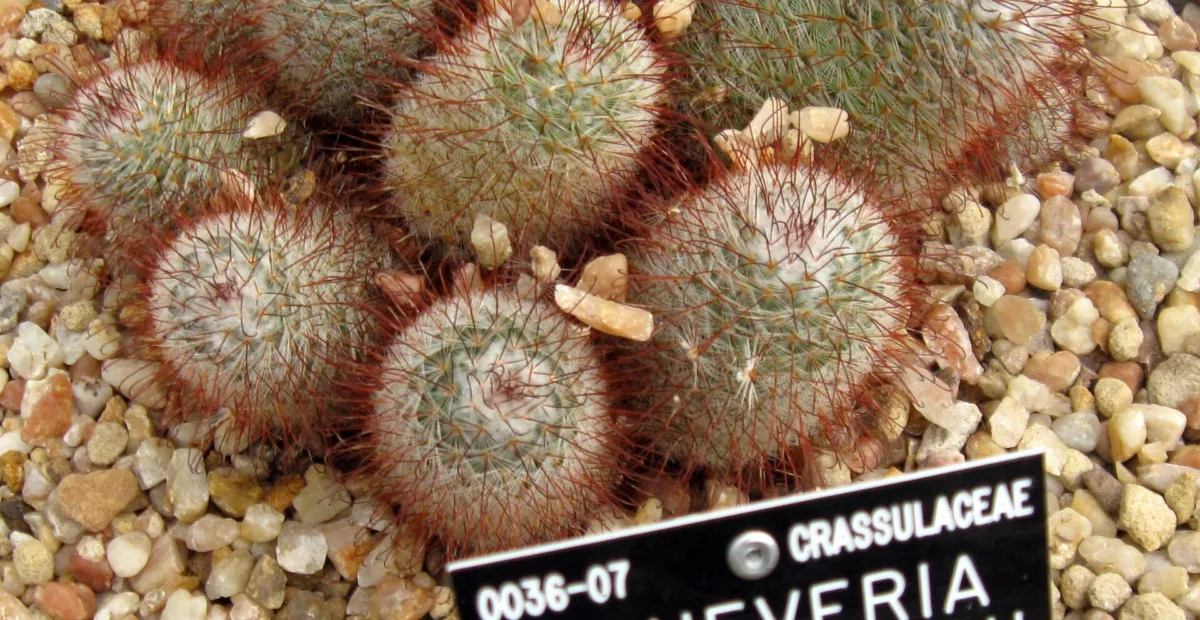
Mammillaria bombycina is a distinctive Mexican pincushion cactus that begins as a rounded stem and can mature into a dense clump. Its green tubercle-covered stems are wrapped in fine white radial spines, woolly areole axils, and several hooked central spines. With strong light, sharply draining soil, restrained watering, and a cool, dry winter rest, established plants can produce a bright ring of pink to reddish-purple flowers in summer.
Taxonomic classification
Mammillaria bombycina care guide
Light and placement
Provide several hours of direct sun, ideally in a south- or west-facing window or a bright greenhouse. Outdoors, acclimate gradually after indoor growth to prevent sunburn. Weak light causes elongated, pale growth and poor flowering; excessive abrupt sun can bleach or brown the epidermis. Good airflow is especially important in humid regions and during cool weather.
Watering and humidity
Water thoroughly only after the mix has dried completely, then let excess drain away. During active spring and summer growth, the interval may be roughly every two to three weeks indoors, but temperature, pot size, and humidity control the schedule. Water much less in fall and keep the plant nearly dry in a cool winter rest. Never water by calendar alone.
Soil and growing medium
Use a porous cactus mix with substantial mineral grit, pumice, perlite, or coarse sand. The container must drain freely and should never sit in a saucer of water. A slightly acidic to neutral substrate is suitable; avoid heavy, peat-rich mixes that stay wet around the roots.
Feeding
Feed during active spring and summer growth with a diluted, low-nitrogen cactus fertilizer every four to six weeks, or follow the product label at reduced strength. Do not fertilize dry, stressed, recently repotted, dormant, or wintered plants; water first if the root ball is completely dry.
Growth and habit
This cactus starts as a rounded solitary stem and commonly becomes cylindrical with age, producing offsets that build a compact to broad clump. Growth is slow, especially in low winter temperatures. Keep the crown dry and remove dead material carefully so the dense wool and hooked spines do not trap moisture or debris.
Planting and repotting
Plant outdoors after the danger of frost has passed, only in a raised, sharply drained bed or rock garden. Set the root ball at its original depth; do not bury the stem. Allow room for offsets to develop and keep newly planted specimens nearly dry until roots re-establish.
Repot in spring or early summer only when the mix is dry, the plant has outgrown its pot, or the substrate has degraded. Use a pot only slightly wider than the root system, protect hands from hooked spines, and wait several days before watering after repotting.
Propagation and pruning
Propagation
Offsets are the simplest method. Separate an offset in the growing season, allow the cut surface to callus for about a week, then place it in a dry, porous mix and water sparingly after roots begin forming. Seed propagation is also possible but slower and requires warm, bright, humid germination conditions followed by gradual drying.
Pruning
No routine pruning is needed. Remove dead, diseased, or badly damaged offsets with a sterile blade, then allow wounds to dry fully before resuming watering. Avoid cutting healthy stems merely to control size; offsets can instead be separated for propagation.
Overwintering
Keep frost-free, bright, and cool in winter, ideally around 50–60°F. Reduce watering sharply once growth slows and keep the substrate nearly dry during cold spells. In USDA Zone 10b or warmer, outdoor plants still need protection from prolonged cold, winter rain, and saturated soil.
Uses
Primarily grown as an ornamental specimen for cactus collections, sunny windows, greenhouses, containers, and sheltered xeric displays. Its clumping habit and crown of flowers make it suitable for small rock-garden compositions where drainage is excellent. It is not documented here as a food or medicinal plant.
Appearance
The plant has green, nipple-like tubercles arranged in spirals rather than true leaves. Areoles carry numerous fine whitish radial spines and several longer hooked central spines, with conspicuous white wool in the axils, especially near the crown. Young plants are rounded; older specimens become cylindrical and produce offsets.
Flowering
Flowers form in a crown-like ring near the upper part of the stem. They are reported as pink to reddish-purple, broadly funnel-shaped, and approximately 2–3 inches across in cultivation. Strong light and a pronounced dry winter rest support flowering; the usual United States display is in summer, although timing varies with latitude and culture.
Pollination and visitors
Species-specific pollinator documentation was not located in the reviewed sources, so no visitor group is assigned. The flowers are open during the daytime, but a reliable claim about particular bees, flies, or other visitors would require direct ecological documentation.
Mammillaria bombycina photos
Click any photo for a larger view. Source, author and license are shown separately.
Diseases and pests
Diseases
The main risks are root or stem rot from persistently wet soil and fungal spotting after poor ventilation. Remove damaged tissue, improve drainage and airflow, and keep the plant dry during cool conditions. Isolate affected specimens and use a labeled fungicide only when cultural correction is insufficient.
Pests
Watch for mealybugs in woolly axils and root mealybugs below the soil line. Inspect new plants before adding them to a collection, isolate infestations, remove visible insects with a cotton swab, and treat persistent problems with a labeled succulent-safe product. Avoid excessive spraying that leaves the plant damp for long periods.
Related diseases and pests
Only Plant Doctor profiles whose host data indicate this plant may be affected are shown here.
Toxicity and pollen
No authoritative species-specific toxicology evidence was located confirming poisoning in humans or pets. The principal documented exposure hazard is mechanical injury from the hooked spines. Do not allow children or animals to chew the plant, and handle with thick gloves or tools.
- Pollination / pollen
- Pollen from insect-visited flowers; airborne relevance undocumented
Mammillaria bombycina is an insect-pollinated flowering cactus, but the reviewed sources did not provide species-specific airborne pollen measurements or clinical allergy evidence. Do not assume zero allergy risk; people with known pollen sensitivity should avoid direct contact with flowers and wash hands after handling.
Native habitat
The accepted native range is in Mexico, particularly northeastern Jalisco and southwestern Aguascalientes, where the plant grows in dry shrubland or desert-like environments. It is adapted to intense light, mineral soils, seasonal rainfall, and rapid drainage rather than continuously moist ground.
Interesting fact
The specific epithet bombycina refers to a silky or woolly appearance. The plant changes from globular to more cylindrical with age and can form large clumps. Its hooked central spines are a useful identification feature among cultivated Mammillaria. The species has several historical synonyms, but Mammillaria bombycina is currently accepted by Kew.
Frequently asked questions (FAQ)
The most relevant questions about this plant, with short and direct answers.
🌱Quick care
How do you care for Mammillaria bombycina?⌄
Give Mammillaria bombycina full sun, very fast-draining cactus soil, and low water. Let the mix dry completely before watering again, and keep the plant protected from frost.
How often should I water Mammillaria bombycina?⌄
Water Mammillaria bombycina only when its soil is completely dry, then soak the mix and let excess water drain away. Water much less in winter when growth slows.
Does Mammillaria bombycina need direct sunlight?⌄
Yes, Mammillaria bombycina grows best in full sun or the brightest light available. Acclimate it gradually to strong outdoor sun to reduce the risk of sunburn.
Is Mammillaria bombycina easy to grow indoors?⌄
Mammillaria bombycina can grow well indoors if it receives several hours of strong direct light and is planted in a porous cactus mix. A sunny south- or west-facing window or a grow light is usually needed.
🌤️Environment and placement
Where should I place Mammillaria bombycina outdoors?⌄
Place it in a sunny, open position with excellent air circulation and shelter from prolonged rain. A raised container, rock garden, or covered patio is usually safer than a wet garden bed.
Can Mammillaria bombycina grow outside year-round in the United States?⌄
It can grow outdoors year-round only in regions where freezing conditions are uncommon and the soil stays sharply drained. In areas with regular frost or winter rain, grow it in a container and move it under protection.
What temperature is too cold for Mammillaria bombycina?⌄
Protect Mammillaria bombycina from frost and freezing temperatures. It may tolerate cool conditions when completely dry, but sustained cold and wet soil can cause serious damage.
Can Mammillaria bombycina tolerate high humidity?⌄
Mammillaria bombycina tolerates ordinary indoor humidity but does best in dry conditions with good airflow. High humidity combined with frequent watering increases the risk of rot.
What kind of light does Mammillaria bombycina need in winter?⌄
Keep Mammillaria bombycina in the brightest location possible during winter. Strong light helps prevent weak, stretched growth when watering and growth are reduced.
💧Care and problems
What soil is best for Mammillaria bombycina?⌄
Use a porous cactus mix amended with abundant mineral grit, such as pumice, perlite, or coarse sand. The finished mix should drain rapidly and dry promptly after watering.
Why is my Mammillaria bombycina turning soft or brown at the base?⌄
A soft or darkening base commonly indicates rot caused by excess moisture, poor drainage, or cold wet conditions. Stop watering, inspect the roots, and remove rotted tissue only if healthy stem material remains.
Why is Mammillaria bombycina leaning or growing tall?⌄
Leaning or elongated growth usually means Mammillaria bombycina is not receiving enough light. Move it gradually to a brighter location, but recognize that already-stretched growth will not return to its original shape.
Why is my Mammillaria bombycina yellowing?⌄
Yellowing can result from overwatering, root damage, poor light, or normal aging of older tissue. Check that the roots are firm and the soil dries fully between waterings before watering again.
What pests attack Mammillaria bombycina?⌄
Mealybugs, scale, and spider mites can infest Mammillaria bombycina, especially indoors or in crowded collections. Inspect the woolly crown and crevices regularly because pests can hide among the tubercles and spines.
Should I fertilize Mammillaria bombycina?⌄
Fertilize Mammillaria bombycina sparingly during active growth with a diluted cactus fertilizer. Do not fertilize dry, dormant, recently repotted, or stressed plants.
Does Mammillaria bombycina need a winter dormancy?⌄
A cool, bright, nearly dry winter rest generally helps Mammillaria bombycina remain compact and encourages flowering. Keep it protected from frost and avoid watering while the soil remains damp.
🪴Planting and repotting
What type of pot is best for Mammillaria bombycina?⌄
Use a pot with a drainage hole that is only slightly larger than the root system. Unglazed clay can help the soil dry faster, while oversized or drainage-free pots increase rot risk.
When should I repot Mammillaria bombycina?⌄
Repot Mammillaria bombycina during active growth, preferably in spring or early summer. Allow damaged roots to dry briefly before planting and wait several days before the first watering.
How deep should Mammillaria bombycina be planted?⌄
Plant Mammillaria bombycina at the same depth it was previously growing, with the stem base kept above the soil line. Do not bury the woolly crown or allow the lower stem to sit in wet mix.
How large does Mammillaria bombycina become?⌄
Mammillaria bombycina begins as a rounded cactus and can become more cylindrical with age, eventually forming large clumps from offsets. Individual stems may become several inches tall under good cultivation.
✂️Propagation and pruning
How do you propagate Mammillaria bombycina from offsets?⌄
Remove an offset as close to the parent plant as possible, let the cut surface dry and callus for about a week, then place it in dry, porous cactus mix. Begin light watering only after roots have had time to develop.
Can Mammillaria bombycina be grown from seed?⌄
Yes, Mammillaria bombycina can be propagated from seed, although seedlings develop slowly. Sow in a sterile, well-draining medium with warmth, bright filtered light, and careful moisture control.
Does Mammillaria bombycina need pruning?⌄
Mammillaria bombycina normally does not need pruning. Remove only dead, diseased, or severely damaged offsets, using clean tools and thick gloves or tongs to avoid the hooked spines.
Can broken spines on Mammillaria bombycina grow back?⌄
Broken spines generally do not regrow from mature areoles. New growth may produce new spines, but damaged areas can remain visibly bare until they are gradually hidden by later growth.
⚠️Toxicity and safety
Is Mammillaria bombycina toxic to cats or dogs?⌄
Species-specific toxicity information for Mammillaria bombycina is limited, but Mammillaria cacti are generally regarded as non-toxic to humans and pets. The hooked spines can still cause painful punctures or eye injuries, so keep it inaccessible.
Are Mammillaria bombycina spines dangerous?⌄
Yes, Mammillaria bombycina has sharp, hooked spines that can puncture skin and become difficult to remove. Handle it with thick gloves, tongs, or folded cardboard, and keep it away from children and pets.
How do I safely handle Mammillaria bombycina when repotting?⌄
Use thick leather gloves, long-handled tongs, or a strip of folded newspaper to hold the plant without squeezing it. Wear eye protection if working close to the hooked spines, and avoid brushing against the woolly crown.
🌸Flowering and special interest
Does Mammillaria bombycina flower?⌄
Yes, mature Mammillaria bombycina can produce pink to reddish-purple flowers in a ring near the crown. Flowering is more likely when the plant receives strong light and a cool, dry winter rest.
When does Mammillaria bombycina bloom?⌄
Mammillaria bombycina commonly blooms during the warmer growing season, with flowers reported in midsummer. The exact timing depends on light, temperature, age, and winter dormancy.
Why is my Mammillaria bombycina not flowering?⌄
Insufficient light, excessive winter warmth, overwatering, or an immature plant can prevent flowering. Give it stronger light, maintain a dry winter rest, and avoid expecting blooms from very young specimens.
What do Mammillaria bombycina flowers look like?⌄
The flowers are funnel-shaped and typically pink to reddish-purple, forming a crown-like ring around the upper stem. They are relatively large compared with the plant and open during the day.
Similar plants
 Azure Monkshood (Aconitum carmichaelii) care guideAconitum carmichaelii
 Monkshood (Aconitum ‘Stainless Steel’)Aconitum 'Stainless Steel'
 Monkshood (Aconitum ‘Bressingham Spire’)Aconitum 'Bressingham Spire'
 Golden full moon maple (Acer shirasawanum ‘Aureum’)Acer shirasawanum 'Aureum'
 Globosum (Acer platanoides ‘Globosum’)Acer platanoides 'Globosum'
 Striped maple (Acer pensylvanicum) care guideAcer pensylvanicum