
 Source:
 Dryopteris affinis short overview
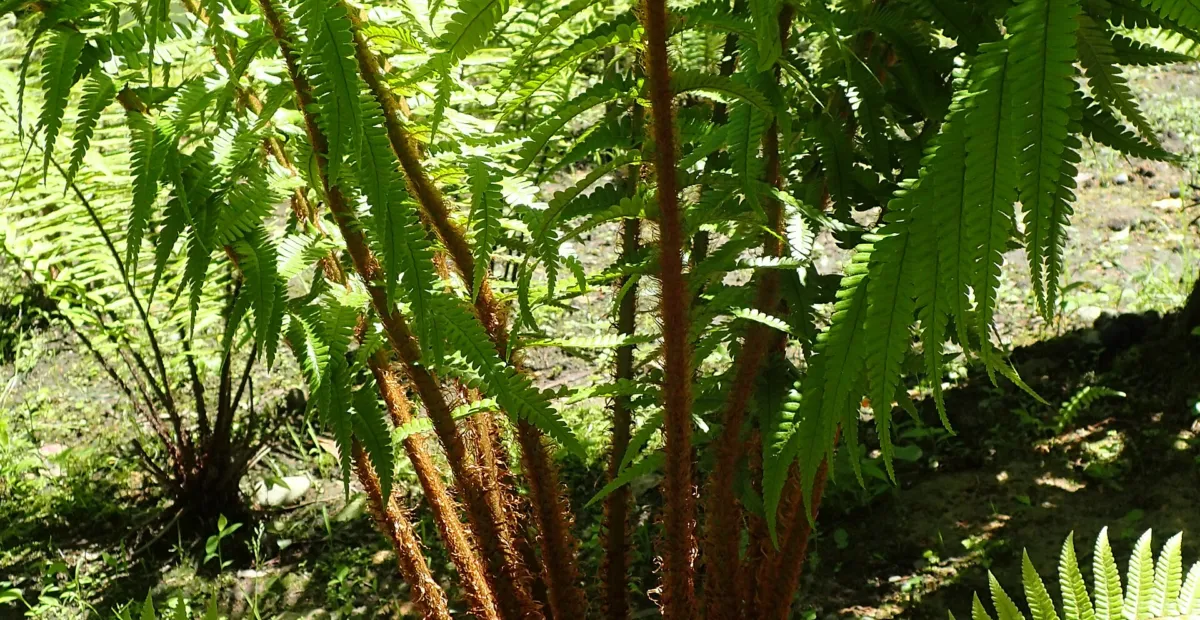
Dryopteris affinis is a robust terrestrial fern from temperate Europe, Macaronesia, and parts of western Asia. It forms an upright rosette of leathery, bipinnate fronds, with fresh yellow-green growth maturing to rich green and golden-brown scales densely covering the stipes and rachises. A dependable choice for shaded woodland borders, it tolerates a broad range of well-drained soils when moisture is available during establishment.
Taxonomic classification
Dryopteris affinis care guide
Light and placement
Give partial shade to deep shade, ideally beneath open woodland or on a north- or east-facing site with protection from hot afternoon sun and drying winds. It can tolerate more sun when soil stays reliably moist. Bleached, scorched fronds indicate excessive light or drought; weak, elongated growth and sparse rosettes suggest insufficient light.
Watering and humidity
Water deeply when the upper inch of soil begins to dry during the first growing season, keeping the root zone evenly moist but never waterlogged. Established plants tolerate short dry periods in shade, but prolonged summer drought can brown the fronds. Water containers more often, and mulch outdoor plants with leaf mold to reduce evaporation.
Soil and growing medium
Use a moisture-retentive but well-drained soil rich in organic matter, such as loam amended with leaf mold or compost. It tolerates clay, sand, and a broad pH range from acidic through neutral to alkaline, provided the root zone does not remain stagnant. Avoid very dry, compacted ground during establishment.
Feeding
Feed in spring with a thin layer of compost, leaf mold, or a balanced slow-release fertilizer at label rate. Ferns generally need modest nutrition; overfertilizing can produce soft, drought-sensitive growth and salt injury. Do not fertilize newly divided plants until they resume active growth.
Growth and habit
The plant forms a slowly expanding, stout-crowned clump of erect fronds. Established specimens are relatively low maintenance and can tolerate some dry shade, but new plantings benefit from regular watering and a protective organic mulch. Remove aging fronds selectively to preserve the rosette’s appearance.
Planting and repotting
Plant in spring or fall while soil moisture is reliable. Set the crown at soil level rather than deeply burying it. Space plants about 24–36 inches apart, allowing room for the mature frond spread. Water thoroughly after planting and mulch with leaf mold or compost without covering the crown.
Repot container-grown plants in spring when the root mass fills the pot. Use a sturdy container and a free-draining, humus-rich mix. Handle the rhizome carefully and replant at the original depth; do not bury the crown.
Propagation and pruning
Propagation
Divide established clumps in spring, making sure each division includes a viable crown and roots. Propagation from spores is possible but slow and technically demanding; sow fresh ripe spores on a sterile, moist medium and maintain high humidity and indirect light.
Pruning
Remove dead, damaged, or badly weathered fronds in late winter or early spring before new croziers expand. In mild climates, retain attractive semi-evergreen fronds through winter and cut only those that have collapsed or become unsightly.
Overwintering
Usually hardy outdoors through USDA Zones 4–8. In cold regions, leave healthy fronds in place over winter for crown protection and remove them in late winter. Container plants are more exposed to freezing than in-ground specimens; shelter pots from wind and severe temperature swings rather than bringing established plants into warm indoor rooms.
Uses
Best used as a structural foliage plant in woodland borders, shade gardens, naturalistic plantings, and large containers. Its upright rosette and persistent fronds provide year-round or seasonal texture depending on winter severity. It has no well-supported culinary or medicinal use for this profile.
Appearance
The erect rosette consists of stiff, leathery, two-pinnate to bipinnatifid fronds. Young fronds emerge bright yellow-green and mature green. The stipes and rachises are densely clothed in persistent golden-brown scales. Dark spots at the bases of the pinnae and round sori on the lower frond surface can aid identification.
Pollination and visitors
This fern has no flowers and is not animal-pollinated. Reproduction occurs through spores produced in sori on the undersides of fertile fronds.
Dryopteris affinis photos
Click any photo for a larger view. Source, author and license are shown separately.
Diseases and pests
Diseases
Usually trouble-free outdoors. Poor drainage can encourage crown or rhizome rot, while drought stress may cause frond browning. Improve drainage, avoid overhead watering in stagnant conditions, remove badly damaged material, and maintain good air circulation around dense plantings.
Pests
Generally pest-free outdoors, although slugs, snails, and occasional vine weevil larvae may damage plants in gardens or containers. Inspect new growth, remove hiding places, and use nonchemical barriers or targeted controls where necessary. Avoid routine broad-spectrum insecticides.
Related diseases and pests
Only Plant Doctor profiles whose host data indicate this plant may be affected are shown here.
 Environmental stressDrought stress
 Environmental stressPoor drainage stress (waterlogging)
 DiseaseRhizopus soft rotRhizopus stolonifer
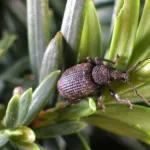 PestBlack Vine WeevilOtiorhynchus sulcatus
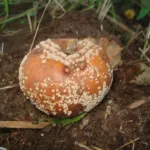 DiseaseEuropean brown rotMonilinia fructigena
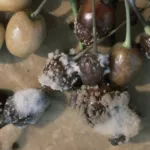 DiseaseBrown Rot of Stone FruitMonilinia fructicola
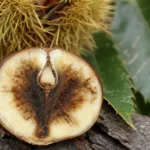 DiseaseChestnut brown rotGnomoniopsis smithogilvyi
 PestPeach weevilRhynchites bacchus
Toxicity and pollen
No reliable authoritative source located for species-specific poisoning in humans or pets. Do not assume complete safety from that absence of evidence. Prevent children and animals from chewing ornamental ferns, and seek medical or veterinary advice after ingestion or if symptoms occur.
- Pollination / pollen
- Airborne fern spores, not pollen
Ferns do not produce pollen. Dryopteris affinis releases spores from sori on fertile fronds. Species-specific airborne-allergy evidence is limited, so sensitive individuals should avoid deliberately dispersing mature spores indoors and use ordinary ventilation when handling fertile fronds.
Native habitat
Native across Macaronesia, Europe, and parts of western Asia, where it occurs mainly in temperate climates. It is associated with woodland, heathland, upland, and open hillside habitats, often on humus-rich soils with dependable moisture and good drainage. In warmer regions it is more often found at elevation or in sheltered sites.
Interesting fact
The species is accepted taxonomically but contains many recognized infraspecific taxa. Its dense golden scales on the stipes and rachises are important identification features. Fern fronds develop from coiled croziers and mature plants reproduce through sori and spores rather than flowers or seeds.
Frequently asked questions (FAQ)
The most relevant questions about this plant, with short and direct answers.
🌱Quick care
What is Dryopteris affinis?⌄
Dryopteris affinis is a hardy, semi-evergreen to evergreen fern commonly known as a scaly male fern. It forms an upright rosette of arching, finely divided fronds with golden-brown scales along the stems.
Is Dryopteris affinis easy to grow?⌄
Yes, Dryopteris affinis is generally easy to grow when planted in partial shade or shade with moisture-retentive, well-drained soil. Established plants are relatively low-maintenance.
How big does Dryopteris affinis get?⌄
Dryopteris affinis commonly grows about 2–5 feet tall and 3–6 feet wide. Mature size varies by subspecies, cultivar, climate, and growing conditions.
🌤️Environment and placement
What light does Dryopteris affinis need?⌄
Dryopteris affinis grows best in partial shade to shade, especially with protection from intense afternoon sun. With consistently moist soil, established plants may tolerate brighter conditions, but hot direct sun can scorch the fronds.
Can Dryopteris affinis grow in full shade?⌄
Yes, Dryopteris affinis can grow in full shade, including deep or dappled woodland shade. Growth may be slower and the fronds may be less dense than in bright, indirect light.
What soil is best for Dryopteris affinis?⌄
Use loamy, humus-rich soil that retains moisture without becoming waterlogged. It can tolerate clay or neutral soil if drainage is adequate and organic matter is available.
How much water does Dryopteris affinis need?⌄
Water Dryopteris affinis moderately and keep the soil evenly moist while the plant establishes. Mature plants may tolerate short dry periods, but prolonged drought can reduce frond quality.
Can Dryopteris affinis tolerate wet soil?⌄
Dryopteris affinis can tolerate occasional wetness, but it should not remain in stagnant, saturated soil. Improve drainage if water collects around the rhizome.
What USDA hardiness zones suit Dryopteris affinis?⌄
Dryopteris affinis is commonly listed as hardy in USDA Zones 4–8, although hardiness can vary among forms and local conditions. Shelter from drying winter winds is helpful in colder areas.
Can Dryopteris affinis grow in containers?⌄
Yes, Dryopteris affinis can be grown in a large container with drainage holes and moisture-retentive potting mix. Choose a container wide enough for its mature spread and protect the roots from extreme heat or freezing.
💧Care and problems
Why are the fronds of my Dryopteris affinis turning brown?⌄
Brown fronds are usually caused by drought, hot sun, drying wind, or winter damage. Check soil moisture and exposure, then remove completely damaged fronds without cutting into the crown.
Why is my Dryopteris affinis wilting?⌄
Wilting usually indicates insufficient moisture, root stress, excessive heat, or damage to the rhizome. Check whether the soil is dry or waterlogged and correct the underlying condition rather than watering automatically.
Does Dryopteris affinis need fertilizer?⌄
Dryopteris affinis usually needs little fertilizer when grown in fertile, humus-rich soil. If growth is weak, apply a light, balanced fertilizer in spring according to the product label.
Does Dryopteris affinis lose its fronds in winter?⌄
Dryopteris affinis is often semi-evergreen and may retain fronds in mild climates, while colder regions can cause older foliage to decline. Remove tattered foliage in late winter or early spring before new fronds emerge.
Is Dryopteris affinis deer resistant?⌄
Dryopteris affinis is generally considered relatively resistant to deer and rabbits. No plant is completely browse-proof, particularly when animals have limited food choices.
What pests and diseases affect Dryopteris affinis?⌄
Dryopteris affinis usually has few serious pest or disease problems. Poor airflow, excessive moisture, or plant stress can contribute to fungal issues, rust, or occasional leaf damage.
🪴Planting and repotting
When should I plant Dryopteris affinis?⌄
Plant Dryopteris affinis in spring or early fall when temperatures are moderate and soil moisture is dependable. Avoid planting during extreme heat, drought, or frozen ground.
How do I plant Dryopteris affinis in the ground?⌄
Set the plant with the crown at soil level, backfill with humus-rich soil, and water thoroughly. Add a 2–3 inch layer of organic mulch around the plant, keeping it away from the crown.
How far apart should Dryopteris affinis be planted?⌄
Space Dryopteris affinis about 3–6 feet apart, depending on the mature size of the form and whether you want individual specimens or a filled woodland planting. Allow room for the arching fronds.
✂️Propagation and pruning
How is Dryopteris affinis propagated?⌄
Dryopteris affinis can be propagated by division or from spores. Division is the more practical method for gardeners because spore propagation is slower and requires careful moisture and humidity control.
Can Dryopteris affinis be divided?⌄
Yes, divide Dryopteris affinis in spring or early fall when the plant is not under heat or drought stress. Separate sections of the rhizome that contain viable growth points and replant them promptly.
Can Dryopteris affinis be grown from spores?⌄
Yes, Dryopteris affinis produces spores on the undersides of mature fronds and can be grown from them. Sow fresh spores on a sterile, moist medium and maintain high humidity; the process is substantially slower than division.
Should I cut back Dryopteris affinis?⌄
Cut back only dead, damaged, or unsightly fronds, preferably in late winter or early spring. Avoid removing healthy green fronds unnecessarily because they support the plant's growth.
⚠️Toxicity and safety
Is Dryopteris affinis poisonous to people or pets?⌄
Species-specific toxicity information for Dryopteris affinis is uncertain, so do not ingest any part of the plant. Keep it away from children and pets that chew on garden plants.
🌸Flowering and special interest
Does Dryopteris affinis produce flowers?⌄
No, Dryopteris affinis does not produce flowers or seeds. Like other ferns, it reproduces through spores formed in sori on the undersides of mature fronds.
When does Dryopteris affinis produce new fronds?⌄
Dryopteris affinis typically produces new, coiled fronds in spring. The emerging fronds are often brighter yellow-green before maturing to deeper green.
What do the brown spots on Dryopteris affinis fronds mean?⌄
Regular rows or clusters of brown spots on the underside of the fronds are usually sori, the fern's spore-producing structures. Irregular brown patches on the upper surface are more likely to indicate scorch, age, or damage.
Similar plants
 Azure Monkshood (Aconitum carmichaelii) care guideAconitum carmichaelii
 Monkshood (Aconitum ‘Stainless Steel’)Aconitum 'Stainless Steel'
 Monkshood (Aconitum ‘Bressingham Spire’)Aconitum 'Bressingham Spire'
 Golden full moon maple (Acer shirasawanum ‘Aureum’)Acer shirasawanum 'Aureum'
 Globosum (Acer platanoides ‘Globosum’)Acer platanoides 'Globosum'
 Striped maple (Acer pensylvanicum) care guideAcer pensylvanicum