 Source:
 Canna ‘Tenerife’ short overview
Canna 'Tenerife' is a compact garden canna valued for its broad deep-green leaves and upright spikes of golden-yellow flowers marked with orange-red speckles. The vigorous rhizomatous perennial brings a tropical effect to sunny borders, containers, poolside plantings, and cut-flower displays. It flowers from summer into fall, appreciates consistently moist but well-drained soil, and usually needs winter rhizome storage in colder parts of the United States.
Taxonomic classification
Canna ‘Tenerife’ care guide
Light and placement
Give full sun, ideally six or more hours of direct light, with the brightest exposure oriented south or west. A sheltered position protects the broad leaves and flower stems from wind. Too little light produces weak, stretched growth and fewer flowers; severe heat combined with dry soil can scorch leaf edges, so provide afternoon relief only when needed.
Watering and humidity
Keep soil consistently moist during active growth, watering deeply when the surface begins to dry rather than applying frequent shallow sips. Increase attention during hot, windy weather and reduce watering after flowering declines. Containers dry faster than beds. Avoid leaving rhizomes in cold, saturated soil, which encourages rot.
Soil and growing medium
Use fertile loam or sandy loam that holds even moisture without remaining saturated. Good drainage is essential because dormant or cool rhizomes can rot in stagnant soil. Canna tolerates a range from slightly acidic through slightly alkaline conditions; adding compost improves structure and moisture retention in sandy beds, while raised planting or coarse amendment helps heavy clay drain.
Feeding
Feed after active growth begins with compost or a balanced controlled-release fertilizer, then provide a balanced liquid feed about monthly during vigorous growth if plants are in containers or poor soil. Water before fertilizing. Stop regular feeding as growth slows in fall and do not fertilize dormant, lifted rhizomes.
Growth and habit
A vigorous rhizomatous perennial, 'Tenerife' forms upright clumps and sends up multiple flowering stems from spreading underground rhizomes. Remove fading flower clusters to encourage continued display, and divide congested clumps in spring. In windy sites, shelter is useful because broad leaves can increase wind resistance and tear.
Planting and repotting
Plant outdoors after the last spring frost, when soil has warmed. Set rhizomes about 4–6 inches deep with the growing points upward; commercial guidance commonly uses roughly 12–18 inches of spacing, while wider spacing gives large clumps more room. Water well after planting and keep the bed evenly moist while shoots establish.
Repot container-grown plants in spring as new shoots begin, moving them into fresh, fertile, well-drained mix. Choose a sturdy container with drainage holes and enough weight to resist tipping. Rhizomes can be divided at the same time if crowded. After repotting, water thoroughly and place the plant in bright sun once active growth resumes.
Propagation and pruning
Propagation
Divide dormant or actively growing rhizomes in spring, ensuring each section has a healthy bud or growing point. Allow cut surfaces to dry briefly before planting if they are wet or damaged. Seed propagation is possible but seedlings may not reproduce the named cultivar reliably; division is the preferred method for maintaining 'Tenerife'.
Pruning
No routine structural pruning is required. Deadhead spent flowers to encourage continued blooming and remove yellowing or frost-damaged foliage. After the first killing frost, cut stems and foliage to the ground before lifting rhizomes or applying winter protection.
Overwintering
After frost blackens the foliage, cut stems down, lift rhizomes, and let surface moisture dry. Store them in barely moist peat, vermiculite, or similar material in a cool, frost-free place, commonly around 45–50°F. In mild climates, rhizomes may remain outdoors under a deep, dry mulch if the soil drains well and severe freezing is unlikely.
Uses
Use 'Tenerife' as a sunny border accent, mass planting, container specimen, poolside tropical-effect plant, or cut-flower subject. Its strong foliage also works for seasonal screening. Do not treat the ornamental rhizomes or foliage as food; cultivar identity and culinary suitability are not established here.
Appearance
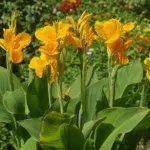
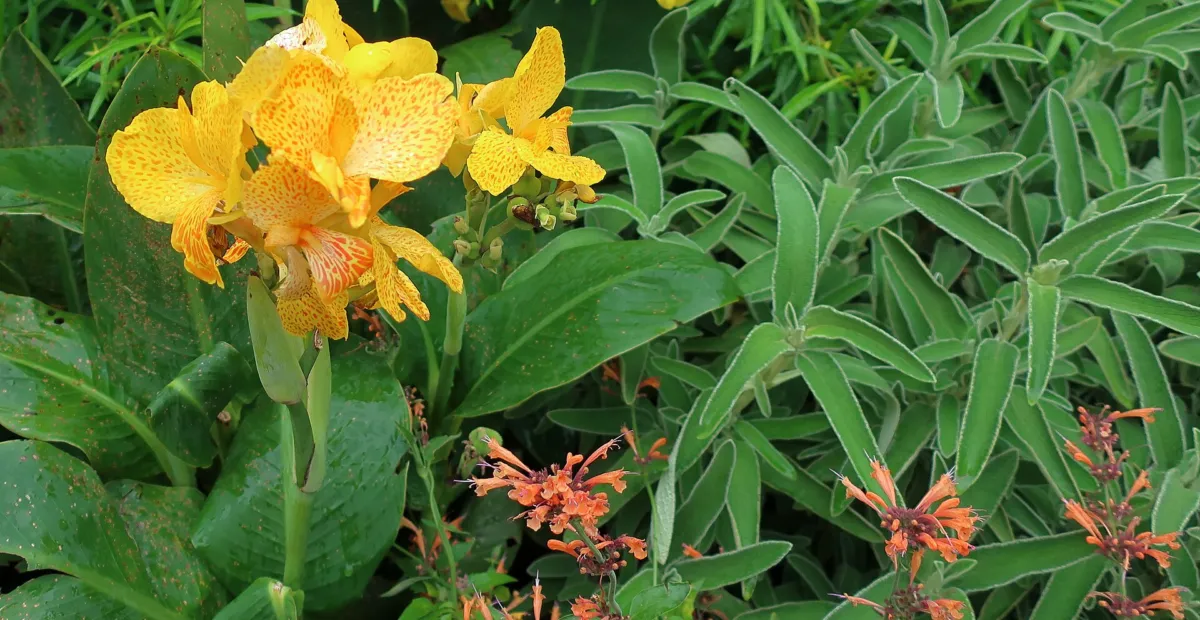
The plant has broad, paddle-shaped green leaves arranged along firm upright stems, giving it a coarse tropical texture. Flower spikes rise above the foliage and carry golden-yellow blooms with conspicuous orange-red spotting. The combination of large leaves, upright stems, and patterned flowers distinguishes it from plain-flowered green-leaved cannas.
Flowering
This selection produces upright terminal spikes of yellow, iris-like flowers densely marked with orange-red speckles. Flowering is described as free and long-lasting, with secondary stems helping maintain a succession of blooms. In the United States, the usual outdoor season is summer into early fall, extending later in warm climates and with adequate moisture.
Pollination and visitors
The large, brightly colored flowers are reported in horticultural sources to attract butterflies and hummingbirds, while broader extension material describes garden cannas as pollinator-attractive. Visitor intensity can vary with region, competing flowers, and plant placement; this should not be interpreted as a formal cultivar-specific pollination study.
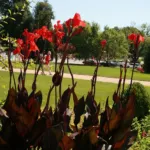
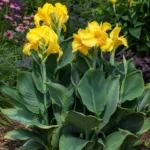
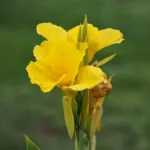
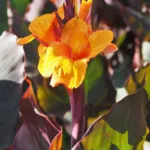
Canna 'Tenerife' photos
Click any photo for a larger view. Source, author and license are shown separately.
Diseases and pests
Diseases
Avoid waterlogged soil and remove diseased foliage promptly. Watch for canna mosaic virus, aster yellows, leaf spot, rust, bacterial blight, bud rot, and rhizome rot. Virus-like striping, distorted growth, or persistent decline warrants removing the plant and disinfecting tools rather than propagating from it.
Pests
Inspect new growth for aphids, Japanese beetles, slugs, snails, caterpillars, and spider mites. Use hand removal, sanitation, barriers, or targeted treatment only when damage is significant. Good spacing and airflow reduce stress; avoid overhead irrigation late in the day.
Related diseases and pests
Only Plant Doctor profiles whose host data indicate this plant may be affected are shown here.
 PestCitrus mealybugPlanococcus citri
 DiseaseAster yellows‘Candidatus Phytoplasma asteris’
 PestJapanese beetlePopillia japonica
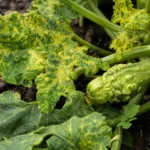 DiseaseZucchini yellow mosaicZucchini yellow mosaic virus
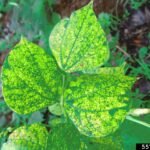 DiseaseBean yellow mosaicBean yellow mosaic virus
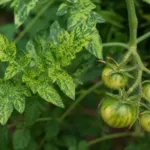 DiseaseTomato mosaic virusTobamovirus tomatotessellati
 Environmental stressWaterlogging
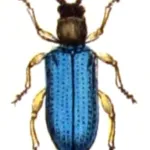 PestCereal leaf beetleOulema melanopus
Toxicity and pollen
No reliable cultivar-specific toxicity assessment was located for Canna 'Tenerife'. Canna is not the same plant as Cannabis, and Cannabis toxicity records should not be applied to it. Avoid intentional consumption, supervise children around ornamental plantings, and seek medical or veterinary advice if substantial plant material is eaten or symptoms occur.
- Typical season
- During flowering, typically June–September in much of the United States
- Pollination / pollen
- Heavy, insect-carried pollen
Canna flowers are insect-pollinated and their pollen is generally not released as a fine, wind-dispersed cloud. That suggests low routine airborne exposure, but it does not establish zero allergy risk. People with known pollen sensitivities should avoid rubbing flowers or handling pollen directly and monitor their own response.
Native habitat
The cultivar has no verified native habitat of its own. It belongs to cultivated garden canna stock derived from Canna species and hybrids associated with tropical and subtropical regions of the Americas and Asia. In cultivation it prefers warm, sunny conditions, fertile moisture-retentive soil, and a long frost-free growing season.
Interesting fact
The Island Series is noted for producing several secondary flowering stems, helping extend the display. 'Tenerife' is described as having a flower pattern similar to 'Starship' but with smaller blooms. Its large leaves provide a tropical architectural effect even when flowers are between flushes.
Frequently asked questions (FAQ)
The most relevant questions about this plant, with short and direct answers.
🌱Quick care
What is Canna 'Tenerife'?⌄
Canna 'Tenerife' is a compact, clump-forming canna cultivar with deep green foliage and yellow flowers marked with orange-red speckles. It is commonly grown as a flowering perennial in warm climates or as a seasonal container plant in colder areas.
How tall does Canna 'Tenerife' get?⌄
Canna 'Tenerife' typically grows about 3 to 4 feet tall, although size varies with climate, soil, container space, and nutrition. It generally forms an upright clump rather than spreading aggressively above ground.
How much sun does Canna 'Tenerife' need?⌄
Canna 'Tenerife' grows best in full sun, with at least 6 hours of direct sunlight daily. More light usually supports stronger stems, fuller growth, and better flowering.
How often should I water Canna 'Tenerife'?⌄
Water Canna 'Tenerife' whenever the soil surface begins to dry, keeping the root zone evenly moist. Increase watering during hot, sunny weather, but avoid permanently saturated soil.
Is Canna 'Tenerife' easy to grow?⌄
Yes, Canna 'Tenerife' is generally easy to grow when given full sun, fertile soil, regular moisture, and warmth. The main extra task in cold regions is lifting or protecting the rhizomes before hard frost.
🌤️Environment and placement
Can Canna 'Tenerife' grow in containers?⌄
Yes, Canna 'Tenerife' grows well in a large container placed in full sun. Use a pot with drainage holes and enough room for its rhizomes and mature clump, and expect to water and fertilize more often than plants in the ground.
What soil is best for Canna 'Tenerife'?⌄
The best soil for Canna 'Tenerife' is fertile, moisture-retentive but well-drained loam or sandy loam. Improve poor soil with compost, while correcting heavy, poorly drained soil to reduce rhizome-rot risk.
Can Canna 'Tenerife' grow in wet soil?⌄
Canna 'Tenerife' tolerates consistently moist soil but should not remain in stagnant, waterlogged ground. Good drainage is especially important during cool weather and winter dormancy.
What USDA zones can grow Canna 'Tenerife' outdoors?⌄
Canna 'Tenerife' can be grown outdoors year-round only where winter temperatures remain mild enough to prevent hard freezes; published nursery guidance commonly places it around USDA Zones 7 through 10, but local exposure and drainage matter. In colder zones, grow it as a summer plant and overwinter the rhizomes indoors.
Can Canna 'Tenerife' tolerate heat?⌄
Yes, established Canna 'Tenerife' handles summer heat well when it receives sufficient water and sunlight. Mulching the soil can help maintain even moisture during prolonged hot, dry periods.
💧Care and problems
How do I fertilize Canna 'Tenerife'?⌄
Feed Canna 'Tenerife' with compost or a balanced fertilizer during active growth, following the product label. Regular feeding is helpful because cannas grow quickly and flower heavily in warm weather.
Why is my Canna 'Tenerife' not flowering?⌄
Poor flowering is most often caused by insufficient sun, cool temperatures, drought, or inadequate nutrition. Move container plants to brighter light, keep the soil evenly moist, and feed during the growing season.
Why are the leaves of my Canna 'Tenerife' turning yellow?⌄
Yellow leaves may result from normal aging, overwatering, underwatering, nutrient deficiency, or pest damage. Check soil moisture and drainage first, then inspect the foliage and new growth for insects or disease symptoms.
What pests affect Canna 'Tenerife'?⌄
Canna 'Tenerife' may be attacked by aphids, caterpillars, slugs, snails, and spider mites, particularly when grown under cover. Remove pests manually where practical and use a treatment labeled for the pest and plant when needed.
Can Canna 'Tenerife' get canna virus?⌄
Yes, Canna 'Tenerife' can be affected by canna viruses, which may cause streaking, mottling, distortion, or unusual leaf coloration. Isolate suspicious plants and obtain specialist advice because infected plants are generally discarded rather than cured.
🪴Planting and repotting
When should I plant Canna 'Tenerife' outdoors?⌄
Plant Canna 'Tenerife' outdoors in spring after the danger of hard frost has passed and the soil has warmed. Starting rhizomes indoors several weeks earlier can produce faster growth and earlier flowers in regions with short summers.
How deep should I plant Canna 'Tenerife' rhizomes?⌄
Plant Canna 'Tenerife' rhizomes horizontally with the growing eyes facing upward, covering them with about 2 to 3 inches of soil. Avoid planting into cold, saturated ground, which can delay growth or encourage rot.
How far apart should Canna 'Tenerife' plants be?⌄
Space Canna 'Tenerife' plants about 12 to 18 inches apart for a continuous display while allowing room for clumps to expand. Use wider spacing if you want each plant to remain visually distinct.
Can I repot Canna 'Tenerife' during the growing season?⌄
Yes, Canna 'Tenerife' can be repotted during active growth if the new container is only moderately larger and the root ball is disturbed as little as possible. Water it thoroughly afterward and protect it from severe midday stress while it re-establishes.
✂️Propagation and pruning
How do I propagate Canna 'Tenerife'?⌄
Propagate Canna 'Tenerife' primarily by dividing its rhizomes in spring. Each division should contain at least one healthy growing eye and a firm section of rhizome.
When should I divide Canna 'Tenerife'?⌄
Divide Canna 'Tenerife' in spring as new shoots begin to emerge or just before active growth starts. This timing allows divisions to establish quickly in warm soil.
Should I deadhead Canna 'Tenerife'?⌄
Deadhead spent flowers on Canna 'Tenerife' to keep the plant tidy and encourage continued flowering. Remove the entire faded flower stalk when it becomes unproductive, while leaving healthy foliage in place.
Should I cut back Canna 'Tenerife' in fall?⌄
Cut Canna 'Tenerife' back after frost blackens the foliage or when the plant naturally enters dormancy. In frost-free areas, old stems can also be removed for tidiness while the rhizomes remain in the ground.
How do I overwinter Canna 'Tenerife' in a cold climate?⌄
After the first damaging frost, cut back the foliage, lift the rhizomes, and store them in barely moist packing material in a cool, frost-free place. Replant them in spring after freezing weather has passed.
⚠️Toxicity and safety
Is Canna 'Tenerife' poisonous to dogs or cats?⌄
The toxicity of Canna 'Tenerife' has not been well documented with cultivar-specific evidence. Because safety information is limited, prevent pets and children from chewing the plant and contact a veterinarian or poison-control service if ingestion causes symptoms.
Is Canna 'Tenerife' a true lily?⌄
No, Canna 'Tenerife' is not a true lily. It belongs to the family Cannaceae, whereas true lilies belong to the genus Lilium and can have different toxicity concerns.
🌸Flowering and special interest
What color are Canna 'Tenerife' flowers?⌄
Canna 'Tenerife' produces yellow flowers heavily marked with orange to orange-red speckles and spots. The flowers contrast with its large, deep green leaves.
When does Canna 'Tenerife' bloom?⌄
Canna 'Tenerife' generally blooms from summer into early fall, with timing depending on planting date, temperature, sunlight, and growing zone. Warm conditions can extend flowering later into the season.
Does Canna 'Tenerife' attract hummingbirds and butterflies?⌄
Yes, the brightly colored flowers of Canna 'Tenerife' can attract hummingbirds and butterflies. Planting it in full sun with other nectar-producing flowers can make the area more useful to pollinators.