
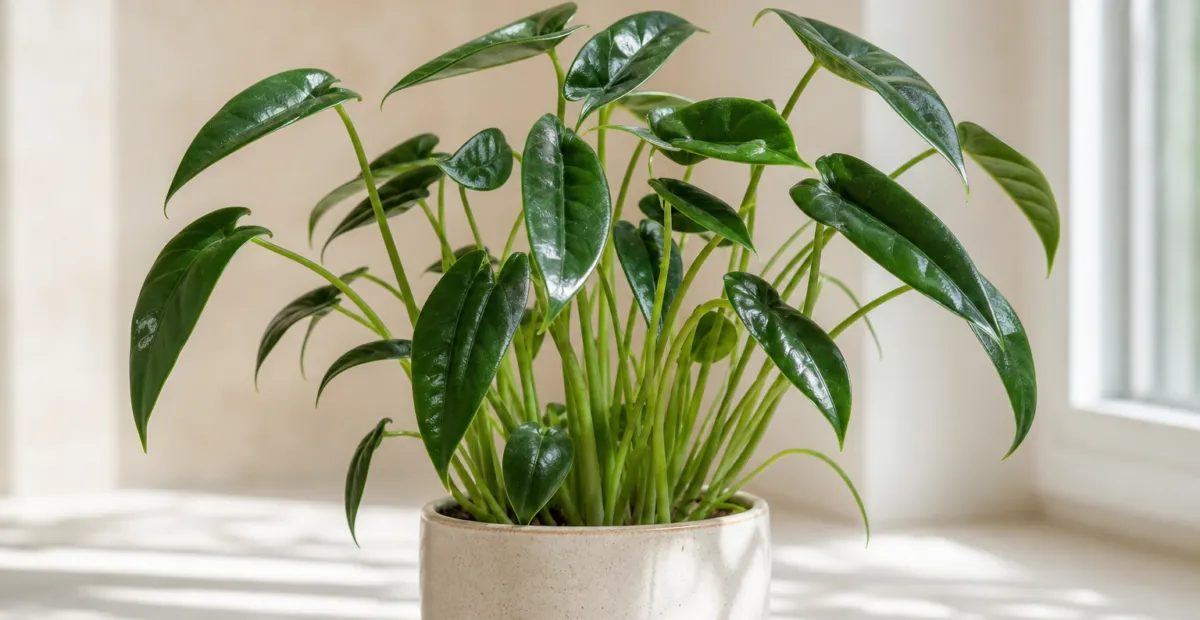
 AI-generated illustration
Alocasia ‘Tiny Dancer’ short overview
Alocasia 'Tiny Dancer' is a compact, sterile hybrid elephant ear valued for its graceful silhouette rather than flowers. Numerous small, glossy green, teardrop-shaped leaves rise on slender petioles, creating a light, animated habit in containers or bright indoor displays. Give it warmth, filtered light, steady moisture, and excellent drainage. It is tender to cold, and all parts contain irritating calcium oxalate crystals, so keep it away from pets and children.
Taxonomic classification
Alocasia ‘Tiny Dancer’ care guide
Light and placement
Provide bright filtered light, such as an east- or west-facing window or a south-facing window softened by a sheer curtain. Gentle morning sun is usually acceptable, but harsh afternoon sun can scorch or bleach leaves. Too little light produces slower growth and stretched petioles; too much direct sun may cause pale patches, crispy margins, or leaf scorch.
Watering and humidity
Water thoroughly when the upper inch of mix begins to dry, allowing excess water to drain fully. Keep the root zone evenly moist during active growth but never leave the pot standing in water. In winter, water less often as light and growth decline, while maintaining enough moisture to prevent the rhizome from becoming completely dry. Humidity helps, but it cannot compensate for poor drainage.
Soil and growing medium
Use a porous, moisture-retentive but fast-draining mix based on quality potting soil with orchid bark and perlite or pumice. A slightly acidic to neutral reaction is suitable. Avoid dense, waterlogged media and containers without drainage holes, because fleshy roots and rhizomes can decline quickly in stagnant conditions.
Feeding
Feed during active spring and summer growth with a balanced liquid houseplant fertilizer diluted to half the label rate about every 3–4 weeks. Water the plant first if the mix is dry. Reduce or stop feeding in low-light winter conditions or whenever growth has stalled; excess fertilizer can damage roots and cause salt buildup.
Growth and habit
This is a stemless, clumping tropical perennial that develops multiple leaves from fleshy underground rhizomes. Growth is moderate under warm, bright, humid conditions and may slow sharply in cool or dim rooms. Rotate containers periodically for balanced growth, and remove only damaged leaves so the plant can continue replenishing its rhizome reserves.
Planting and repotting
Plant outdoors only after nights are reliably warm and frost danger has passed; in most of the United States, container culture is safer. Set the rhizome at its previous depth, provide drainage, and leave enough room for the clump to expand. Acclimate plants gradually when moving between indoor and outdoor light.
Repot in spring or early summer when roots fill the container, moving up only one pot size. Handle the fleshy rhizome and roots gently, replant at the same depth, and water lightly until growth resumes. Refreshing part of the mix without major root disturbance is appropriate for established plants.
Propagation and pruning
Propagation
Propagate by division of rhizome offsets when the plant is actively growing and warm. Separate divisions only when each section has viable roots or a growing point, then pot into a lightly moist, airy medium. Tissue culture is also documented commercially, but is not a practical home method.
Pruning
Remove yellowing, damaged, or fully collapsed leaves at the base with clean tools. Do not cut healthy foliage merely to shape the plant. Wear gloves because cut surfaces and sap may irritate skin, and disinfect tools after use.
Overwintering
Bring containers indoors before temperatures fall near 55°F, and definitely before frost. Place the plant in bright filtered light, reduce watering as growth slows, and keep it away from cold windows and heating vents. In frost-free climates, protect it from cold snaps and winter saturation; foliage may decline after chilling even if the rhizome survives.
Uses
Best used as an ornamental foliage plant in indoor containers, patios, balconies, shaded entryways, and frost-free tropical landscapes. Its compact size suits shelves and small displays, but it is not an edible taro and should not be used as food. Keep it away from pets and children because the genus contains irritating calcium oxalate crystals.
Appearance
The plant is stemless and upright to softly arching, with many leaves emerging from fleshy rhizomes. Leaves are small, glossy, green, simple, and distinctly teardrop or cordate-sagittate in outline, with pointed tips and slender green petioles. The foliage is held at an angled, animated posture that gives the cultivar its characteristic dancer-like appearance.
Pollination and visitors
No animal pollination is expected for the named cultivar because the patent describes it as non-blooming and unable to set seed. Consequently, no reliable pollinator or flower-visitor record applies to this exact cultivar.
Diseases and pests
Diseases
The main risk is rhizome or root rot caused by persistently saturated media, poor drainage, or cold wet conditions. Remove affected tissue, replace contaminated mix, improve drainage, and reduce watering while maintaining warmth. Leaf-spot problems are best limited by avoiding prolonged leaf wetness and providing air movement.
Pests
Spider mites, mealybugs, scale, and thrips may appear, especially in dry indoor air. Inspect leaf undersides and petiole bases regularly, isolate affected plants, wash foliage, and use an appropriately labeled houseplant treatment as needed. Avoid stressing the plant with cold, drought, or prolonged saturation, which can worsen pest problems.
Related diseases and pests
Only Plant Doctor profiles whose host data indicate this plant may be affected are shown here.
 DiseaseRhizopus soft rotRhizopus stolonifer
 DiseaseAlternaria leaf spot and fruit rotAlternaria alternata
 DiseaseRhizoctonia DiseasesRhizoctonia solani Kühn
 PestOnion thripsThrips tabaci Lindeman
 PestMelon thripsThrips palmi Karny
 PestChilli thripsScirtothrips dorsalis Hood
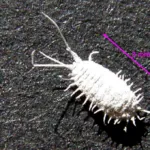 PestObscure mealybugPseudococcus viburni
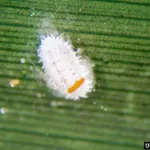 PestCitrus mealybugPlanococcus citri
Toxicity and pollen
Alocasia tissues contain insoluble calcium oxalate crystals. Chewing or swallowing can cause immediate burning and irritation of the mouth, tongue, and throat, drooling, swelling, vomiting, or difficulty swallowing; sap may irritate skin and eyes. Wear gloves when dividing or cutting, wash hands afterward, and seek poison-control or veterinary guidance after exposure.
- Pollination / pollen
- No normal pollen release documented
Because the named cultivar is documented as non-blooming, it should not normally release airborne pollen. This is separate from toxicity: plant sap and tissues can still irritate people and animals through contact or ingestion.
Native habitat
The cultivar is a human-bred hybrid rather than a wild species, developed in Florida from Alocasia brisbanensis and A. odora parentage. Its parentage points to warm, humid tropical conditions with rich, moisture-available soils, but the cultivar itself is maintained primarily in containers and cultivated landscapes.
Interesting fact
This cultivar arose from a controlled cross made in Florida in 2009 and was selected in 2010. Its patent emphasizes a very dwarf habit, unusually high leaf count, teardrop leaves, and delicate petioles. It is propagated vegetatively because the documented cultivar does not bloom or produce seed.
Frequently asked questions (FAQ)
The most relevant questions about this plant, with short and direct answers.
🌱Quick care
How do you care for Alocasia 'Tiny Dancer'?⌄
Give Alocasia 'Tiny Dancer' bright filtered light, evenly moist but well-drained soil, warm temperatures, and moderate to high humidity. Protect it from frost, cold drafts, and standing water.
How much light does Alocasia 'Tiny Dancer' need indoors?⌄
Alocasia 'Tiny Dancer' grows best in bright, indirect or filtered light. An east- or west-facing window with a sheer curtain is suitable, while harsh midday sun can scorch the leaves.
How often should I water Alocasia 'Tiny Dancer'?⌄
Water when the top 1–2 inches of potting mix feel dry, then let excess water drain completely. Watering frequency varies with light, temperature, pot size, and season, so check the soil instead of following a fixed schedule.
Does Alocasia 'Tiny Dancer' need high humidity?⌄
Higher humidity helps Alocasia 'Tiny Dancer' maintain healthy leaf edges, although it can adapt to average household conditions. A humidifier is more reliable than misting, particularly when indoor air is dry.
🌤️Environment and placement
What temperature is best for Alocasia 'Tiny Dancer'?⌄
Keep Alocasia 'Tiny Dancer' warm, ideally around 65–80°F indoors. Protect it from cold drafts, air-conditioning vents, and temperatures near or below 55°F.
Can Alocasia 'Tiny Dancer' grow outdoors?⌄
Alocasia 'Tiny Dancer' can grow outdoors in warm, frost-free areas with bright filtered light. In most of the United States, grow it in a container and bring it indoors before temperatures become chilly.
What USDA zones can grow Alocasia 'Tiny Dancer' outdoors?⌄
Alocasia 'Tiny Dancer' is best treated as an outdoor plant only in warm, frost-free USDA climates, commonly zones 10–11. Elsewhere, it is usually grown as a seasonal patio plant or houseplant.
Can Alocasia 'Tiny Dancer' tolerate low light?⌄
Alocasia 'Tiny Dancer' may survive in moderate light, but low light commonly causes slower, weaker, or stretched growth and can contribute to leaf loss. Move it closer to a bright window while avoiding intense direct sun.
Is a bathroom a good place for Alocasia 'Tiny Dancer'?⌄
A bright bathroom can be a good location for Alocasia 'Tiny Dancer' because humidity is often higher there. The room still needs adequate filtered light, and the plant should not sit in a cold or dark corner.
💧Care and problems
Why are the leaves on my Alocasia 'Tiny Dancer' turning yellow?⌄
Yellow leaves most often indicate consistently wet soil, poor drainage, aging foliage, or environmental stress. Check the roots and potting mix before watering again, and remove leaves that are fully yellow.
Why is my Alocasia 'Tiny Dancer' drooping?⌄
Drooping can result from dry soil, overwatering and root damage, cold temperatures, insufficient light, or a recent change in conditions. Check soil moisture and roots first, then correct the underlying stress rather than watering automatically.
Why does Alocasia 'Tiny Dancer' have brown leaf edges?⌄
Brown edges usually reflect dry air, inconsistent watering, excessive fertilizer salts, or direct sun. Keep moisture more consistent, increase humidity if the air is very dry, and flush accumulated fertilizer salts from the potting mix.
Why is my Alocasia 'Tiny Dancer' losing leaves?⌄
Leaf loss can follow low light, cold temperatures, watering problems, pests, or seasonal dormancy. If the corm or rhizome remains firm and healthy, the plant may recover after stable warmth, light, and moisture are restored.
What pests commonly affect Alocasia 'Tiny Dancer'?⌄
Spider mites, aphids, mealybugs, and fungus gnats can affect Alocasia 'Tiny Dancer'. Inspect leaf undersides and the soil regularly, isolate affected plants, and use an appropriate houseplant treatment according to its label.
Should I fertilize Alocasia 'Tiny Dancer'?⌄
Fertilize Alocasia 'Tiny Dancer' lightly during active spring and summer growth with a balanced, diluted houseplant fertilizer. Stop or greatly reduce feeding when growth slows in fall and winter.
Can I use tap water for Alocasia 'Tiny Dancer'?⌄
Alocasia 'Tiny Dancer' can often be watered with tap water, but sensitive plants may respond better to filtered, rain, or distilled water. If leaf tips brown or mineral deposits accumulate, switch water sources or periodically flush the pot.
🪴Planting and repotting
What soil is best for Alocasia 'Tiny Dancer'?⌄
Use a porous, rich, moisture-retentive but well-drained potting mix. A houseplant mix amended with perlite, orchid bark, or another aerating material helps prevent compacted, waterlogged roots.
What type of pot does Alocasia 'Tiny Dancer' need?⌄
Choose a pot with drainage holes that is only slightly larger than the root system. A close-fitting pot reduces excess wet soil, while a saucer should be emptied after watering.
When should I repot Alocasia 'Tiny Dancer'?⌄
Repot Alocasia 'Tiny Dancer' when roots fill the container, drainage becomes poor, or the potting mix has broken down, usually during active spring growth. Move it into a pot only one size larger to avoid prolonged wetness.
Can Alocasia 'Tiny Dancer' be grown in LECA or semi-hydroponics?⌄
Alocasia 'Tiny Dancer' can be grown in LECA or another semi-hydroponic setup, but the transition requires careful root cleaning, stable moisture, and gradual acclimation. Avoid leaving newly transferred roots in stagnant water.
✂️Propagation and pruning
How do you propagate Alocasia 'Tiny Dancer'?⌄
Propagate Alocasia 'Tiny Dancer' by separating rooted offsets or divisions from the parent plant during repotting. Each division should have a healthy growing point and roots or a viable corm before potting separately.
Can you propagate Alocasia 'Tiny Dancer' from a leaf?⌄
A leaf alone cannot reliably produce a new Alocasia 'Tiny Dancer' because new growth comes from a corm, rhizome, or growing point. Propagation requires a viable offset, division, or corm piece.
Should I cut off damaged leaves on Alocasia 'Tiny Dancer'?⌄
Remove leaves that are fully yellow, dead, or badly damaged by cutting the petiole near its base with clean pruners. Do not remove healthy green leaves unnecessarily because they support the plant's energy reserves.
⚠️Toxicity and safety
Is Alocasia 'Tiny Dancer' toxic to cats and dogs?⌄
Alocasia 'Tiny Dancer' is toxic to cats and dogs if chewed or swallowed. Keep it out of reach and contact a veterinarian promptly if a pet eats any part of the plant or develops mouth irritation, drooling, vomiting, or difficulty swallowing.
Is Alocasia 'Tiny Dancer' poisonous to people?⌄
Alocasia 'Tiny Dancer' is toxic to people if chewed or swallowed because its tissues contain irritating calcium oxalate crystals. Keep it away from children, and seek medical guidance after ingestion or significant mouth, throat, or eye irritation.
🌸Flowering and special interest
Does Alocasia 'Tiny Dancer' flower indoors?⌄
Alocasia 'Tiny Dancer' can flower, but indoor blooming is uncommon and is not required for a healthy plant. Mature plants receiving strong filtered light, warmth, moisture, and adequate nutrition are more likely to bloom.
What does an Alocasia 'Tiny Dancer' flower look like?⌄
The flower is a typical aroid inflorescence consisting of a spathe surrounding a spadix. It is generally less showy than the foliage, and flowering may temporarily redirect energy from new leaves.
Similar plants
 Azure Monkshood (Aconitum carmichaelii) care guideAconitum carmichaelii
 Monkshood (Aconitum ‘Stainless Steel’)Aconitum 'Stainless Steel'
 Monkshood (Aconitum ‘Bressingham Spire’)Aconitum 'Bressingham Spire'
 Golden full moon maple (Acer shirasawanum ‘Aureum’)Acer shirasawanum 'Aureum'
 Globosum (Acer platanoides ‘Globosum’)Acer platanoides 'Globosum'
 Striped maple (Acer pensylvanicum) care guideAcer pensylvanicum