
 Source:
 Amazonian elephant’s ear (Alocasia mortfontanensis) short overview
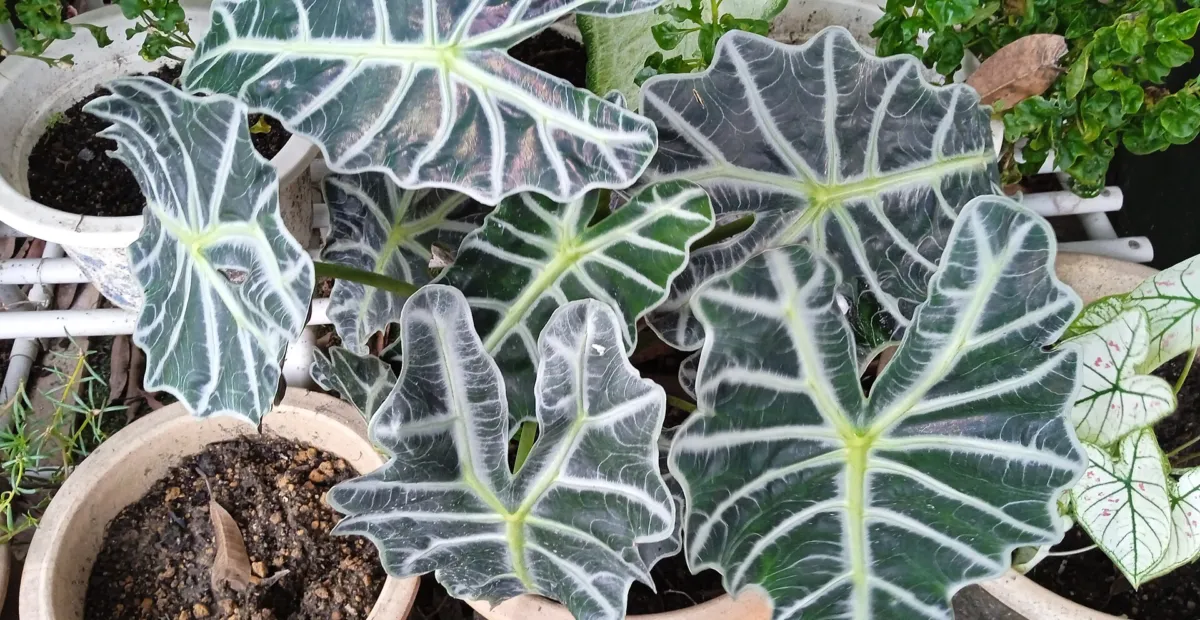
Amazonian elephant's ear is a tropical Alocasia hybrid prized for its compact, clumping form and boldly marked foliage. Its thick, arrowhead-shaped leaves are deep green to nearly metallic, with prominent pale veins that create a dramatic mask-like pattern. In the United States it is primarily grown as a houseplant or seasonal container accent. Provide bright filtered light, warmth, high humidity and consistently moist but well-drained soil, and keep it away from pets and children because all parts are toxic if eaten.
Taxonomic classification
Amazonian elephant’s ear (Alocasia mortfontanensis) care guide
Light and placement
Place near an east- or north-facing window, or several feet back from a bright south- or west-facing window behind a sheer curtain. Bright filtered light supports compact growth and strong leaf markings. Harsh direct midday sun can scorch or bleach leaves, while very low light may produce weak, stretched growth and slower leaf production.
Watering and humidity
Water thoroughly when the upper inch of mix begins to dry, then allow the pot to drain fully. Keep the root zone evenly moist during active growth without leaving the container in standing water. In winter, water less often as light and growth decline, but do not allow the rhizome to become bone dry. High humidity helps reduce crispy margins but does not replace good drainage.
Soil and growing medium
Use a loose, fertile, moisture-retentive but fast-draining mix, such as quality indoor potting soil amended with orchid bark and perlite. A slightly acidic to neutral reaction is suitable. Avoid dense, waterlogged media, which can deprive the rhizome and roots of oxygen and encourage rot.
Feeding
Feed during active spring and summer growth with a complete balanced houseplant fertilizer diluted to about half the label strength every 3–4 weeks. Water the plant first if the mix is dry. Reduce or stop feeding during cool, dim winter conditions or whenever growth has slowed substantially.
Growth and habit
A rhizomatous, clump-forming perennial that produces successive leaves from a short central stem or crown. Growth is strongest in warm, bright and humid conditions. Cool temperatures, dry air, low light or damaged roots can trigger stalled growth or leaf loss; stable conditions are more useful than frequent repositioning.
Planting and repotting
Plant outdoors only after the danger of frost has passed and night temperatures remain reliably warm. Set the root mass at the same depth as before; do not bury the central growing point. Allow enough room for the clump to expand without crowding neighboring plants. Container growing is usually the most practical choice in the United States.
Repot in spring or early summer when roots have filled the container or the mix has broken down. Move only one pot size larger, use a container with drainage holes, and keep the rhizome at its previous depth. After repotting, water thoroughly and allow excess water to drain.
Propagation and pruning
Propagation
Division of offsets or rhizomatous clumps is the most practical method. Separate offsets when they have their own roots or growing points, preferably during active spring or summer growth, and pot them into a warm, airy medium. Seed propagation is not a dependable routine method for named cultivated material.
Pruning
Remove yellowing, dead or badly damaged leaves at the base with clean, sharp tools. Do not cut healthy leaves merely to control size, and avoid injuring the central crown. Wipe tools between plants if bacterial or fungal problems are suspected.
Overwintering
Bring outdoor plants indoors before frost and before temperatures approach 60°F. Place them in bright filtered light, inspect closely for pests and reduce watering as winter growth slows. Protect the plant from cold drafts, heating vents and chilly, saturated soil. In warm, humid indoor conditions it may remain evergreen; otherwise some leaf loss can occur.
Uses
Used primarily as an ornamental foliage houseplant, protected patio specimen or seasonal container accent. Its patterned leaves suit indoor collections and shaded tropical-style displays. It has no supported culinary or medicinal use, and all parts should be treated as unsafe to ingest.
Appearance
Leaves are thick, smooth and arrowhead-shaped, with a dark green to metallic surface and strongly contrasting silvery or lime-white veins. The foliage creates a mask-like geometric pattern and may show darker undersides. The plant grows as a compact clump from a rhizomatous base, with each leaf held on a long fleshy petiole.
Flowering
The inflorescence is a typical aroid structure: a small creamy-white spadix enclosed by a pale green spathe. Flowering is uncommon in ordinary indoor culture and is not the plant's main ornamental feature. Mature, vigorous plants in consistently warm conditions are more likely to produce an inflorescence.
Pollination and visitors
Reliable species-specific pollinator or visitor records were not found for this cultivated hybrid. Its small aroid inflorescences may be biologically functional, but ordinary indoor plants rarely flower, so pollinator value should be considered undocumented rather than assumed.
Alocasia mortfontanensis photos
Click any photo for a larger view. Source, author and license are shown separately.
Diseases and pests
Diseases
The main risks are root rot and bacterial stem or soft rot, usually associated with saturated media, poor drainage or cool wet conditions. Use clean tools, remove declining tissue promptly, improve drainage and avoid wetting the crown repeatedly. Isolate plants showing spreading watery lesions or foul-smelling tissue.
Pests
Spider mites, mealybugs and aphids may attack stressed plants, especially in dry indoor air. Inspect leaf undersides and leaf axils regularly. Improve humidity and airflow, isolate infested plants, remove pests mechanically where practical, and use an appropriately labeled houseplant treatment according to its directions.
Related diseases and pests
Only Plant Doctor profiles whose host data indicate this plant may be affected are shown here.
 DiseaseBacterial soft rotPectobacterium carotovorum
 Environmental stressPoor drainage stress (waterlogging)
 DiseaseRhizopus soft rotRhizopus stolonifer
 PestMealy Plum AphidHyalopterus pruni (Geoffroy, 1762)
 DiseasePhytophthora root and crown rotPhytophthora nicotianae
 Environmental stressWaterlogging
 DiseaseBacterial WiltRalstonia solanacearum species complex
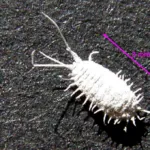 PestObscure mealybugPseudococcus viburni
Toxicity and pollen
Alocasia tissues contain insoluble calcium oxalate crystals that can cause immediate irritation, burning and swelling of the mouth and throat if chewed. Sap may irritate skin and eyes. Keep the plant inaccessible to children and animals; seek professional medical or veterinary advice after ingestion or significant exposure.
- Pollination / pollen
- Flower pollen; airborne relevance not established
This is an insect-associated flowering aroid, not a wind-pollinated grass or tree. The available horticultural information does not establish a meaningful airborne pollen allergy profile for this hybrid. Avoid presenting the plant as allergen-free; flowering plants can still release pollen locally when an inflorescence opens.
Native habitat
This is a cultivated hybrid rather than a naturally occurring wild species with a single native range. Its parentage links it to tropical Southeast Asian aroids, so it is adapted to warm, humid conditions, filtered light and organic, well-drained substrates rather than frost or prolonged drought.
Interesting fact
This cultivated hybrid was associated with French horticulturist M. M. Chantrier and Mortefontaine, France. The epithet refers to Mortefontaine. Plants sold as Amazonica, Amazonian elephant's ear or African mask may represent closely related or commercially overlapping material rather than a consistently distinct botanical entity.
Frequently asked questions (FAQ)
The most relevant questions about this plant, with short and direct answers.
🌱Quick care
What is Alocasia mortfontanensis commonly called?⌄
Alocasia mortfontanensis is commonly called Amazonian elephant's ear. It is also widely sold under the older horticultural name Alocasia × amazonica or the cultivar name ‘Polly’.
Is Alocasia mortfontanensis an indoor or outdoor plant?⌄
Alocasia mortfontanensis is best grown as an indoor plant in most of the United States. It can be moved outdoors during warm, frost-free weather in a bright, sheltered location.
How much light does Amazonian elephant's ear need?⌄
Give Amazonian elephant's ear bright filtered or indirect light. Protect it from intense midday sun, which can scorch the leaves, while avoiding very dark locations that cause weak growth.
How often should I water Alocasia mortfontanensis?⌄
Water Alocasia mortfontanensis when the top inch of potting mix begins to dry, then let excess water drain fully. Keep the mix evenly moist but never waterlogged.
Is Alocasia mortfontanensis easy to care for?⌄
Alocasia mortfontanensis is moderately demanding rather than carefree. Consistent warmth, filtered light, humidity, and careful watering are the main requirements.
🌤️Environment and placement
What temperature is best for Alocasia mortfontanensis?⌄
Keep Alocasia mortfontanensis warm, ideally above 60°F, and protect it from cold drafts. It is frost-tender and may decline when exposed to prolonged temperatures near or below 50°F.
Does Amazonian elephant's ear need high humidity?⌄
Yes, Amazonian elephant's ear grows best in moderate to high humidity. A humidifier or grouping plants together is generally more reliable than occasional misting.
Can Alocasia mortfontanensis grow in a bathroom?⌄
Alocasia mortfontanensis can grow well in a bright bathroom with suitable humidity. It still needs filtered light and good air circulation to reduce fungal and pest problems.
Can Alocasia mortfontanensis grow outdoors?⌄
It can grow outdoors in warm, frost-free conditions with bright filtered light and evenly moist, well-drained soil. Bring it indoors before cool nights or any risk of frost.
What USDA hardiness zones are suitable for Amazonian elephant's ear?⌄
Amazonian elephant's ear is primarily suited to warm tropical or subtropical conditions and is not reliably frost-hardy. In much of the United States, grow it in a container and overwinter it indoors.
💧Care and problems
Why are the leaves of my Alocasia mortfontanensis turning yellow?⌄
Yellow leaves commonly indicate overwatering, poor drainage, cold stress, or normal aging of an older leaf. Check the roots and potting mix before watering again, and make sure the container has drainage holes.
Why is my Alocasia mortfontanensis drooping?⌄
Drooping usually results from dry soil, overwatering-related root stress, cold temperatures, or sudden environmental change. Check moisture and roots first, then keep the plant warm and consistently watered.
Why does Alocasia mortfontanensis have brown leaf edges?⌄
Brown leaf edges are often caused by dry air, inconsistent watering, excess fertilizer salts, or direct sun. Improve humidity, maintain steadier moisture, and flush the potting mix if salts have accumulated.
Why is my Amazonian elephant's ear losing leaves?⌄
Leaf loss can follow cold exposure, overwatering, low light, transplant stress, or a seasonal slowdown. Correct the growing conditions and inspect the rhizome and roots for rot.
How do I prevent spider mites on Alocasia mortfontanensis?⌄
Prevent spider mites by providing adequate humidity, avoiding severe dryness, and checking leaf undersides regularly. Isolate affected plants and treat infestations promptly with a suitable insecticidal product.
Does Alocasia mortfontanensis go dormant?⌄
Alocasia mortfontanensis may slow down or enter partial dormancy when light and temperatures drop. During this period, water less frequently while keeping the rhizome from staying wet or becoming completely desiccated.
Should I fertilize Alocasia mortfontanensis?⌄
Fertilize Alocasia mortfontanensis lightly during active growth with a balanced, diluted houseplant fertilizer. Reduce or stop feeding during dormancy, after repotting, or when the plant is stressed.
🪴Planting and repotting
What soil is best for Alocasia mortfontanensis?⌄
Use a fertile, airy, well-drained potting mix that retains some moisture without becoming soggy. A houseplant mix amended with orchid bark and perlite or another coarse aeration material works well.
What type of pot does Amazonian elephant's ear need?⌄
Choose a pot with drainage holes and only slightly more room than the root system. An oversized pot holds excess moisture and increases the risk of rhizome and root rot.
When should I repot Alocasia mortfontanensis?⌄
Repot Alocasia mortfontanensis when roots fill the container, drainage becomes poor, or the potting mix breaks down. Repot during active growth and move it into only one pot size larger.
How deep should I plant an Alocasia mortfontanensis rhizome?⌄
Plant the rhizome shallowly, with the top portion at or just above the surface of the potting mix. Planting it too deeply keeps the crown wet and can encourage rot.
✂️Propagation and pruning
How do you propagate Alocasia mortfontanensis?⌄
Propagate Alocasia mortfontanensis by separating offsets or divisions from the rhizome when the plant is actively growing. Each division should have viable roots and at least one growth point.
Can Alocasia mortfontanensis be propagated from leaf cuttings?⌄
No, a leaf or leaf cutting normally cannot produce a new Alocasia mortfontanensis plant. Propagation requires a rhizome section, corm, or rooted offset with a viable growth point.
Should I cut off damaged leaves from Amazonian elephant's ear?⌄
Remove leaves that are fully yellow, badly damaged, or diseased by cutting the petiole near its base with clean tools. Do not remove healthy leaves unnecessarily because the plant needs them for energy.
⚠️Toxicity and safety
Is Alocasia mortfontanensis poisonous to cats and dogs?⌄
Yes, Alocasia mortfontanensis is toxic to cats and dogs if chewed or swallowed. Calcium oxalate crystals can cause intense mouth irritation, drooling, vomiting, and difficulty swallowing, so seek veterinary advice after ingestion.
Is Amazonian elephant's ear toxic to people?⌄
Yes, Amazonian elephant's ear is moderately toxic if chewed or swallowed. Its sap and tissues can cause painful irritation of the mouth, throat, skin, or eyes, so keep it away from children and handle damaged tissue carefully.
Can I touch Alocasia mortfontanensis?⌄
Yes, casual contact is generally safe, but sap may irritate sensitive skin. Wear gloves when cutting or repotting the plant, avoid touching your eyes, and wash your hands afterward.
🌸Flowering and special interest
Does Alocasia mortfontanensis flower indoors?⌄
Alocasia mortfontanensis can produce small cream-colored flowers, but indoor flowering is uncommon. Flowers are less significant than the plant's patterned foliage and may appear when the plant is mature and growing vigorously.
What do Alocasia mortfontanensis flowers look like?⌄
The flowers consist of a small finger-like spadix surrounded by a pale green spathe. They are relatively inconspicuous compared with the large, dark leaves and contrasting pale veins.
Similar plants
 Azure Monkshood (Aconitum carmichaelii) care guideAconitum carmichaelii
 Monkshood (Aconitum ‘Stainless Steel’)Aconitum 'Stainless Steel'
 Monkshood (Aconitum ‘Bressingham Spire’)Aconitum 'Bressingham Spire'
 Golden full moon maple (Acer shirasawanum ‘Aureum’)Acer shirasawanum 'Aureum'
 Globosum (Acer platanoides ‘Globosum’)Acer platanoides 'Globosum'
 Striped maple (Acer pensylvanicum) care guideAcer pensylvanicum