
 AI-generated illustration
Alocasia ‘Ivory Coast’ short overview
Alocasia 'Ivory Coast' is a patented hybrid elephant ear valued for its glossy, dark green arrow-shaped leaves, broad silver shading along the veins, and striking light-pink petioles striped with brown and green. Its upright, columnar habit and early basal shoots help it form a full display in a container. Grow it as a warm indoor plant in bright filtered light, airy soil, and evenly managed moisture, while keeping it away from pets and children.
Taxonomic classification
Alocasia ‘Ivory Coast’ care guide
Light and placement
Give bright filtered or indirect light. An east-facing window is usually suitable; south- or west-facing windows should be screened from intense midday and afternoon sun. Too much direct light can bleach or scorch leaves, while too little light causes weak, stretched growth and smaller foliage. Rotate the container periodically for even growth.
Watering and humidity
Water thoroughly when the upper portion of the mix has partly dried, then let excess drain completely. Do not keep the pot standing in water. Check more often during warm, bright active growth and reduce frequency in cool, dim winter conditions. Consistent moisture is useful, but saturated soil is more damaging than brief partial drying.
Soil and growing medium
Use a loose, airy tropical potting mix that retains some moisture without becoming saturated. A blend based on quality potting mix, orchid bark, and perlite is suitable. Slightly acidic to neutral conditions are appropriate. Drainage holes are essential because dense, waterlogged media encourage root problems.
Feeding
Feed during spring and summer when the plant is actively producing leaves, using a balanced liquid houseplant fertilizer at half strength about every 3–4 weeks. Water first if the mix is dry. Reduce or stop feeding during cool, dim winter conditions and never fertilize severely stressed or recently repotted plants.
Growth and habit
This hybrid grows rapidly when warm and well lit, with leaves emerging directly from the base rather than from a branching woody stem. Early basal shoots create an upright, symmetrical clump. Individual leaves may be shed as new ones develop, especially after changes in light, watering, temperature, or humidity.
Planting and repotting
In the United States, grow this frost-tender hybrid primarily in containers or indoors. Set outdoors only after frost danger has passed, in a sheltered shaded location. Plant at the same depth as before; do not bury the crown or growing points. Allow enough room for the upright clump to expand.
Repot in spring or early summer when roots fill the container or the mix breaks down. Move up only one pot size and disturb the fleshy roots as little as possible. Ensure the new container drains freely and keep the plant warm while it re-establishes.
Propagation and pruning
Propagation
Propagate during active growth by separating basal offsets or dividing the tuberous underground structures, ensuring each division has viable roots and a growing point. Keep divisions warm, humid, and lightly moist while they establish. Seed propagation is not a practical method for preserving this named cultivar.
Pruning
Remove yellow, damaged, or declining leaves at the base with clean shears. Do not cut healthy leaves solely to reshape the plant; each leaf contributes to energy storage. Disinfect tools between cuts and avoid injuring the crown or emerging shoots.
Overwintering
Move outdoors plants inside before temperatures approach 55°F, and before any frost. Keep the plant in bright filtered light, away from cold drafts and heating vents. Growth may slow in winter; reduce watering and stop fertilizer until active growth resumes. Do not allow the container or crown to freeze.
Uses
Best used as an indoor specimen, container accent, or warm-season shaded patio plant. Its glossy foliage and pink-striped petioles provide strong ornamental contrast. It is not recommended as a culinary plant because this named ornamental cultivar has not been established as food-safe and Alocasia tissue contains irritating oxalate crystals.
Appearance
The plant forms an upright, symmetrical, columnar clump with leaves emerging directly from the base. Mature blades are thick, glossy, and sagittate, with dark green margins and broad silvery shadowing along the principal veins. The pale pink petioles are distinctly marked with brown or green streaks, while the lower leaf surface may show a lighter burgundy cast.
Flowering
Like other Alocasia, this hybrid is capable of producing aroid inflorescences, but flowering is uncommon in ordinary indoor culture and cultivar-specific flowering timing is not well documented. The inflorescence consists of a spadix enclosed by a spathe. Reliable cultivar-specific flower color and scent data were not found.
Pollination and visitors
Specific animal visitors or pollinators for this named cultivar were not reliably documented. Alocasia inflorescences can involve specialized insect interactions in the genus, but no visitor group is assigned here without cultivar-specific evidence.
Diseases and pests
Diseases
Prevent disease by using a porous mix, clean tools, good air circulation, and careful watering. Overwatering may lead to root or crown rot; brown or spotted foliage can also follow prolonged wetness or poor airflow. Remove badly damaged tissue and correct the cultural cause rather than treating routinely.
Pests
Inspect leaf undersides and petioles for spider mites, aphids, mealybugs, and thrips. Wipe leaves, isolate infested plants, and use repeated insecticidal soap or horticultural oil applications according to the label. Avoid drought stress and very dry air, which can encourage spider mites.
Related diseases and pests
Only Plant Doctor profiles whose host data indicate this plant may be affected are shown here.
 Environmental stressOverwatering
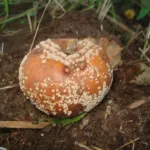 DiseaseEuropean brown rotMonilinia fructigena
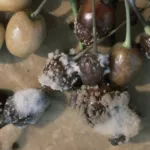 DiseaseBrown Rot of Stone FruitMonilinia fructicola
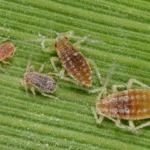 PestMealy Plum AphidHyalopterus pruni (Geoffroy, 1762)
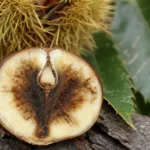 DiseaseChestnut brown rotGnomoniopsis smithogilvyi
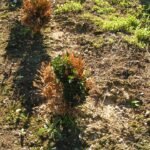 DiseasePhytophthora root and crown rotPhytophthora nicotianae
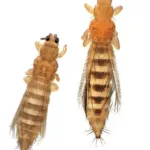 PestOnion thripsThrips tabaci Lindeman
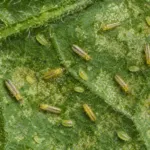 PestMelon thripsThrips palmi Karny
Toxicity and pollen
Alocasia species contain insoluble calcium oxalate crystals. Chewing or swallowing plant material can cause immediate irritation and pain in the mouth, tongue, and throat, with drooling, swelling, vomiting, or difficulty swallowing. Keep every part away from children and pets; wear gloves when handling damaged tissue and seek poison-control or veterinary advice after exposure.
- Pollination / pollen
- Pollen produced within a spadix; airborne significance not established
A flowering Alocasia produces pollen inside its spadix, but the airborne allergy relevance of this named cultivar has not been specifically studied. Its indoor inflorescences are uncommon, so exposure is likely limited; avoid handling pollen or flowers if sensitivity is suspected.
Native habitat
This is a cultivated hybrid rather than a wild species with a native range. Its parentage includes Alocasia 'Aurora' and an Alocasia longiloba selection; the longiloba lineage is associated with warm, humid Southeast Asian forest habitats, damp ravines, and rocky sites. The hybrid therefore performs best in warm, moisture-retentive but aerated conditions.
Interesting fact
The cultivar is formally designated ALO1 in its U.S. plant patent. It was bred by Marian Osiecki and commercialized by Oglesby Plants International. Its early basal shoots help produce a fuller, more columnar plant than many spreading Alocasia types. Patent descriptions report thick sagittate leaves and fleshy roots rather than a conventional woody stem.
Frequently asked questions (FAQ)
The most relevant questions about this plant, with short and direct answers.
🌱Quick care
How do you care for Alocasia 'Ivory Coast'?⌄
Give Alocasia 'Ivory Coast' bright filtered light, airy well-drained soil, moderate moisture, warmth, and higher humidity. Let the upper layer of the potting mix partially dry before watering again, and never leave the pot sitting in water.
Is Alocasia 'Ivory Coast' easy to grow indoors?⌄
Alocasia 'Ivory Coast' is moderately easy indoors when light, moisture, temperature, and humidity remain consistent. It can drop leaves after sudden environmental changes, but healthy corms may produce new growth.
How big does Alocasia 'Ivory Coast' get indoors?⌄
Alocasia 'Ivory Coast' can reach roughly 3 feet tall and wide indoors under good conditions. Its upright, clumping habit usually makes it taller than it is wide while young.
What does Alocasia 'Ivory Coast' look like?⌄
Alocasia 'Ivory Coast' has upright, arrow-shaped dark-green leaves with slim ivory to silvery veining and contrasting pinkish petioles marked with brown or green. It grows as an upright clump rather than a spreading groundcover.
🌤️Environment and placement
How much light does Alocasia 'Ivory Coast' need?⌄
Provide bright filtered or indirect light for Alocasia 'Ivory Coast'. Protect the leaves from strong midday and afternoon sun, although gentle morning or late-day sun indoors may be tolerated.
Can Alocasia 'Ivory Coast' grow in a north-facing window?⌄
Alocasia 'Ivory Coast' can grow near a bright north-facing window if the room receives adequate ambient light. If growth becomes weak or stretched, move it closer to a brighter filtered window or add a grow light.
Can Alocasia 'Ivory Coast' tolerate direct sunlight?⌄
Alocasia 'Ivory Coast' generally should not receive harsh direct sunlight because its leaves can scorch. A short period of gentle early-morning or late-afternoon sun may be acceptable if the plant is acclimated gradually.
What temperature is best for Alocasia 'Ivory Coast'?⌄
Keep Alocasia 'Ivory Coast' around 60–85°F for reliable growth. Protect it from cold windows, drafts, abrupt temperature changes, and temperatures near freezing.
Does Alocasia 'Ivory Coast' need high humidity?⌄
Alocasia 'Ivory Coast' grows best with higher humidity, especially in dry heated or air-conditioned homes. A humidifier, grouping plants, or a naturally humid bathroom can help, provided air circulation remains good.
Can Alocasia 'Ivory Coast' grow outdoors in the United States?⌄
Alocasia 'Ivory Coast' can grow outdoors in warm, frost-free areas with filtered light and shelter from wind. In colder USDA-style climates, grow it in a container and bring it indoors before temperatures approach 60°F or freezing weather threatens.
💧Care and problems
How often should you water Alocasia 'Ivory Coast'?⌄
Water Alocasia 'Ivory Coast' when the upper 1–2 inches of mix have begun to dry, rather than following a fixed calendar. It may need more frequent watering during bright active growth and considerably less in dim winter conditions.
How can you tell when Alocasia 'Ivory Coast' needs water?⌄
Check whether the upper potting mix feels partly dry and whether the container feels lighter than usual. Slight drooping can indicate dryness, but persistent drooping with a soft or slimy stem may indicate overwatering or root damage.
Why are the leaves of my Alocasia 'Ivory Coast' turning yellow?⌄
Yellow leaves on Alocasia 'Ivory Coast' are often caused by overly wet soil, poor drainage, low light, or normal aging of an older leaf. Check the roots and potting mix before watering again, and remove only leaves that are mostly yellow or damaged.
Why is Alocasia 'Ivory Coast' dropping leaves?⌄
Alocasia 'Ivory Coast' may drop leaves after changes in light, watering, temperature, humidity, or during a temporary dormancy. Correct the growing conditions and inspect the corm and roots, because a firm corm can still produce new leaves.
Why are the leaf edges on Alocasia 'Ivory Coast' turning brown?⌄
Brown edges commonly result from low humidity, underwatering, intense light, or fertilizer-salt buildup. Keep the mix moderately moist, increase humidity gradually, protect the leaves from harsh sun, and occasionally flush salts from the pot with clean water.
Why are the leaves of Alocasia 'Ivory Coast' curling?⌄
Curling leaves on Alocasia 'Ivory Coast' usually signal moisture stress, dry air, excessive light, cold exposure, or pests. Check the mix, humidity, leaf undersides, and nearby drafts before changing the watering routine.
How often should you fertilize Alocasia 'Ivory Coast'?⌄
Fertilize Alocasia 'Ivory Coast' about once a month during active growth with a balanced liquid fertilizer diluted to half strength. Reduce or stop feeding when growth slows in winter, and avoid fertilizing very dry or recently stressed plants.
What pests commonly affect Alocasia 'Ivory Coast'?⌄
Spider mites, thrips, mealybugs, and scale can affect Alocasia 'Ivory Coast', particularly in dry indoor conditions. Inspect new growth and leaf undersides regularly and isolate affected plants while treating according to the product label.
How do you prevent root rot in Alocasia 'Ivory Coast'?⌄
Prevent root rot by using a pot with drainage holes and an airy mix, then watering only after the upper mix has partly dried. Empty excess water from the saucer or cachepot and do not keep the corm in saturated soil.
🪴Planting and repotting
What soil is best for Alocasia 'Ivory Coast'?⌄
Use an airy tropical potting mix that holds some moisture but drains quickly. A quality indoor potting mix amended with orchid bark and perlite is a practical container blend.
What type of pot does Alocasia 'Ivory Coast' need?⌄
Choose a stable pot with drainage holes for Alocasia 'Ivory Coast', especially as its upright clump becomes top-heavy. Keep the new container only slightly larger than the root system to reduce the risk of wet, unused soil.
When should you repot Alocasia 'Ivory Coast'?⌄
Repot Alocasia 'Ivory Coast' when roots circle the container, emerge from drainage holes, or the clump is becoming crowded. Late winter or the start of active spring growth is generally less disruptive than repotting during a stress period.
How do you repot Alocasia 'Ivory Coast'?⌄
Move Alocasia 'Ivory Coast' into fresh, well-drained mix at the same planting depth and water it thoroughly once. Do not bury the corm or stem bases deeply, and allow the container to drain completely afterward.
✂️Propagation and pruning
How do you propagate Alocasia 'Ivory Coast'?⌄
Alocasia 'Ivory Coast' is best propagated by separating established offsets or corms when the plant is actively growing. Each division should have viable roots or a healthy corm, and newly separated pieces need warmth, moisture, and high humidity while they establish.
Does Alocasia 'Ivory Coast' produce pups or offsets?⌄
Yes, Alocasia 'Ivory Coast' can produce basal shoots that gradually form a fuller clump. Wait until an offset is well developed before separating it, because very small divisions may establish slowly.
Can you propagate Alocasia 'Ivory Coast' from a leaf cutting?⌄
A leaf cutting alone will not reliably produce a new Alocasia 'Ivory Coast' plant because new growth comes from the corm or associated growth tissue. Propagation is more dependable through rooted offsets or corm division.
Should you prune Alocasia 'Ivory Coast'?⌄
Prune Alocasia 'Ivory Coast' only to remove fully yellow, dead, or badly damaged leaves. Cut the petiole close to the base with a clean tool, but do not remove healthy leaves unnecessarily because the plant needs them to replenish its corm.
⚠️Toxicity and safety
Is Alocasia 'Ivory Coast' toxic to cats and dogs?⌄
Alocasia 'Ivory Coast' is toxic if ingested by cats, dogs, and other pets. Keep it out of reach and contact a veterinarian promptly if a pet chews or swallows any part of the plant.
Is Alocasia 'Ivory Coast' poisonous to people?⌄
Alocasia 'Ivory Coast' is toxic if ingested and may irritate the mouth, throat, skin, or digestive tract. Keep it away from children, avoid touching your face after handling it, and seek medical or poison-control advice after ingestion.
Can you touch Alocasia 'Ivory Coast'?⌄
You can handle Alocasia 'Ivory Coast' for routine care, but sap may irritate sensitive skin. Wear gloves when pruning or repotting, wash your hands afterward, and keep plant material away from eyes and mouth.
🌸Flowering and special interest
Does Alocasia 'Ivory Coast' flower indoors?⌄
Alocasia 'Ivory Coast' can produce a small aroid inflorescence indoors, but it is grown primarily for its foliage and flowering is uncommon in ordinary household conditions. Consistent warmth, bright filtered light, and active growth improve the chance of blooming.
What does an Alocasia 'Ivory Coast' flower look like?⌄
The flower is a typical aroid inflorescence consisting of a spathe surrounding a spadix. It is usually less showy than the plant's arrow-shaped, silver-veined leaves and may be removed if the plant is weak or stressed.
Similar plants
 Mandevilla ‘Rio White’Mandevilla 'Rio White'
 Mandevilla ‘Red Velvet’Mandevilla 'Red Velvet'
 Mandevilla ‘Red Riding Hood’Mandevilla 'Red Riding Hood'
 Mandevilla ‘Pink Charm’Mandevilla 'Pink Charm'
 Campbell’s Magnolia (Magnolia campbellii) care guideMagnolia campbellii
 Magnolia ‘Susan’Magnolia 'Susan'