
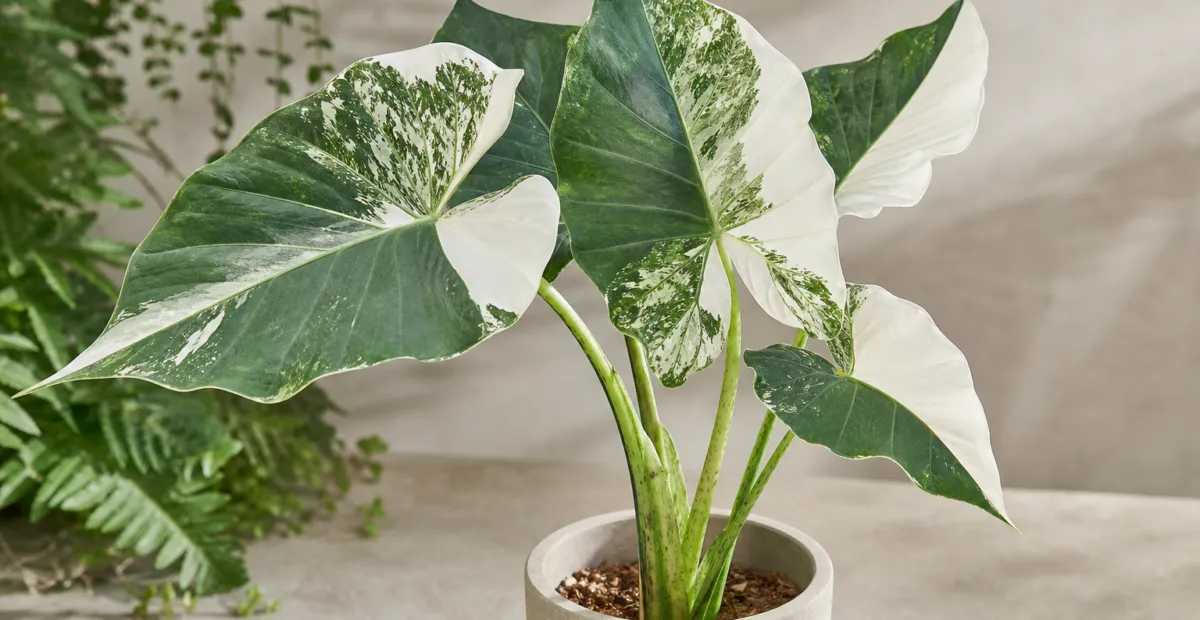
 AI-generated illustration
Albo Variegata (Alocasia gageana ‘Albo Variegata’) short overview
Alocasia gageana 'Albo Variegata' is a collectible variegated elephant ear grown mainly as a warm-climate container or houseplant. Its upright, clumping habit and broad arrow-shaped leaves carry irregular white to cream sectors that make every plant distinctive. Bright filtered light, warmth, airy moisture-retentive soil, and careful watering support steady growth and help limit stress-related leaf loss. It is frost tender and toxic if chewed.
Taxonomic classification
Albo Variegata (Alocasia gageana ‘Albo Variegata’) care guide
Light and placement
Give bright filtered light near an east- or bright north-facing window, or several feet back from a strong south- or west-facing window. Gentle morning sun can be tolerated after acclimation. Too much direct sun may bleach or scorch leaves; too little light produces smaller leaves, slower growth, and weaker variegation. Rotate the pot for balanced growth.
Watering and humidity
Water thoroughly when the top 1–2 inches of mix feel partly dry, then let excess drain completely. Keep the root zone evenly moist during active growth, but never leave the pot standing in water. Reduce frequency in cool or dim winter conditions while avoiding prolonged bone-dry periods. Humidity helps limit crisp margins but cannot compensate for poor drainage.
Soil and growing medium
Use a chunky, airy mix that holds some moisture without remaining saturated: quality indoor potting mix amended with fine orchid bark and perlite or pumice works well. Slightly acidic to neutral conditions are suitable. Avoid dense garden soil in containers because poor aeration encourages corm and root problems.
Feeding
Feed only while the plant is actively producing leaves, generally spring through early fall indoors. Use a complete balanced fertilizer at quarter to half strength every 3–4 weeks, preferably after watering. Pause during cool, dark, stagnant periods or after repotting until new growth resumes; excess fertilizer can damage roots and increase salt buildup.
Growth and habit
This plant develops from a rhizomatous or tuberous underground base and produces upright, long-petioled leaves in a clump. Variegated tissue grows more slowly than fully green tissue, and heavily white leaves may decline sooner. Rotate containers periodically for even light, remove failing leaves at the base, and avoid abrupt changes in temperature or watering.
Planting and repotting
Treat this cultivar as a container or indoor plant in most of the United States. Set the corm or rooted division just below the surface, with the growing point exposed or only lightly covered. Plant outdoors only after nights are reliably warm; allow enough room for leaves to spread without crowding.
Repot in spring or early summer when roots fill the container or the mix breaks down. Move up only one pot size and keep the corm at its previous depth. Handle roots gently, refresh compacted substrate, and provide warmth while the plant re-establishes.
Propagation and pruning
Propagation
Propagate by separating offsets or dividing established rhizomatous clumps during active growth. Small corms may also be started warm and humid, but variegation and vigor can vary among offsets. Use sterile tools and allow cuts to dry briefly before potting into a lightly moist, airy medium.
Pruning
Remove yellow, damaged, or collapsing leaves by cutting the petiole cleanly near the base with sterilized tools. Do not routinely trim healthy variegated tissue. Wipe sap from tools and skin, because the plant's irritant crystals can cause painful reactions.
Overwintering
Move indoors before temperatures approach 50°F. Provide bright filtered light, warmth, and reduced watering through winter. Check carefully for mites and mealybugs before bringing it inside. Growth may slow substantially in short-day conditions; resume stronger watering and feeding only when new growth is clearly active.
Uses
Primarily an ornamental foliage plant for indoor collections, greenhouses, shaded patios, and frost-free landscapes. Its strong leaf pattern makes it useful as a specimen or accent plant. Do not use it as food; raw Alocasia tissues are hazardous, and cultivar-specific edible preparation has not been established.
Appearance
Leaves are broad, heart- to arrow-shaped, and held on sturdy upright petioles. The blades show irregular white to cream sectors or patches over a green background, with prominent veins and a slightly undulate outline. The plant forms an upright clump rather than a vine. Variegation pattern, sector size, and the amount of green tissue vary from leaf to leaf.
Flowering
Mature Alocasia plants may produce arum-type inflorescences consisting of a spadix enclosed by a spathe. Flowering is sporadic in cultivation and may be reduced by low light, cool temperatures, or division. Reliable flowering dates for this named variegated cultivar are not established.
Pollination and visitors
No reliable documentation was found for a characteristic animal pollinator or visitor specific to this named cultivar. Alocasia inflorescences use the typical arum floral arrangement, but a species- or cultivar-specific visitor should not be assumed.
Diseases and pests
Diseases
Watch for root or corm rot, bacterial soft rot, and leaf-spot symptoms. Prevention depends on clean tools, an airy substrate, good drainage, and avoiding water sitting on leaves or in the crown. Remove badly affected tissue, isolate symptomatic plants, and correct excess moisture before considering a labeled treatment.
Pests
Spider mites, thrips, mealybugs, scale, and fungus gnats may occur, especially under dry indoor conditions. Inspect leaf undersides and petiole bases regularly. Improve airflow, reduce plant stress, remove heavily infested tissue, and use insecticidal soap or horticultural oil only according to the product label and after testing sensitive foliage.
Related diseases and pests
Only Plant Doctor profiles whose host data indicate this plant may be affected are shown here.
 DiseaseBacterial soft rotPectobacterium carotovorum
 DiseaseRhizopus soft rotRhizopus stolonifer
 DiseaseAlternaria leaf spot and fruit rotAlternaria alternata
 DiseasePhytophthora root and crown rotPhytophthora nicotianae
 PestOnion thripsThrips tabaci Lindeman
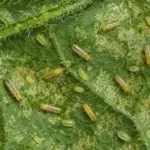 PestMelon thripsThrips palmi Karny
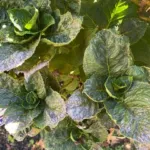 PestChilli thripsScirtothrips dorsalis Hood
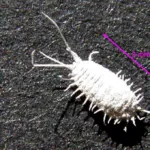 PestObscure mealybugPseudococcus viburni
Toxicity and pollen
Alocasia tissues contain insoluble calcium oxalate crystals that can cause immediate burning, pain, swelling, drooling, vomiting, and difficulty swallowing if chewed. Sap may irritate skin and eyes. Keep away from children and pets, wear gloves when cutting, and seek poison-control or veterinary guidance after ingestion.
- Pollination / pollen
- Limited, locally released pollen from occasional inflorescences
This is a flowering aroid, so it can produce pollen when it flowers, but indoor airborne exposure and cultivar-specific pollen measurements are not well documented. The inflorescences are uncommon in ordinary houseplant culture. People with significant allergies should avoid handling flowers closely and monitor personal reactions.
Native habitat
The backbone species is associated with humid tropical to subtropical Asian environments, including northern Myanmar and related regions recognized in current taxonomic treatments. It favors warm conditions, regular moisture, organic soils, and filtered light, although cultivated plants tolerate brighter or shadier positions when acclimated.
Interesting fact
The name Alocasia gageana is taxonomically linked in modern treatments to Englerarum montanum. The cultivar's white sectors contain little or no chlorophyll, so heavily variegated leaves contribute less photosynthesis. Plants sold under similar names may show different patterns because cultivar-level trade naming is not standardized.
Frequently asked questions (FAQ)
The most relevant questions about this plant, with short and direct answers.
🌱Quick care
How do you care for Alocasia gageana 'Albo Variegata'?⌄
Give Alocasia gageana 'Albo Variegata' bright filtered light, evenly moist but well-drained soil, warmth, and moderate to high humidity. Let excess water drain fully and protect it from cold drafts and temperatures below 50°F.
Is Alocasia gageana 'Albo Variegata' easy to grow indoors?⌄
Alocasia gageana 'Albo Variegata' is moderately demanding indoors because its variegated leaves need consistent light, moisture, warmth, and humidity. It is usually manageable when environmental conditions remain stable.
🌤️Environment and placement
How much light does Alocasia gageana 'Albo Variegata' need?⌄
Place it in bright filtered or indirect light, such as near an east-facing window or behind a sheer curtain. Variegated sections can scorch in intense direct sun, while insufficient light may slow growth and reduce vigor.
Can Alocasia gageana 'Albo Variegata' tolerate direct sunlight?⌄
It can tolerate gentle early-morning sun after gradual acclimation, but strong midday or afternoon sunlight may burn the pale leaf areas. Filter intense sunlight with a sheer curtain or move the plant farther from the window.
What temperature is best for Alocasia gageana 'Albo Variegata'?⌄
Keep Alocasia gageana 'Albo Variegata' warm, ideally around 65–82°F during active growth. Protect it from temperatures below 50°F, cold floors, drafts, and sudden temperature changes.
Does Alocasia gageana 'Albo Variegata' need high humidity?⌄
It grows best with moderate to high humidity, especially in heated or air-conditioned homes. A humidifier and good air circulation are more reliable than frequent misting, which does not permanently raise humidity.
Can Alocasia gageana 'Albo Variegata' grow outdoors in the United States?⌄
It can grow outdoors in warm, frost-free areas in bright shade or filtered light, but it should be brought inside or protected before temperatures approach 50°F. In colder USDA zones, grow it as a container plant.
💧Care and problems
How often should you water Alocasia gageana 'Albo Variegata'?⌄
Water when the surface of the mix feels slightly dry, then soak thoroughly until water drains from the pot. Adjust the schedule to light, temperature, pot size, and season rather than watering on a fixed calendar.
Should Alocasia gageana 'Albo Variegata' dry out between waterings?⌄
Let only the upper portion of the potting mix dry slightly; do not allow the root ball to become completely dry for long periods. Constantly soggy soil is equally harmful because it encourages root and rhizome rot.
Why are the leaves of my Alocasia gageana 'Albo Variegata' turning yellow?⌄
Yellow leaves commonly result from overwatering, poor drainage, cold stress, low light, or normal aging of an older leaf. Check the roots and rhizome for softness, improve drainage, and adjust watering before the problem spreads.
Why is my Alocasia gageana 'Albo Variegata' losing leaves?⌄
Leaf loss can follow cold exposure, inconsistent watering, transplant stress, low humidity, pests, or seasonal dormancy. Keep the plant warm and evenly moist, inspect closely for pests, and avoid removing healthy leaves prematurely.
Why are the white parts of my Alocasia gageana 'Albo Variegata' turning brown?⌄
Brown patches on the white variegation usually indicate sun scorch, dry air, inconsistent watering, salt buildup, or hot airflow. Move the plant to filtered light, maintain steadier moisture, and flush accumulated fertilizer salts from the mix.
Why are the new leaves on my Alocasia gageana 'Albo Variegata' smaller?⌄
Small new leaves often indicate inadequate light, restricted roots, cool conditions, underwatering, or insufficient nutrition during active growth. Correct the environmental issue first and repot only when the roots have substantially filled the container.
Why is my Alocasia gageana 'Albo Variegata' drooping?⌄
Drooping may be caused by dry soil, overwatering and root damage, cold temperatures, transplant shock, or inadequate light. Check soil moisture and the root system, then keep the plant warm while correcting the underlying condition.
What pests attack Alocasia gageana 'Albo Variegata'?⌄
Spider mites, thrips, mealybugs, scale, and fungus gnats can affect Alocasia gageana 'Albo Variegata'. Inspect leaf undersides, petioles, rolled new leaves, and the soil regularly, and isolate the plant if pests are found.
How should I fertilize Alocasia gageana 'Albo Variegata'?⌄
Feed during active growth with a balanced houseplant fertilizer diluted according to the label, usually every few weeks rather than at every watering. Reduce or stop feeding when growth slows in winter, and flush the pot occasionally to limit salt buildup.
🪴Planting and repotting
What soil is best for Alocasia gageana 'Albo Variegata'?⌄
Use an airy, well-drained, moisture-retentive aroid mix containing materials such as bark, coco coir or peat, and perlite or pumice. The mix should hold some moisture while allowing abundant air around the roots.
What type of pot does Alocasia gageana 'Albo Variegata' need?⌄
Choose a pot with drainage holes that is only slightly larger than the root system. A close-fitting, stable container helps the mix dry evenly and reduces the risk of prolonged wetness around the roots.
When should I repot Alocasia gageana 'Albo Variegata'?⌄
Repot when roots circle the container, emerge from drainage holes, or the mix breaks down and stays wet for too long. Spring or early summer is generally the least stressful time, provided the plant is actively growing.
Can Alocasia gageana 'Albo Variegata' be grown in LECA or semi-hydroponics?⌄
It can be grown in LECA or another semi-hydroponic setup, but the transition should be gradual and the plant must receive adequate warmth, light, and oxygen around its roots. Monitor carefully for rot during the change from soil.
✂️Propagation and pruning
How do you propagate Alocasia gageana 'Albo Variegata'?⌄
The most practical method is division of rooted basal offsets or propagation from healthy corms. Separate offsets only when they have their own roots, and keep newly divided plants warm, lightly moist, and humid while they establish.
Can Alocasia gageana 'Albo Variegata' be propagated from a leaf cutting?⌄
A single leaf without a node, corm, or attached rhizome cannot normally produce a new Alocasia plant. Propagation requires a viable corm, rhizome section, or rooted offset with a growth point.
Will new Alocasia gageana 'Albo Variegata' leaves have the same variegation?⌄
No, the amount and pattern of variegation can vary from leaf to leaf, even on the same plant. Division generally preserves the cultivar, but individual offsets may produce greener, whiter, or differently marbled foliage.
Should I cut off damaged leaves on Alocasia gageana 'Albo Variegata'?⌄
Remove a leaf when it is mostly yellow, dead, diseased, or badly damaged, using sterilized tools and cutting the petiole near its base. Minor brown edges can be trimmed for appearance, but the remaining green tissue still benefits the plant.
⚠️Toxicity and safety
Is Alocasia gageana 'Albo Variegata' toxic to cats and dogs?⌄
Yes, Alocasia gageana 'Albo Variegata' is toxic to cats and dogs because it contains insoluble calcium oxalate crystals. Ingestion can cause oral pain, drooling, swelling, vomiting, or difficulty swallowing, so contact a veterinarian promptly after exposure.
Is Alocasia gageana 'Albo Variegata' toxic to people?⌄
Yes, chewing or handling damaged tissue can irritate the mouth, throat, skin, and eyes because of insoluble calcium oxalate crystals. Keep it away from children, wash hands after handling, and seek medical advice if swelling or trouble breathing occurs.
Can you touch Alocasia gageana 'Albo Variegata'?⌄
Yes, brief contact is generally tolerated, but sap from cut or damaged tissue may irritate sensitive skin and eyes. Wear gloves when pruning or repotting, avoid touching your face, and wash exposed skin afterward.
🌸Flowering and special interest
Does Alocasia gageana 'Albo Variegata' flower indoors?⌄
It can flower when mature and growing vigorously, but indoor flowering is not guaranteed and is less common than attractive leaf production. Warmth, strong filtered light, adequate nutrition, and a healthy established root system improve the chance of blooming.
What does an Alocasia gageana 'Albo Variegata' flower look like?⌄
Its flower is a typical aroid inflorescence made of a spathe surrounding a spadix rather than a showy, conventional blossom. The plant is primarily grown for its large, irregularly white-variegated foliage.
Similar plants
 Foxtail Palm (Wodyetia bifurcata) care guideWodyetia bifurcata
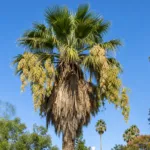 He Mexican fan palm (Washingtonia robusta) care guideWashingtonia robusta
 He California fan palm (Washingtonia filifera) care guideWashingtonia filifera
 Veitchia arecina care guideVeitchia arecina
 Trachycarpus latisectus care guideTrachycarpus latisectus
 He Chusan palm (Trachycarpus fortunei) care guideTrachycarpus fortunei