
 Source:
 Shaw’s Agave (Agave shawii) short overview
Shaw's Agave is a compact, clumping succulent native to coastal scrub from Southern California into Baja California. Its glossy green leaves form a bold rosette edged with conspicuous reddish teeth and a sharp terminal spine. Mature plants eventually produce a tall, branched stalk bearing yellow to reddish tubular flowers, then the flowering rosette dies. In the United States, it performs best in full sun, gritty drainage and low summer irrigation, with protection from prolonged frost and winter wet.
Taxonomic classification
Shaw’s Agave (Agave shawii) care guide
Light and placement
Give full sun with strong air circulation, ideally in a south- or west-facing bed that receives at least 6 hours of direct light. In very hot inland climates, light afternoon shade can prevent scorch. Too little light produces stretched, looser rosettes; sudden intense sun after indoor growth can bleach or burn leaves, so acclimate gradually.
Watering and humidity
Water deeply, then allow the soil to dry completely through the root zone before watering again. Established plants usually need irrigation only during prolonged drought. Reduce watering sharply in cool weather and stop during extended winter rain. Container plants dry faster, but a dry interval is still essential; do not mist the rosette.
Soil and growing medium
Use a very sharply drained mineral soil or cactus-and-succulent mix amended with pumice, gravel or coarse sand. Avoid heavy clay and organic-rich mixes that stay wet. A mildly acidic to mildly alkaline reaction is tolerated, provided drainage is rapid and roots are not waterlogged.
Feeding
Feed sparingly in spring with a low-nitrogen, slow-release succulent fertilizer at the label rate, or use a light compost top-dressing in the ground. Do not fertilize newly planted, dormant, stressed or actively rotting plants. Excess nitrogen can produce softer growth and reduce resilience in wet conditions.
Growth and habit
This slow-growing agave forms a basal rosette and commonly produces offsets that develop into a spreading clump. It is monocarpic: each flowering rosette uses its stored energy to produce the inflorescence and then dies. Remove the spent mother rosette only after offsets are established and the stalk has finished developing seed.
Planting and repotting
Plant in spring after cold, wet weather has passed. Set the root crown at soil level rather than burying the rosette. Backfill with mineral soil, water once to settle the roots, then allow the planting bed to dry thoroughly. Leave enough room for offsets and keep sharp leaves away from paths.
Repot container plants in spring only when roots have filled the pot or drainage has declined. Use a heavy, stable container with a drainage hole and a gritty mix. Wear thick gloves and protect skin from the sharp spines and irritating sap.
Propagation and pruning
Propagation
Separate rooted offsets in spring or early summer when they are large enough to handle. Allow cut surfaces to dry briefly, then pot into a gritty mix and water sparingly until roots establish. Seed propagation is possible but slower and requires fresh, viable seed and warm, well-drained conditions.
Pruning
Pruning is usually limited to removing dead outer leaves, spent flower stalks and a finished mother rosette. Cut only after tissue has dried and use clean, sturdy tools. Never cut healthy leaves for cosmetic reasons, and wear protective clothing because both spines and sap can injure skin.
Overwintering
Keep plants as dry as possible during cold spells. In regions colder than Zone 8, grow in a container and move it under bright cover before hard freezes. Protect the crown from prolonged rain and frost, but maintain ventilation. Allow the mix to remain nearly dry while temperatures are low.
Uses
Useful for xeriscapes, coastal gardens, rock gardens, raised beds and large containers. Its architectural rosette and tall flowering display provide strong structural interest. It is not recommended beside paths or seating because of sharp spines and irritating sap. Wild plants should not be collected; use nursery-propagated stock where available.
Appearance
The rosette has thick, rigid, glossy green leaves that are narrowly ovate to ovate and ascend from the center. Leaf margins carry conspicuous, often reddish teeth, and each leaf ends in a dark, needle-like spine. Plants may remain solitary or branch from the rootstock to form connected offsets and small colonies.
Flowering
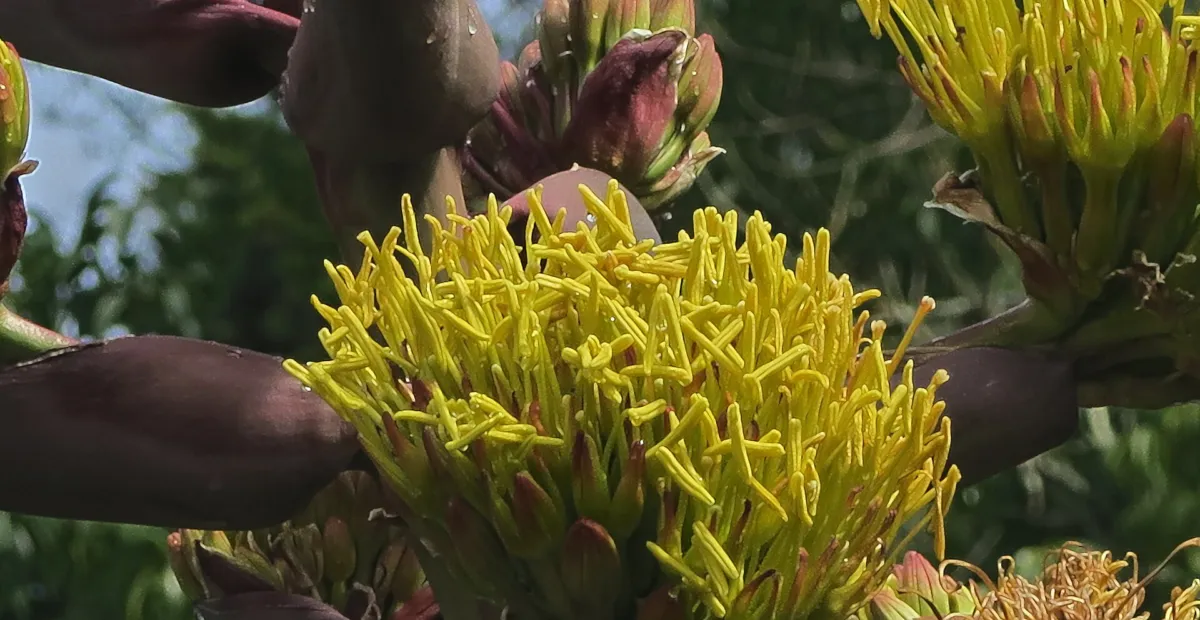
A mature rosette produces one terminal, branched panicle about 6–13 feet tall, with dense clusters of tubular flowers. Buds are often reddish or red-purple and open yellow, with flowers sometimes becoming reddish as they age. The flowering rosette dies after seed production, while offsets may continue the colony.
Pollination and visitors
The tubular, nectar-producing flowers are reported to attract hummingbirds, butterflies and other pollinating visitors; bees and bumblebees may also visit. Visitor composition can vary by region and by whether the plant is flowering in cultivation.
Agave shawii photos
Click any photo for a larger view. Source, author and license are shown separately.
Diseases and pests
Diseases
Root and crown rot are the principal concerns, especially in heavy or persistently wet soil. Prevent problems with a raised or fast-draining site, restrained irrigation and clean tools. Remove collapsed tissue and improve drainage; discard severely rotted plants rather than repeatedly watering them.
Pests
Scale insects, agave snout weevil and mealybugs may occur, particularly on stressed or container-grown plants. Inspect leaf bases and the crown regularly. Isolate affected containers, remove minor infestations manually and use a labeled treatment only when necessary. Good airflow and dry, clean conditions reduce problems.
Related diseases and pests
Only Plant Doctor profiles whose host data indicate this plant may be affected are shown here.
 DiseasePhytophthora cactorum crown, collar, root and fruit rotPhytophthora cactorum
 DiseasePhytophthora root and crown rotPhytophthora nicotianae
 PestPeach weevilRhynchites bacchus
 PestObscure mealybugPseudococcus viburni
 PestCitrus mealybugPlanococcus citri
 PestCotton mealybugPhenacoccus solenopsis Tinsley
Toxicity and pollen
Agave sap and leaf tissues can cause painful skin irritation or dermatitis, while the spines create a mechanical injury risk. Reliable species-specific evidence for serious systemic poisoning in people or pets is limited, so avoid ingestion and contact with sap. Wear gloves, eye protection and long sleeves when planting or pruning.
- Typical season
- During flowering, generally late winter through early summer in much of the United States.
- Pollination / pollen
- Heavy, insect-associated pollen; airborne relevance uncertain
Agave shawii is animal-pollinated rather than wind-pollinated, so its flowers are not expected to create the heavy airborne pollen clouds associated with wind-pollinated trees and grasses. Species-specific clinical allergy data are limited; sensitive people should still avoid direct contact with flowers and sap.
Native habitat
Native populations occur in coastal scrub, maritime succulent scrub, coastal bluffs and nearby dry mesas from southern California into Baja California. Plants experience bright sun, seasonal drought, maritime influence and rocky or sandy soils that drain rapidly. Natural populations are restricted and conservation-sensitive.
Interesting fact
The species honors Henry Shaw, founder of the Missouri Botanical Garden. It is one of the more compact agaves used in coastal California gardens. Mature plants may flower after many years, and the parent rosette dies after blooming while offsets preserve the clump.
Frequently asked questions (FAQ)
The most relevant questions about this plant, with short and direct answers.
🌱Quick care
What is Shaw's Agave (Agave shawii)?⌄
Shaw's Agave is a slow-growing, evergreen succulent that forms a spiny basal rosette. It is native mainly to coastal sage scrub and rocky coastal habitats of Southern California and northwestern Baja California.
How much sunlight does Shaw's Agave need?⌄
Give Shaw's Agave full sun for the strongest growth and best form. Light afternoon shade can help in very hot inland locations, where intense heat may scorch the leaves.
How often should I water Agave shawii?⌄
Water Shaw's Agave deeply but infrequently while it is establishing, then keep it nearly dry once established. Allow the soil to dry completely between waterings, and avoid routine summer irrigation in humid or poorly drained conditions.
Is Shaw's Agave drought tolerant?⌄
Yes, Shaw's Agave is highly drought tolerant after its roots are established. Excess moisture is generally more damaging than dry soil, particularly during warm weather.
🌤️Environment and placement
What USDA hardiness zone is Shaw's Agave suited to?⌄
Shaw's Agave is generally suited to USDA Zones 9b through 10, although sheltered plants may tolerate brief colder conditions. Protect it from prolonged hard freezes and saturated winter soil.
Can Shaw's Agave grow near the coast?⌄
Yes, Shaw's Agave is well suited to coastal gardens and tolerates salt exposure better than many succulents. Provide excellent drainage, strong light, and protection from exposed foot traffic because of its spines.
Can Agave shawii grow in hot inland areas?⌄
Agave shawii can grow in hot inland areas if it has sharply drained soil and appropriate irrigation. Light afternoon shade may be beneficial where extreme summer heat causes leaf scorch.
What soil is best for Shaw's Agave?⌄
Use sandy, rocky, mineral soil that drains sharply after rain or irrigation. Heavy clay should be amended substantially or replaced with a raised, gritty planting mix because persistent wetness can cause rot.
Can Shaw's Agave grow in a container?⌄
Yes, Shaw's Agave grows well in a container with a drainage hole and a gritty succulent mix. Choose a stable pot with enough room for the rosette and handle the plant carefully during maintenance.
💧Care and problems
Why are the leaves of my Shaw's Agave turning soft?⌄
Soft leaves usually indicate overwatering, poor drainage, cold injury, or developing rot rather than drought. Move the plant to drier conditions, inspect the crown and roots, and remove only tissue that is clearly dead or rotting.
Why is my Agave shawii turning brown at the tips?⌄
Brown leaf tips can result from drought stress, sun scorch, cold damage, or physical injury. Check the roots and soil moisture first, then provide consistent drainage and shelter from unusually harsh exposure.
Does Shaw's Agave need fertilizer?⌄
Shaw's Agave usually needs little or no fertilizer when grown in suitable mineral soil. If growth is poor, a light application of a low-nitrogen succulent fertilizer during active growth is safer than heavy feeding.
What pests and diseases affect Shaw's Agave?⌄
Shaw's Agave is generally low maintenance, but wet soil can cause crown or root rot. Watch for common agave pests such as scale insects and agave snout weevil where they occur, and avoid stressing the plant with excess irrigation.
🪴Planting and repotting
When is the best time to plant Shaw's Agave outdoors?⌄
Plant Shaw's Agave in spring or early fall when temperatures are moderate and the soil is not waterlogged. In colder parts of its range, spring planting gives roots more time to establish before winter.
How far apart should Shaw's Agave plants be spaced?⌄
Space individual Shaw's Agave rosettes about 3 to 4 feet apart if you want room for mature plants and offsets. Closer spacing can create a colony, but it makes access and maintenance more difficult.
Should I plant Shaw's Agave near a walkway?⌄
No, place Shaw's Agave away from walkways, patios, play areas, and other high-traffic locations. Its hooked marginal teeth and rigid terminal spine can cause serious puncture injuries.
✂️Propagation and pruning
How do you propagate Shaw's Agave?⌄
The most practical method is to separate rooted offsets, also called pups, from the parent plant and replant them in dry, sharply drained soil. Seed propagation is possible but slower and less predictable.
Can Shaw's Agave be grown from seed?⌄
Yes, Shaw's Agave can be grown from seed, although seedlings develop slowly and flowering may take many years. Use a sterile, well-drained medium, keep it lightly moist during germination, and gradually reduce moisture after emergence.
When should I remove pups from Shaw's Agave?⌄
Remove pups during active growth, preferably in spring or early summer, when they have formed their own roots or are large enough to establish independently. Let cut surfaces dry briefly before planting them in dry mix.
Can I cut off a Shaw's Agave flower stalk to save the plant?⌄
Cutting off the flower stalk does not reliably save a flowering Shaw's Agave rosette. The plant is monocarpic, so the rosette normally declines and dies after flowering, while offsets may continue growing.
⚠️Toxicity and safety
Is Shaw's Agave poisonous to people or pets?⌄
Shaw's Agave has irritating sap and sharp spines, so it should be treated as a hazardous landscape plant. Keep children and pets away, avoid contact with the sap, and wash exposed skin promptly.
How should I handle or prune Shaw's Agave?⌄
Wear thick gloves, long sleeves, eye protection, and use long-handled tools when handling Shaw's Agave. Remove only dead or damaged leaves, and dispose of cut material carefully because spines remain dangerous after pruning.
🌸Flowering and special interest
How long does Shaw's Agave take to flower?⌄
Shaw's Agave may take roughly 15 to 30 years to flower, depending on growing conditions and plant origin. The timing is highly variable, so a mature rosette may remain vegetative for many years.
What does a Shaw's Agave flower look like?⌄
A flowering Shaw's Agave produces a tall, branched stalk, commonly about 8 to 12 feet high, bearing clusters of yellow-green to reddish tubular flowers. The blooms can attract hummingbirds, butterflies, and other pollinators.
Does Shaw's Agave die after flowering?⌄
Yes, the flowering rosette normally dies after producing its flower stalk and setting seed. Offsets around the base can survive and replace the original rosette over time.
When does Shaw's Agave bloom?⌄
Shaw's Agave commonly blooms from late winter through spring, although the season can vary with climate and cultivation. Flowering is a one-time event for the individual rosette.
Similar plants
 Azure Monkshood (Aconitum carmichaelii) care guideAconitum carmichaelii
 Monkshood (Aconitum ‘Stainless Steel’)Aconitum 'Stainless Steel'
 Monkshood (Aconitum ‘Bressingham Spire’)Aconitum 'Bressingham Spire'
 Golden full moon maple (Acer shirasawanum ‘Aureum’)Acer shirasawanum 'Aureum'
 Globosum (Acer platanoides ‘Globosum’)Acer platanoides 'Globosum'
 Striped maple (Acer pensylvanicum) care guideAcer pensylvanicum