
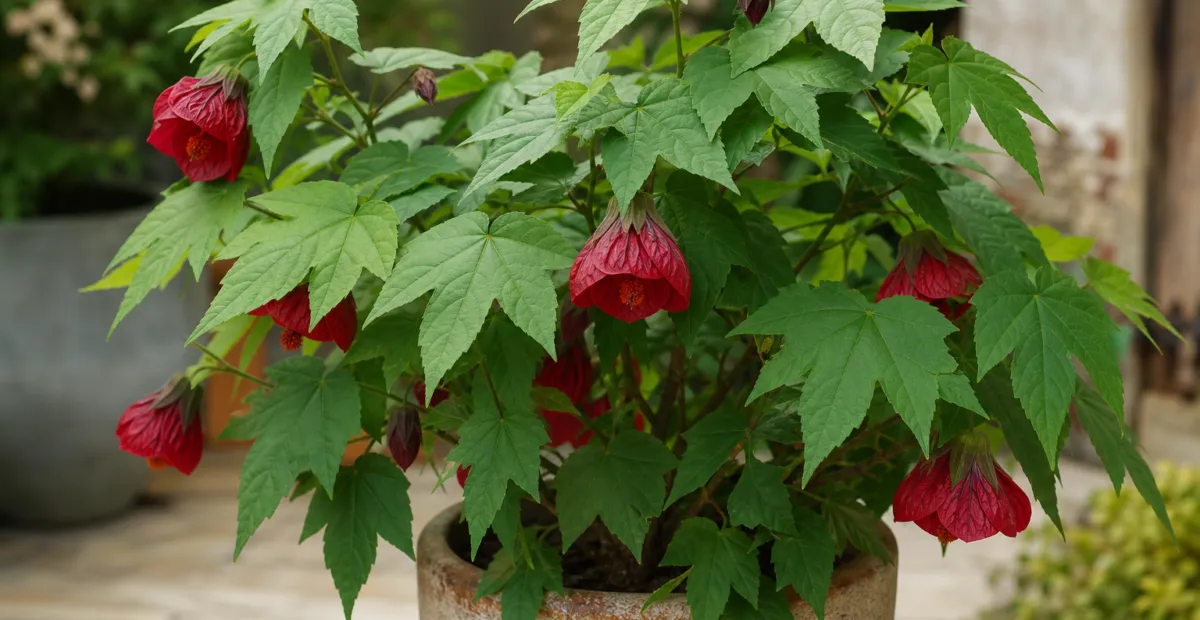
 AI-generated illustration
Abutilon ‘Ashford Red’ short overview
Abutilon 'Ashford Red' is a tender flowering-maple cultivar valued for its large, pendent bell-shaped flowers in a rich deep red. It forms an erect to spreading, twiggy evergreen shrub with pale green, shallowly lobed leaves. In the United States, grow it in full sun with shelter from cold winds, usually in a container or conservatory-style setting. Keep the soil evenly moist but well drained, and move it indoors before freezing temperatures arrive.
Taxonomic classification
Abutilon ‘Ashford Red’ care guide
Light and placement
Give full sun for the strongest growth and flowering, ideally in a sheltered south-, east-, or west-facing position. In very hot inland climates, bright filtered afternoon light can reduce leaf scorch. Too little light produces lanky growth and fewer flowers; excessive harsh reflected heat may cause wilting or leaf scorch.
Watering and humidity
Water thoroughly when the top inch of mix begins to dry, then allow excess water to drain away. Keep the root zone evenly moist during active growth, but never saturated. Reduce watering in cool winter quarters while avoiding complete desiccation. Good airflow is more important than unusually high humidity.
Soil and growing medium
Use a fertile, loam-based or high-quality container mix that drains freely while retaining moderate moisture. Sandier structure is acceptable if organic matter is present. Published guidance allows acid, neutral, or alkaline conditions, so precise pH correction is usually unnecessary; avoid persistently waterlogged media.
Feeding
Feed during active spring and summer growth with a balanced liquid fertilizer at the label rate, commonly about monthly in container culture. Water the root ball first if the mix is dry. Reduce or stop feeding during cool, low-light winter conditions, when soft growth is more vulnerable.
Growth and habit
This cultivar develops an erect to spreading, twiggy framework and can become a substantial shrub in warm climates. In containers it is easier to maintain at a manageable size. Growth becomes sparse and flowering decreases in inadequate light; periodic tip pruning can encourage branching, while excessive hard pruning may remove flowering wood.
Planting and repotting
Plant outdoors after the last expected frost in a warm, sheltered location. Set at the same depth as the root ball and water thoroughly to settle the soil. Container growing is generally safer in much of the United States because the plant can be moved indoors before freezing weather.
Repot container plants in spring when roots fill the pot, moving up only one container size. Refresh depleted loam-based mix and ensure generous drainage holes. Large specimens can be top-dressed instead of repeatedly moved into much larger pots.
Propagation and pruning
Propagation
Take softwood cuttings in spring or greenwood cuttings in summer. Use clean, non-flowering shoots, remove lower leaves, and root in a sterile, free-draining medium under bright, indirect light with steady moisture. Seed is listed as a possible method, but named-cultivar seedlings may not reproduce the parent faithfully.
Pruning
Prune lightly after a flowering flush or in early spring to shape the plant and remove weak, damaged, or crossing stems. Tip-prune young growth to encourage branching. Avoid severe late-season pruning where possible because it can delay flowering and produce soft growth before winter.
Overwintering
Move containers indoors, into a cool greenhouse, or into a frost-free conservatory before temperatures approach freezing. Keep the plant in the brightest available light, water sparingly in winter, and check regularly for mites, whiteflies, scale, and mealybugs. Return outdoors gradually in spring after frost danger has passed.
Uses
Use as a specimen shrub, patio container plant, conservatory subject, greenhouse plant, or sheltered warm-climate accent. Its pendent red flowers suit mixed borders where winters are frost-free or nearly so. It is not recommended as a food or medicinal plant without separate authoritative identification and safety guidance.
Appearance
An evergreen to semi-evergreen shrub with slender woody stems, an erect-to-spreading habit, and pale green leaves that are broadly ovate to rounded and shallowly 3–5-lobed. The most diagnostic feature is the conspicuous pendent, lantern-like deep-red flowers suspended beneath the foliage.
Flowering
The cultivar bears solitary, pendent, lantern-like flowers with a bell-shaped form. Blooming is reported from spring through autumn, with flowering potentially continuing later in mild conditions or under glass. Flowers are large for the genus, commonly reported at roughly 2½–3 inches long.
Pollination and visitors
Reliable cultivar-specific pollinator records are limited. The conspicuous pendent flowers may receive visits from general flower-visiting insects, but a stronger attraction rating or named pollinator species cannot be supported from the evidence reviewed.
Diseases and pests
Diseases
Avoid saturated soil, which can encourage root problems such as Pythium root rot. Maintain airflow, use clean tools, and remove badly affected tissue. Abutilons may also show occasional virus symptoms; discard severely distorted plants rather than propagating from them.
Pests
Watch for aphids, thrips, mites, whiteflies, mealybugs, and scale, especially indoors or in greenhouses. Inspect leaf undersides and new growth regularly. Improve airflow, isolate infested plants, wash foliage when practical, and use a labeled horticultural oil or insecticidal soap according to its directions.
Related diseases and pests
Only Plant Doctor profiles whose host data indicate this plant may be affected are shown here.
 PestGreenhouse thripsHeliothrips haemorrhoidalis
 PestGreen Peach AphidMyzus persicae
 PestMealy Plum AphidHyalopterus pruni (Geoffroy, 1762)
 PestGreen Apple AphidAphis pomi
 DiseasePythium damping-off, root rot and blightPythium aphanidermatum
 PestOnion thripsThrips tabaci Lindeman
 PestMelon thripsThrips palmi Karny
 PestChilli thripsScirtothrips dorsalis Hood
Toxicity and pollen
No reliable, cultivar-specific human or pet toxicity assessment was located for Abutilon 'Ashford Red'. Do not treat the absence of evidence as proof of safety. Prevent ingestion of plant material, especially by children and pets, and seek professional advice if a substantial amount is eaten or irritation occurs.
- Typical season
- Typically spring through fall during flowering; exact allergy season is undocumented
- Pollination / pollen
- Insect-dispersed pollen; airborne relevance not well documented
Abutilon 'Ashford Red' is insect-pollinated and is not documented as a major airborne-pollen allergen. Nevertheless, individual sensitivity cannot be ruled out, and handling flowering plants can expose sensitive people to pollen or other plant particles. Keep flowering containers away from sleeping areas if symptoms occur.
Native habitat
The cultivar is of garden origin rather than a wild population. Its broader abutilon relatives are associated with warm subtropical and tropical regions, where woody shrubs grow in frost-free climates and reasonably fertile, well-drained soils. It lacks dependable outdoor frost tolerance in most of the United States.
Interesting fact
Ashford Red is listed among classic tender hybrid abutilon selections. Its flowers are described in specialist horticultural literature as a deep crushed-strawberry shade. The cultivar can flower for an extended season and may continue blooming in a conservatory. The common genus label flowering maple refers to the maple-like leaves, not a relationship to Acer.
Frequently asked questions (FAQ)
The most relevant questions about this plant, with short and direct answers.
🌱Quick care
What is Abutilon 'Ashford Red'?⌄
Abutilon 'Ashford Red' is a vigorous, upright evergreen to semi-evergreen flowering shrub with maple-like, lobed leaves and large, pendent deep-red bell-shaped flowers. It is a frost-tender cultivar commonly grown outdoors in containers or in protected beds.
How much light does Abutilon 'Ashford Red' need?⌄
Give Abutilon 'Ashford Red' full sun to bright filtered light. A sheltered spot with several hours of direct sun usually supports the best flowering, while intense afternoon heat may require light shade.
How often should I water Abutilon 'Ashford Red'?⌄
Water Abutilon 'Ashford Red' whenever the surface of the soil begins to dry, keeping the root zone evenly moist but never waterlogged. Container plants may need frequent watering during hot, actively growing weather.
Is Abutilon 'Ashford Red' hardy in the United States?⌄
Abutilon 'Ashford Red' is frost tender and should be protected when temperatures approach 34°F. In much of the United States, grow it as a container plant or move it into a protected, frost-free space for winter.
🌤️Environment and placement
Can Abutilon 'Ashford Red' grow outdoors?⌄
Abutilon 'Ashford Red' can grow outdoors during the frost-free season in a sunny, sheltered location. Bring it indoors or provide dependable frost protection before freezing conditions arrive.
Can Abutilon 'Ashford Red' grow in full sun?⌄
Yes, Abutilon 'Ashford Red' grows well in full sun when its soil remains evenly moist. In very hot climates, bright filtered light or afternoon shade can reduce heat and water stress.
Can Abutilon 'Ashford Red' grow in shade?⌄
Abutilon 'Ashford Red' tolerates bright filtered light but flowers less reliably in deep shade. Place it where it receives strong ambient light and preferably some gentle direct sun.
What temperature is too cold for Abutilon 'Ashford Red'?⌄
Protect Abutilon 'Ashford Red' when temperatures fall below about 34°F. Frost and freezing conditions can damage or kill the foliage and tender stems, even if the plant later regrows.
Where should I place Abutilon 'Ashford Red' indoors for winter?⌄
Place Abutilon 'Ashford Red' in the brightest available window, sunroom, cool greenhouse, or conservatory. Keep it away from cold drafts, heating vents, and sudden temperature changes.
💧Care and problems
What soil is best for Abutilon 'Ashford Red'?⌄
Use fertile, well-drained loam-based soil or a high-quality container mix for Abutilon 'Ashford Red'. The soil should hold moderate moisture while allowing excess water to drain freely.
How should I fertilize Abutilon 'Ashford Red'?⌄
Feed Abutilon 'Ashford Red' with a balanced liquid fertilizer about monthly during active growth. Reduce or stop feeding during winter when growth and watering needs decline.
Why are the leaves of my Abutilon 'Ashford Red' turning yellow?⌄
Yellow leaves on Abutilon 'Ashford Red' commonly result from overwatering, poor drainage, insufficient light, or normal winter stress. Check the roots and soil moisture before increasing water or fertilizer.
Why is Abutilon 'Ashford Red' dropping its leaves?⌄
Abutilon 'Ashford Red' may drop leaves after exposure to cold, drought, abrupt indoor relocation, or low winter light. Keep conditions stable, avoid soggy soil, and protect the plant from temperatures below about 34°F.
What pests attack Abutilon 'Ashford Red'?⌄
Abutilon 'Ashford Red' can be affected by whiteflies, spider mites, mealybugs, and scale insects, especially indoors or in greenhouses. Inspect leaf undersides and stems regularly and isolate infested plants promptly.
How do I treat spider mites on Abutilon 'Ashford Red'?⌄
Rinse Abutilon 'Ashford Red' thoroughly, especially beneath the leaves, and repeat regularly while improving humidity and airflow. Severe infestations may require a labeled insecticidal soap or horticultural oil used according to its instructions.
How do I overwinter Abutilon 'Ashford Red'?⌄
Move Abutilon 'Ashford Red' indoors before frost, place it in bright light, and water more sparingly during winter. Check carefully for pests before bringing it inside and return it outdoors gradually in spring.
🪴Planting and repotting
Can Abutilon 'Ashford Red' grow in a container?⌄
Yes, Abutilon 'Ashford Red' performs well in a large container filled with fertile, well-drained mix. Container growing also makes it easier to move the plant indoors before frost.
When should I plant Abutilon 'Ashford Red' outdoors?⌄
Plant Abutilon 'Ashford Red' outdoors after the last expected frost, once nighttime temperatures are consistently mild. Harden an overwintered indoor plant gradually before placing it in full outdoor light.
When should I repot Abutilon 'Ashford Red'?⌄
Repot Abutilon 'Ashford Red' in spring when new growth begins or when roots have filled the container. Move it into only a slightly larger pot to avoid excess wet soil around the roots.
Does Abutilon 'Ashford Red' need good drainage?⌄
Yes, excellent drainage is essential for Abutilon 'Ashford Red' because persistently wet roots can cause decline or root rot. Use a drainage-holed container and never leave the pot standing in water.
✂️Propagation and pruning
How do I propagate Abutilon 'Ashford Red'?⌄
Propagate Abutilon 'Ashford Red' most reliably from softwood cuttings in spring or greenwood cuttings in summer. Use clean tools, a free-draining rooting medium, and consistent moisture until roots develop.
Can Abutilon 'Ashford Red' be grown from seed?⌄
Abutilon 'Ashford Red' can be propagated from seed, but seedlings may not reproduce the cultivar’s exact flower color, form, or vigor. Stem cuttings are preferred when maintaining the named cultivar.
How should I prune Abutilon 'Ashford Red'?⌄
Prune Abutilon 'Ashford Red' in early spring by removing weak, damaged, or overcrowded growth and shortening long stems to shape the plant. Light trimming during the growing season can encourage branching and maintain a manageable size.
Can Abutilon 'Ashford Red' be cut back hard?⌄
Yes, an established Abutilon 'Ashford Red' can usually be cut back hard in early spring before vigorous new growth begins. Avoid severe pruning immediately before cold weather, when tender regrowth could be damaged.
⚠️Toxicity and safety
Is Abutilon 'Ashford Red' toxic to cats or dogs?⌄
The toxicity of Abutilon 'Ashford Red' has not been firmly established by cultivar-specific evidence. Keep pets and children from chewing the plant, and contact a veterinarian or poison-control service if ingestion causes symptoms.
🌸Flowering and special interest
When does Abutilon 'Ashford Red' flower?⌄
Abutilon 'Ashford Red' typically flowers from late spring or summer into autumn, and it may continue longer in mild conditions or a bright conservatory. Flowering usually decreases when light, moisture, or temperatures are inadequate.
How do I make Abutilon 'Ashford Red' bloom more?⌄
Provide Abutilon 'Ashford Red' with bright light, even moisture, regular feeding during active growth, and occasional pruning to encourage branching. Avoid heavy shade, drought stress, and excessive nitrogen fertilizer.
Why is my Abutilon 'Ashford Red' not flowering?⌄
Poor flowering in Abutilon 'Ashford Red' is usually linked to insufficient light, cold temperatures, drought, root stress, or heavy pruning at the wrong time. Move it to brighter light and maintain steady moisture while new growth develops.
Are the flowers of Abutilon 'Ashford Red' red all season?⌄
Abutilon 'Ashford Red' is known for large, pendent flowers in a strong deep-red to brick-red color. Exact color intensity can vary with light, temperature, plant age, and growing conditions.
Similar plants
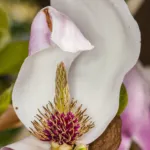 Saucer Magnolia (Magnolia soulangeana) care guideMagnolia soulangeana
 Magnolia × loebneri ‘Merrill’Magnolia × loebneri 'Merrill'
 Magnolia loebneri care guideMagnolia loebneri
 Sweetbay magnolia (Magnolia virginiana) care guideMagnolia virginiana
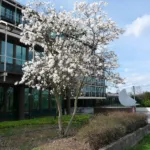 Star magnolia (Magnolia stellata) care guideMagnolia stellata
 Magnolia sprengeri care guideMagnolia sprengeri