
 Source:
 He mistletoe cactus (Rhipsalis baccifera) short overview
He mistletoe cactus, Rhipsalis baccifera, is an evergreen epiphytic cactus with slender, spineless, branching stems that cascade from hanging baskets. It grows naturally on trees or rocks in tropical and subtropical regions, rather than in ordinary desert conditions. In U.S. homes, provide bright filtered light, an airy fast-draining mix, moderate watering and good humidity. Small pale flowers may be followed by translucent white, pink or red berries.
Taxonomic classification
He mistletoe cactus (Rhipsalis baccifera) care guide
Light and placement
Provide bright filtered light or gentle partial shade. An east-facing window is ideal; near a south- or west-facing window, use a sheer curtain or place the plant several feet back. Too much direct midday sun can scorch or redden the stems, while too little light causes weak, elongated growth and may reduce flowering. Summer outdoor placement should be shaded from harsh afternoon sun.
Watering and humidity
Water thoroughly when the upper portion of the mix has dried, then let excess drain completely. Rhipsalis generally prefers more consistent moisture than desert cacti, but its roots still need air. Reduce frequency in winter, especially in cool or dim conditions. Limp, puckered stems suggest drought; soft, dark or collapsing stems suggest excess moisture or root problems.
Soil and growing medium
Use a loose, airy epiphytic mix that drains quickly yet retains a little organic moisture, such as orchid bark, coco coir or peat-free houseplant mix with perlite. Avoid dense garden soil and containers that stay wet. A slightly acidic to neutral reaction is suitable; exact pH is not critical when drainage and aeration are good.
Feeding
Feed during active growth in spring and summer with a balanced or slightly low-nitrogen houseplant fertilizer diluted to about one-quarter to one-half strength every four to six weeks. Water first if the mix is dry. Stop or greatly reduce feeding in winter and after flowering if the plant is cool or dormant; excess fertilizer can weaken roots and produce lanky growth.
Growth and habit
This cactus produces long, flexible, repeatedly branched stems from older joints and naturally hangs or spreads from its support. It can become several feet long in cultivation and may develop aerial roots at branch tips. Provide a stable hanging container, rotate periodically for even growth, and trim only to control length or encourage branching.
Planting and repotting
Plant or pot up after the last frost when nighttime temperatures remain above 50°F. Set the root ball at its original depth and keep the stem bases above the mix surface. Give hanging specimens room to cascade, with roughly 12–18 inches between plants when displayed together. Water lightly after planting, then establish gradually rather than keeping the mix saturated.
Repot in spring or early summer only when the container is crowded, the mix has decomposed, or drainage has declined. Move up one pot size at most and handle the fragile stems carefully. Refresh part of the airy epiphytic mix rather than burying the plant deeply. Allow damaged roots or cut surfaces to dry briefly before watering.
Propagation and pruning
Propagation
Stem cuttings are the simplest method: take a healthy segment in spring or summer, let the cut end callus briefly, then place it in a barely moist, airy propagation mix. Keep warm with bright filtered light and avoid excess water until roots form. Seed propagation is possible but slower and requires warmth, moisture control and patience.
Pruning
Pruning is optional. Use clean scissors to remove damaged, diseased or excessively long stems, ideally during active growth. Cut at a joint and allow the plant to branch from nearby nodes. Do not remove large portions immediately after repotting or during cool, low-light winter conditions.
Overwintering
Bring indoors before temperatures approach 50°F, and protect completely from frost. In winter, provide bright filtered light, avoid cold windows and drafts, and water less often as growth slows. Do not place the plant beside a heater, where dry air and rapid temperature changes can cause stress.
Uses
Best used as an indoor hanging plant, greenhouse specimen, conservatory plant or warm-climate patio accent. Its cascading form suits hanging baskets and elevated containers. Although Kew records food and medicinal uses in some source traditions, those uses are not sufficiently standardized here for home consumption or medical recommendation.
Appearance
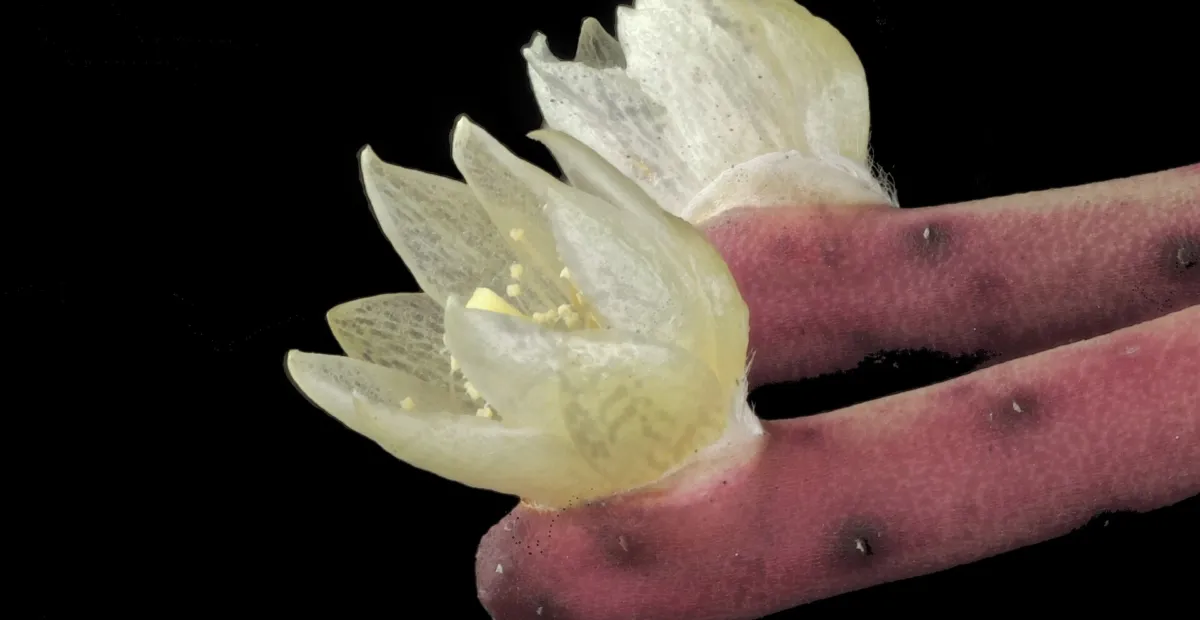
The plant is leafless and spineless, with slender cylindrical green to pale-green stems that branch repeatedly and cascade. Young growth may show tiny woolly areoles or short bristles, which become less conspicuous as stems mature. Small pale flowers occur along the stems, followed by translucent berry-like fruits in white, pink or sometimes red tones.
Flowering
Small lateral flowers are usually solitary, white to greenish-white and about 0.4 inch across, although botanical descriptions report flowers up to about 0.4 inch wide. They arise along the stems and can be numerous. In U.S. indoor cultivation, flowering is commonly reported in late winter and early spring, while native tropical populations may flower at other times depending on local conditions.
Pollination and visitors
The reviewed authoritative sources describe the flowers and fruits but do not provide sufficiently specific, cross-checked documentation of the principal animal pollinator for the exact taxon. Pollinator attraction is therefore left unknown rather than inferred from flower color or cactus family membership.
Rhipsalis baccifera photos
Click any photo for a larger view. Source, author and license are shown separately.
Diseases and pests
Diseases
Root and stem rot are the main risks when the mix remains wet or air circulation is poor. Remove affected tissue, correct watering, improve drainage and isolate severely affected plants. Fungal spotting is more likely in stagnant, humid conditions. Avoid routine fungicide use unless the problem is identified and cultural corrections are insufficient.
Pests
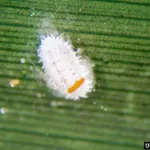
Inspect stems and joints for mealybugs, aphids and spider mites, especially on stressed or crowded plants. Isolate affected specimens, remove visible pests with a cotton swab or gentle water spray, and use an appropriately labeled insecticidal soap or horticultural oil when needed. Avoid treating in hot direct sun and improve airflow and plant vigor.
Related diseases and pests
Only Plant Doctor profiles whose host data indicate this plant may be affected are shown here.

Toxicity and pollen
No authoritative evidence located in the reviewed sources establishes clinically important toxicity for the exact species. The plant lacks the milky sap and irritating spines associated with some look-alikes, but ingestion of any ornamental plant can cause mild gastrointestinal upset or choking, and plant material may carry soil or pesticides. Keep cuttings and berries away from children and pets and contact a poison-control or veterinary service if symptoms occur.
- Typical season
- Typically late winter to spring indoors; exact U.S. outdoor season varies
- Pollination / pollen
- Flower pollen; airborne exposure not well documented
This is an insect-associated flowering cactus, but the reviewed sources do not provide reliable measurements or clinical evidence for airborne pollen exposure from Rhipsalis baccifera. Its small flowers are unlikely to be a major household pollen source, yet low risk should not be interpreted as zero allergy risk. Avoid handling flowers if a personal sensitivity is known.
Native habitat
It is native across tropical and subtropical America, with additional natural-range populations in tropical Africa and Sri Lanka. In nature it grows as an epiphyte on trees or as a lithophyte on rocks, often in humid forests or evergreen bushland, where roots encounter organic debris rather than deep mineral soil. Conditions range from lowland sites to montane elevations.
Interesting fact
Rhipsalis baccifera is an epiphytic cactus rather than a desert-dwelling terrestrial cactus. It is notable as the only cactus species naturally occurring in both the New World and parts of the Old World. Its fruits are translucent, berry-like and visually resemble mistletoe berries. The species is accepted by Kew and is listed as Least Concern in the IUCN assessment cited by Kew.
Frequently asked questions (FAQ)
The most relevant questions about this plant, with short and direct answers.
🌱Quick care
What is he mistletoe cactus?⌄
He mistletoe cactus is the verified common name for Rhipsalis baccifera, a spineless, trailing epiphytic cactus in the Cactaceae family. It grows naturally on trees rather than in dry desert soil.
Is Rhipsalis baccifera a cactus or a succulent?⌄
Rhipsalis baccifera is both a true cactus and a succulent plant. Unlike desert cacti, it prefers filtered light, higher humidity, and more regular moisture.
Is Rhipsalis baccifera easy to grow indoors?⌄
Yes, Rhipsalis baccifera is generally an easy-care indoor plant when given bright filtered light, airy soil, and moderate watering. It is especially well suited to hanging baskets.
How fast does Rhipsalis baccifera grow?⌄
Rhipsalis baccifera grows slowly to moderately indoors, producing long, branching stems over time. Growth is usually faster in warm, bright conditions during spring and summer.
🌤️Environment and placement
How much light does Rhipsalis baccifera need?⌄
Rhipsalis baccifera grows best in bright filtered light to partial shade. Protect it from intense afternoon sun, which can scorch the slender stems.
Can Rhipsalis baccifera grow in low light?⌄
Rhipsalis baccifera can tolerate lower light for a while, but growth may become sparse and flowering is less likely. Move it closer to a bright window while avoiding harsh direct sun.
Can Rhipsalis baccifera grow outdoors?⌄
Yes, it can grow outdoors in warm, frost-free areas with partial shade and good air circulation. Bring it indoors before temperatures approach freezing.
What temperature is best for Rhipsalis baccifera?⌄
Normal indoor temperatures around 60–80°F suit Rhipsalis baccifera well. It is frost-tender and should be protected from freezing temperatures.
Does Rhipsalis baccifera need high humidity?⌄
Rhipsalis baccifera benefits from moderate to high humidity, particularly in dry heated or air-conditioned rooms. Good ventilation is still important to reduce the risk of fungal problems.
Is Rhipsalis baccifera suitable for a hanging basket?⌄
Yes, a hanging basket is one of the best ways to display Rhipsalis baccifera. Its slender, branching stems naturally trail and cascade over the container.
💧Care and problems
How often should I water Rhipsalis baccifera?⌄
Water Rhipsalis baccifera when the potting mix is partly dry, then let excess water drain completely. Water less often during winter or whenever growth slows.
Should Rhipsalis baccifera dry out completely between waterings?⌄
No, Rhipsalis baccifera should not routinely remain completely dry for long periods. Allow the mix to partly dry, but provide water when the stems begin to lose firmness or pucker.
Why are my Rhipsalis baccifera stems wrinkled or puckered?⌄
Wrinkled or puckered stems usually indicate that Rhipsalis baccifera needs water. If the mix is already wet, inspect the roots for damage because root loss can also prevent the plant from absorbing water.
Why are the stems of my Rhipsalis baccifera turning mushy?⌄
Mushy stems usually indicate overwatering, poor drainage, or root rot. Remove affected sections, check the roots, and repot healthy material into a fresh, airy mix if necessary.
Why are the tips of my Rhipsalis baccifera turning brown?⌄
Brown stem tips can result from underwatering, very dry air, or excessive direct sunlight. Check the moisture level and move the plant away from hot, intense sun.
What pests affect Rhipsalis baccifera?⌄
Rhipsalis baccifera can be affected by mealybugs, spider mites, and aphids. Inspect stems and branch joints regularly, especially when the plant is stressed or kept in dry indoor air.
🪴Planting and repotting
What soil is best for Rhipsalis baccifera?⌄
Use an airy epiphytic cactus mix that drains quickly but holds a small amount of moisture. A mix containing orchid bark, perlite, and a modest amount of potting soil is suitable.
Does Rhipsalis baccifera need a pot with drainage holes?⌄
Yes, Rhipsalis baccifera should be planted in a container with drainage holes. Excess water around the roots can quickly lead to rot.
When should I repot Rhipsalis baccifera?⌄
Repot Rhipsalis baccifera when the mix breaks down, drainage slows, or the roots have filled the container. Spring or early summer is usually the least stressful time.
Does Rhipsalis baccifera like to be root-bound?⌄
Rhipsalis baccifera can tolerate being somewhat root-bound, so it does not need frequent repotting. Move it only one pot size larger when repotting to avoid excess wet soil.
✂️Propagation and pruning
How do you propagate Rhipsalis baccifera from cuttings?⌄
Take a healthy stem cutting several inches long, allow the cut end to dry briefly, and place it in lightly moist, airy mix. Keep it warm in bright filtered light until roots form.
Can Rhipsalis baccifera be propagated in water?⌄
Yes, stem cuttings of Rhipsalis baccifera can produce roots in water, although transferring them later to soil requires care. A lightly moist propagation mix often produces roots with less transition stress.
Can Rhipsalis baccifera be grown from seed?⌄
Yes, Rhipsalis baccifera can be grown from seed, including seed from its berries. Seed propagation is slower and less commonly used than stem cuttings.
Can I prune Rhipsalis baccifera?⌄
Yes, you can prune Rhipsalis baccifera to control length, remove damaged stems, or encourage a fuller shape. Use clean scissors and allow cut surfaces to dry before heavy watering.
⚠️Toxicity and safety
Is Rhipsalis baccifera toxic to cats or dogs?⌄
Toxicity is not established for the exact species Rhipsalis baccifera, so it should not be assumed to be completely pet-safe. Keep it away from pets and contact a veterinarian if ingestion causes symptoms.
Does Rhipsalis baccifera have spines?⌄
Rhipsalis baccifera is generally spineless, with slender, smooth, trailing stems. Young growth may have tiny bristles or woolly structures that are not the prominent spines seen on many desert cacti.
🌸Flowering and special interest
Does Rhipsalis baccifera flower?⌄
Yes, mature Rhipsalis baccifera can produce small white to greenish-white flowers along its stems. Flowering commonly occurs from late winter into spring, although indoor plants may vary.
How can I make Rhipsalis baccifera bloom?⌄
Provide bright filtered light, healthy steady growth, and a slightly cooler, somewhat drier winter rest. Avoid prolonged drought or severe temperature changes, which can weaken the plant instead of encouraging flowers.
What are the berries on Rhipsalis baccifera?⌄
The small white or pale-pink berries on Rhipsalis baccifera are fruits that develop after flowering. Their translucent, rounded appearance resembles mistletoe berries.
Why is my Rhipsalis baccifera not flowering?⌄
A lack of flowering is commonly associated with insufficient light, immaturity, or the absence of a seasonal rest period. Improve filtered light and maintain consistent care through the growing season.
Similar plants
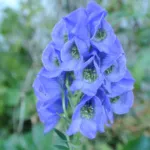 Azure Monkshood (Aconitum carmichaelii) care guideAconitum carmichaelii
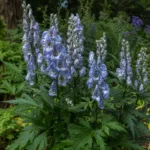 Monkshood (Aconitum ‘Stainless Steel’)Aconitum 'Stainless Steel'
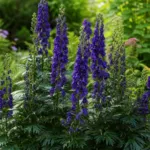 Monkshood (Aconitum ‘Bressingham Spire’)Aconitum 'Bressingham Spire'
 Golden full moon maple (Acer shirasawanum ‘Aureum’)Acer shirasawanum 'Aureum'
 Globosum (Acer platanoides ‘Globosum’)Acer platanoides 'Globosum'
 Striped maple (Acer pensylvanicum) care guideAcer pensylvanicum