
 Source:
 Pyracantha ‘Mohave’ short overview
Pyracantha 'Mohave' is a vigorous, thorny evergreen firethorn valued for glossy dark-green foliage, abundant white flower clusters, and heavy crops of orange-red berries that can remain attractive into winter. Developed through the U.S. National Arboretum’s plant-introduction program, this upright shrub is useful for sunny hedges, screens, barriers, and specimen plantings. Give it well-drained soil, room for its spines, and prune after flowering to preserve next year’s bloom.
Taxonomic classification
Pyracantha ‘Mohave’ care guide
Light and placement
Best flowering and fruiting occur in full sun, with at least 6 hours of direct light. Partial shade is tolerated, especially in hot climates, but dense shade can reduce flowering, fruiting, and compact growth. A sunny east-, south-, or west-facing position is suitable; provide airflow and avoid cramped corners. Pale, sparse growth suggests insufficient light, while winter leaf scorch may indicate intense exposure combined with drying winds.
Watering and humidity
Water deeply and thoroughly when the upper few inches of soil begin to dry, rather than giving frequent shallow sprinklings. Keep newly planted shrubs consistently moist during establishment, then reduce irrigation as roots mature. Established plants tolerate short dry periods but fruiting and foliage suffer under prolonged drought. Avoid saturated soil and wetting the canopy late in the day.
Soil and growing medium
Use moderately fertile, well-drained soil with good air movement around the roots. ‘Mohave’ tolerates sand, loam, and clay and adapts across a broad pH range, from slightly acidic through neutral to mildly alkaline. Avoid persistently waterlogged ground; improve heavy soil with organic matter and plant slightly high if drainage is marginal.
Feeding
Apply compost or a balanced slow-release shrub fertilizer in early spring as growth begins, following the product label. Avoid heavy nitrogen feeding, which can produce soft, overly vigorous shoots and reduce the balance between flowering and fruiting. Do not fertilize drought-stressed, newly transplanted, or visibly diseased plants until they have recovered.
Growth and habit
This is a vigorous, dense, upright shrub with stiff, thorn-bearing branches. It can become a substantial hedge or screen and responds well to training and renewal pruning. Because flowers form on older wood, maintenance should preserve short flowering spurs rather than shearing indiscriminately before bloom.
Planting and repotting
Plant in spring or fall while temperatures are moderate. Set the root ball level with the surrounding soil, or slightly high in heavy ground, then water deeply to settle the roots. Space plants about 6–10 feet apart for a hedge, depending on the desired density and pruning regime. Mulch lightly, keeping mulch away from the trunk, and irrigate regularly during the first growing season.
Container plants should be shifted into the next larger pot when roots fill the container, preferably in early spring before strong growth begins. Use a durable, free-draining potting mix and a heavy container that will not tip as the shrub enlarges. Handle branches with thick gloves because the spines are substantial.
Propagation and pruning
Propagation
Propagate commercially or experimentally from softwood, semi-hardwood, or hardwood cuttings taken during the active growing season or dormant season, using clean material and a well-drained rooting medium. Cultivar traits are preserved by vegetative propagation; seedlings will not reliably reproduce ‘Mohave’.
Pruning
Prune after flowering, usually in early to mid-summer, because next season’s flowers develop on older wood. Remove dead, damaged, crossing, or excessively crowded branches first, then shorten selected shoots to control size and shape. Use long sleeves, thick gloves, eye protection, and bypass pruners; avoid severe pre-bloom shearing if flowers and berries are priorities.
Overwintering
Plants in Zones 6–8 generally overwinter outdoors without special protection once established. Water before the ground freezes if autumn is dry, and apply a light mulch over the root zone without touching the stems. In exposed northern sites, protect young shrubs from drying winter winds with temporary screening. Container plants have less root insulation and should be sheltered in a protected, unheated location during severe freezes.
Uses
Use ‘Mohave’ as a thorny hedge, privacy screen, security barrier, espalier, foundation accent, or specimen shrub. Its evergreen foliage and persistent orange-red fruit provide multi-season structure. Avoid planting beside paths, play areas, or seating where the spines may contact people or pets. The berries should not be promoted as edible.
Appearance
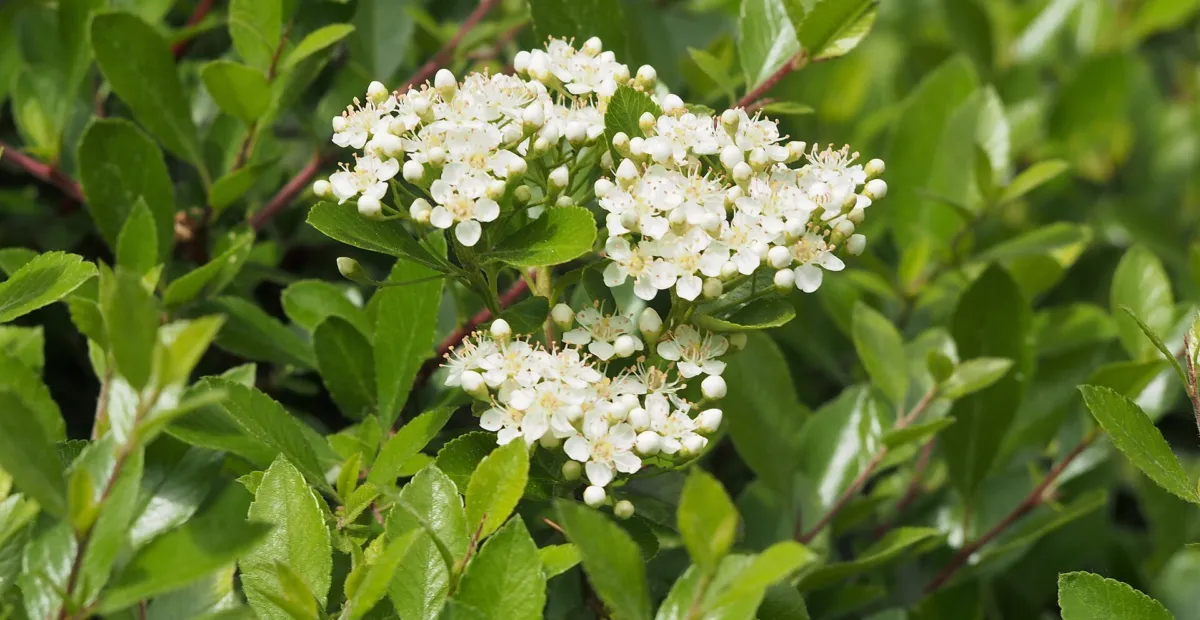
‘Mohave’ forms a dense shrub with upright to arching, thorn-bearing branches and rough brown bark. The simple leaves are narrow to oval, glossy, leathery, and dark green. Small white flower clusters give way to conspicuous orange-red pomes. The persistent fruit and evergreen foliage provide strong seasonal identification, while the sharp spines distinguish it from many similar berrying shrubs.
Flowering
Small white flowers are borne in conspicuous clusters on older wood in late spring to early summer, commonly around May and June in much of the United States. Flowering is followed by heavy crops of orange-red pomes. Pruning immediately before bloom can remove the shoots that carry the next display.
Pollination and visitors
The small, open white flowers fit a generalist insect-pollination pattern and provide pollen, with limited nectar. Extension sources specifically record bees and pollinators visiting Pyracantha flowers. Evidence for a particular bee species visiting this exact cultivar is not sufficiently specific for a Latin species name.
Pyracantha 'Mohave' photos
Click any photo for a larger view. Source, author and license are shown separately.
Diseases and pests
Diseases
‘Mohave’ is recognized for good resistance to fire blight and scab, although no cultivar is completely disease-proof. Reduce risk with full sun, adequate spacing, clean pruning tools, and irrigation directed at the soil rather than the foliage. Remove badly infected shoots during dry weather and avoid excessive nitrogen, which encourages soft growth.
Pests
Watch for aphids, scale insects, spider mites, and lace bugs, especially on stressed or densely planted shrubs. Inspect new growth and the undersides of leaves. Improve vigor with correct watering and pruning for airflow; use a strong water spray for light infestations, and reserve labeled horticultural oils or insecticides for persistent problems, following all product directions.
Related diseases and pests
Only Plant Doctor profiles whose host data indicate this plant may be affected are shown here.
 DiseaseFire BlightErwinia amylovora
 DiseaseEntomosporium Leaf SpotDiplocarpon mespili (synonym: Entomosporium mespili)
 PestSan Jose scaleDiaspidiotus perniciosus
 PestGreen Apple AphidAphis pomi
 DiseaseStemphylium Leaf BlightStemphylium vesicarium (Wallr.) E.G. Simmons
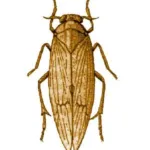 PestBrown planthopperNilaparvata lugens (Stål)
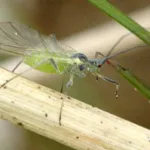 PestGreen Peach AphidMyzus persicae
 DiseaseChestnut blightCryphonectria parasitica (Murrill) M.E. Barr
Toxicity and pollen
Available poison-control evidence indicates Pyracantha berries are not considered poisonous to people or animals, although eating large quantities may cause mild stomach upset. The principal practical hazards are thorn punctures and choking in young children. Do not treat the berries as food, and wear thick gloves and eye protection when pruning.
- Typical season
- May–June in much of the United States
- Pollination / pollen
- Heavy, insect-carried pollen
‘Mohave’ is insect-pollinated, so its pollen is generally heavier and less readily dispersed through the air than pollen from wind-pollinated trees and grasses. This supports a low airborne-allergy classification, not a claim of zero risk. Sensitive people may still react during flowering or through close contact with flowers.
Native habitat
The cultivar is a cultivated hybrid rather than a wild habitat plant. Its Pyracantha background is associated with temperate regions of Europe and Asia. In gardens it performs in sunny, moderately dry to moist sites, including urban conditions, provided the soil drains well and roots are not kept saturated.
Interesting fact
‘Mohave’ was introduced by the U.S. National Arboretum and became a widely grown hybrid firethorn. Its abundant fruit display can be more ornamental than valuable to birds, because the cultivar is reported to have relatively low bird appeal. The name firethorn reflects the combination of bright fruit and sharp spines.
Frequently asked questions (FAQ)
The most relevant questions about this plant, with short and direct answers.
🌱Quick care
What is Pyracantha 'Mohave' commonly called?⌄
Pyracantha 'Mohave' is commonly called Mohave pyracantha or firethorn 'Mohave'. It is an evergreen, thorny shrub grown for white flowers and large orange-red berries.
How fast does Pyracantha 'Mohave' grow?⌄
Pyracantha 'Mohave' is a vigorous, relatively fast-growing shrub. Give it adequate space or plan to prune it regularly to control its size and shape.
Is Pyracantha 'Mohave' evergreen?⌄
Yes, Pyracantha 'Mohave' is generally evergreen in suitable climates. Its dark green foliage may thin or suffer winter damage in colder or exposed locations.
How big does Pyracantha 'Mohave' get?⌄
Pyracantha 'Mohave' can reach about 12 feet tall and wide when mature, although size varies with climate, soil, and pruning. Allow plenty of room when planting it as a hedge or screen.
🌤️Environment and placement
What USDA hardiness zones are suitable for Pyracantha 'Mohave'?⌄
Pyracantha 'Mohave' is suitable for approximately USDA Zones 6a through 9b. Protect young plants from severe exposure while they establish, especially in colder or windy sites.
Does Pyracantha 'Mohave' need full sun?⌄
Pyracantha 'Mohave' grows best in full sun but also tolerates partial shade. More sunlight generally promotes heavier flowering and berry production.
Can Pyracantha 'Mohave' grow in shade?⌄
Pyracantha 'Mohave' can tolerate partial shade, but dense shade may reduce flowering, berry production, and compact growth. In hot climates, some afternoon shade can help limit stress.
What soil is best for Pyracantha 'Mohave'?⌄
Use well-drained sandy, loamy, or clay soil for Pyracantha 'Mohave'; it is adaptable to a range of soil pH levels. Avoid persistently waterlogged ground, which can damage the roots.
Is Pyracantha 'Mohave' drought tolerant?⌄
Established Pyracantha 'Mohave' has useful drought tolerance, but it needs regular watering during its first growing seasons. Water deeply during prolonged heat or drought, then allow excess moisture to drain.
💧Care and problems
How often should I water Pyracantha 'Mohave'?⌄
Water Pyracantha 'Mohave' moderately, allowing the soil to dry slightly between waterings once the plant is established. Newly planted shrubs need more consistent moisture during the first year or two.
Does Pyracantha 'Mohave' need fertilizer?⌄
Pyracantha 'Mohave' usually grows well without heavy feeding in reasonably fertile soil. If growth is weak, apply a balanced slow-release fertilizer in spring according to the product label.
Why is my Pyracantha 'Mohave' not producing berries?⌄
Poor berry production is often caused by insufficient sunlight, excessive pruning, drought stress, or pruning at the wrong time. Because flowers form on older growth, preserve flowering wood and avoid removing it before bloom.
What pests attack Pyracantha 'Mohave'?⌄
Possible pests include aphids, scale insects, spider mites, lace bugs, and caterpillars. Inspect new growth and the undersides of leaves, and address infestations early with the least disruptive treatment appropriate for the problem.
Is Pyracantha 'Mohave' resistant to fire blight and scab?⌄
Pyracantha 'Mohave' is recognized as having good resistance to fire blight and scab. Resistance does not provide complete immunity, so sanitation, good airflow, and avoidance of excessive nitrogen remain useful.
How can I tell if Pyracantha 'Mohave' has fire blight?⌄
Fire blight may cause sudden blackening or wilting of shoots, flowers, and leaves that can resemble fire damage. Prune infected material well below visible symptoms with disinfected tools and seek local extension guidance for serious infections.
🪴Planting and repotting
When is the best time to plant Pyracantha 'Mohave'?⌄
Plant Pyracantha 'Mohave' in spring or fall when temperatures are moderate and the soil is workable. Fall planting is suitable where the ground does not freeze soon after planting.
How far apart should Pyracantha 'Mohave' be planted for a hedge?⌄
Space Pyracantha 'Mohave' according to the desired mature width, commonly about 5 to 8 feet apart for a substantial hedge. Closer spacing fills in faster but increases competition and pruning needs.
Can Pyracantha 'Mohave' be grown against a wall or fence?⌄
Yes, Pyracantha 'Mohave' can be trained against a wall, fence, or sturdy support. Leave room for airflow and maintenance, and use caution because its branches carry sharp thorns.
Does Pyracantha 'Mohave' transplant well?⌄
Pyracantha generally resents transplanting, especially when mature. Choose the planting location carefully, and move only young plants with as much intact root ball as possible.
✂️Propagation and pruning
How do you propagate Pyracantha 'Mohave'?⌄
Propagate Pyracantha 'Mohave' most reliably from semi-ripe or hardwood cuttings. Seed propagation is possible, but cultivated plants may not come true to the 'Mohave' characteristics.
When should Pyracantha 'Mohave' be pruned?⌄
Prune Pyracantha 'Mohave' after flowering, while retaining as much older flowering wood as practical. Heavy or late pruning can remove the shoots that would produce next season’s flowers and berries.
Can Pyracantha 'Mohave' be hard pruned?⌄
Pyracantha 'Mohave' tolerates substantial pruning, but hard pruning can reduce flowers and berries for the following season. Make major reductions gradually and schedule them after flowering when possible.
How do I prune Pyracantha 'Mohave' safely?⌄
Wear thick gloves, long sleeves, eye protection, and use sharp, clean pruners because the stems have long, strong thorns. Remove dead, damaged, crossing, or unwanted branches while preserving healthy flowering wood.
⚠️Toxicity and safety
Are Pyracantha 'Mohave' berries poisonous?⌄
Pyracantha 'Mohave' berries are generally considered low toxicity rather than highly poisonous, but eating large amounts may cause mild stomach upset. Do not intentionally eat the berries, and keep children and pets from consuming them.
Are Pyracantha 'Mohave' thorns dangerous?⌄
Yes, Pyracantha 'Mohave' has sharp thorns that can cause painful punctures and scratches. Avoid planting it beside high-traffic paths or play areas, and wear protective clothing when handling it.
Is Pyracantha 'Mohave' safe to plant around dogs and cats?⌄
Pyracantha 'Mohave' is not considered highly poisonous, but its berries may upset the stomach if eaten in quantity and its thorns can injure animals. Place it where pets are unlikely to chew the plant or brush against it.
🌸Flowering and special interest
When does Pyracantha 'Mohave' bloom?⌄
Pyracantha 'Mohave' usually produces clusters of small white flowers in spring or early summer. The flowers are followed by decorative orange-red berries later in the growing season.
What color berries does Pyracantha 'Mohave' produce?⌄
Pyracantha 'Mohave' produces abundant large orange-red berries. They can remain attractive from late summer or fall into winter, depending on weather and wildlife activity.
Do birds eat Pyracantha 'Mohave' berries?⌄
Birds may eat Pyracantha 'Mohave' berries, particularly as other food becomes scarce, although this cultivar is reported to have lower bird appeal than some firethorns. Berry persistence therefore varies by location and bird populations.
Does Pyracantha 'Mohave' attract pollinators?⌄
The small white flowers of Pyracantha 'Mohave' can provide resources for pollinating insects during bloom. Flowering is usually strongest when the shrub receives adequate sunlight and is not pruned immediately before flowering.
Similar plants
 Saucer Magnolia (Magnolia soulangeana) care guideMagnolia soulangeana
 Magnolia × loebneri ‘Merrill’Magnolia × loebneri 'Merrill'
 Magnolia loebneri care guideMagnolia loebneri
 Sweetbay magnolia (Magnolia virginiana) care guideMagnolia virginiana
 Star magnolia (Magnolia stellata) care guideMagnolia stellata
 Magnolia sprengeri care guideMagnolia sprengeri