
 Source:
 Opuntia ‘Macrorhiza’ short overview
Opuntia 'Macrorhiza' is a cold-hardy prickly pear identity associated with the species Opuntia macrorhiza. It forms a low, spreading clump of blue-green pads from a substantial underground root system and produces showy yellow flowers in late spring to early summer. Give it full sun, very sharp drainage, and little supplemental water once established. The quoted cultivar identity is not well documented, so species-level guidance is used cautiously.
Taxonomic classification
Opuntia ‘Macrorhiza’ care guide
Light and placement
Provide unobstructed full sun, ideally with a south- or southwest-facing exposure and excellent air movement. In containers, avoid shaded walls or dense plantings. Weak, elongated pads and sparse flowering indicate insufficient light; pale, scorched patches can follow abrupt exposure to intense sun, especially after indoor growing, so acclimate gradually.
Watering and humidity
Water deeply only after the substrate has dried through, then allow excess water to drain completely. During active growth, this may mean occasional watering every few weeks in a dry summer, but rainfall should reduce irrigation. Water very sparingly in fall and keep outdoor plants nearly dry in winter, particularly in clay soils or rainy climates.
Soil and growing medium
Use a mineral, sharply draining substrate with substantial sand, gravel, pumice, or crushed rock. In the ground, avoid heavy clay and sites that remain wet in winter. A mildly acidic to mildly alkaline reaction is generally tolerated; drainage is more important than exact pH.
Feeding
Usually needs little fertilizer. In spring, top-dress established plants lightly with compost or apply a low-nitrogen cactus fertilizer at half strength. A second light application after flowering is optional in containers. Do not feed during winter dormancy or when the plant is stressed, newly rooted, or growing in rich wet soil.
Growth and habit
This cactus develops a low, spreading colony from underground roots and may remain partly flattened during cold or drought. New pads emerge from older segments in warm weather. Keep it from paths and play areas because glochids detach easily; avoid unnecessary pruning, which creates wounds and removes flowering wood.
Planting and repotting
Plant after the danger of severe spring frost has passed, setting the root crown at its original level rather than deeply burying it. Choose an open, sunny site and keep surrounding soil dry during establishment. Space plants about 18–30 inches apart, allowing for spreading pads.
Repot container plants in spring only when the root ball is dry. Use a pot with a drainage hole and a gritty cactus mix. Handle pads with tongs or thick gloves, and allow damaged roots to dry briefly before replanting.
Propagation and pruning
Propagation
Propagate from mature pads in late spring or summer. Cut or separate a healthy pad, let the wound callus for several days, then place the base in barely moist, gritty mix. Seed propagation is possible but slower and may produce variable offspring. Do not overwater unrooted cuttings.
Pruning
Pruning is rarely needed. Remove dead, diseased, or dangerously encroaching pads in warm, dry weather using long-handled tools and protective gloves. Let cuts dry and callus; do not cut heavily just before prolonged rain or freezing weather.
Overwintering
Established plants can remain outdoors in cold regions when roots stay dry. Protect container plants from prolonged winter rain by moving them under cover, and insulate pots because roots are less protected than those in the ground. Do not bring plants into warm, dim rooms unless necessary; cool, bright, dry dormancy is preferable.
Uses
Useful in xeric borders, native-plant or prairie gardens, rock gardens, and large containers. Its flowers support insect visitors, while the pads provide strong architectural structure. Some Opuntia fruits and pads are edible after careful removal of spines and glochids, but this exact identity should not be harvested for food without verified identification and appropriate preparation.
Appearance
The plant has flattened, rounded to obovate blue-green cladodes joined in a low colony. Areoles carry glochids and variable spines, while the large underground roots are a notable identification feature. Cold or drought may cause pads to wrinkle, redden, or lie close to the ground without indicating immediate death.
Flowering
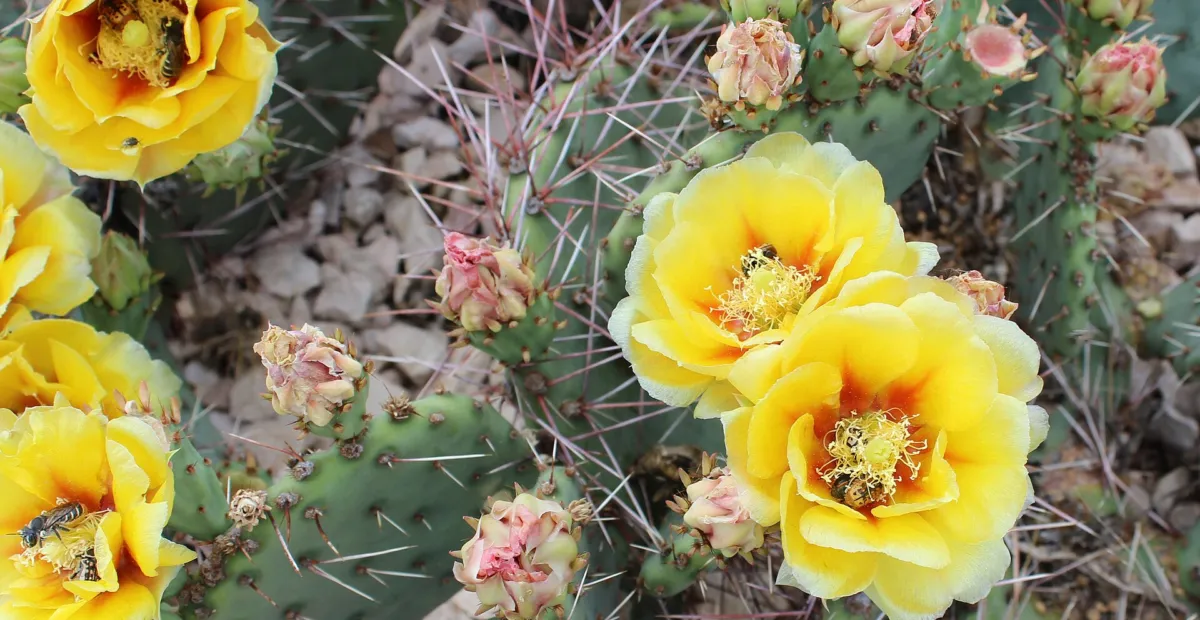
Large, bowl-shaped flowers appear on mature pads, normally in late spring or early summer. Species-level references describe yellow flowers, sometimes with a contrasting reddish inner zone; the exact color pattern is not confirmed for the quoted identity. Flowers open during daylight and are short-lived individually, with several produced over the bloom period.
Pollination and visitors
The open, daylight flowers are consistent with visitation by bees and bumblebees. A specific pollinator species was not sufficiently documented for this exact identity, so no Latin pollinator name is supplied.
Opuntia 'Macrorhiza' photos
Click any photo for a larger view. Source, author and license are shown separately.
Diseases and pests
Diseases
Root and crown rot usually follow poor drainage or frequent irrigation. Improve drainage, keep the crown dry, remove badly rotted tissue, and avoid overhead watering during cool weather. In humid regions, allow pads to dry rapidly after rain and provide generous spacing.
Pests
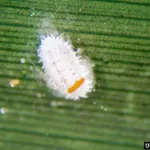
Watch for cochineal scale, mealybugs, spider mites, and cactus moth damage where present. Remove small infestations with a cotton swab or directed water stream; isolate container plants and use labeled treatments only when necessary. Inspect pads and discard severely infested material.
Related diseases and pests
Only Plant Doctor profiles whose host data indicate this plant may be affected are shown here.

Toxicity and pollen
No strong evidence was located for intrinsic poisonous compounds in Opuntia macrorhiza. The practical hazards are glochids, spines, and possible skin or eye injury; edible use should not be assumed for an unidentified cultivated clone. Remove glochids carefully and keep fallen pads away from children and pets.
- Typical season
- Late spring to early summer during flowering
- Pollination / pollen
- Insect-presented pollen; limited airborne dispersal
As an insect-pollinated cactus, its pollen is mainly presented within flowers rather than released in large airborne clouds. Individual sensitivity remains possible, and the flowering plant can still contribute pollen locally, but a high allergy risk is not documented.
Native habitat
The species occurs across central and southern parts of the United States and into northern Mexico, especially in open grasslands, prairies, rocky slopes, sandy ground, and other sunny sites with rapid drainage. Its enlarged roots help it persist through drought and cold-season dormancy.
Interesting fact
The species name macrorhiza refers to its large root system. It is one of the prickly pears adapted to cold continental climates. Pads can shrivel and lie partly flat during winter dormancy, then expand again in spring. Taxonomic treatments have historically placed it under several alternative names.
Frequently asked questions (FAQ)
The most relevant questions about this plant, with short and direct answers.
🌱Quick care
What is Opuntia 'Macrorhiza'?⌄
Opuntia 'Macrorhiza' is a low, clump-forming prickly pear cactus in the Cactaceae family. The researched species identity is commonly associated with plains, prairie, western, or twistspine prickly pear, but the supplied horticultural name is retained here exactly.
How much sunlight does Opuntia 'Macrorhiza' need?⌄
Give Opuntia 'Macrorhiza' full sun, ideally at least 6 hours of direct sunlight daily. Strong light helps maintain compact pads and supports flowering.
How often should I water Opuntia 'Macrorhiza'?⌄
Water Opuntia 'Macrorhiza' sparingly and only after the soil has dried thoroughly. Established plants often need little supplemental water, especially outdoors, and should remain nearly dry during winter.
Is Opuntia 'Macrorhiza' cold hardy?⌄
Yes, Opuntia 'Macrorhiza' is a cold-hardy prickly pear that can tolerate severe winter cold when its roots stay dry. Winter wetness is more dangerous than freezing temperatures.
What USDA hardiness zones suit Opuntia 'Macrorhiza'?⌄
Opuntia macrorhiza is commonly listed for approximately USDA Zones 3 through 9, although survival depends on local moisture, drainage, snow cover, and the plant’s provenance. Use the coldest end of that range cautiously in wet climates.
🌤️Environment and placement
Where should I plant Opuntia 'Macrorhiza' outdoors?⌄
Plant Opuntia 'Macrorhiza' in the sunniest, driest part of the landscape, such as a rock garden, gravel bed, south-facing slope, or raised berm. Keep it away from walkways and play areas because the spines and glochids can injure people and pets.
Can Opuntia 'Macrorhiza' grow in clay soil?⌄
Opuntia 'Macrorhiza' can grow in clay soil only when drainage is excellent and water does not remain around the roots. Improve the site with elevation, coarse mineral material, or a raised planting area rather than relying on rich organic amendments alone.
Can Opuntia 'Macrorhiza' grow in a humid climate?⌄
Opuntia 'Macrorhiza' can grow in humid regions if planted in very sharp drainage and given full sun with good air movement. In areas with frequent summer rain, a raised or rocky site is safer than a flat, moisture-retentive bed.
Is Opuntia 'Macrorhiza' native to the United States?⌄
Yes, the species associated with Opuntia 'Macrorhiza' is native across parts of the central and southern United States and extends into northern Mexico. Its U.S. distribution includes portions of the Great Plains, Midwest, Southwest, and nearby regions.
How large does Opuntia 'Macrorhiza' get?⌄
Opuntia 'Macrorhiza' is generally a short, spreading cactus about 6 to 14 inches tall, with clumps that can spread at least as wide. Size varies with climate, soil, age, and the particular plant.
💧Care and problems
Why is my Opuntia 'Macrorhiza' turning soft or mushy?⌄
Soft, mushy pads usually indicate excess moisture, poor drainage, cold wet soil, or rot. Remove affected tissue with a clean tool, allow healthy cuts to dry, and correct the drainage before watering again.
Why is my Opuntia 'Macrorhiza' shriveling?⌄
Some pad wrinkling is normal during winter dormancy or prolonged drought, but severe shriveling can indicate extended underwatering or damaged roots. Check that the roots are firm and that the plant is not sitting in wet soil.
Does Opuntia 'Macrorhiza' need fertilizer?⌄
Opuntia 'Macrorhiza' usually needs little fertilizer when grown in gritty soil. If growth is weak, apply a diluted, low-nitrogen cactus fertilizer during active growth, but avoid heavy feeding that can produce soft, weak pads.
What pests attack Opuntia 'Macrorhiza'?⌄
Common prickly pear pests include cochineal scale, armored scale, mealybugs, and occasionally chewing insects. Inspect pad joints and undersides, then remove isolated pests manually or use a treatment labeled for cacti.
Can I grow Opuntia 'Macrorhiza' indoors?⌄
You can grow Opuntia 'Macrorhiza' indoors temporarily, but it needs a very bright, sunny window and excellent drainage. Indoor plants should be watered less often than outdoor plants and kept away from high-traffic areas because of the spines and glochids.
🪴Planting and repotting
What soil is best for Opuntia 'Macrorhiza'?⌄
Use gritty, sandy, or rocky cactus soil that drains sharply and dries quickly. A mineral-heavy mix is preferable to dense potting soil because the plant’s tuberous roots are vulnerable to prolonged wetness.
How do I plant Opuntia 'Macrorhiza' in the ground?⌄
Set the plant at the same depth it was growing and place it in a sharply drained, full-sun site. Handle it with thick gloves or tools, and avoid watering immediately if roots or pads were damaged during planting.
How do I grow Opuntia 'Macrorhiza' in a container?⌄
Choose a pot with a drainage hole and use a mostly mineral cactus mix. A heavy, stable container helps prevent tipping, and the pot should be protected from standing water during winter.
When should I repot Opuntia 'Macrorhiza'?⌄
Repot Opuntia 'Macrorhiza' in spring or early summer when active growth is beginning. Let damaged roots or cut surfaces dry before planting into fresh, dry cactus soil, then wait briefly before watering.
✂️Propagation and pruning
How do I propagate Opuntia 'Macrorhiza' from a pad?⌄
Cut or separate a healthy pad at the joint, let the wound callus for about a week, and place the lower end on or barely into dry, sharply drained soil. Begin light watering only after roots start forming and new growth appears.
Can Opuntia 'Macrorhiza' be grown from seed?⌄
Yes, Opuntia 'Macrorhiza' can be propagated from seed, although seedlings grow more slowly than pad cuttings. Sow in a sterile, gritty medium, provide warmth and bright light, and keep moisture controlled to prevent rot.
Can Opuntia 'Macrorhiza' spread by itself?⌄
Yes, pads that detach naturally can root nearby and gradually form colonies. This spread is usually slow, but place the plant where fallen pads will not contact people, pets, or unwanted planting areas.
Should I prune Opuntia 'Macrorhiza'?⌄
Pruning is usually limited to removing damaged, diseased, or unwanted pads. Use long-handled tools and protective clothing, allow cut surfaces to dry, and avoid pruning during prolonged wet weather.
⚠️Toxicity and safety
Are Opuntia 'Macrorhiza' spines dangerous?⌄
The main safety hazard is mechanical injury from sharp spines and tiny barbed glochids, not documented intrinsic poisoning. Wear thick gloves, use tools when handling pads, and keep children and pets away from the plant.
Is Opuntia 'Macrorhiza' toxic to dogs or cats?⌄
There is no documented intrinsic poisoning hazard identified for Opuntia 'Macrorhiza', but spines and glochids can injure the mouth, paws, skin, or eyes. Seek veterinary advice if a pet chews the plant or develops embedded spines.
Can you eat Opuntia 'Macrorhiza' fruit?⌄
The species associated with Opuntia 'Macrorhiza' produces edible prickly pear fruit, but the fruit must be handled carefully and cleaned of glochids before eating. Because the exact horticultural selection may vary, avoid eating fruit from an unidentified or chemically treated plant.
🌸Flowering and special interest
When does Opuntia 'Macrorhiza' bloom?⌄
Opuntia 'Macrorhiza' typically blooms from late spring into summer, often around June and July in much of the United States. Flowering is strongest when the plant receives full sun and experiences a dry, cool winter rest.
What color are Opuntia 'Macrorhiza' flowers?⌄
The flowers are typically bright yellow and may show reddish or darker markings toward the bases of the petals. Exact color intensity can vary among plants and regional forms.
Why is my Opuntia 'Macrorhiza' not flowering?⌄
The most common causes are insufficient direct sun, excessive watering or fertilizer, immaturity, or lack of a cool dry winter rest. Move container plants to brighter light and keep established plants drier during winter.
Does Opuntia 'Macrorhiza' produce fruit?⌄
Yes, Opuntia 'Macrorhiza' can produce narrow fruits that mature from yellowish tones to red or dull red. Fruit production depends on successful flowering, pollination, weather, and the presence of compatible flowering plants or pollinators.
Similar plants
 Azure Monkshood (Aconitum carmichaelii) care guideAconitum carmichaelii
 Monkshood (Aconitum ‘Stainless Steel’)Aconitum 'Stainless Steel'
 Monkshood (Aconitum ‘Bressingham Spire’)Aconitum 'Bressingham Spire'
 Golden full moon maple (Acer shirasawanum ‘Aureum’)Acer shirasawanum 'Aureum'
 Globosum (Acer platanoides ‘Globosum’)Acer platanoides 'Globosum'
 Striped maple (Acer pensylvanicum) care guideAcer pensylvanicum