
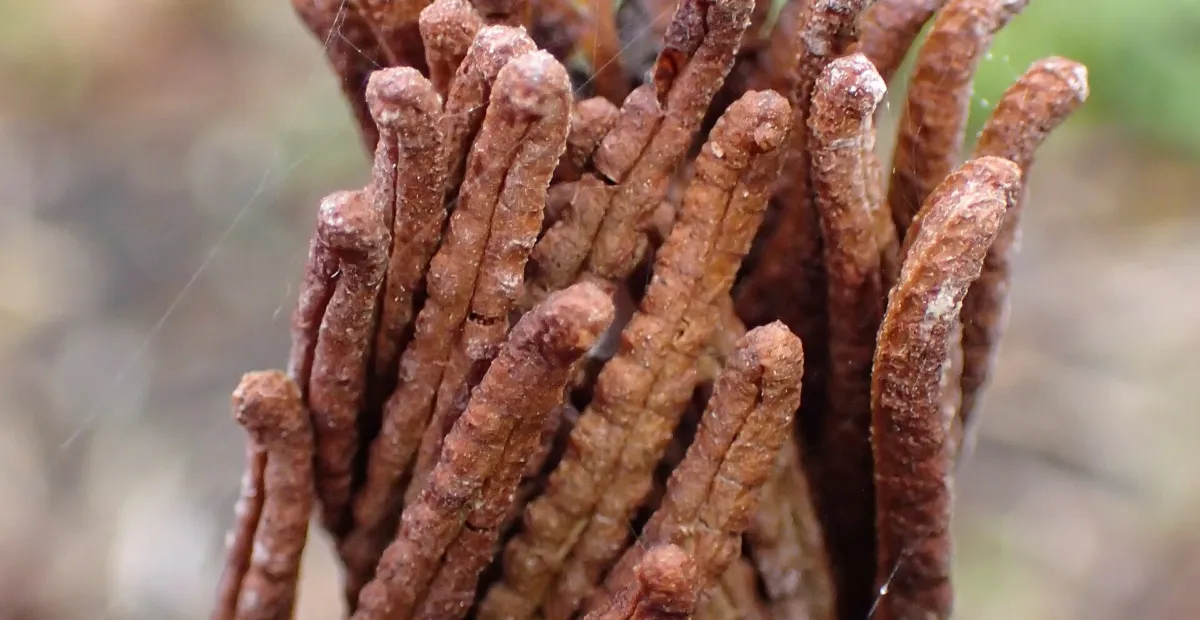
 Source:
 Ostrich fern (Matteuccia struthiopteris) short overview
Ostrich fern is a hardy, deciduous fern that brings a bold, feathery texture to cool, shaded gardens. Its upright green fronds form broad vase-shaped clumps, while separate brown fertile fronds rise from the center and often persist into winter. Native across parts of eastern North America, Europe, and Asia, it thrives in rich, consistently moist soil and spreads steadily by underground rhizomes. Young fiddleheads are edible only when correctly identified and thoroughly cooked.
Taxonomic classification
Ostrich fern (Matteuccia struthiopteris) care guide
Light and placement
Grow in part shade to full shade, ideally beneath open deciduous trees or on a north- or east-facing side of a building. Morning sun can be tolerated where soil remains cool and wet, but hot afternoon sun may scorch fronds and cause premature dormancy. Too little light can produce weaker, more open growth; too much light combined with dryness causes curling, browning, and collapse.
Watering and humidity
Keep the root zone evenly and consistently moist, especially during spring expansion and summer heat. Water deeply when the surface begins to dry, directing water to the soil rather than repeatedly wetting the crown. Increase frequency during hot or windy weather and reduce only after dormancy begins. Mulch with leaf mold or compost to moderate soil temperature and moisture.
Soil and growing medium
Use rich, humus-enhanced soil that holds moisture without becoming stagnant. Loam or moisture-retentive clay amended with compost is suitable. The species tolerates somewhat acidic to neutral conditions; avoid sites that dry repeatedly or contain highly alkaline, drought-prone soil.
Feeding
Top-dress with compost or leaf mold in spring as new fronds emerge. If growth is pale or weak, use a balanced, slow-release fertilizer at label rate rather than strong liquid feeding. Avoid heavy nitrogen applications, late-season fertilizing, and feeding dry plants, since these can produce soft growth or stress the crown.
Growth and habit
This rhizomatous perennial emerges as a tight spring crown, expands into a vase-like clump, and gradually spreads outward through underground rhizomes. It performs best where soil stays cool and moist. Allow room for colony formation, or install a root barrier if a confined planting is essential.
Planting and repotting
Plant in spring or early fall while soil is workable and moisture is dependable. Set the crown at soil level rather than burying it. Space plants about 3–5 feet apart for a colony-forming display, allowing extra room where vigorous spreading is desirable. Water deeply after planting and keep evenly moist during establishment.
Container-grown plants can be shifted in spring before strong new frond expansion. Use a roomy pot with moisture-retentive, organic-rich mix and reliable drainage. Because rhizomes spread, divide and refresh crowded containers rather than repeatedly moving an established large crown.
Propagation and pruning
Propagation
Division is the most practical method: separate rhizome sections or crowns in spring as growth begins, retaining healthy roots and buds. Spores can be sown when ripe, but fern spore culture is slower and more exacting because it requires a gametophyte stage.
Pruning
Remove yellowed, collapsed, or damaged sterile fronds in late fall or early spring. Fertile fronds may be left standing because they provide winter structure and release spores; cut them only when appearance or access requires it. Do not cut emerging spring fiddleheads intended for frond development.
Overwintering
Plants established in the ground are reliably winter hardy through much of the northern United States. Leave fertile fronds in place for winter structure, then remove collapsed foliage in late winter or early spring. In containers, protect the root ball from repeated freeze-thaw cycles by sinking the pot or placing it in an unheated sheltered space.
Uses
Use as a structural foliage plant in woodland borders, rain gardens, streamside plantings, erosion-prone moist slopes, and naturalized shade gardens. It is also the principal fern associated with commercially harvested fiddleheads in the northeastern United States, but harvesting requires exact identification, sustainable restraint, and thorough cooking.
Appearance
The plant forms a recognizable shuttlecock or vase-shaped rosette. Sterile fronds are tall, pinnately divided, and feather-like, with a narrowing tip. Fertile fronds are distinctly shorter, darker, stiffer, and more upright, remaining near the center of the clump. Young fiddleheads are smooth-stemmed, green, and covered by papery brown scales.
Pollination and visitors
No animal pollination is involved. Like other ferns, this species reproduces through spores and a separate gametophyte stage rather than flowers, nectar, or pollen-bearing anthers.
Matteuccia struthiopteris photos
Click any photo for a larger view. Source, author and license are shown separately.
Diseases and pests
Diseases
Usually trouble-free in suitable outdoor conditions. Poor drainage, crowded wet foliage, or chronic stress can encourage rot and spotting. Improve air movement, avoid burying the crown, remove badly damaged fronds, and keep tools clean when dividing.
Pests
Healthy outdoor plants are generally pest-resistant, though slugs, snails, and occasional chewing insects may damage emerging fronds. Hand-pick pests, reduce hiding places, and avoid unnecessary insecticide use. Persistent decline is more often linked to heat, drought, or poor site conditions than to insects.
Related diseases and pests
Only Plant Doctor profiles whose host data indicate this plant may be affected are shown here.


Toxicity and pollen
This fern is commercially harvested for fiddleheads, but raw or lightly cooked young fronds have been associated with gastrointestinal illness. Only correctly identified ostrich-fern fiddleheads should be eaten, and they should be washed and thoroughly boiled or steamed before consumption. Do not treat the plant as risk-free simply because it is an edible species.
- Pollination / pollen
- Spores, not pollen
Ferns do not produce airborne pollen. Matteuccia struthiopteris releases spores from sori on fertile fronds instead. Spores are not equivalent to pollen, although sensitive people may still experience irritation from airborne organic particles in dense fern habitats.
Native habitat
It occurs in moist or wet woods, floodplains, stream margins, swampy ground, and cool woodland openings. Natural populations favor rich alluvial or organic soils with dependable moisture and protection from drying winds. Its broad range includes eastern North America, parts of Europe, and temperate Asia.
Interesting fact
The species produces two visibly different frond types. Its central fertile fronds are shorter, stiff, and brown, and may remain attractive through winter. The genus spreads by rhizomes and can form large colonies in cool, wet habitats. Properly identified young fiddleheads are a traditional seasonal food, but raw or lightly cooked fronds are unsafe to eat.
Frequently asked questions (FAQ)
The most relevant questions about this plant, with short and direct answers.
🌱Quick care
What is Matteuccia struthiopteris called in the United States?⌄
Matteuccia struthiopteris is commonly called ostrich fern in the United States. It is a deciduous perennial fern valued for its tall, vase-shaped clumps and edible fiddleheads when properly identified and thoroughly cooked.
How much light does ostrich fern need?⌄
Ostrich fern grows best in part shade to full shade. It can tolerate some morning sun if the soil stays consistently moist, but hot afternoon sun and dry conditions can scorch the fronds.
How often should I water ostrich fern?⌄
Water ostrich fern whenever the soil surface begins to dry, keeping the root zone consistently moist. It needs more frequent watering during hot weather, drought, or when grown in sunnier locations.
How big does ostrich fern get?⌄
Ostrich fern commonly reaches about 3 to 5 feet tall and 2 to 4 feet wide in favorable garden conditions. Its underground rhizomes can spread beyond the original clump and form a colony.
🌤️Environment and placement
What USDA hardiness zones are suitable for ostrich fern?⌄
Ostrich fern is generally suitable for USDA Zones 3 through 7. In warmer parts of its range, deep shade, cool conditions, and dependable moisture are especially important.
Can ostrich fern grow in full shade?⌄
Yes, ostrich fern grows well in full shade, especially where the soil is rich and moisture-retentive. Growth may be less vigorous than in bright, filtered shade, but excessive direct sun is usually more harmful than deep shade.
Can ostrich fern grow in full sun?⌄
Ostrich fern can grow in full sun only where the soil remains reliably moist and temperatures are not excessively hot. In most gardens, part shade is safer because dry soil and intense afternoon sun can cause frond scorch.
What soil is best for ostrich fern?⌄
Use rich, moisture-retentive loam or clay amended with organic matter. The soil should hold moisture without remaining stagnant around the crown, because poorly drained conditions can contribute to crown or root problems.
Can ostrich fern grow in wet soil?⌄
Ostrich fern tolerates consistently moist and occasionally wet soil, making it useful near shaded streams, rain gardens, and damp woodland edges. Avoid permanently stagnant water around the crown, which can encourage rot.
Is ostrich fern native to the United States?⌄
Yes, ostrich fern is native to parts of the United States, particularly the Northeast, Midwest, and northern regions. Its natural habitats include cool, moist floodplains, streambanks, and shaded woodland edges.
Is ostrich fern deer resistant?⌄
Established ostrich fern is generally considered deer resistant, but deer may browse newly emerging fiddleheads or young plantings. Protection may be needed until the colony becomes established.
💧Care and problems
Why are my ostrich fern fronds turning brown?⌄
Brown ostrich fern fronds are most often caused by dry soil, hot sun, wind, or transplant stress. Move or shade the plant if necessary and maintain steady moisture, but remove severely damaged fronds only after checking that the crown remains healthy.
Should I fertilize ostrich fern?⌄
Ostrich fern usually needs little fertilizer when planted in rich soil. If growth is weak, add compost or apply a balanced slow-release fertilizer in spring according to the product label rather than heavily feeding the plant.
Why is my ostrich fern not coming back in spring?⌄
Ostrich fern may emerge late after a cold spring, but failure to return can result from a damaged crown, severe drought, poor drainage, or winter disturbance. Check for firm rhizomes and new buds before removing the planting.
Does ostrich fern lose its fronds in winter?⌄
Yes, ostrich fern is deciduous and its green sterile fronds usually die back after several frosts in fall. The upright brown fertile fronds often persist through winter and may release spores later.
Are ostrich ferns difficult to grow?⌄
Ostrich ferns are generally easy to grow when planted in shade or filtered light with consistently moist, rich soil. The main maintenance challenge is controlling their spread in small or mixed perennial gardens.
🪴Planting and repotting
When is the best time to plant ostrich fern?⌄
Plant ostrich fern in spring or early fall when temperatures are mild and the soil is moist. Water new divisions or container plants regularly during their first growing season while roots establish.
How far apart should ostrich ferns be planted?⌄
Space ostrich ferns about 3 feet apart for a connected colony, or farther apart if you want individual clumps. Allow additional room near paths and small beds because rhizomes can spread over time.
Can ostrich fern grow under trees?⌄
Yes, ostrich fern grows well under trees when it receives filtered shade and enough moisture. Avoid sites dominated by dense tree-root competition or dry, sun-exposed conditions unless irrigation is dependable.
Can ostrich fern grow in containers?⌄
Ostrich fern can be grown in a large container, but it needs a moisture-retentive potting mix, regular watering, and protection from drying winds. Containers restrict rhizome spread but require closer moisture monitoring than in-ground plantings.
✂️Propagation and pruning
How do you propagate ostrich fern?⌄
The easiest way to propagate ostrich fern is by dividing established crowns or rhizomes in spring. It can also be grown from spores, but spore propagation is slower and requires more specialized conditions.
Does ostrich fern spread by runners?⌄
Yes, ostrich fern spreads through underground rhizomes and slender runners that produce new crowns. In moist, favorable sites it can form a dense colony, so install it where natural spreading is acceptable.
Can I divide ostrich fern in the fall?⌄
Ostrich fern is best divided in spring as new growth begins, when the crown is easier to locate and moisture supports establishment. Fall division can be possible in mild climates, but the plants need time to root before hard freezes.
Should I cut back ostrich fern in fall?⌄
Cut back the spent green fronds in late fall or early spring if you want a tidier planting. Leave the persistent fertile fronds if you want winter structure or natural reseeding, and avoid damaging the crown.
⚠️Toxicity and safety
Can you eat ostrich fern fiddleheads?⌄
Ostrich fern fiddleheads are traditionally eaten as a seasonal vegetable, but they should be correctly identified and thoroughly cooked before eating. Raw or undercooked fiddleheads have been associated with foodborne illness.
Are ostrich fern fiddleheads poisonous when raw?⌄
Raw or undercooked ostrich fern fiddleheads should not be eaten because they can cause gastrointestinal illness. The specific toxin has not been clearly identified, so thorough cooking is recommended rather than relying on raw or lightly cooked preparation.
How should ostrich fern fiddleheads be prepared safely?⌄
Clean ostrich fern fiddleheads and cook them thoroughly, such as by boiling for at least 15 minutes before serving. Do not eat fiddleheads that have been identified only by appearance, because several fern species can look similar.
How can I identify ostrich fern fiddleheads?⌄
Ostrich fern fiddleheads typically have a smooth green stem with a deep U-shaped groove and papery brown scales on the emerging coil. Correct identification is essential because other ferns may be unsuitable or unsafe to eat.
🌸Flowering and special interest
Does ostrich fern produce flowers?⌄
No, ostrich fern does not produce flowers or fruits because it is a fern. It reproduces with spores, which develop on distinctive upright fertile fronds.
What are the brown fronds in the center of my ostrich fern?⌄
The brown central fronds are fertile, spore-bearing fronds rather than dead leaves. They usually appear later in the growing season, persist through winter, and help the plant reproduce.
When do ostrich fern fiddleheads emerge?⌄
Ostrich fern fiddleheads emerge in early to mid-spring, with timing varying by region and weather. They rapidly unfurl into tall sterile fronds as temperatures rise and soil moisture remains adequate.
Similar plants
 Azure Monkshood (Aconitum carmichaelii) care guideAconitum carmichaelii
 Monkshood (Aconitum ‘Stainless Steel’)Aconitum 'Stainless Steel'
 Monkshood (Aconitum ‘Bressingham Spire’)Aconitum 'Bressingham Spire'
 Golden full moon maple (Acer shirasawanum ‘Aureum’)Acer shirasawanum 'Aureum'
 Globosum (Acer platanoides ‘Globosum’)Acer platanoides 'Globosum'
 Striped maple (Acer pensylvanicum) care guideAcer pensylvanicum