
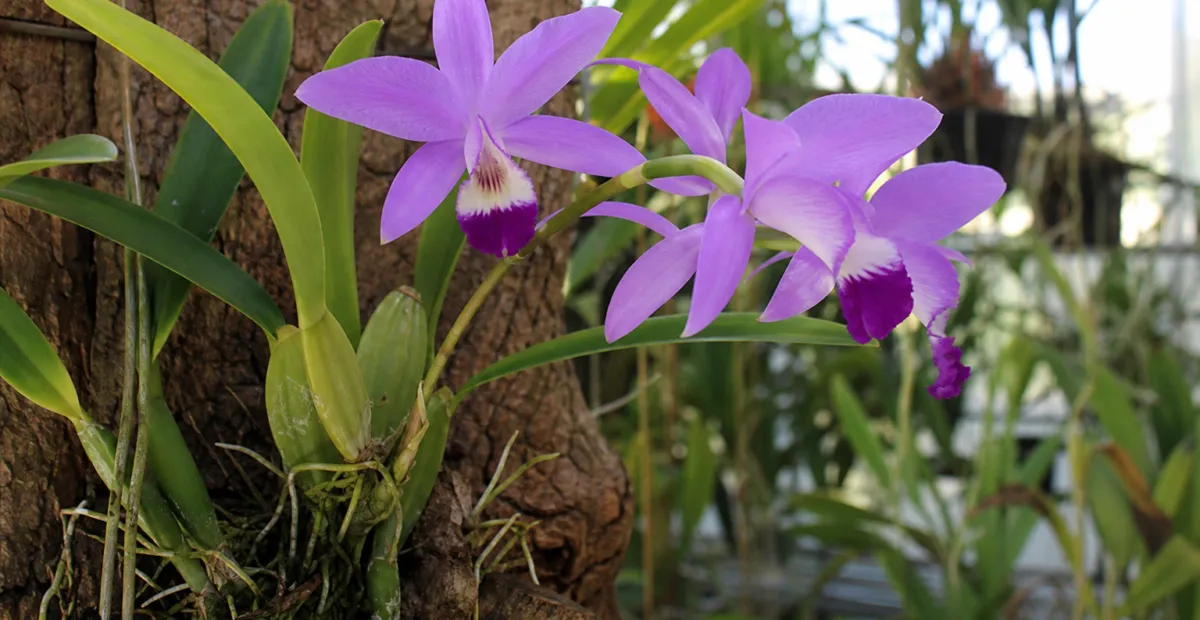
 AI-generated illustration
Laelia anceps short overview
Laelia anceps is a striking Mexican orchid valued for its tall flower spikes and long-lasting blooms. This epiphytic or lithophytic species forms flattened pseudobulbs with leathery leaves and prefers bright light, strong air movement, and a pronounced dry rest after growth. It is best grown in a freely draining orchid medium or mounted, with cooler winter nights and careful watering while the pseudobulbs mature.
Taxonomic classification
Laelia anceps care guide
Light and placement
Provide bright filtered light, such as an unobstructed east or bright west window, greenhouse bench, or lightly shaded south exposure. Gradually acclimate plants to stronger sun; reddish or bleached leaves indicate excessive light, while very dark green leaves and weak flowering suggest insufficient light. Keep foliage cool when direct midday sun is intense.
Watering and humidity
Water thoroughly when the medium is nearly dry, then allow excess water to drain completely. During active growth, do not let the pseudobulbs remain severely shriveled; after new growth matures, reduce watering and give a distinct winter rest, providing only enough moisture to prevent prolonged shriveling. Water early in the day and maintain air movement around the roots.
Soil and growing medium
Use a coarse, rapidly draining orchid medium based on bark with supplemental perlite, charcoal, or other aerating material. Mounted culture also suits established plants if watering can be adjusted frequently. Avoid dense potting soil and stagnant moisture around the roots. A slightly acidic to neutral root environment is appropriate; repot when the medium decomposes or the plant outgrows its container.
Feeding
Feed during active root and shoot growth with a balanced orchid fertilizer diluted to about one-quarter to one-half strength, typically every two to four waterings. Flush the medium periodically with plain water to limit salt buildup. Reduce or stop feeding during the winter rest and do not fertilize a dehydrated, recently divided, or root-damaged plant.
Growth and habit
This species grows by producing successive flattened pseudobulbs along a creeping rhizome, gradually forming a clump. Mature pseudobulbs support one, occasionally two, leathery leaves and can flower from the newest completed growth. Good light, firm mounting or stable potting, and a dry rest help maintain compact growth and reliable blooming.
Planting and repotting
Position the oldest pseudobulbs toward the edge of the container or mount so new growth has space to advance. Keep the rhizome and pseudobulbs above the medium, anchor the plant firmly, and avoid disturbing fresh root tips. Begin regular watering only as new roots establish, then increase feeding as active growth develops.
Repot when the bark has decomposed, drainage has declined, or the plant is advancing beyond the container. Choose a pot only slightly larger than the root mass, or remount onto cork or tree fern with excellent drainage. Keep the rhizome on the surface and provide bright, humid conditions with restrained watering until new roots grip the medium.
Propagation and pruning
Propagation
The practical method is division of a well-established clump, preferably after flowering when new roots begin to emerge. Each division should retain several healthy pseudobulbs and at least one active growth point. Seed propagation requires sterile flask culture and specialized orchid facilities, so it is not a routine home method.
Pruning
Remove a spent flower spike after it has fully dried or when no further buds remain. Cut with sterilized tools near its base without injuring the pseudobulb or emerging growth. Do not remove green pseudobulbs or healthy leaves; they continue storing resources and supporting future flowering.
Overwintering
Give a cooler, brighter winter period with substantially reduced watering after the newest pseudobulb matures. Keep the plant dry at night and protect it from prolonged temperatures near freezing, especially when wet. In most of the United States, grow it in a greenhouse, bright sunroom, or indoors during cold weather.
Uses
Primarily an ornamental specimen for orchid collections, bright indoor growing spaces, cool greenhouses, and frost-free patios. Its tall spikes and durable flowers make it useful for display and exhibition. It is not a culinary or medicinal plant, and no unsupported edible or therapeutic use should be assumed.
Appearance
The plant has ovate to oblong, laterally compressed pseudobulbs and one or rarely two apical, oblong-lanceolate leathery leaves. Tall, slender inflorescences rise well above the foliage and carry a loose terminal cluster. The flowers commonly show lavender to purple sepals and petals with a strongly marked contrasting lip, although color varies across forms.
Flowering
Flowering follows maturation of the current pseudobulb and a cooler, drier period. A spike may carry roughly two to six relatively large, long-lasting flowers, held on a tall inflorescence above the foliage. Color forms vary, but the species is often recognized by purple-lavender segments and a prominently patterned lip. Cooler nights and adequate light support flowering.
Pollination and visitors
The flowers are adapted for insect pollination and produce discrete pollinia rather than loose, wind-dispersed pollen. A specific principal pollinator for this species was not sufficiently documented in the reviewed sources, so no species-level visitor is assigned.
Laelia anceps photos
Click any photo for a larger view. Source, author and license are shown separately.
Diseases and pests
Diseases
The main risks are root and pseudobulb rots caused by stagnant, waterlogged conditions. Use a porous medium, clean pots, good ventilation, and careful watering. Remove damaged tissue with sterilized tools and isolate affected plants. Brown or soft areas should be treated as an urgent drainage and watering problem rather than routinely masked with chemicals.
Pests
Watch for scale, mealybugs, aphids, thrips, and spider mites, especially in dry indoor air or crowded collections. Inspect leaf undersides, pseudobulb joints, and flower spikes regularly. Isolate new plants, remove small infestations manually, and use a labeled horticultural oil or insecticidal soap only when appropriate for orchids and applied according to the product label.
Related diseases and pests
Only Plant Doctor profiles whose host data indicate this plant may be affected are shown here.
 PestMealy Plum AphidHyalopterus pruni (Geoffroy, 1762)
 Environmental stressWaterlogging
 PestOnion thripsThrips tabaci Lindeman
 PestMelon thripsThrips palmi Karny
 PestChilli thripsScirtothrips dorsalis Hood
 DiseaseRhabdocline Needle Cast of Douglas-FirRhabdocline pseudotsugae
 DiseasePseudomonas viridiflava bacterial blightPseudomonas viridiflava
 DiseaseBacterial blight and cankerPseudomonas syringae pv. syringae
Toxicity and pollen
The reviewed authoritative and horticultural sources did not establish a reliable toxicology profile for Laelia anceps. Do not treat the absence of evidence as proof of safety: prevent children and pets from chewing plant material, potting media, or fertilizer residues, and seek professional advice after ingestion or a significant exposure.
- Typical season
- Autumn through winter during flowering
- Pollination / pollen
- Heavy orchid pollinia packaged in pollen masses
As an insect-pollinated orchid, it produces compact pollinia rather than abundant loose pollen released into indoor air. This suggests low airborne exposure compared with wind-pollinated plants, but it does not prove that sensitive individuals cannot react. Handle flowers and plants carefully if personal sensitivity is known.
Native habitat
Laelia anceps occurs from Mexico to Honduras in seasonally dry tropical settings, including trees, oak or oak-pine woodland, open pasture trees, coffee-growing landscapes, and rocky sites. It is associated with moderate elevations and experiences a marked seasonal change in moisture, helping explain its need for bright light, drying between waterings, and a winter rest.
Interesting fact
The species was formally published in 1835. Its flattened pseudobulbs store water and help it tolerate seasonal dryness. The long inflorescences can hold flowers well above the foliage. It has been used extensively in orchid breeding and has received American Orchid Society awards in named cultivars.
Frequently asked questions (FAQ)
The most relevant questions about this plant, with short and direct answers.
🌱Quick care
How do you care for Laelia anceps indoors?⌄
Give Laelia anceps bright filtered light, strong air movement, an open orchid mix, and thorough watering while it is actively growing. Let the medium dry substantially before watering again, then reduce watering during the winter rest.
Is Laelia anceps easy to grow?⌄
Laelia anceps is generally considered a relatively forgiving orchid when given bright light, excellent drainage, and a seasonal dry rest. It tolerates cooler conditions better than many common tropical orchids, but prolonged wet roots and hard freezes remain dangerous.
🌤️Environment and placement
What kind of light does Laelia anceps need?⌄
Provide bright filtered light to gentle full sun, such as an unobstructed east window or a lightly shaded south or west exposure. Acclimate it gradually to stronger sun and watch for bleached or scorched leaves.
Can Laelia anceps grow outside in the United States?⌄
Laelia anceps can grow outdoors in mild parts of the United States if it receives bright light, good airflow, and protection from hard freezes. In colder USDA zones, move it indoors or into a heated greenhouse before freezing weather.
What temperatures does Laelia anceps prefer?⌄
Laelia anceps prefers cool-to-intermediate conditions, with noticeable day-to-night temperature changes. It can tolerate cool winter temperatures, but the exact lower limit varies with acclimation, dryness, and wind exposure, so protect it from hard freezes.
Can Laelia anceps tolerate frost?⌄
Laelia anceps may tolerate brief near-freezing conditions when dry and acclimated, but it should not be treated as reliably frost-proof. Protect the plant from hard freezes, ice, and prolonged temperatures below freezing.
Does Laelia anceps need high humidity?⌄
Moderate humidity with continuous air movement is usually sufficient for Laelia anceps. Higher humidity can help mounted plants or very dry homes, but stagnant, constantly wet conditions increase the risk of root and pseudobulb rot.
💧Care and problems
How often should you water Laelia anceps?⌄
Water Laelia anceps thoroughly whenever the growing medium has dried substantially and the pseudobulbs are not staying constantly swollen from moisture. Water more often during active growth and much less often in winter, especially in cool conditions.
How should you water Laelia anceps in winter?⌄
Reduce watering during winter because Laelia anceps normally experiences a drier seasonal rest. Give enough water to prevent severe shriveling, but allow the plant and medium to dry more fully between waterings.
Why are the pseudobulbs on my Laelia anceps shriveling?⌄
Shriveled pseudobulbs usually indicate insufficient water, damaged roots, or a normal degree of seasonal rest. Check the roots and medium first; increase watering only if the roots are healthy and the plant is actively growing.
Why is my Laelia anceps not blooming?⌄
Insufficient light is a common reason Laelia anceps fails to bloom, although immature growth, weak roots, inadequate seasonal rest, or disrupted culture can also contribute. Increase light gradually and maintain a drier, cooler winter period.
How do you fertilize Laelia anceps?⌄
Fertilize Laelia anceps lightly and regularly during active growth with a balanced orchid fertilizer, applying it to already-moistened roots. Reduce or pause feeding during the winter rest, and flush the medium periodically to limit salt buildup.
What does yellowing foliage mean on Laelia anceps?⌄
Yellowing leaves can result from excessive light, aging foliage, root damage, or overwatering. A uniformly pale plant may need more shade, while yellowing accompanied by soft roots or wet media points more strongly to cultural stress.
Why are the leaves of Laelia anceps turning black or brown?⌄
Black or rapidly spreading brown tissue may indicate cold injury, sunburn, fungal or bacterial damage, or persistent moisture on the foliage. Isolate the plant, improve airflow, keep leaves dry, and remove severely damaged tissue with sterile tools.
🪴Planting and repotting
What potting mix is best for Laelia anceps?⌄
Use a very open, fast-draining orchid mix containing coarse bark, chunky inorganic material, or a comparable blend that dries between waterings. Avoid dense potting soil because it restricts airflow and can keep the roots wet for too long.
Can Laelia anceps be grown mounted?⌄
Yes, Laelia anceps can be grown mounted because it is commonly epiphytic in nature and benefits from excellent root aeration. Mounted plants dry faster than potted plants, so they may need more frequent watering during active growth.
What type of pot should you use for Laelia anceps?⌄
Choose a small, stable orchid pot or basket with generous drainage and enough room for roughly two to three years of growth. Oversized containers stay wet longer and make root problems more likely.
When should you repot Laelia anceps?⌄
Repot Laelia anceps when the medium breaks down, drainage deteriorates, or the plant is beginning a new cycle of root growth. Avoid unnecessary repotting during flowering or when fragile new roots are extending.
How deeply should you plant Laelia anceps?⌄
Keep the rhizome at or slightly above the surface rather than burying it deeply. Anchor the older pseudobulbs while positioning the newest growth toward open space so it can expand without immediately reaching the pot edge.
✂️Propagation and pruning
How do you divide Laelia anceps?⌄
Divide a mature Laelia anceps by separating the rhizome into sections containing several healthy pseudobulbs, ideally with an active lead on the front division. Keep each division firmly mounted or potted and provide slightly reduced stress during establishment.
Can Laelia anceps grow from back bulbs?⌄
Yes, back bulbs may produce dormant growth when kept warm enough, lightly moist, and in good indirect light. They develop more slowly than a division with an active lead, so patience and avoidance of overwatering are important.
How do you prune Laelia anceps after flowering?⌄
Remove a spent flower spike after it has dried or finished producing flowers, cutting it near its base with sterile tools. Do not remove green pseudobulbs or healthy leaves, because they continue storing energy for future growth.
Can you propagate Laelia anceps from seed at home?⌄
Laelia anceps can be propagated from seed, but orchid seed normally requires sterile flask culture and specialized media because it lacks the reserves needed for ordinary soil germination. Division is the practical method for most home growers.
⚠️Toxicity and safety
Is Laelia anceps toxic to cats or dogs?⌄
There is no verified toxicity classification for Laelia anceps from the available core information. Because formal pet-safety data are limited, prevent pets from chewing the plant and contact a veterinarian if ingestion causes symptoms.
Is Laelia anceps safe to touch?⌄
Laelia anceps is not known from the available information to cause toxicity through ordinary handling. Wash hands after working with potting media, fertilizer, or plant treatments, and avoid contact with sap or debris in the eyes.
🌸Flowering and special interest
When does Laelia anceps flower?⌄
Laelia anceps commonly flowers in the cooler part of the year, often from fall into winter, although timing varies by clone, growing conditions, and location. Flower spikes emerge from mature pseudobulbs after the active growth has finished hardening.
How long do Laelia anceps flowers last?⌄
Individual Laelia anceps flowers can remain attractive for several weeks under stable indoor or greenhouse conditions. Excessive heat, very dry air, rough handling, and ethylene from ripening fruit can shorten the display.
What do Laelia anceps flowers look like?⌄
Laelia anceps produces showy orchid flowers on slender spikes, commonly in pink, lavender, or purple shades with a contrasting lip. Flower size, color intensity, and spotting vary among plants and cultivated forms.
How can you encourage Laelia anceps to rebloom?⌄
Encourage reblooming with strong but safe light, healthy mature pseudobulbs, moderate feeding during growth, and a cooler, drier winter rest. Avoid cutting green growth prematurely because the plant needs stored energy to initiate flowers.
Similar plants
 Azure Monkshood (Aconitum carmichaelii) care guideAconitum carmichaelii
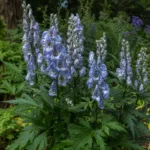 Monkshood (Aconitum ‘Stainless Steel’)Aconitum 'Stainless Steel'
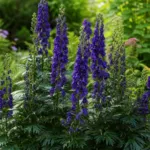 Monkshood (Aconitum ‘Bressingham Spire’)Aconitum 'Bressingham Spire'
 Golden full moon maple (Acer shirasawanum ‘Aureum’)Acer shirasawanum 'Aureum'
 Globosum (Acer platanoides ‘Globosum’)Acer platanoides 'Globosum'
 Striped maple (Acer pensylvanicum) care guideAcer pensylvanicum