
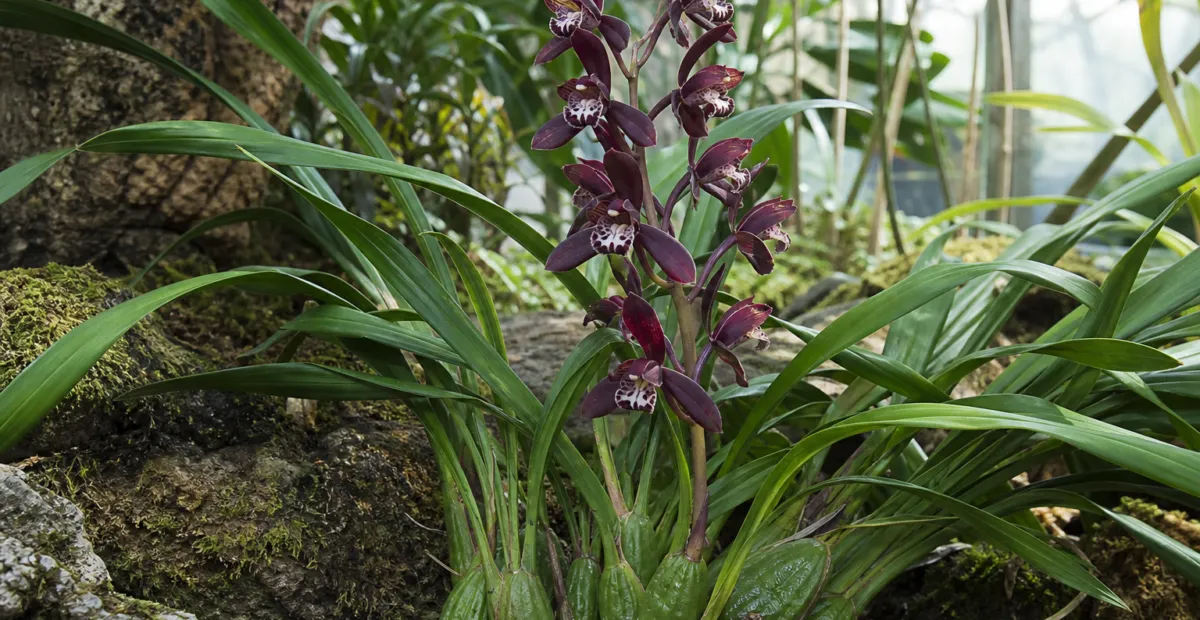
 AI-generated illustration
Cymbidium sinense short overview
Cymbidium sinense is a terrestrial, pseudobulb-forming orchid from subtropical Asia, prized for glossy strap-shaped foliage and strongly fragrant flowers in deep purple, purplish-brown, or greenish forms. In cultivation it prefers bright filtered light, steady moisture, excellent drainage, and a distinct seasonal cooling period to initiate flowering. In the United States, it is usually grown in a container and protected from freezing weather.
Taxonomic classification
Cymbidium sinense care guide
Light and placement
Give bright filtered light or gentle morning sun, such as an east-facing window, a bright greenhouse bench, or light shade outdoors. Avoid harsh afternoon sun, especially through glass, which can bleach or scorch the leaves. Too little light produces soft, dark foliage and weak flowering; excessive light causes yellowing, reddish stress tones, or leaf burn. Good airflow is important in dense shade.
Watering and humidity
Water thoroughly when the upper layer of the mix begins to dry, allowing excess water to drain completely. Keep the root zone evenly moist during spring and summer growth, then reduce frequency as flowering buds mature and keep the mix only slightly moist in winter. Never leave the pot standing in water. Water at the root zone and keep water out of leaf axils to reduce rot.
Soil and growing medium
Use a loose terrestrial orchid medium containing fine bark, perlite or pumice, and moisture-retentive organic material such as leaf mold or coco coir. The mix should hold some moisture while remaining airy around the roots. Slightly acidic to neutral conditions are suitable. Avoid dense garden soil, fine peat alone, or any container that drains slowly.
Feeding
Feed during active leaf and pseudobulb growth with a balanced orchid fertilizer at half the label strength every two to four weeks. A dilute, regular program is safer than heavy feeding. Flush the pot with plain water periodically to limit salt buildup. Reduce or stop feeding while the plant is cool, dormant, newly repotted, or in full flower.
Growth and habit
This species forms compact clumps from successive ovoid pseudobulbs, with new growth developing beside older fans. It is not a vine and does not need a support structure. Mature clumps can become crowded, but flowering is often better when several healthy pseudobulbs remain together. Use a stable pot because the upright foliage and flower spikes can make the plant top-heavy.
Planting and repotting
Choose a heavy container with generous drainage and plant into a loose terrestrial orchid medium. Keep the rhizome and pseudobulb bases near the surface so they remain ventilated. Water thoroughly after planting, then keep the medium lightly and evenly moist while new roots establish. Acclimate plants gradually when moving them outdoors.
Repot after flowering in spring, generally every two to three years or sooner if the medium has decomposed, roots are suffocating, or the plant has outgrown its container. Remove loose old medium, trim dead roots, and use a pot only slightly larger than the root mass. Keep the rhizome near the surface and delay heavy feeding until new growth resumes.
Propagation and pruning
Propagation
The practical home method is division after flowering or when a clump is crowded. Each division should retain several healthy pseudobulbs and at least one active growth. Seed propagation requires sterile culture and specialized orchid techniques because orchid seeds depend on precise germination conditions and are not practical for routine home propagation.
Pruning
After flowering, remove the spent flower spike close to its base with sterilized shears. Remove only fully dead or diseased leaves. Do not cut healthy green leaves or divide a clump merely to make it smaller, since mature pseudobulbs help support future growth and flowering.
Overwintering
Bring container plants indoors or into a frost-free greenhouse before temperatures approach freezing. Provide bright filtered light, cool nights, good air circulation, and reduced watering. Flower initiation benefits from a noticeable day–night temperature difference, but prolonged cold, wet roots, and frost can cause severe damage.
Uses
Primarily grown as a fragrant ornamental orchid, specimen container plant, greenhouse plant, and cut-flower subject. It has long cultural and horticultural importance in East Asian orchid traditions. Do not use it as food or medicine without authoritative species-specific evidence.
Appearance
The plant has glossy, dark green, leathery, strap-like leaves emerging in fans from ovoid pseudobulbs. Upright flower racemes rise from the base of mature pseudobulbs and may carry many narrow-petaled flowers. The species is especially recognizable by its deep-toned flowers, pale patterned lip, strong fragrance, and formal upright habit.
Flowering
Flower spikes emerge from the base of mature pseudobulbs and commonly bear 10–20 or more flowers. The flowers are usually strongly fragrant, with narrow pointed sepals and petals, a three-lobed lip, and a fused column. Flowering is commonly reported from October through March, with timing varying by region, clone, and cultivation conditions.
Pollination and visitors
Reliable species-specific documentation of the principal animal pollinator or regular floral visitor was not located. The orchid has specialized flowers and pollinia, but visitor identity should not be inferred from general orchid biology.
Cymbidium sinense photos
Click any photo for a larger view. Source, author and license are shown separately.
Diseases and pests
Diseases
Prevent disease with clean tools, airy potting media, careful watering, and good ventilation. Watch for root or pseudobulb rot when the medium stays saturated, and isolate plants with spreading leaf spots. Remove affected tissue with sterile tools and correct the moisture or airflow problem before applying any treatment.
Pests
Inspect new growth, leaf undersides, and pseudobulb bases for scale, mealybugs, aphids, thrips, and spider mites. Isolate affected plants, wash pests away when practical, and use a labeled horticultural oil or insecticide according to the product directions. Avoid spraying stressed plants or flowers in hot, bright conditions.
Related diseases and pests
Only Plant Doctor profiles whose host data indicate this plant may be affected are shown here.
 PestBrown Soft ScaleCoccus hesperidum
 PestMealy Plum AphidHyalopterus pruni (Geoffroy, 1762)
 DiseaseAlternaria leaf spot and fruit rotAlternaria alternata
 PestOnion thripsThrips tabaci Lindeman
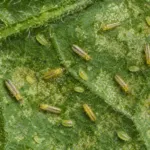 PestMelon thripsThrips palmi Karny
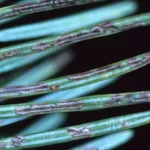 DiseaseRhabdocline Needle Cast of Douglas-FirRhabdocline pseudotsugae
 DiseasePseudomonas viridiflava bacterial blightPseudomonas viridiflava
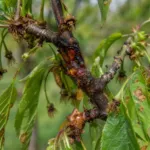 DiseaseBacterial blight and cankerPseudomonas syringae pv. syringae
Toxicity and pollen
ASPCA lists Cymbidium orchids among safer orchids for households with dogs and cats. Species-specific toxicology for Cymbidium sinense is limited, so prevent chewing of large amounts of plant material; any ingested plant matter can still cause mild gastrointestinal upset or choking risk. Seek veterinary advice for persistent symptoms.
- Typical season
- Typically during flowering, mainly winter to early spring
- Pollination / pollen
- Pollinia enclosed in paired masses
Cymbidium sinense produces orchid pollinia rather than freely dispersing clouds of loose pollen. The airborne allergy relevance of this exact species has not been adequately established, so risk should be treated as unknown rather than assumed to be zero. Sensitive individuals should avoid handling flowers if symptoms occur.
Native habitat
In nature it occurs in subtropical Asian forests, ravines, and other shaded, moist sites, generally in humus-rich, well-drained substrates. Sources describe it as terrestrial or pseudobulbous, with recorded elevations varying by region from roughly 300 to 2,000 meters. It benefits from moisture, ventilation, seasonal cooling, and protection from intense midday sun.
Interesting fact
Cymbidium sinense is one of the traditional Chinese orchids and has been cultivated for centuries. Its flowers are noted for a violet-like fragrance and substantial variation in flower, leaf, and lip patterning. Flower initiation and development involve a prolonged seasonal cycle, with cool conditions helping promote later spike elongation and bloom.
Frequently asked questions (FAQ)
The most relevant questions about this plant, with short and direct answers.
🌱Quick care
How do you care for Cymbidium sinense indoors?⌄
Give Cymbidium sinense bright filtered light, an evenly moist but well-drained orchid mix, moderate humidity, and good air circulation. Keep it cool enough in fall and winter to support flowering, and protect it from freezing temperatures.
Is Cymbidium sinense easy to grow?⌄
Cymbidium sinense is moderately easy to grow when given bright light, consistent moisture, and seasonal temperature changes. Flowering is usually more difficult than maintaining healthy foliage, especially in warm indoor conditions.
🌤️Environment and placement
How much light does Cymbidium sinense need?⌄
Cymbidium sinense needs bright filtered light, such as near an east-facing window or a bright south or west window protected by a sheer curtain. Too much direct sun can scorch the leaves, while very dark green foliage usually indicates insufficient light.
Can Cymbidium sinense grow outdoors in the United States?⌄
Cymbidium sinense can grow outdoors in mild U.S. climates when placed in bright shade or dappled light, but it should be moved indoors or protected before freezing weather. In colder regions, grow it as a container orchid.
What temperature does Cymbidium sinense need?⌄
Cymbidium sinense prefers moderate growing temperatures and benefits from cooler nights, especially before flowering. Aim for nights around 50–60°F in fall when possible, while avoiding prolonged exposure to freezing temperatures.
Can Cymbidium sinense tolerate frost?⌄
Cymbidium sinense may tolerate a brief light chill, but it should be protected from frost and freezing temperatures. Move container plants indoors when nighttime temperatures approach 40°F or lower, particularly while buds are developing.
What humidity is best for Cymbidium sinense?⌄
Moderate humidity around 40–60% is suitable for Cymbidium sinense. If indoor air is dry, use a humidifier or pebble tray while keeping the pot above the water and maintaining good air movement.
💧Care and problems
How often should you water Cymbidium sinense?⌄
Water Cymbidium sinense thoroughly when the mix is nearly dry, then let excess water drain completely. Keep the mix more consistently moist during active growth and somewhat drier in winter, but never allow the roots to remain waterlogged.
What type of water is best for Cymbidium sinense?⌄
Use lukewarm water with low salt content, such as rainwater, filtered water, or suitable tap water. Avoid softened water, and occasionally flush the pot thoroughly to reduce fertilizer-salt buildup.
Why are Cymbidium sinense leaves turning yellow?⌄
Yellow leaves on Cymbidium sinense can result from normal aging, excessive light, overwatering, poor drainage, or root damage. Check the potting mix and roots first, then correct the watering or light problem rather than removing healthy leaves immediately.
Why are Cymbidium sinense leaves dark green?⌄
Dark green leaves usually mean Cymbidium sinense is receiving too little light for strong growth and flowering. Move it gradually to a brighter filtered-light location, avoiding a sudden change to intense direct sun.
Why is my Cymbidium sinense not flowering?⌄
The most common causes of poor flowering are insufficient light, excessive warmth in fall and winter, immature growth, or overly frequent disturbance. Provide brighter light and cooler nights, and remember that plants may need time to recover after dividing or repotting.
How should you fertilize Cymbidium sinense?⌄
Feed Cymbidium sinense with a balanced orchid fertilizer during active growth, following the product label and watering before fertilizing. Reduce or stop feeding during the darker winter period, and flush the pot periodically to prevent salt accumulation.
What pests attack Cymbidium sinense?⌄
Cymbidium sinense may be affected by aphids, scale, mealybugs, and spider mites. Inspect leaf bases and pseudobulbs regularly, isolate affected plants, and treat promptly with a method labeled for orchids.
How do you prevent root rot in Cymbidium sinense?⌄
Prevent root rot by using a free-draining orchid mix, a pot with drainage holes, and a watering schedule that allows excess water to escape. Do not leave the container standing in a saucer of water or keep the medium saturated.
🪴Planting and repotting
What soil is best for Cymbidium sinense?⌄
Use a well-drained terrestrial orchid mix formulated for Cymbidiums, typically containing fine or medium bark with materials such as perlite, sphagnum, coir, or charcoal. The mix should retain some moisture while still allowing air around the roots.
When should you repot Cymbidium sinense?⌄
Repot Cymbidium sinense after flowering, usually in spring or early summer, when the potting medium has decomposed or the plant has outgrown its container. Avoid unnecessary repotting because disturbed roots can delay flowering.
How often should Cymbidium sinense be repotted?⌄
Cymbidium sinense commonly needs repotting every two to three years, or sooner if the mix breaks down or drainage declines. Choose a container only slightly larger than the current root mass rather than overpotting.
Can Cymbidium sinense be planted in a regular potting soil?⌄
Cymbidium sinense should not be planted in ordinary indoor potting soil because it holds too much water and restricts root aeration. Use a coarse, well-drained orchid medium instead.
How do you repot Cymbidium sinense?⌄
Remove the plant carefully, discard loose old medium, trim only dead or damaged roots with sterile tools, and place the oldest pseudobulbs near the pot edge. Fill firmly with fresh orchid mix while leaving the pseudobulb bases near the surface.
✂️Propagation and pruning
How do you propagate Cymbidium sinense?⌄
The practical way to propagate Cymbidium sinense is by dividing a mature clump during repotting. Keep several healthy pseudobulbs with each division so it has enough stored energy to establish and flower.
How many pseudobulbs should a Cymbidium sinense division have?⌄
Each Cymbidium sinense division should ideally contain at least three healthy pseudobulbs, with five or more giving a stronger start and better flowering potential. Smaller divisions may survive but can take longer to recover and bloom.
Can Cymbidium sinense grow from a backbulb?⌄
Cymbidium sinense can be propagated from a healthy backbulb, although growth is slower than from a mature division. Keep the backbulb upright in a lightly moist, well-drained medium until a new shoot and roots develop.
Can Cymbidium sinense be grown from seed at home?⌄
Cymbidium sinense seed is generally not practical to germinate at home because orchid seeds require a controlled laboratory environment and specialized fungal or sterile culture conditions. Division is the reliable home-propagation method.
How do you prune Cymbidium sinense after flowering?⌄
After Cymbidium sinense finishes flowering, cut the spent flower spike down to its base with a sterile tool. Do not remove green pseudobulbs or healthy leaves, because they store energy for future growth.
⚠️Toxicity and safety
Is Cymbidium sinense toxic to cats and dogs?⌄
Cymbidium sinense is generally regarded as non-toxic to cats and dogs, consistent with orchids commonly listed as pet-safe. Pets may still develop stomach upset from eating plant material, so contact a veterinarian if symptoms occur.
Can Cymbidium sinense irritate skin?⌄
Cymbidium sinense may cause skin irritation or allergic reactions in sensitive people, particularly when handling plant material or potting media. Wear gloves during repotting and wash your hands afterward.
🌸Flowering and special interest
When does Cymbidium sinense bloom?⌄
Cymbidium sinense commonly flowers in winter, often from late fall through early spring depending on the clone and growing conditions. Flowering time can vary with temperature, light, and the plant’s maturity.
How do you encourage Cymbidium sinense to bloom?⌄
Encourage flowering by providing bright filtered light, strong growth during spring and summer, and cooler nights in late summer and fall. Avoid excessive warmth during bud initiation, but protect developing buds from freezing temperatures.
How long do Cymbidium sinense flowers last?⌄
Cymbidium sinense flowers can remain attractive for several weeks when the plant is kept cool, well ventilated, and away from harsh direct sun. Water the medium carefully and avoid wetting the flowers repeatedly.
Will Cymbidium sinense rebloom from the same flower spike?⌄
Cymbidium sinense generally will not rebloom from the same spent flower spike. Cut the old spike to the base after flowering and wait for a new spike to emerge from a mature pseudobulb.
Similar plants
 Azure Monkshood (Aconitum carmichaelii) care guideAconitum carmichaelii
 Monkshood (Aconitum ‘Stainless Steel’)Aconitum 'Stainless Steel'
 Monkshood (Aconitum ‘Bressingham Spire’)Aconitum 'Bressingham Spire'
 Golden full moon maple (Acer shirasawanum ‘Aureum’)Acer shirasawanum 'Aureum'
 Globosum (Acer platanoides ‘Globosum’)Acer platanoides 'Globosum'
 Striped maple (Acer pensylvanicum) care guideAcer pensylvanicum