
 Source:
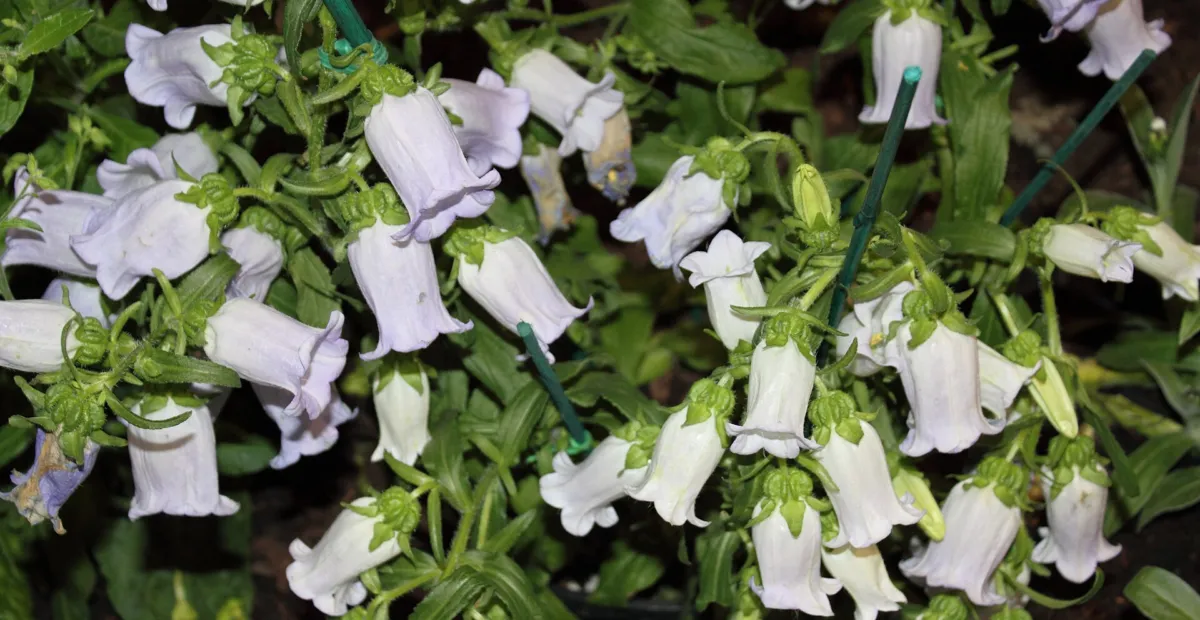
 Canterbury bells (Campanula ‘Medium’) short overview
Campanula ‘Medium’, widely grown as Canterbury bells, is an upright biennial bellflower for sunny or lightly shaded borders and containers. It forms a leafy first-year rosette, then sends up bristly stems carrying large bell-shaped flowers in blue, pink, lavender, or white. Sow seed in late spring or early summer for blooms the following season, and provide fertile, evenly moist but well-drained soil.
Taxonomic classification
Canterbury bells (Campanula ‘Medium’) care guide
Light and placement
Grow in full sun for strongest stems and best flowering, or provide partial afternoon shade in hot climates. East- or west-facing positions are useful where summer heat is intense. Deep shade produces weak, stretched growth and fewer flowers; harsh, dry reflected heat can bleach flowers and stress foliage.
Watering and humidity
Water deeply when the upper inch of soil begins to dry, keeping the root zone evenly moist during establishment and flowering. Reduce frequency after flowering and as the plant senesces, but do not allow container plants to become bone dry. Avoid overhead watering late in the day to limit foliar disease.
Soil and growing medium
Use fertile soil that drains freely yet holds consistent moisture. Loam amended with compost is suitable, while sandy or clay soils should be improved for moisture balance and drainage. Campanula medium tolerates acidic, neutral, and alkaline conditions, but avoid persistently waterlogged or extremely dry ground.
Feeding
Incorporate a modest amount of mature compost before planting. If growth is pale or weak, apply a balanced granular fertilizer at label rate in spring or use a dilute liquid feed during active vegetative growth. Stop heavy feeding once flower buds form; excessive nitrogen can produce soft foliage and fewer flowers.
Growth and habit
Traditional Campanula medium is monocarpic at the garden scale: it builds a substantial leaf rosette, flowers once, produces seed, and then usually declines. Removing spent stems can extend the display, while leaving some stems intact encourages seed production and possible self-sowing.
Planting and repotting
Sow seed on the surface or cover only lightly from late spring to early summer. Plant young rosettes in fall or early spring where winters are reliable, spacing them about 8–12 inches apart. Water thoroughly after planting and keep the root zone evenly moist during establishment.
Transplant young plants before the root system becomes crowded. In containers, move seedlings into a well-drained, compost-enriched potting mix when they have several true leaves. Avoid unnecessary root disturbance once the flowering stem is developing.
Propagation and pruning
Propagation
Propagate from seed. Surface-sow in late spring or early summer and keep the medium evenly moist; germination commonly takes about two to three weeks under suitable conditions. Traditional strains usually flower after a cold period and overwintered rosette. Annual series may flower from seed in their first season.
Pruning
Cut off spent flower spikes to tidy the plant and potentially encourage additional blooms. Leave selected stems if seed production or self-sowing is wanted. Remove declining foliage after flowering and clear debris to reduce disease carryover.
Overwintering
Traditional forms overwinter as leafy rosettes. In USDA Zones 4–5, protect young plants with a light mulch after the ground cools, keeping crowns from remaining wet. Containers are more exposed to root chilling and should be placed in a sheltered location or sunk into the ground for winter.
Uses
Useful in cottage borders, informal beds, containers, wildlife gardens, and cutting gardens. The long-lasting stems are suitable for fresh arrangements, with reported vase life of roughly 7–14 days under suitable postharvest conditions. It is ornamental rather than a documented culinary or medicinal crop.
Appearance
The first season forms a basal rosette of lance-shaped, toothed leaves. The flowering stem is upright, leafy, bristly, and often somewhat reddish, with smaller sessile leaves higher up. Large bell-shaped flowers are carried along the upper stem, giving the plant a formal, vertical appearance.
Flowering
Traditional forms produce a basal rosette in the first year and flower mainly in the second year. Upright stems carry long-lasting, broadly bell-shaped flowers in summer. Removing spent flower spikes can encourage a second flush, while leaving them allows seed production and self-sowing.
Pollination and visitors
Field research on Campanula medium records bees as the most frequent flower visitors, including honey bees and several solitary or bumblebee species; pollen-foraging beetles were also observed. The flowers depend mainly on insect visitation for effective outcrossing, although some self-pollination may occur.
Campanula 'Medium' photos
Click any photo for a larger view. Source, author and license are shown separately.
Diseases and pests
Diseases
Powdery mildew and rust can occur, especially where foliage stays wet or air circulation is poor. Space plants adequately, water at the soil line, remove badly affected leaves, and clear spent foliage at the end of the season. Avoid routine fungicide use unless symptoms are persistent and accurately identified.
Pests
Slugs and snails may chew young leaves and rosettes. Reduce hiding places, remove debris, water in the morning, and use barriers or targeted controls where needed. Inspect container plants frequently because tender seedlings are particularly vulnerable.
Related diseases and pests
Only Plant Doctor profiles whose host data indicate this plant may be affected are shown here.
Toxicity and pollen
No reliable evidence was found identifying Campanula medium as a plant of significant human or pet toxicity. As with any ornamental plant, ingestion may cause minor gastrointestinal upset in some individuals, and plant material should not be eaten. Wash hands after handling if skin irritation occurs.
- Typical season
- May–July in much of the United States
- Pollination / pollen
- Insect-transferred floral pollen
The flowers release pollen for insect transfer rather than creating a strongly wind-borne pollen cloud. Direct allergy data for Campanula medium are limited, so a low airborne-allergy rating is provisional rather than a guarantee of no sensitivity.
Native habitat
The species is associated with southern European habitats, especially rocky or well-drained sites in parts of Italy and southeastern France. In cultivation it performs best in fertile, moisture-retentive but freely draining soil and dislikes deep shade, prolonged wetness, and severe drought.
Interesting fact
Campanula medium uses secondary pollen presentation: pollen is displayed on the style before the stigma becomes fully receptive. Its flowers show temporal separation between male and female phases, helping reduce self-pollination. The species is important as a cut flower, and some modern series can flower in the first season without the traditional cold treatment.
Frequently asked questions (FAQ)
The most relevant questions about this plant, with short and direct answers.
🌱Quick care
What is Campanula 'Medium' commonly called?⌄
Campanula 'Medium' is commonly called Canterbury bells. It is a tall, bell-flowered Campanula grown as a biennial or short-lived flowering plant.
Is Campanula 'Medium' an annual, biennial, or perennial?⌄
Campanula 'Medium' is typically a biennial, flowering in its second year after producing a basal rosette in the first year. Some modern strains may flower the first season, while self-seeding can maintain a recurring display.
How much sun does Campanula 'Medium' need?⌄
Grow Campanula 'Medium' in full sun to partial shade. In hot U.S. climates, provide afternoon shade or filtered light to reduce heat stress.
How often should I water Canterbury bells?⌄
Water Canterbury bells when the soil surface begins to dry, keeping the soil moderately and evenly moist. Avoid constantly wet soil, which can encourage crown or root problems.
What soil is best for Campanula 'Medium'?⌄
Use fertile, well-drained loam amended with compost if needed. Campanula 'Medium' is adaptable to sandy, clay, or chalky soils as long as excess water drains away.
🌤️Environment and placement
Where should I plant Campanula 'Medium' in the garden?⌄
Plant it in a sunny or partly shaded bed, border, cottage garden, pollinator garden, or cut-flower garden. Choose a sheltered location if the site is windy because flowering stems can become tall and top-heavy.
Can Canterbury bells grow in hot climates?⌄
Canterbury bells perform best in cool or temperate conditions and may struggle during very hot summers. In the southern United States, use afternoon shade, consistent moisture, and good air circulation.
What USDA hardiness zones are suitable for Campanula 'Medium'?⌄
Campanula 'Medium' is commonly grown across roughly USDA Zones 4 through 8, although hardiness varies by strain and local winter conditions. Mulch the first-year rosette in colder areas for added protection.
Can Campanula 'Medium' grow in partial shade?⌄
Yes, Campanula 'Medium' can grow in partial shade, especially where summers are hot. It generally produces stronger flowering in brighter light, provided the soil does not dry excessively.
Can I grow Canterbury bells in containers?⌄
Yes, Canterbury bells can be grown in containers with drainage holes and fertile, well-drained potting mix. Choose a container large enough for the tall root system and protect it from drying winds and severe winter cold.
💧Care and problems
Why are my Canterbury bells not flowering?⌄
The usual reason is that traditional Campanula 'Medium' plants are biennial and flower mainly in their second year. Excessive heat, insufficient light, drought, or planting at the wrong seasonal stage can also reduce flowering.
Do Canterbury bells need staking?⌄
Tall Canterbury bells may need staking, particularly in windy locations or when grown individually. Planting them in groups can provide mutual support, but support netting or discreet stakes may still be useful.
Should I deadhead Campanula 'Medium'?⌄
Deadhead spent flowers to improve the plant’s appearance and potentially encourage a second flush. Leave some flower heads in place if you want the plant to produce seed and self-sow.
What pests attack Canterbury bells?⌄
Slugs and snails are the most commonly noted pests, especially on seedlings and lower leaves. Aphids and other minor pests may occasionally affect tender growth.
What diseases affect Campanula 'Medium'?⌄
Campanula 'Medium' can be affected by powdery mildew and rust, particularly where air circulation is poor or foliage stays wet. Space plants properly, water at the soil line, and remove badly affected leaves.
How do I keep Canterbury bells from flopping over?⌄
Give the plants strong light, avoid excessive nitrogen fertilizer, and provide support before the flowering stems become tall. Growing several plants together can also help them remain upright.
🪴Planting and repotting
When should I plant Campanula 'Medium' seeds?⌄
Sow traditional Campanula 'Medium' seeds in late spring or early summer so plants can establish before winter and flower the following year. Exact timing should be adjusted for your USDA zone and summer heat.
How do you sow Canterbury bells from seed?⌄
Surface-sow the seeds or cover them only very lightly because light supports germination. Keep the seed-starting medium evenly moist and expect germination in about 14 to 21 days under suitable conditions.
Can I direct-sow Campanula 'Medium' outdoors?⌄
Yes, Campanula 'Medium' can be direct-sown in a prepared garden bed during the appropriate cool-season window. Keep the seedbed moist and thin seedlings so mature plants have adequate room and airflow.
How far apart should I plant Canterbury bells?⌄
Space Canterbury bells about 10 to 12 inches apart, allowing extra room where air circulation is poor or plants are expected to branch heavily. Follow the spacing on the seed packet for named series or compact forms.
Can I transplant Canterbury bells seedlings?⌄
Yes, transplant seedlings carefully once they are established, taking care not to damage their roots or bury the crown. Harden indoor-grown plants before setting them outdoors.
✂️Propagation and pruning
How do I propagate Campanula 'Medium'?⌄
Propagate Campanula 'Medium' primarily from seed, which is the most dependable method for this biennial plant. Spring division may be possible, but divided plants can establish less reliably than seedlings.
Can Canterbury bells self-seed?⌄
Yes, Canterbury bells can self-seed if some flowers are allowed to mature into seed capsules. Seedlings may appear near the parent plant, although their flower color and form may not come true to a selected strain.
Should I cut back Campanula 'Medium' after flowering?⌄
Cut back flowering stems after blooming if you want a tidier plant or a possible second flush. Do not remove every spent flower if you want seed production or natural reseeding.
⚠️Toxicity and safety
Are Canterbury bells poisonous to people or pets?⌄
No significant toxicity is documented for Campanula 'Medium', but it should not be eaten. Keep plant material away from children and pets because individual sensitivities and misidentification are possible.
🌸Flowering and special interest
When do Canterbury bells bloom?⌄
Campanula 'Medium' usually blooms in late spring or summer, most often during its second year. Bloom timing varies with the strain, planting date, temperature, and day length.
What colors do Campanula 'Medium' flowers come in?⌄
Campanula 'Medium' flowers commonly appear in blue, pink, lavender, or white. Flower form may be single, double, or cup-and-saucer depending on the strain.
Are Canterbury bells good cut flowers?⌄
Yes, Canterbury bells are valued as cut flowers because their tall stems carry showy bell-shaped blooms. Harvest stems when the first flower begins to open so the remaining buds can develop in the vase.
Do Canterbury bells attract pollinators?⌄
Yes, the bell-shaped flowers can contribute to a pollinator-friendly garden. Their usefulness is greatest when planted alongside other flowers that provide nectar and pollen throughout the growing season.
Similar plants
 Campanula ‘Purple Sensation’Campanula 'Purple Sensation'
 Peach-leaved Bellflower (Campanula persicifolia) care guideCampanula persicifolia
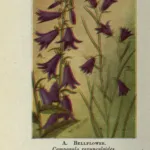 Harebell (Campanula rotundifolia) care guideCampanula rotundifolia
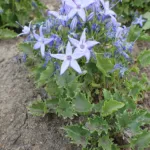 Campanula garganica care guideCampanula garganica
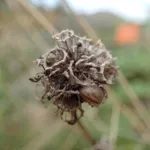 Dane’s Blood (Campanula glomerata) care guideCampanula glomerata
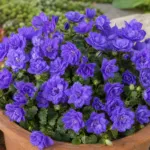 Campanula ‘Blue Wonder’Campanula 'Blue Wonder'