
 Source:
 Dane’s Blood (Campanula glomerata) short overview
Campanula glomerata, documented in the United States as Dane's Blood, is a hardy, clump-forming perennial from temperate Eurasia. Its upright stems carry ovate leaves and dense clusters of violet-blue, bell-shaped flowers in late spring and summer. Plant it in full sun or partial shade with fertile, evenly moist but well-drained soil. It works well in borders, cottage gardens, wildlife plantings and containers.
Taxonomic classification
Dane’s Blood (Campanula glomerata) care guide
Light and placement
Grow in full sun for the strongest flowering, or partial shade where summers are hot or flower color needs protection. A bed receiving morning sun and afternoon shade is suitable in warm regions. Floppy stems, sparse flowering and stretched growth suggest insufficient light; scorched foliage or faded flowers can indicate excessive reflected heat or drought.
Watering and humidity
Water deeply when the upper inch of soil begins to dry during establishment, then maintain steady moisture through active growth. Reduce watering after dormancy while preventing prolonged winter saturation. Mulch lightly to moderate soil temperature, keeping mulch away from the crown; humidity itself is rarely a limiting factor outdoors.
Soil and growing medium
Use fertile loam or other humus-enriched soil that holds moisture without becoming waterlogged. Neutral to slightly alkaline conditions are preferred, and calcareous soil is tolerated. Improve compacted ground with compost and coarse organic matter, but avoid sites that remain saturated in winter.
Feeding
Top-dress with compost in spring. In average garden soil, a balanced slow-release perennial fertilizer applied at label rate is generally sufficient; avoid heavy nitrogen, which can produce soft, leafy growth and fewer flowers. Do not fertilize drought-stressed or waterlogged plants.
Growth and habit
This rhizomatous perennial develops upright flowering stems from a spreading crown and can gradually form a substantial clump. It is vigorous in favorable soil, so divide congested plants and remove unwanted seedlings before they become established. Cutting back after bloom helps maintain a tidy habit.
Planting and repotting
Plant nursery divisions in spring or early fall, setting the crown at soil level. Space plants about 12–18 inches apart for a connected display while allowing air movement. Water thoroughly after planting and keep the root zone evenly moist during the first growing season.
Repot container-grown plants in spring when roots fill the pot, moving them into a slightly larger container with a moisture-retentive but freely draining potting mix. Divide crowded plants at the same time if necessary. Containers dry faster than garden soil and need closer summer monitoring.
Propagation and pruning
Propagation
Sow fresh or stratified seed when practical, or divide established clumps in spring or fall. Basal softwood cuttings can be taken in spring. Division is usually the most predictable method for maintaining a selected garden form.
Pruning
Cut flowering stems back after the first bloom to improve appearance, reduce self-seeding and possibly encourage a second flush. Remove dead stems in late fall or early spring. Avoid cutting into the crown while new shoots are emerging.
Overwintering
Leave the crown in the ground in cold climates; the plant is winter-hardy when drainage is good. After frost blackens the stems, remove them or wait until late winter. In containers, protect the pot from repeated freeze-thaw cycles by sinking it, moving it to an unheated sheltered location or insulating the container.
Uses
Primarily an ornamental perennial for borders, cottage gardens, informal meadows, wildlife gardens and large containers. Its upright flower clusters also suit seasonal cut-flower arrangements. Because the species is introduced in parts of North America, check local invasive-plant guidance before using it for naturalizing.
Appearance
The plant has erect, usually simple, slightly hairy stems. Lower leaves are petioled, ovate to lance-shaped and sometimes heart-based; upper leaves are narrower, sessile and partly clasp the stem. Flowers are crowded into conspicuous terminal clusters, with occasional smaller clusters in upper leaf axils.
Flowering
True flowers are arranged in dense terminal clusters, with additional sessile flowers sometimes appearing in the upper leaf axils. Bloom normally begins in late spring or early summer and may continue through summer. Cutting back after the first display can encourage a later flush in favorable conditions.
Pollination and visitors
The open bell-shaped flowers provide nectar and pollen resources for visiting bees and bumblebees. Evidence supports animal-mediated pollination, but a single consistently documented pollinator species for this exact taxon was not established.
Campanula glomerata photos
Click any photo for a larger view. Source, author and license are shown separately.
Diseases and pests
Diseases
Watch for rust, powdery mildew and leaf spot, especially where foliage stays wet or air circulation is poor. Water at the soil line, thin overcrowded growth and remove affected leaves. Dispose of badly infected debris rather than composting it; use a labeled fungicide only when cultural measures are insufficient.
Pests
Slugs and snails may damage young shoots and foliage. Inspect plants after wet weather, reduce hiding places, keep debris away from crowns and use proportionate controls such as hand-picking or an approved slug treatment when damage is persistent.
Related diseases and pests
Only Plant Doctor profiles whose host data indicate this plant may be affected are shown here.
Toxicity and pollen
No authoritative species-specific human or veterinary toxicology record was located that establishes Campanula glomerata as poisonous. That absence is not proof of universal safety: prevent children and pets from eating ornamental plants, and seek professional advice after a significant ingestion or if symptoms occur.
- Typical season
- Late spring through summer
- Pollination / pollen
- Primarily insect-dispersed pollen
Campanula glomerata is insect-pollinated, so its pollen is not typically released in large airborne clouds like wind-pollinated grasses or trees. Individual sensitivity is still possible, and flowers may transfer pollen to hands, clothing or nearby surfaces. People with known pollen allergies should use ordinary exposure precautions during heavy bloom.
Native habitat
Across its native temperate Eurasian range, the species occurs in open woodland, woodland edges, grassland, scrub and other sunny to lightly shaded sites. It favors fertile, often calcareous soils that are not permanently wet, and commonly grows in climates with cold winters and moderate summer moisture.
Interesting fact
The species name glomerata refers to the tightly clustered arrangement of its flowers. It is native across a broad temperate Eurasian range and has also been introduced in parts of North America. The plant is rhizomatous and can form an expanding clump rather than remaining a solitary crown.
Frequently asked questions (FAQ)
The most relevant questions about this plant, with short and direct answers.
🌱Quick care
What is Dane's Blood (Campanula glomerata)?⌄
Dane's Blood is a cold-hardy herbaceous perennial bellflower in the Campanulaceae family. It produces upright stems topped with dense clusters of violet, blue, or sometimes white, bell-shaped flowers.
How much sun does Dane's Blood need?⌄
Dane's Blood grows best in full sun to partial shade. Provide full sun in cooler climates, but afternoon shade can help in hot summer regions.
How often should I water Campanula glomerata?⌄
Water Campanula glomerata whenever the soil surface begins to dry, keeping the root zone evenly moist. Avoid waterlogged soil because good drainage is essential.
Is Dane's Blood a perennial?⌄
Yes, Dane's Blood is a cold-hardy perennial that returns from its roots each year. It becomes more vigorous as established clumps mature.
What USDA zones can grow Campanula glomerata?⌄
Campanula glomerata is generally hardy in USDA Zones 3 through 8. Exact performance can vary by cultivar, exposure, snow cover, and winter drainage.
🌤️Environment and placement
Where should I plant Dane's Blood?⌄
Plant Dane's Blood in a sunny or partly shaded border, cottage garden, rock garden, or naturalized planting. Choose a site with fertile, well-drained soil that stays moderately moist.
What type of soil does Campanula glomerata prefer?⌄
Campanula glomerata prefers fertile loam that drains well and is neutral to slightly alkaline. Improve compact or poor soil with organic matter, but do not create a permanently wet planting bed.
Can Dane's Blood grow in partial shade?⌄
Yes, Dane's Blood tolerates partial shade and may appreciate it in hot climates. Flowering is usually strongest with several hours of direct sunlight.
Can Campanula glomerata grow in containers?⌄
Yes, Campanula glomerata can grow in a container with drainage holes and fertile, well-drained potting mix. Choose a container wide enough for its clumping habit and water when the mix begins to dry.
How tall does Dane's Blood get?⌄
Dane's Blood commonly grows about 12 to 18 inches tall and 6 to 12 inches wide. Height and spread vary among cultivars and growing conditions.
Does Dane's Blood attract bees, butterflies, or hummingbirds?⌄
Yes, the clustered flowers of Dane's Blood attract bees, butterflies, and hummingbirds. Its blooms are especially useful in sunny pollinator borders.
💧Care and problems
Why is my Campanula glomerata not blooming?⌄
Campanula glomerata may fail to bloom because of insufficient light, drought stress, excessive nitrogen, or a recently divided root system. Move plants toward brighter light and maintain even moisture without overfertilizing.
Should I deadhead Dane's Blood?⌄
Yes, deadhead Dane's Blood after the flowers fade to improve appearance, encourage possible reblooming, and reduce self-seeding. Remove individual flowers or cut back the entire spent flower stem.
When should I cut back Campanula glomerata?⌄
Cut Campanula glomerata back after flowering or after the foliage declines in fall. Removing spent stems promptly helps limit seed dispersal and keeps the clump tidy.
Does Dane's Blood spread aggressively?⌄
Dane's Blood can spread by rhizomes and seed, especially in moist, favorable soil, although it is generally less aggressive than creeping bellflower. Deadhead it and divide the clump regularly if it begins moving beyond its intended area.
How do I stop Campanula glomerata from spreading?⌄
Prevent Campanula glomerata from spreading by removing spent flower heads before seeds mature and digging out unwanted rhizome sections. Monitor around the original clump because small root fragments can regenerate.
What are common problems with Dane's Blood?⌄
Common problems include root or crown decline in wet soil, drought stress, and occasional slug or snail damage. Good drainage, consistent watering, and removing damaged debris usually provide effective prevention.
🪴Planting and repotting
When is the best time to plant Dane's Blood?⌄
Plant Dane's Blood in spring or early fall, when temperatures are moderate and soil moisture is reliable. Give fall-planted divisions enough time to establish roots before the ground freezes.
How far apart should I plant Campanula glomerata?⌄
Space Campanula glomerata about 12 to 18 inches apart for a connected display while allowing airflow. Use wider spacing if you want individual clumps rather than a mass planting.
How do I plant Dane's Blood in the ground?⌄
Set Dane's Blood at the same depth it was growing in its nursery container, backfill with fertile well-drained soil, and water thoroughly. Keep the soil evenly moist while the plant establishes.
Does Dane's Blood need fertilizer?⌄
Dane's Blood usually needs little fertilizer when planted in fertile soil. Apply a light layer of compost in spring rather than heavy nitrogen fertilizer, which can encourage foliage at the expense of flowers.
✂️Propagation and pruning
How do I propagate Campanula glomerata?⌄
Propagate Campanula glomerata most reliably by dividing established clumps in spring or fall. Seed is also possible, but seedlings may vary and can take longer to reach flowering size.
Can I grow Dane's Blood from seed?⌄
Yes, Dane's Blood can be grown from seed, typically by sowing it in containers and exposing the seed to a cold period. Germination may be slow or uneven, so do not discard trays too soon.
When should I divide Dane's Blood?⌄
Divide Dane's Blood in spring or fall, preferably after the clump has become well established. Replant healthy divisions immediately and keep them evenly moist until new growth resumes.
Can Campanula glomerata be propagated from cuttings?⌄
Campanula glomerata can be propagated from basal softwood cuttings in spring, although division is usually simpler and more dependable for gardeners. Use healthy nonflowering shoots and a sterile, well-drained rooting medium.
⚠️Toxicity and safety
Is Dane's Blood toxic to dogs or cats?⌄
The toxicity of Dane's Blood has not been clearly established by a species-specific poisoning classification. Prevent pets from chewing the plant, because eating any plant material can still cause stomach upset, and contact a veterinarian or animal poison service after significant ingestion.
Is Campanula glomerata safe for people to eat?⌄
Although some references describe Campanula leaves as edible, species and identification errors are possible, and Dane's Blood is primarily grown as an ornamental. Do not eat it unless the plant has been positively identified and food-use guidance is confirmed.
🌸Flowering and special interest
When does Dane's Blood bloom?⌄
Dane's Blood usually blooms from late spring into early summer. Flowering time can shift with climate, cultivar, winter conditions, and the amount of sunlight received.
What color are Campanula glomerata flowers?⌄
Campanula glomerata flowers are commonly violet, purple, or blue, with some cultivars producing white blooms. The flowers are bell-shaped and held in dense terminal clusters.
Does Dane's Blood rebloom after cutting back?⌄
Dane's Blood may produce a second flush of flowers after spent stems are removed. Reblooming is more likely when the plant has adequate light, moisture, and time remaining in the growing season.
Similar plants
 Milky Bellflower (Campanula lactiflora) care guideCampanula lactiflora
 Tussock bellflower (Campanula carpatica) care guideCampanula carpatica
 Campanula garganica care guideCampanula garganica
 Campanula ‘Trachelium’Campanula 'Trachelium'
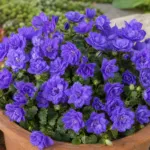 Campanula ‘Blue Wonder’Campanula 'Blue Wonder'
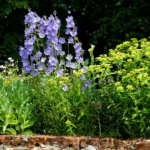 Peach-leaved Bellflower (Campanula persicifolia) care guideCampanula persicifolia