
 Source:
 Milky Bellflower (Campanula lactiflora) short overview
Campanula lactiflora, known in the United States as Milky Bellflower, is a tall, clump-forming herbaceous perennial from northeastern Turkey through the Caucasus and northwestern Iran. Its branching stems carry airy summer panicles of open, bell-shaped flowers in white to pale blue. Grow it in full sun or light partial shade with fertile, moisture-retentive but well-drained soil. It is valuable in cottage borders, pollinator plantings, and cut-flower gardens.
Taxonomic classification
Milky Bellflower (Campanula lactiflora) care guide
Light and placement
Grow in full sun for the strongest flowering and sturdier stems, or give light partial shade where summers are hot. An east- or south-facing border with morning or filtered afternoon light is suitable. Too little light produces stretched stems and fewer flowers; intense, reflected heat with dry soil can scorch foliage and reduce flowering. Provide shelter from strong wind because mature panicles can become top-heavy.
Watering and humidity
Water deeply when the top inch of soil begins to dry, then allow excess water to drain. Keep the root zone evenly moist during establishment, flowering, and hot summer weather, but never leave containers standing in water. Mulch lightly to moderate soil temperature and reduce evaporation. Reduce watering after dormancy, while continuing occasional checks during prolonged winter dryness.
Soil and growing medium
Use fertile loam or amended clay that retains even moisture without becoming waterlogged. Good drainage is important, especially in winter. Neutral to slightly alkaline soil is suitable, and the plant generally tolerates chalky, sandy, or clay-based ground if structure is improved with compost. Avoid stagnant wet soil and very dry, impoverished beds.
Feeding
In spring, spread a thin layer of finished compost around the plant without burying the crown. In poor soil, apply a balanced slow-release perennial fertilizer at the label rate as growth begins. Avoid heavy nitrogen feeding, which can produce weak, floppy stems and abundant foliage. Stop routine feeding by late summer so new growth can mature before winter.
Growth and habit
The plant forms an upright clump of leafy stems and develops a branching floral framework as it matures. In rich soil or exposed positions, stems can become tall and may benefit from discreet support. Cutting back spent flowering stems can improve appearance and limit self-seeding; divide only when needed because established roots are sensitive to disturbance.
Planting and repotting
Plant nursery specimens in spring or early fall while the soil is workable. Set the crown at the same level as in its pot and firm the soil gently around the roots. Water thoroughly after planting and maintain consistent moisture during the first growing season. Allow about 18–24 inches between plants for air circulation and mature branching.
Container-grown plants can be shifted in spring when roots fill the pot. Use a sturdy container with drainage holes and a fertile, well-drained loam-based mix. Repot only as needed because established plants dislike unnecessary root disturbance. Renew the upper layer of compost annually if the plant remains in the same container.
Propagation and pruning
Propagation
Sow seed in containers in late winter or spring; press the small seed onto the surface because light may aid germination, and do not cover deeply. Keep the medium evenly moist. Established clumps can be divided in spring, although division is best done only when necessary because the fleshy root system can resent disturbance. Cultivars may not come true from seed.
Pruning
Deadhead individual panicles or cut flowering stems after the main display to encourage a tidier appearance and possible late blooms. After foliage yellows or dies back in fall, cut the plant to the ground and remove debris. If self-seeding is desired, leave a few seed heads until they mature. Avoid hard pruning during active spring growth.
Overwintering
Leave the plant outdoors in USDA Zones 5–8. After frost blackens the stems, cut them back and apply a light winter mulch over the root zone, especially during the first winter or in exposed sites. Avoid heavy, water-holding mulch against the crown. Container plants are more vulnerable to root freezing and should be placed in a sheltered location or insulated for winter.
Uses
Use Milky Bellflower in mixed perennial borders, cottage gardens, naturalistic plantings, and pollinator-focused beds. Its long, branched stems are suitable for cutting when lower flowers are opening. It is ornamental rather than a documented culinary or medicinal crop; do not use it internally without authoritative species-specific evidence.
Appearance
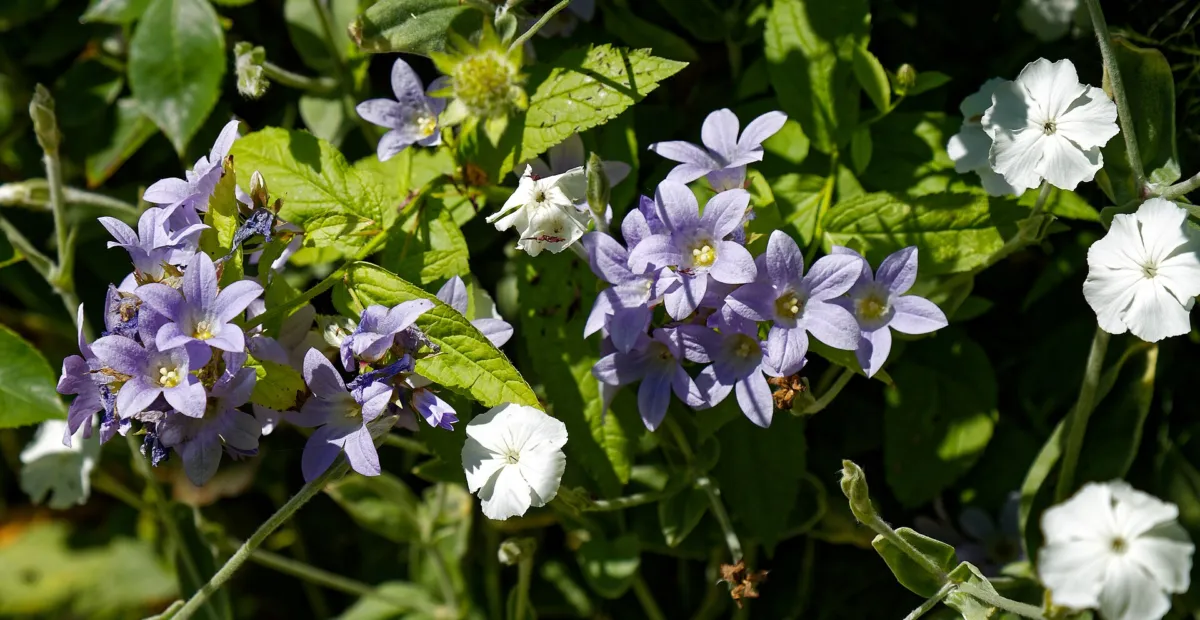
Milky Bellflower has erect green stems bearing alternate ovate to oblong leaves with toothed margins. Leaves become smaller toward the flowering tips, helping reveal the airy branching panicles. The flowers are arranged in dense but open conical clusters and range from nearly white to pale blue. Cut stems may release a characteristic white, milky sap.
Flowering
This species produces numerous erect to slightly spreading, open bell-shaped flowers in branched, conical panicles. Flowering is concentrated in summer and may continue into early autumn in favorable climates. Deadheading can extend the display and reduce unwanted self-seeding. Tall stems may need support in exposed sites or fertile soil.
Pollination and visitors
Campanula flowers are characteristically visited by bees, including small specialist bellflower bees and bumblebees. The open, pollen-bearing flowers provide accessible floral resources during the summer bloom period. Evidence for the genus is strong; direct records for C. lactiflora are less extensive, so no single pollinator species is assigned here.
Campanula lactiflora photos
Click any photo for a larger view. Source, author and license are shown separately.
Diseases and pests
Diseases
Watch for powdery mildew, rust, leaf spots, and crown or root rot in crowded, persistently wet conditions. Improve air circulation, water at the soil line, remove affected foliage, and avoid overhead irrigation. Discard badly rotted plants and correct drainage before replanting. Mildew is more likely when plants are stressed by drought followed by humid weather.
Pests
Slugs and snails may damage young foliage, while aphids can cluster on tender shoots and flower stems. Inspect regularly, remove slugs by hand or use non-toxic barriers, and wash aphids off with a firm water spray. Encourage natural predators and avoid routine broad-spectrum insecticides during bloom. Stressed plants may also attract spider mites in hot, dry conditions.
Related diseases and pests
Only Plant Doctor profiles whose host data indicate this plant may be affected are shown here.
 DiseaseImpatiens necrotic spot virus diseaseImpatiens necrotic spot orthotospovirus
 PestBroad mitePolyphagotarsonemus latus (Banks)
 Environmental stressDrought stress
 DiseaseMaple powdery mildewSawadaea bicornis
 DiseaseCucurbit Powdery MildewPodosphaera xanthii (Castagne) U. Braun & Shishkoff
 DiseaseRose powdery mildewPodosphaera pannosa
 Environmental stressSalt stress
 Environmental stressHeat stress
Toxicity and pollen
No authoritative source located in this review identifies Campanula lactiflora as a poisonous ornamental for people or pets. Species-specific toxicology data are limited, so avoid presenting it as edible and discourage substantial ingestion. Normal gardening contact is not considered a special exposure concern; seek medical or veterinary advice if a large amount is eaten or symptoms occur.
- Typical season
- June–August
- Pollination / pollen
- Insect-carried pollen; limited airborne dispersal
The flowers are insect-pollinated, so pollen is usually deposited locally by visiting insects rather than released in large airborne clouds. That does not prove zero allergy risk, but this species is generally a low airborne-pollen concern compared with wind-pollinated plants. People with known pollen sensitivity should still avoid rubbing their eyes after handling flowering stems.
Native habitat
Campanula lactiflora is native from northeastern Turkey through the Caucasus and Transcaucasia to northwestern Iran, where it occurs in temperate environments. In cultivation it prefers open, fertile sites with consistent moisture and drainage, broadly resembling sunny woodland edges, meadow margins, and open herbaceous communities rather than saturated ground.
Interesting fact
The specific epithet lactiflora refers to the species' pale, milk-like flower coloration. Cut stems and leaves may exude a white latex-like sap. The species has a fleshy, somewhat tuberous root system and can dislike disturbance after establishment. Garden cultivars include white, pink, lilac, and violet-blue selections.
Frequently asked questions (FAQ)
The most relevant questions about this plant, with short and direct answers.
🌱Quick care
What is Campanula lactiflora?⌄
Campanula lactiflora, commonly called Milky Bellflower, is a tall herbaceous perennial bellflower in the Campanulaceae family. It forms upright clumps and produces summer panicles of bell-shaped flowers in white, pink, violet, or blue, depending on the cultivar.
How much sun does Milky Bellflower need?⌄
Milky Bellflower grows best in full sun to partial shade. In hot summer regions, afternoon shade can help preserve flower color and reduce drought stress, while too much shade may produce weaker, floppier stems and fewer flowers.
How often should I water Campanula lactiflora?⌄
Water Campanula lactiflora whenever the soil surface begins to dry, keeping the root zone evenly moist but not waterlogged. Established plants tolerate brief dry periods, but consistent moisture is especially important during active growth and flowering.
What soil is best for Milky Bellflower?⌄
The best soil is fertile, moisture-retentive but well-drained loam. Improve poor soil with compost, but avoid waterlogged ground because persistently wet conditions can encourage root problems and reduce winter survival.
🌤️Environment and placement
What USDA hardiness zones can grow Campanula lactiflora?⌄
Campanula lactiflora is generally suited to USDA Zones 5 through 7, although established plants may tolerate temperatures near -5°F under suitable conditions. Cultivar hardiness can differ, so provide extra winter protection in colder or poorly drained locations.
Can Milky Bellflower grow in hot, humid climates?⌄
Milky Bellflower may struggle in hot, humid climates, particularly where summer nighttime temperatures remain above 70°F. In those regions, choose morning sun or partial shade, maintain even moisture, improve air circulation, and avoid heavy, poorly drained soil.
Does Campanula lactiflora need staking?⌄
Tall Campanula lactiflora plants may need staking, especially in rich soil, windy sites, or partial shade. Install supports early in the season so stems can grow through them naturally, or pinch young shoots to encourage shorter, sturdier growth.
Is Milky Bellflower good for borders and cottage gardens?⌄
Milky Bellflower is well suited to cottage gardens, perennial borders, informal beds, and lightly shaded woodland-style plantings. Its tall flower stems work best toward the middle or back of a border, where neighboring plants can support the upright habit.
Does Campanula lactiflora spread aggressively?⌄
Campanula lactiflora can spread by self-seeding and may become weedy in favorable conditions, especially in parts of the Northwestern United States. Remove spent flower stems before seeds mature if you want to limit seedlings, and avoid planting it where naturalization would be difficult to control.
💧Care and problems
Why is my Milky Bellflower flopping over?⌄
Milky Bellflower usually flops because of excessive shade, rich soil, wind, or insufficient support. Move future plantings toward brighter light, avoid excessive nitrogen, consider early-season staking, and cut the plant back after flowering if a shorter second flush is desired.
Should I deadhead Campanula lactiflora?⌄
Yes, deadhead Campanula lactiflora after the first flush of flowers to reduce self-seeding and improve the plant’s appearance. Cutting flowering stems back to basal foliage may also encourage a lighter second bloom later in the season.
When should I cut back Milky Bellflower?⌄
Cut Milky Bellflower back after flowering or once the foliage dies down in fall. Removing old stems after the main bloom helps tidy the plant, limits unwanted seedlings, and allows new basal growth to develop without leaving tall, weak stalks.
What pests attack Campanula lactiflora?⌄
Common pests include slugs, snails, aphids, spider mites, and occasionally vine weevils. Check young growth and the undersides of leaves regularly, improve air circulation, and use an appropriate locally labeled control if pest damage becomes significant.
What diseases affect Milky Bellflower?⌄
Milky Bellflower can be affected by powdery mildew, rust, leaf spots, and other fungal problems, particularly in crowded or humid conditions. Space plants well, water the soil rather than the foliage, remove infected leaves, and avoid overwatering.
Do deer and rabbits eat Campanula lactiflora?⌄
Campanula lactiflora is generally considered relatively resistant to deer and rabbits, although no ornamental perennial is completely browse-proof. Newly planted specimens may still need protection until they are established, especially where food is scarce.
🪴Planting and repotting
When is the best time to plant Milky Bellflower?⌄
Plant Milky Bellflower in spring after the threat of hard frost has passed or in early fall while the soil remains workable. Spring planting is preferable in colder areas, while fall planting can work well where roots have time to establish before winter.
How far apart should I plant Campanula lactiflora?⌄
Space Campanula lactiflora according to the cultivar’s mature size, commonly allowing about 18 to 24 inches between plants. Taller forms may need more room for air circulation, while compact cultivars such as ‘Pouffe’ can be planted closer together.
Can Milky Bellflower grow in a container?⌄
Milky Bellflower can grow in a large container with drainage holes, fertile potting mix, and regular watering. Choose a compact cultivar when possible, because standard forms can reach several feet tall and may become top-heavy or dry out quickly in small pots.
How should I transplant Campanula lactiflora?⌄
Transplant Campanula lactiflora with as much of the root ball intact as possible, because established plants can resent root disturbance. Water thoroughly after planting and keep the soil evenly moist while the plant rebuilds roots.
✂️Propagation and pruning
How do you propagate Milky Bellflower from seed?⌄
Sow Milky Bellflower seeds in containers in spring and press them lightly onto the growing medium because they need light to germinate. Keep the medium evenly moist in a bright, protected location; germination commonly takes about two to four weeks under suitable conditions.
Can Campanula lactiflora be propagated by division?⌄
Yes, Campanula lactiflora can be propagated by division in spring or early fall. Divide younger or manageable clumps carefully, because mature plants may have tough roots and can suffer more transplant shock after extensive disturbance.
Can I grow Milky Bellflower from cuttings?⌄
Milky Bellflower can be propagated from basal cuttings in spring or stem-tip cuttings taken from new growth after flowering. Root cuttings in a moist, well-drained medium under bright, indirect light, and keep them protected until a strong root system forms.
⚠️Toxicity and safety
Is Milky Bellflower toxic to dogs, cats, or people?⌄
No established toxicity is documented for Milky Bellflower, but it should not be intentionally eaten. Plant material can still cause individual stomach upset or irritation, so keep it away from children and pets that chew garden plants and contact a medical or veterinary professional if ingestion causes symptoms.
🌸Flowering and special interest
When does Campanula lactiflora bloom?⌄
Campanula lactiflora generally blooms in summer, often from June into July, with flowering lasting several weeks. Timing varies with cultivar, climate, and planting conditions, and cutting back after the first bloom may produce a smaller later flush.
Why is my Milky Bellflower not flowering?⌄
Milky Bellflower may fail to flower because of insufficient light, drought stress, excessive nitrogen, root disturbance, or immature growth. Give it brighter conditions, maintain even moisture, avoid high-nitrogen fertilizer, and allow newly planted divisions time to establish.
What colors do Milky Bellflower flowers come in?⌄
Milky Bellflower flowers may be white, pale pink, violet, lavender-blue, or blue, depending on the species form or cultivar. Named cultivars such as ‘Loddon Anna’ and ‘Pouffe’ are often selected for distinctive flower color or plant size.
Is Campanula lactiflora good as a cut flower?⌄
Campanula lactiflora is useful as a cut flower because its tall, branched stems carry numerous bell-shaped blooms. Harvest stems when several flowers are open, remove foliage below the waterline, and place them promptly in clean water.
Similar plants
 Yellow lantern chili (Capsicum chinense) care guideCapsicum chinense
 Capsicum baccatum care guideCapsicum baccatum
 Serrano (Capsicum annuum ‘Serrano’)Capsicum annuum 'Serrano'
 Purple Beauty (Capsicum annuum ‘Purple Beauty’)Capsicum annuum 'Purple Beauty'
 Numex Twilight (Capsicum annuum ‘Numex Twilight’)Capsicum annuum 'Numex Twilight'
 Explosive Ember Chili Pepper (Capsicum annuum ‘Explosive Ember’)Capsicum annuum 'Explosive Ember'