
 Source:
Tussock bellflower (Campanula carpatica) short overview
Tussock bellflower is a compact, clump-forming perennial from the Carpathian Mountains, valued in U.S. gardens for its extended summer display of blue-violet, purple, pink, or white cup-shaped flowers. It performs best in full sun to partial shade with fertile, well-drained soil that stays evenly moist without becoming waterlogged. Use it along rock-garden edges, in front-of-border plantings, containers, or cool-summer pollinator beds.
Taxonomic classification
Tussock bellflower (Campanula carpatica) care guide
Light and placement
Give full sun in cooler regions; in hot climates, morning sun with afternoon shade helps keep roots cool and flowers fresher. South- or east-facing sites are suitable if moisture is steady. Pale, stretched growth and sparse flowering suggest insufficient light; scorched foliage or rapid wilting suggests excessive heat, reflected light, or drying soil.
Watering and humidity
Water deeply when the top inch of soil begins to dry, then allow excess water to drain. Keep newly planted divisions evenly moist during establishment. Increase frequency during hot, dry weather and reduce it in cool autumn conditions, but do not let containers dry completely or remain waterlogged. Good airflow is preferable to high humidity.
Soil and growing medium
Use fertile, well-drained loam or a gritty mineral-rich mix. The plant tolerates mildly acidic to mildly alkaline conditions, but stagnant winter moisture is more damaging than a slightly imperfect pH. In heavy clay, raise the planting area or amend generously with coarse organic matter and grit without creating a sharply contrasting pocket.
Feeding
Apply a thin layer of compost in spring or use a balanced, slow-release perennial fertilizer at the label rate. Avoid heavy nitrogen feeding, which can produce soft foliage and fewer flowers. Do not fertilize drought-stressed, newly divided, or dormant plants until they are actively growing and adequately watered.
Growth and habit
This perennial forms a tidy basal clump rather than an aggressive running colony. Flowering stems rise above the foliage and may lean slightly under rain or crowding. Removing spent flowers keeps the plant neat and can encourage additional bloom; divide only when the clump becomes congested.
Planting and repotting
Plant in spring after the soil can be worked, or in early fall while roots still have time to establish. Set the crown at soil level, not below it. Space plants about 12–14 inches apart for a continuous edging or allow more room for an open clump. Water regularly during the first growing season.
Repot container plants in early spring when roots fill the pot. Move only one pot size larger and use a free-draining perennial mix. Avoid burying the crown, and water thoroughly once after transplanting before returning to a normal schedule.
Propagation and pruning
Propagation
Divide established clumps in spring or early fall, making sure each division has healthy roots and shoots. Seed can be sown in containers and pressed lightly into the surface because light may aid germination; do not bury it deeply. Cultivars may not come true from seed.
Pruning
Deadhead individual flowers or shear the plant lightly after the main flush to improve appearance and encourage rebloom. Remove yellowing foliage after it has naturally declined. Avoid cutting into the crown while new basal growth is emerging.
Overwintering
Leave the crown in place outdoors in Zones 3–8. In cold or exposed gardens, apply a light mulch after the ground begins to freeze, keeping it off the crown. Container plants are more vulnerable to root freezing; overwinter them in a sheltered location or insulate the pot rather than bringing the plant into a warm room.
Uses
A useful ornamental for rock gardens, front borders, troughs, window boxes, and patio containers. Its compact habit suits small landscapes and edging. The flowers can be used in informal cutting arrangements, although the slender stems are better suited to short displays than large bouquets. It is not presented here as a culinary or medicinal plant.
Appearance
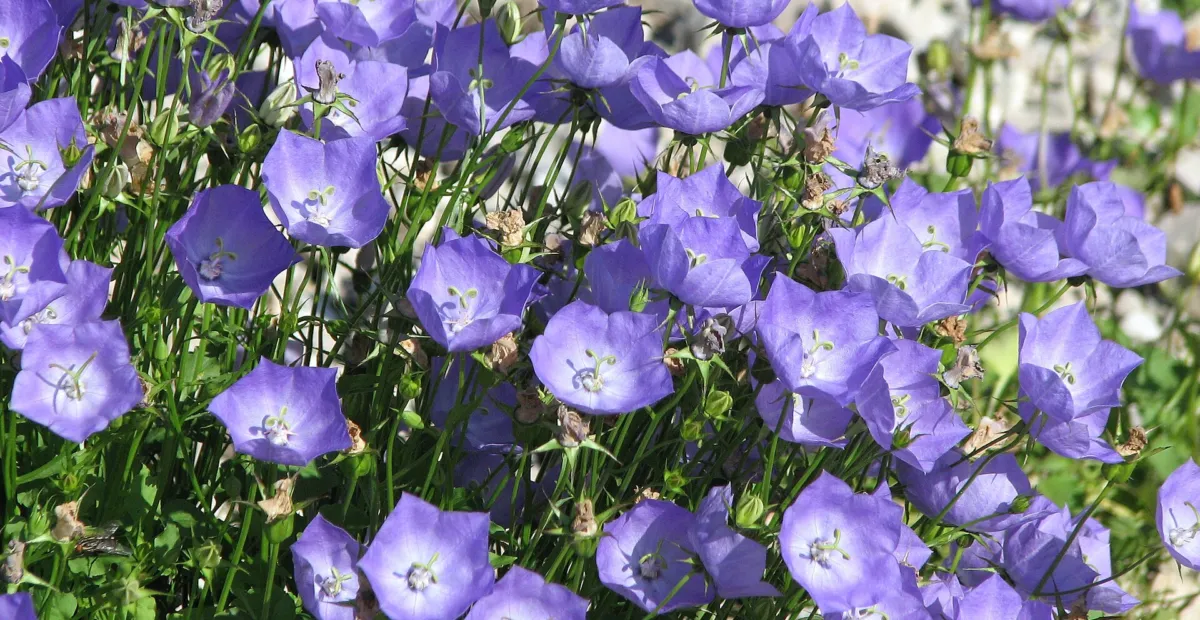
The plant produces a dense mound of smooth, green, heart-shaped to pointed-oval leaves with lightly toothed or wavy margins. Slender, branching flower stems rise from the basal foliage and carry conspicuous open bells. Its compact, non-running clump helps distinguish it from more invasive or strongly creeping Campanula species.
Flowering
Solitary, upright, cup- to bell-shaped flowers are carried on wiry stems above the foliage. The main display usually runs from June through August in much of the United States, with lighter rebloom possible after cutting back spent flowers, especially where summers are cool.
Pollination and visitors
Campanula flowers are associated with specialist and generalist bees, bumblebees, and other insects. Evidence is stronger for the genus than for this exact species in the United States, so no single pollinator species is assigned here. Avoid insecticide sprays while flowers are open.
Campanula carpatica photos
Click any photo for a larger view. Source, author and license are shown separately.
Diseases and pests
Diseases
Prevent crown and root problems by providing drainage, avoiding overhead watering, and keeping dense growth thinned. Crown rot and other moisture-related rots are the main concerns in poorly drained soil. Remove affected tissue and improve the site; discard severely rotted plants rather than repeatedly replanting the same wet location.
Pests
Watch for slugs and snails feeding on young foliage, especially in cool, damp beds. Hand-pick, reduce hiding places, and water at the soil surface. Aphids may cluster on tender stems; strong water sprays often suffice. Avoid broad-spectrum insecticides during bloom to reduce harm to visiting insects.
Related diseases and pests
Only Plant Doctor profiles whose host data indicate this plant may be affected are shown here.


Toxicity and pollen
No strong species-specific evidence of serious toxicity was located in the reviewed authoritative references. Do not treat that limitation as proof of universal safety: ingestion of unfamiliar plant material can still cause stomach upset, and sensitive people may react to plant contact. Keep garden chemicals and plant debris away from children and pets.
- Typical season
- June–August
- Pollination / pollen
- Insect-carried pollen
The flowers release pollen primarily during insect visits rather than dispersing it abundantly through the air. Airborne allergy exposure is therefore expected to be low, but individual sensitivity cannot be ruled out. Bloom-related exposure is generally concentrated from June through August in U.S. gardens.
Native habitat
The species is native to the Carpathian region of southeastern and central Europe, where it occurs in mountainous, rocky settings. Its garden preferences reflect that origin: cool roots, good drainage, sunlight, and soil that does not remain saturated through winter.
Interesting fact
The species name carpatica refers to the Carpathian Mountains, its native region. Unlike strongly spreading bellflowers, it generally remains a compact clump. The flowers are unusually open and upward-facing for a bellflower, making their color easy to see from above.
Frequently asked questions (FAQ)
The most relevant questions about this plant, with short and direct answers.
🌱Quick care
What is tussock bellflower?⌄
Tussock bellflower is the documented US common name for Campanula carpatica, a compact, clump-forming perennial with upward-facing blue, purple, or white bell-shaped flowers. It typically grows about 4 to 12 inches tall and wide.
Is Campanula carpatica a perennial?⌄
Yes, Campanula carpatica is a hardy herbaceous perennial. Its foliage may remain semi-evergreen in mild climates but can die back during colder winters.
How big does tussock bellflower get?⌄
Tussock bellflower usually reaches 4 to 12 inches tall and wide, although individual cultivars may be smaller or slightly larger. Its compact mound makes it useful near paths, in rock gardens, and at the front of borders.
🌤️Environment and placement
How much sun does Campanula carpatica need?⌄
Campanula carpatica grows best in full sun to partial shade. In hot climates, afternoon shade can help keep the roots cool and reduce stress.
What USDA hardiness zones can grow tussock bellflower?⌄
Tussock bellflower is generally hardy in USDA Zones 3 through 8. Performance may decline in hot, humid areas, especially where nighttime temperatures stay high.
Can Campanula carpatica grow in shade?⌄
Campanula carpatica can grow in partial shade, but it usually flowers best with several hours of direct sun. Dense shade may produce weaker growth and fewer blooms.
What soil is best for Campanula carpatica?⌄
Use fertile, well-drained loam or gritty soil suitable for a rock garden. The plant tolerates neutral, acidic, or alkaline soil, but it performs poorly in soil that stays waterlogged.
Can tussock bellflower grow in a rock garden?⌄
Yes, tussock bellflower is well suited to rock gardens because it stays compact and prefers well-drained soil. Place it where it receives full sun or light shade and avoid pockets that remain soggy.
Can Campanula carpatica grow in containers?⌄
Yes, Campanula carpatica grows well in containers with drainage holes and a well-drained potting mix. Choose a container wide enough for its spreading mound and water whenever the surface begins to dry.
💧Care and problems
How often should I water Campanula carpatica?⌄
Water Campanula carpatica regularly enough to maintain moderate, even moisture. Do not allow the soil to become consistently soggy or bone-dry, particularly while the plant is flowering or establishing.
Why is my Campanula carpatica wilting?⌄
Wilting usually indicates insufficient moisture, excessive heat, root damage, or soil that stays too wet. Check soil moisture and drainage, then provide consistent water while improving airflow and afternoon protection in hot weather.
Does tussock bellflower need fertilizer?⌄
Tussock bellflower usually needs only modest fertility when planted in reasonably fertile soil. A light application of balanced fertilizer in spring is sufficient; excessive nitrogen can encourage foliage at the expense of flowers.
What problems affect Campanula carpatica?⌄
Campanula carpatica generally has few serious pest or disease problems, but slugs and snails may damage the foliage. Powdery mildew and rust can occur, particularly when plants are crowded, stressed, or grown in poor air circulation.
How do I prevent powdery mildew on Campanula carpatica?⌄
Prevent powdery mildew by spacing plants for airflow, watering the soil rather than the foliage, and avoiding prolonged drought stress. Remove badly affected leaves and improve light and ventilation around the plant.
Why is Campanula carpatica dying in summer?⌄
Summer decline is often caused by heat, humidity, drought, or poorly drained soil rather than winter injury. Keep the roots evenly moist and cool, provide afternoon shade in hot regions, and avoid heavy wet soil.
🪴Planting and repotting
When should I plant tussock bellflower?⌄
Plant tussock bellflower in spring or early fall when temperatures are moderate. Spring planting is especially useful in colder regions, while fall planting allows roots to establish before winter.
How far apart should Campanula carpatica be planted?⌄
Space Campanula carpatica about 12 to 14 inches apart. This allows the clumps to fill in while leaving enough room for air circulation.
How do I plant Campanula carpatica in the ground?⌄
Plant Campanula carpatica at the same depth it was growing in its nursery container, then water thoroughly. Choose a sunny to partly shaded site with fertile, well-drained soil and maintain even moisture during establishment.
Can Campanula carpatica tolerate wet soil?⌄
No, Campanula carpatica does not tolerate persistently wet soil. Improve drainage with gritty amendments or a raised planting area, and avoid locations where water collects after rain.
✂️Propagation and pruning
How do I propagate Campanula carpatica?⌄
The most dependable method is division in spring or early summer, or after the clump has become established. Seed propagation is possible but may be less reliable, especially for maintaining the exact traits of a named cultivar.
When should I divide tussock bellflower?⌄
Divide tussock bellflower in spring or late summer, generally every 2 to 4 years when the clump becomes crowded or loses vigor. Replant the divisions promptly and keep them evenly moist while they establish.
Can I grow Campanula carpatica from seed?⌄
Yes, Campanula carpatica can be grown from seed, but germination and seedling performance may be less reliable than division. Sow the seeds in containers and avoid burying them deeply, since light may aid germination.
Should I deadhead Campanula carpatica?⌄
Yes, deadheading spent flowers keeps Campanula carpatica tidy and can encourage continued or repeat flowering. Remove individual faded flowers or cut the finished flower stems back to the foliage.
Should tussock bellflower be cut back after flowering?⌄
Cut back faded flower stems after flowering to improve the plant’s appearance and encourage fresh growth. A light trim is usually enough; avoid removing healthy basal foliage unless it is damaged or diseased.
⚠️Toxicity and safety
Is Campanula carpatica toxic to dogs and cats?⌄
The toxicity status of Campanula carpatica is uncertain because no serious species-specific toxicity evidence was located. Prevent pets from eating plant material, and contact a veterinarian or animal poison-control service if ingestion causes symptoms.
Is tussock bellflower safe for humans to eat?⌄
Do not eat tussock bellflower unless a qualified expert has confirmed the plant’s identity and edibility. Reliable species-specific evidence supporting routine human consumption was not located.
🌸Flowering and special interest
When does Campanula carpatica bloom?⌄
Campanula carpatica usually blooms from late spring into summer, commonly from May or June through July depending on climate and cultivar. Regular deadheading may help extend the display.
What colors do tussock bellflower flowers come in?⌄
Tussock bellflower flowers are commonly blue, violet-purple, or white. The flowers are upright, bell- or cup-shaped, and typically about 1 inch across.
Why is my Campanula carpatica not flowering?⌄
Common causes include too much shade, excessive nitrogen, drought, heat stress, or an overcrowded clump. Move or thin the plant if necessary, maintain even moisture, and divide an aging clump to restore vigor.
Does Campanula carpatica rebloom?⌄
Campanula carpatica may continue flowering or produce additional blooms when faded flowers are removed. Rebloom is less dependable under severe heat, drought, or other environmental stress.
Is tussock bellflower good for pollinators?⌄
The open bell-shaped flowers of tussock bellflower can provide nectar and pollen for visiting insects. Its value to pollinators may vary with local conditions and the availability of other flowering plants.
Similar plants
 Yellow lantern chili (Capsicum chinense) care guideCapsicum chinense
 Capsicum baccatum care guideCapsicum baccatum
 Serrano (Capsicum annuum ‘Serrano’)Capsicum annuum 'Serrano'
 Purple Beauty (Capsicum annuum ‘Purple Beauty’)Capsicum annuum 'Purple Beauty'
 Numex Twilight (Capsicum annuum ‘Numex Twilight’)Capsicum annuum 'Numex Twilight'
 Explosive Ember Chili Pepper (Capsicum annuum ‘Explosive Ember’)Capsicum annuum 'Explosive Ember'