
 Source:
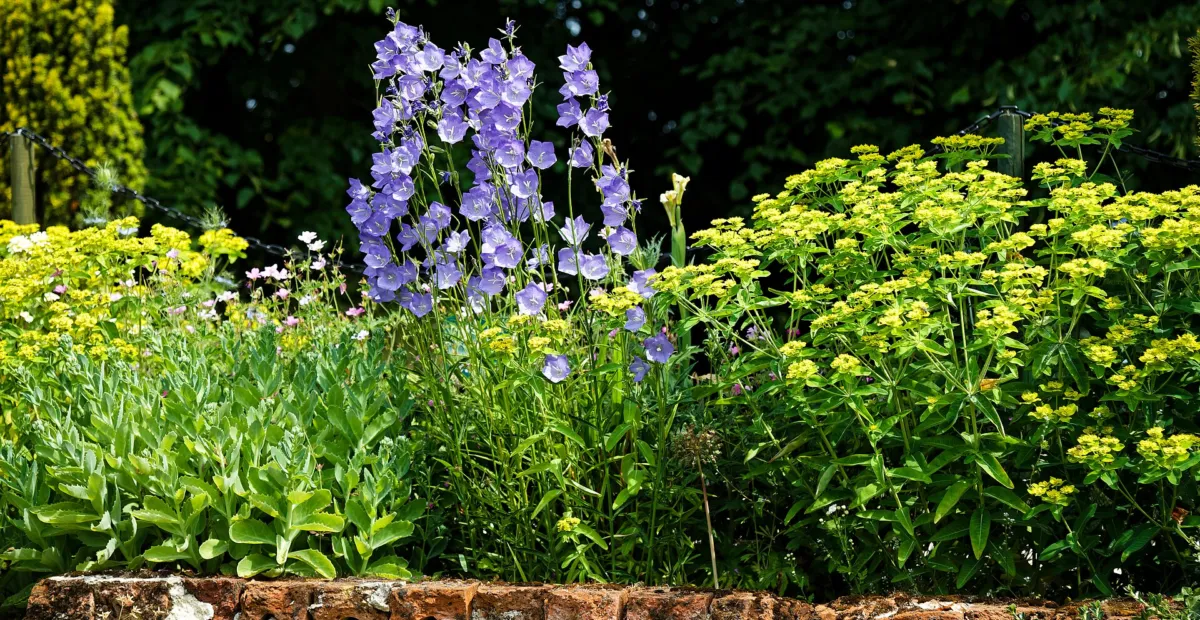
 Peach-leaved Bellflower (Campanula persicifolia) short overview
Peach-leaved Bellflower is a graceful, cold-hardy perennial valued for its tall stems and open bells in blue, violet, or white. Its narrow, toothed leaves form a basal clump, while the flowers rise above the foliage in early summer. In United States gardens, it performs best in fertile, well-drained soil with full sun or light afternoon shade, making it useful for borders, cottage gardens, cutting gardens, containers, and pollinator plantings.
Taxonomic classification
Peach-leaved Bellflower (Campanula persicifolia) care guide
Light and placement
Grow in full sun in cooler climates; in hot-summer areas, provide morning sun and light afternoon shade. Southern or west-facing exposures may cause wilting or faded flowers if soil dries too quickly. Sparse stems and weak flowering suggest insufficient light, while scorched foliage and rapid wilting suggest excessive heat or drought.
Watering and humidity
Water deeply when the top inch of soil begins to dry during establishment, then adjust to weather and soil. Maintain moderate, even moisture in active growth but never leave the crown in standing water. Reduce irrigation in cool fall weather and during winter dormancy, especially in heavy soils.
Soil and growing medium
Use fertile, well-drained soil amended with compost if it is poor. Loam or sandy loam is suitable, provided it does not remain waterlogged in winter. The species tolerates neutral to mildly alkaline conditions and generally performs better where drainage is reliable than in heavy, compacted clay.
Feeding
Apply a thin layer of compost in spring or use a balanced, slow-release perennial fertilizer according to the product label. Avoid heavy nitrogen feeding, which can produce weak leafy growth and fewer flowers. Do not fertilize drought-stressed, newly divided, or waterlogged plants until they recover.
Growth and habit
This perennial forms a basal clump and sends up stiff, erect flowering stems. It is generally well behaved but may self-seed when spent flowers are left in place. Divide crowded clumps every few years to maintain vigor and reduce congestion.
Planting and repotting
Plant nursery stock in spring or early fall, setting the crown at soil level. Space plants about 12–18 inches apart, with wider spacing for larger forms. Water thoroughly after planting and keep evenly moist during the first growing season while roots establish.
Container-grown plants can be moved in spring or early fall. Use a pot with drainage holes and a moisture-retentive but free-draining perennial mix. Repot when the root ball is crowded or the plant dries unusually fast; avoid burying the crown deeply.
Propagation and pruning
Propagation
Sow seed in containers or a prepared seedbed in spring, or divide established clumps in spring or early fall. Stem cuttings may also be used, especially with selected garden forms. Division is practical when mature clumps become crowded.
Pruning
Deadhead after the first flush to reduce self-seeding and encourage a tidier display. Cut flowering stems back after bloom. Remove declining foliage when it yellows naturally, and clean away dead material in late fall or early spring.
Overwintering
The species is hardy through much of the northern United States. Leave healthy basal foliage until late winter in cold regions, then cut it back before new growth begins. In containers, protect roots from repeated freeze-thaw cycles by grouping pots in a sheltered location or insulating the container.
Uses
Use it in perennial borders, cottage gardens, meadow-style plantings, rock gardens, woodland edges, containers, and cutting gardens. The flowers are useful in arrangements, and the species can contribute nectar and pollen resources for flower-visiting insects. It is ornamental rather than a recommended edible or medicinal plant.
Appearance
Basal leaves are narrow, leathery, bright green, and often toothed, with lance-shaped to slightly spatulate blades. Stem leaves become smaller and narrower upward. The flowering stems are stiff, angular, green, and nearly leafless, giving the racemes a clean vertical outline.
Flowering
Large, fused-petal bells are carried in terminal racemes on stiff, mostly unbranched stems. Individual flowers face outward rather than hanging strongly downward. Flowering is concentrated from late spring into summer, with color varying by form from blue and violet to white.
Pollination and visitors
Research and extension records document visits by bees, bumblebees, solitary bees, hoverflies, and butterflies. Bumblebees and solitary bees are especially characteristic visitors in field observations. The flowers can also provide shelter for some insects during cool or wet conditions.
Campanula persicifolia photos
Click any photo for a larger view. Source, author and license are shown separately.
Diseases and pests
Diseases
Avoid persistently wet foliage and crowded planting, which can encourage crown or root problems and foliar fungal spotting. Improve drainage, water at the soil line, remove affected leaves, and divide congested clumps. Discard severely rotted plants rather than repeatedly replanting them in the same wet spot.
Pests
Watch for aphids, slugs, and snails, particularly on young growth. Use hand removal, barriers, sanitation, and habitat-friendly controls first. Avoid broad-spectrum insecticides during bloom because the flowers attract beneficial insects. Strong, healthy plants in open, well-drained sites generally have fewer pest problems.
Related diseases and pests
Only Plant Doctor profiles whose host data indicate this plant may be affected are shown here.
Toxicity and pollen
Reliable species-specific toxicology information for humans, dogs, cats, and children was not located in authoritative sources. Do not treat the plant as edible; prevent ingestion of plant material, supervise children and pets, and contact a medical or veterinary professional if a substantial amount is eaten or symptoms occur.
- Typical season
- Typically late spring through summer in the United States
- Pollination / pollen
- Primarily insect-carried pollen
The species is insect-pollinated, so its pollen is mainly presented within flowers rather than released in large wind-borne clouds. However, insect pollination does not prove zero allergy risk. Species-specific clinical allergy data were not found, so sensitive individuals should use ordinary caution around flowering plants.
Native habitat
Native populations occur across much of Europe and extend eastward toward western Siberia, Turkey, and the North Caucasus. It is associated with open woods, woodland margins, meadows, grasslands, and other temperate habitats with reasonably fertile, well-drained soils and seasonal moisture.
Interesting fact
The specific epithet persicifolia means peach-leaved, referring to the foliage shape.
The flowers are held in terminal racemes above a basal leaf clump.
The species can self-seed without usually being regarded as invasive in gardens.
Its capsule fruit is strongly veined and conical.
Frequently asked questions (FAQ)
The most relevant questions about this plant, with short and direct answers.
🌱Quick care
What is Campanula persicifolia called in the United States?⌄
Campanula persicifolia is commonly called Peach-leaved Bellflower in the United States. It is a cold-hardy, clump-forming perennial in the bellflower family, Campanulaceae.
Is Peach-leaved Bellflower easy to grow?⌄
Peach-leaved Bellflower is generally easy to grow when given fertile, well-drained soil and consistent moisture. Summer heat, winter wetness, and poor drainage can cause problems.
How much sun does Campanula persicifolia need?⌄
Campanula persicifolia grows in full sun to partial shade. In hot climates, afternoon shade can help reduce heat stress and moisture loss.
How often should I water Peach-leaved Bellflower?⌄
Water Peach-leaved Bellflower when the soil surface begins to dry, keeping the root zone moderately moist but never soggy. Newly planted plants need more frequent watering than established clumps.
What type of soil is best for Campanula persicifolia?⌄
The best soil is fertile, well-drained loam or sandy loam that holds moderate moisture without staying waterlogged. Neutral to mildly alkaline soil is generally suitable.
🌤️Environment and placement
What USDA hardiness zones can grow Peach-leaved Bellflower?⌄
Peach-leaved Bellflower is commonly listed as hardy in USDA Zones 3 through 7. Performance in warmer areas improves with afternoon shade, reliable moisture, and excellent drainage.
Can Campanula persicifolia grow in shade?⌄
Campanula persicifolia can grow in partial shade, especially where summers are hot. Deep shade usually produces weaker stems and fewer flowers.
Where should I plant Peach-leaved Bellflower?⌄
Plant Peach-leaved Bellflower in a sunny or lightly shaded perennial border, cottage garden, open woodland edge, or cutting garden. Choose a site with good air circulation and soil that drains freely.
Does Campanula persicifolia tolerate heat?⌄
Campanula persicifolia tolerates some heat but prefers cooler growing conditions. In hot regions, protect it from intense afternoon sun and prevent the soil from drying out completely.
How tall does Peach-leaved Bellflower get?⌄
Peach-leaved Bellflower typically grows about 1.5 to 3 feet tall. Exposed plants may need support if flower stems lean or are damaged by wind.
💧Care and problems
Why is my Campanula persicifolia not blooming?⌄
Poor flowering is commonly caused by insufficient light, excess nitrogen, drought, or a recently divided or transplanted clump. Move overly shaded plants and keep established plants evenly watered.
Why is my Peach-leaved Bellflower wilting?⌄
Wilting can result from dry soil, root damage, heat stress, or overly wet soil that prevents healthy roots from functioning. Check moisture several inches below the surface and improve drainage if the soil remains saturated.
What pests attack Campanula persicifolia?⌄
Slugs, snails, and aphids can affect Campanula persicifolia, although the plant is generally trouble-free. Inspect young growth regularly, especially during cool, damp weather.
What diseases affect Peach-leaved Bellflower?⌄
Peach-leaved Bellflower may develop root rot in poorly drained soil and can occasionally be affected by rust, powdery mildew, or leaf spot. Improve drainage and air circulation, and remove badly affected foliage.
Does Campanula persicifolia need fertilizer?⌄
Campanula persicifolia usually needs little fertilizer if planted in fertile soil. A light spring application of balanced perennial fertilizer is sufficient; excessive nitrogen can encourage foliage over flowers.
🪴Planting and repotting
When should I plant Peach-leaved Bellflower?⌄
Plant Peach-leaved Bellflower in spring after severe freezes have passed or in early fall. Fall planting should be early enough for roots to establish before the ground freezes.
How far apart should I plant Campanula persicifolia?⌄
Space Campanula persicifolia about 12 inches to 3 feet apart, depending on the cultivar and desired density. Allow enough room for the basal foliage and flower stems to receive good air circulation.
Can Campanula persicifolia grow in containers?⌄
Campanula persicifolia can grow in a large container with drainage holes and fertile, well-drained potting mix. Containers dry out and freeze more quickly than garden soil, so monitor moisture and winter exposure carefully.
✂️Propagation and pruning
How do you propagate Peach-leaved Bellflower?⌄
Propagate Peach-leaved Bellflower by seed, spring basal cuttings, or division in spring or fall. Division and cuttings are preferable for maintaining the characteristics of a named cultivar.
Can Campanula persicifolia be grown from seed?⌄
Campanula persicifolia can be grown from seed, and favorable garden conditions may also produce self-sown seedlings. Seed-grown plants may vary from named cultivars and may require a cold period for reliable germination.
How often should I divide Peach-leaved Bellflower?⌄
Divide Peach-leaved Bellflower when clumps become crowded or flowering declines, commonly every 2 to 4 years. Handle the roots carefully because established plants can have a deep root system.
Can I take cuttings from Campanula persicifolia?⌄
Yes, basal cuttings can be taken in spring when new shoots are developing. Root them in a sterile, well-drained medium and keep them evenly moist while they establish.
Should I deadhead Peach-leaved Bellflower?⌄
Deadhead Peach-leaved Bellflower after flowers fade to encourage a second flush and reduce self-seeding. Cut individual flower stems back to the plant’s foliage or remove the entire stem after flowering.
When should I cut back Campanula persicifolia?⌄
Cut Campanula persicifolia back after its main flowering period if you want tidier growth, fewer seedlings, or possible rebloom. Remove dead or declining foliage in late winter or early spring.
⚠️Toxicity and safety
Is Campanula persicifolia poisonous to dogs or cats?⌄
The species-specific toxicity status of Campanula persicifolia is not established by reliable evidence. Prevent pets from eating ornamental plants, and contact a veterinarian or poison-control service if a large amount is swallowed or symptoms appear.
Is Peach-leaved Bellflower safe for people to eat?⌄
Peach-leaved Bellflower should not be treated as an edible plant because reliable evidence does not establish safe culinary use for this species. Avoid consuming it unless identification and edibility have been confirmed by a qualified local authority.
Is Campanula persicifolia invasive in the United States?⌄
Campanula persicifolia can self-seed in favorable conditions and has become naturalized in parts of the northeastern United States and eastern Canada. It is generally described as noninvasive, but remove spent flowers if you want to limit seedlings.
🌸Flowering and special interest
When does Peach-leaved Bellflower bloom?⌄
Peach-leaved Bellflower usually blooms from June through July. Flowering time can shift earlier or later depending on climate, cultivar, planting location, and spring temperatures.
What color flowers does Campanula persicifolia have?⌄
Campanula persicifolia produces large, outward-facing, bell-shaped flowers in shades of blue, violet-blue, lavender, or white. Cultivar selection determines the exact flower color and form.
Can Peach-leaved Bellflower bloom twice?⌄
Peach-leaved Bellflower may produce a second flush of flowers after prompt deadheading or cutting back. Rebloom is more likely when the plant has adequate moisture, light, and healthy basal growth.
Is Campanula persicifolia good as a cut flower?⌄
Campanula persicifolia is a useful cut flower because its upright stems carry attractive bell-shaped blooms. Cut stems when the lower flowers are beginning to open, and remove foliage that would sit below the water line.
Similar plants
 Milky Bellflower (Campanula lactiflora) care guideCampanula lactiflora
 Tussock bellflower (Campanula carpatica) care guideCampanula carpatica
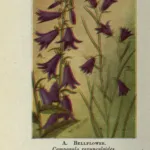 Harebell (Campanula rotundifolia) care guideCampanula rotundifolia
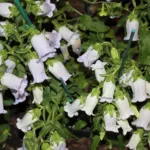 Canterbury bells (Campanula ‘Medium’)Campanula 'Medium'
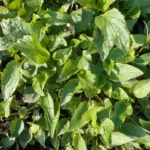 Spotted Bellflower (Campanula punctata) care guideCampanula punctata
 Giant Bellflower (Campanula latifolia) care guideCampanula latifolia