
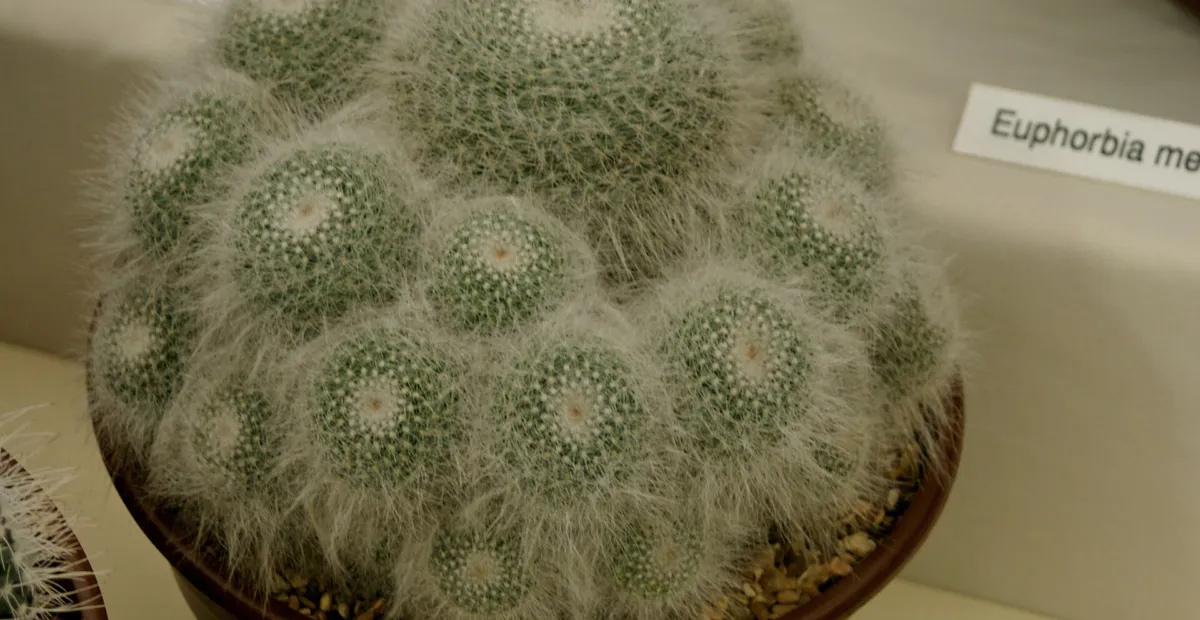
 Source:
 Old woman cactus (Mammillaria hahniana) short overview
Old woman cactus (Mammillaria hahniana) is a small, slow-growing pincushion cactus from northeastern and southwestern Mexico. Its rounded green body is almost hidden beneath a soft-looking covering of white wool and fine spines, while small pink flowers form a ring near the crown when the plant is mature and actively growing. In the United States, it is usually grown as a houseplant or container specimen, with intense light, gritty soil, and a dry winter rest.
Taxonomic classification
Old woman cactus (Mammillaria hahniana) care guide
Light and placement
Provide several hours of direct sun, ideally from a south- or west-facing window, with bright filtered light during the hottest summer afternoon if scorch develops. Rotate the pot periodically for even growth. Insufficient light causes stretching, dull color, and poor flowering; sudden intense sun can bleach or brown exposed tissue, so acclimate gradually.
Watering and humidity
Water thoroughly until excess drains from the pot, then wait until the substrate is completely dry before watering again. During active growth, this may mean every few weeks indoors, depending on pot size, light, and temperature. Reduce sharply in autumn and keep nearly dry through a cool winter rest. Never leave the pot standing in water.
Soil and growing medium
Use a porous cactus mix amended with substantial pumice, perlite, coarse grit, or crushed lava. The substrate should drain immediately and dry quickly after watering. A slightly acidic to neutral mix is suitable; avoid heavy, peat-rich soil that stays wet around the roots. Unglazed clay pots help excess moisture escape.
Feeding
Feed only during active growth, typically from spring into summer, using a balanced or cactus fertilizer diluted to quarter or half strength. Apply to already-moist soil rather than bone-dry roots. Stop feeding in late summer or autumn as growth slows, and never fertilize a stressed, recently repotted, or dormant plant.
Growth and habit
This is a slow-growing, compact cactus that commonly remains solitary when young and can produce offsets with age. Strong light helps maintain a firm, symmetrical body and supports flowering. Low winter temperatures combined with dry conditions encourage dormancy; warm, dim, wet conditions can cause weak growth and rot.
Planting and repotting
Plant outdoors only where winters are reliably warm and frost-free, preferably in spring after cold weather has passed. Set the root collar level with the surrounding soil; do not bury the stem. Space individual plants about 8–12 inches apart for airflow, or provide equivalent room in containers.
Repot in spring or early summer only when the mix is dry. Let damaged roots callus briefly, use fresh dry cactus substrate, and wait several days before watering. Choose a pot only slightly wider than the root ball and handle the wool and spines with folded paper or thick gloves.
Propagation and pruning
Propagation
Propagate from seed or offsets. Sow fresh seed in a sterile, gritty mix with warmth, bright filtered light, and restrained moisture. Separate offsets only after they are well developed; allow any cut surface to dry and callus before planting in dry cactus mix. Seed-grown plants are slower but preserve genetic diversity.
Pruning
No routine pruning is required. Remove dead flowers or dried tissue with clean tools if desired. Do not cut healthy wool or spines; any major tissue damage should be treated as a rot or injury problem rather than normal maintenance.
Overwintering
Keep frost-free, bright, and cool in winter, ideally around 45–55°F if the plant remains fully dry. In colder regions, move it indoors before temperatures approach freezing. Resume watering gradually in spring only after active growth and stronger light return.
Uses
Primarily an ornamental specimen for windowsills, cactus collections, conservatories, rock gardens, and frost-free containers. Its compact form and woolly texture make it useful in small succulent displays. It has no well-supported culinary or medicinal use for home gardening.
Appearance
The body is globose to short cylindrical, with spirally arranged rounded tubercles rather than conventional ribs. Dense white wool and fine radial spines give the plant its white, soft-looking appearance, while stronger central spines may project from each areole. Small flowers form a conspicuous ring close to the crown.
Flowering
Mature plants produce small, funnel-shaped flowers in a ring near the crown. Blooming generally follows a cool, dry rest and resumes with increasing light and watering in the growing season. Flower color is usually pale pink to pink, although cultivated populations can vary in intensity.
Pollination and visitors
The flowers may be visited by small bees, but species-specific pollination records are limited in readily available horticultural literature. Treat animal attraction as modest and variable rather than a primary wildlife-garden feature.
Mammillaria hahniana photos
Click any photo for a larger view. Source, author and license are shown separately.
Diseases and pests
Diseases
The main risks are root or stem rot from wet soil, poor drainage, and cool conditions. Use sterile, free-draining media, water only after complete drying, and provide airflow. Soft dark tissue, collapse, or a sour odor indicates serious rot; isolate the plant and remove affected tissue if salvageable.
Pests
Inspect woolly crevices and the root zone for mealybugs, scale, and spider mites. Quarantine new plants, remove visible insects with a cotton swab and suitable horticultural treatment, and correct weak light or excessive moisture that encourages infestations. Avoid routinely wetting the wool.
Toxicity and pollen
Mammillaria species are generally listed by extension horticulture references as non-toxic to people and pets, but this does not make the plant harmless. The principal risk is mechanical injury from sharp spines and glochidia-like spine structures, along with irritation if plant material is chewed. Keep away from children and animals and handle with care.
- Typical season
- During flowering, typically late spring through summer in the United States
- Pollination / pollen
- Flower-contained, insect-associated pollen
This insect-pollinated cactus produces pollen within its flowers, but readily airborne exposure is expected to be limited compared with wind-pollinated plants. No species-specific allergy profile was established here; sensitive people should still avoid handling flowers closely if symptoms occur.
Native habitat
Mammillaria hahniana is native to Mexico, especially northeastern and southwestern regions extending toward Jalisco according to taxonomic distribution data. It occurs in dry desert or shrubland settings where mineral soils, strong sunlight, seasonal rainfall, and rapid drainage shape its growth cycle.
Interesting fact
The accepted species includes several recognized subspecies. Its dense white covering is made of wool and spines, not true fur. The species is native to dry shrubland and desert environments in Mexico. Older cultivated plants may form offsets and become clustered.
Frequently asked questions (FAQ)
The most relevant questions about this plant, with short and direct answers.
🌱Quick care
How do you care for Mammillaria hahniana, or old woman cactus?⌄
Give old woman cactus full sun to bright filtered light, gritty fast-draining soil, and very little water. Let the soil dry completely before watering again, and keep the plant nearly dry during winter dormancy.
Is Mammillaria hahniana easy to grow indoors?⌄
Yes, Mammillaria hahniana is generally easy to grow indoors when it receives strong light and is planted in a pot with a drainage hole. The main risk is root rot from frequent watering or moisture-retentive soil.
🌤️Environment and placement
How much light does old woman cactus need?⌄
Old woman cactus grows best in full sun or several hours of strong direct light daily. Bright filtered light is safer during intense summer heat, especially behind glass, where foliage can scorch.
Can Mammillaria hahniana grow outside in the United States?⌄
Mammillaria hahniana can grow outdoors in warm, dry areas during the frost-free season. In most of the United States, bring it indoors or under protection before temperatures approach freezing.
What temperature is too cold for Mammillaria hahniana?⌄
Freezing temperatures are too cold for Mammillaria hahniana, which is frost tender. Keep it dry and protected from frost, freezes, and prolonged cold spells; a cool, dry winter rest can help flowering.
Does old woman cactus need high humidity?⌄
No, old woman cactus prefers low humidity and good air circulation. Avoid placing it in a constantly damp bathroom, enclosed terrarium, or other humid location.
💧Care and problems
How often should you water Mammillaria hahniana?⌄
Water Mammillaria hahniana thoroughly only after its soil has dried completely, then let excess water drain away. The interval may range from about every two weeks to several weeks indoors, depending on light, temperature, pot size, and soil.
Should I water old woman cactus in winter?⌄
Usually, keep old woman cactus nearly dry during winter. Water only if it shows significant shriveling and the plant is kept warm enough for the soil to dry quickly.
Why is my Mammillaria hahniana turning soft or brown at the base?⌄
A soft or brown base most often indicates overwatering, poor drainage, or root rot. Stop watering, inspect the roots, and remove damaged tissue before repotting into completely dry, sharply draining mix if the rot has not spread too far.
Why is my old woman cactus leaning or growing unevenly?⌄
Uneven or leaning growth usually means the plant is reaching toward a stronger light source. Move it gradually into brighter light and rotate the pot periodically, while avoiding a sudden transition from shade to intense sun.
Can Mammillaria hahniana be fertilized?⌄
Yes, fertilize Mammillaria hahniana sparingly during active spring and summer growth with a diluted cactus fertilizer. Do not fertilize during winter dormancy or when the plant is stressed, recently repotted, or suffering from root problems.
What pests commonly affect old woman cactus?⌄
Mealybugs are the main pest reported on old woman cactus, and spider mites can also occur in hot, dry conditions. Inspect the white hairs and crevices regularly because pests can hide among the spines.
🪴Planting and repotting
What soil is best for Mammillaria hahniana?⌄
Use a gritty cactus mix that drains sharply and dries quickly, with substantial mineral material such as pumice, perlite, or coarse grit. Avoid dense garden soil and mixes that stay wet for long periods.
What type of pot is best for old woman cactus?⌄
Choose a pot with a drainage hole and only slightly more room than the root ball. Unglazed clay can help the soil dry faster, but any well-drained container is suitable if watering is carefully controlled.
When should I repot Mammillaria hahniana?⌄
Repot Mammillaria hahniana in spring or early summer when active growth is beginning, especially if roots fill the pot or emerge from the drainage hole. Repotting is usually needed only every few years rather than annually.
How do you repot old woman cactus without getting hurt?⌄
Handle old woman cactus with folded newspaper, sturdy gloves, or cactus tongs, and work with dry soil. After repotting, wait several days before watering so damaged roots can dry and heal.
✂️Propagation and pruning
How do you propagate Mammillaria hahniana?⌄
Propagate Mammillaria hahniana from offsets or seeds. Offsets are the simplest method when a mature clump produces removable pups, while seeds require warmth, patience, and carefully controlled moisture.
Can I propagate old woman cactus from pups?⌄
Yes, old woman cactus can be propagated from healthy pups that have developed their own base or can be separated cleanly. Allow a cut or detached offset to callus before planting it in dry, gritty mix.
Does Mammillaria hahniana need pruning?⌄
No, Mammillaria hahniana normally needs no pruning. Remove only dead, diseased, or severely damaged parts using sterile tools, and protect your hands from the sharp spines.
⚠️Toxicity and safety
Is Mammillaria hahniana poisonous to cats or dogs?⌄
Mammillaria hahniana is generally considered a low toxicity concern, but its sharp spines are the primary hazard. Keep it away from pets and children, and contact a veterinarian or poison-control service if any plant material is swallowed.
Are the hairs on old woman cactus dangerous?⌄
The white hairs on old woman cactus are less conspicuous than its fine spines but should still be handled cautiously. Use gloves or a barrier when moving or repotting the plant, and avoid rubbing the plant against skin or eyes.
🌸Flowering and special interest
When does Mammillaria hahniana flower?⌄
Mammillaria hahniana commonly flowers in spring or early summer, producing small rose-red to reddish-purple flowers in a ring near the crown. A mature plant with strong light and a cool, dry winter rest is more likely to bloom.
How can I get my old woman cactus to bloom?⌄
Provide strong light, avoid excess fertilizer and water, and give the plant a cool, dry winter rest without freezing it. Blooming also depends on maturity and overall health, so these conditions improve the chances but do not guarantee flowers.
Why is my Mammillaria hahniana not flowering?⌄
Lack of flowers is commonly linked to insufficient light, warm and wet winter conditions, immaturity, or stress from poor roots. Improve light, keep the plant drier in winter, and avoid forcing growth with frequent watering.
What do Mammillaria hahniana flowers look like?⌄
Mammillaria hahniana produces small funnel-shaped rose-red or reddish-purple flowers that often form a halo around the top of the stem. Small red fruits may follow successful pollination.
Similar plants
 Eve’s Needle Cactus (Austrocylindropuntia subulata) care guideAustrocylindropuntia subulata
 Acanthocereus ‘Tetragonus’Acanthocereus 'Tetragonus'
 Carnegiea ‘Gigantea’Carnegiea 'Gigantea'
 Mammillaria ‘Compressa’Mammillaria 'Compressa'
 Cereus ‘Jamacaru’Cereus 'Jamacaru'
 Star cactus (Astrophytum ornatum) care guideAstrophytum ornatum