
 Source:
 Cereus ‘Jamacaru’ short overview
Cereus 'Jamacaru' is a horticultural identity associated with Cereus jamacaru, a tall, branching columnar cactus native to seasonally dry regions of central and eastern Brazil. It forms ribbed blue-green stems with conspicuous areoles and spines, and mature plants may produce large white flowers that open at night. In the United States, grow it in intense light, porous cactus soil, and a frost-free container or protected landscape position.
Taxonomic classification
Cereus ‘Jamacaru’ care guide
Light and placement
Give full sun whenever possible, gradually acclimating plants moved outdoors to prevent sunburn. Indoors, use a south- or west-facing window or supplemental grow light. Weak, elongated stems and pale growth indicate insufficient light; yellowing, scarring, or bleached patches can indicate abrupt or excessive exposure, especially after low-light winter conditions.
Watering and humidity
Water thoroughly only after the substrate has dried completely, allowing excess water to drain away. During warm, bright growth, check the mix periodically; in fall and winter, water much less often and only enough to prevent severe shriveling. Never leave the pot standing in water. Added humidity is unnecessary and poor airflow is more dangerous than dry indoor air.
Soil and growing medium
Use a very porous cactus substrate with abundant mineral grit, such as pumice, coarse sand, lava rock, or perlite blended with a modest amount of organic potting material. The root zone must drain rapidly and never remain saturated. A near-neutral to slightly alkaline reaction is suitable; avoid heavy, compacted, peat-dominant soil.
Feeding
Feed only during active growth, generally from spring through late summer, using a cactus fertilizer diluted to about one-quarter to one-half label strength and relatively low in nitrogen. Water first if the mix is dry, then fertilize. Do not feed a stressed, freshly cut, dormant, or cold-stored plant.
Growth and habit
This is a vigorous, upright, branching columnar cactus that can develop a woody, tree-like framework in warm climates. Indoors it remains smaller and grows more slowly because light and root volume limit development. Provide sturdy support for tall specimens, rotate containers periodically for even growth, and leave room for lateral branches.
Planting and repotting
Plant outdoors only after the danger of frost has passed and soil is fully warm. Set the root ball at the same depth as before; do not bury the stem. Space generously for eventual branching and provide a mineral, raised, fast-draining site. Establish with occasional deep watering, then lengthen the interval as roots settle.
Repot in spring or early summer only when the container is crowded, the mix has degraded, or drainage has declined. Use a pot with a drainage hole and move up only one size. Let cut or disturbed roots dry briefly before watering, and protect hands and arms from the spines during handling.
Propagation and pruning
Propagation
Propagate from mature stem cuttings in warm weather. Allow the cut surface to callus for several days to a few weeks, then place the cutting in barely moist, sharply drained medium. Seed propagation is possible but slower and more variable. Use clean tools and avoid watering heavily until roots begin to form.
Pruning
Prune only to remove damaged, diseased, dead, or dangerously placed branches, or to control a container specimen. Make clean cuts during warm, dry weather and allow wounds to dry before watering. Do not routinely shorten healthy stems simply to maintain a compact shape; cuttings can be saved for propagation.
Overwintering
Move container plants indoors or into a frost-free greenhouse before temperatures approach 32°F. Keep them very bright, dry, and cool-to-mild through winter, with sparse watering. Avoid placing a dormant plant directly beside a heater. Outdoor specimens in marginal climates need an overhead rain shelter as well as frost protection.
Uses
Best suited to specimen display, large containers, conservatories, xeric gardens, and frost-free rock gardens. Its architectural form provides vertical structure, while mature flowers and fruits add seasonal interest. Keep it away from paths, pets, and children because of the spines. Edible or medicinal uses were not assigned to this exact horticultural identity.
Appearance
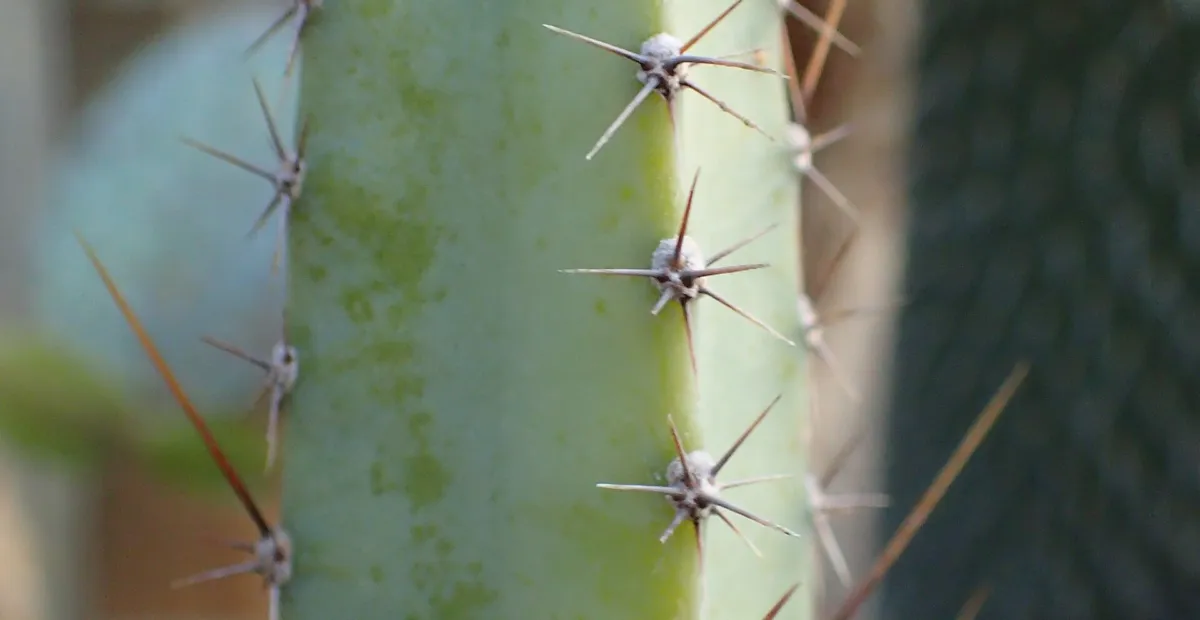
The plant has succulent, ribbed, columnar stems that branch upward and may develop a short woody trunk with age. Blue-green to green epidermis, regularly spaced areoles, and conspicuous spines are key identification features. Mature plants have a candelabra-like silhouette. Spine density and color can vary, and the quoted cultivar name is not supported by a definitive formal description.
Flowering
The species associated with this horticultural identity produces large, pale flowers on mature growth. Flowers are primarily nocturnal, opening around dusk and fading by morning. Spring flowering is documented in Brazil, while container plants in the United States may bloom later or irregularly depending on light, warmth, age, and winter rest. Cultivar-specific flowering data for 'Jamacaru' are not established.
Pollination and visitors
Species-level reports describe melittophily, psychophily, and chiropterophily, indicating visits by bees, butterflies, and bats. The large pale flowers open at night, making nocturnal visitors particularly relevant. The evidence applies to Cereus jamacaru rather than being demonstrated specifically for the quoted 'Jamacaru' cultivar.
Cereus 'Jamacaru' photos
Click any photo for a larger view. Source, author and license are shown separately.
Diseases and pests
Diseases
The principal risks are root and stem rots caused by persistent moisture, especially in cool weather or poorly drained soil. Use a porous mix, avoid splash and overhead irrigation, and inspect the base for softening, discoloration, or odor. Remove affected tissue with sterile tools only if localized; severe rot may require propagating healthy cuttings.
Pests
Watch for mealybugs, scale, spider mites, and root pests. Inspect areoles, joints, and the stem base regularly, isolate affected plants, remove small infestations mechanically, and use a labeled treatment only as directed. Avoid frequent misting, which can increase fungal and rot problems in stagnant conditions.
Related diseases and pests
Only Plant Doctor profiles whose host data indicate this plant may be affected are shown here.
Toxicity and pollen
I found no strong authoritative evidence that Cereus jamacaru tissue is a significant systemic poison to people or pets. The practical hazards are mechanical injury from spines, irritation from plant sap or damaged tissue, and possible gastrointestinal upset if plant material is chewed. Keep it away from children and animals, wear gloves, and seek medical or veterinary advice after significant ingestion or injury.
- Typical season
- During flowering; typically spring in the native range and warm-season flowering in cultivation
- Pollination / pollen
- Flower pollen, mainly transferred by animal visitors
This cactus is animal-pollinated and does not appear to be a major source of airborne pollen in ordinary garden settings, but cultivar-specific allergy studies are lacking. Flowers can still expose sensitive people to pollen during bloom, especially when handled or brought indoors. Avoid touching flowers unnecessarily and monitor personal symptoms.
Native habitat
The accepted species is native to central and eastern Brazil, especially seasonally dry Caatinga and related dry tropical habitats. It experiences intense sun, pronounced dry periods, warm temperatures, and episodic heavy rain. Natural soils are often mineral and rapidly drained, so cultivated plants should not be treated like humid-forest cacti.
Interesting fact
Cereus jamacaru is a seasonally dry-tropical cactus that can become tree-sized in its native range. Its flowers open at night and its mature fruits are brightly colored. The name 'Jamacaru' is also encountered as a spelling or horticultural usage associated with the accepted species name, but the quoted cultivar identity is not well documented in authoritative nomenclatural sources.
Frequently asked questions (FAQ)
The most relevant questions about this plant, with short and direct answers.
🌱Quick care
How do you care for Cereus 'Jamacaru'?⌄
Give Cereus 'Jamacaru' full sun to very bright filtered light, water only after the potting mix dries thoroughly, and use a sharp-draining cactus mix. Protect it from frost and standing water.
How often should I water Cereus 'Jamacaru'?⌄
Water Cereus 'Jamacaru' deeply, then wait until the mix is completely dry before watering again. Indoor plants may need water every few weeks during active growth and much less in winter, depending on light, temperature, and pot size.
Is Cereus 'Jamacaru' easy to grow indoors?⌄
Cereus 'Jamacaru' can grow well indoors when placed in the brightest available window, especially a south- or west-facing window. Insufficient light commonly causes weak, stretched growth.
🌤️Environment and placement
How much light does Cereus 'Jamacaru' need?⌄
Cereus 'Jamacaru' grows best in full sun or several hours of direct sunlight daily. Acclimate it gradually when moving it from shade or indoor light to strong outdoor sun to reduce sunscald.
Can Cereus 'Jamacaru' grow outside in the United States?⌄
Cereus 'Jamacaru' can grow outdoors year-round only in warm, frost-free parts of the United States, generally comparable to USDA Zones 10–12. In colder areas, grow it in a container and move it indoors before freezing weather.
What temperature is too cold for Cereus 'Jamacaru'?⌄
Protect Cereus 'Jamacaru' before temperatures reach 32°F because it is frost tender. Keep it dry during cold weather, since wet tissues and frozen conditions increase the risk of permanent damage.
Can Cereus 'Jamacaru' tolerate low humidity?⌄
Yes, Cereus 'Jamacaru' generally tolerates the dry air found in heated or air-conditioned homes. Good airflow and a fast-draining mix are more important than adding humidity.
Does Cereus 'Jamacaru' need a grow light?⌄
Cereus 'Jamacaru' may need a grow light if it cannot receive several hours of strong direct sunlight indoors. Use a bright, consistent light source close enough to prevent thin, leaning, or elongated growth.
💧Care and problems
Why is my Cereus 'Jamacaru' turning soft?⌄
A soft or mushy Cereus 'Jamacaru' is most often suffering from excess moisture, poor drainage, or developing root or stem rot. Stop watering, inspect the roots and stem, and remove diseased tissue only if firm healthy tissue remains.
Why is my Cereus 'Jamacaru' wrinkled?⌄
Wrinkling usually means Cereus 'Jamacaru' is using stored water, especially during prolonged dryness or winter dormancy. If the stem is firm and the mix is dry, give it a thorough watering and allow excess water to drain.
Why is my Cereus 'Jamacaru' leaning or growing thin?⌄
Leaning or thin growth usually indicates insufficient light. Move Cereus 'Jamacaru' gradually to a brighter location and rotate the pot periodically for more even growth.
Why does Cereus 'Jamacaru' have brown or corky patches?⌄
Brown, corky patches can result from age-related corking, sun stress, physical injury, pests, or disease. Dry, hard patches that spread slowly are less urgent than dark, wet, soft, or rapidly expanding lesions.
Does Cereus 'Jamacaru' need fertilizer?⌄
Cereus 'Jamacaru' needs only light feeding during active spring and summer growth. Use a cactus fertilizer at reduced strength and avoid fertilizing dry, dormant, recently repotted, or damaged plants.
How fast does Cereus 'Jamacaru' grow?⌄
Cereus 'Jamacaru' is a columnar cactus that can grow substantially faster in warm conditions with strong light than in a dim indoor location. Growth slows during cool, dark winters and when the roots remain wet.
🪴Planting and repotting
What is the best soil for Cereus 'Jamacaru'?⌄
Use a coarse, sharp-draining cactus mix for Cereus 'Jamacaru', with substantial mineral material such as pumice, perlite, or coarse grit. Avoid dense garden soil and moisture-retentive mixes that stay wet around the roots.
What type of pot is best for Cereus 'Jamacaru'?⌄
Choose a pot with a drainage hole and enough weight to support the plant's upright growth. Unglazed terracotta can help the mix dry faster, while a heavy container reduces the risk of tipping as the cactus becomes taller.
When should I repot Cereus 'Jamacaru'?⌄
Repot Cereus 'Jamacaru' in spring or early summer when roots have filled the container, emerged from drainage holes, or growth has slowed despite good care. Move it into only the next practical pot size and let damaged roots dry before watering.
Can Cereus 'Jamacaru' be planted in the ground?⌄
Cereus 'Jamacaru' can be planted in the ground in warm, frost-free climates with excellent drainage and full sun. In areas with wet winters, heavy soil, or freezing temperatures, container culture is safer.
✂️Propagation and pruning
How do you propagate Cereus 'Jamacaru' from cuttings?⌄
Propagate Cereus 'Jamacaru' by cutting a healthy stem, allowing the cut end to callus fully, and planting it upright in a dry, gritty cactus mix. Begin light watering only after roots have had time to form.
Can Cereus 'Jamacaru' be grown from seed?⌄
Yes, Cereus 'Jamacaru' can be grown from seed, although seedlings develop more slowly than rooted cuttings. Sow on the surface of a sterile, free-draining mix and provide warmth, bright light, and careful moisture control.
Can I prune Cereus 'Jamacaru'?⌄
You can prune Cereus 'Jamacaru' to control height, remove damaged sections, or encourage branching. Use a clean, sharp tool, allow cut surfaces to dry, and keep the wound protected from water until it has healed.
How do I remove offsets from Cereus 'Jamacaru'?⌄
Remove an offset only when it is large enough to handle and has a clean connection point. Let the detached offset callus before placing it in dry, sharply draining mix, and avoid immediate heavy watering.
⚠️Toxicity and safety
Does Cereus 'Jamacaru' have spines?⌄
Cereus 'Jamacaru' should be treated as a spiny cactus, even though some cultivated forms may have reduced or inconspicuous spines. Handle it carefully and inspect the areoles before touching the stems.
Is Cereus 'Jamacaru' toxic to cats and dogs?⌄
No confirmed systemic toxicity is established for Cereus 'Jamacaru', but pets can still be injured by its spines or by chewing plant material. Keep it out of reach of animals and contact a veterinarian if a pet has eaten a large amount or shows symptoms.
Is Cereus 'Jamacaru' safe to touch?⌄
Cereus 'Jamacaru' is not reliably safe to touch because spines may be present, even when they are small or difficult to see. Wear thick gloves and use folded cardboard, tongs, or soft straps when repotting larger plants.
🌸Flowering and special interest
Does Cereus 'Jamacaru' flower indoors?⌄
Cereus 'Jamacaru' can flower indoors, but mature size, strong light, seasonal growth, and winter rest are usually needed before blooming occurs. Young or low-light plants may grow for years without producing flowers.
When does Cereus 'Jamacaru' bloom?⌄
Cereus 'Jamacaru' typically produces large, pale flowers that open at night, but the season varies with climate and growing conditions. Warm temperatures, strong light, and a dry winter rest can support flowering.
Are Cereus 'Jamacaru' fruits edible?⌄
Cereus 'Jamacaru' produces fleshy fruits in suitable conditions, but reliable identification and clean cultivation are important before considering them for food. Do not assume that fruit from an unknown plant or treated ornamental specimen is safe to eat.
Similar plants
 Azure Monkshood (Aconitum carmichaelii) care guideAconitum carmichaelii
 Monkshood (Aconitum ‘Stainless Steel’)Aconitum 'Stainless Steel'
 Monkshood (Aconitum ‘Bressingham Spire’)Aconitum 'Bressingham Spire'
 Golden full moon maple (Acer shirasawanum ‘Aureum’)Acer shirasawanum 'Aureum'
 Globosum (Acer platanoides ‘Globosum’)Acer platanoides 'Globosum'
 Striped maple (Acer pensylvanicum) care guideAcer pensylvanicum