
 Source:
 Gold Lace Cactus (Mammillaria elongata) short overview
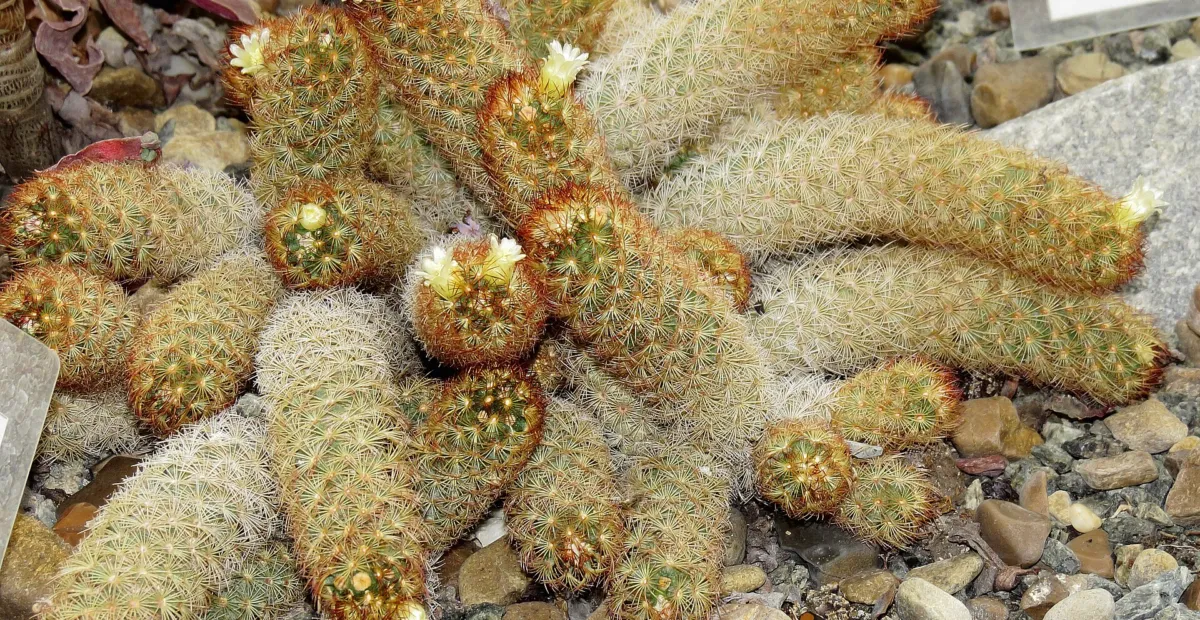
Mammillaria elongata, commonly called Gold Lace Cactus, is a compact Mexican cactus that forms dense clusters of slender, finger-like stems. Its green surfaces are largely concealed by white to golden spines, creating a warm metallic appearance, while small pale yellow to pink-tinged flowers may encircle the stems in spring. Give it strong light, gritty drainage, and a thoroughly dry winter rest. Mammillaria elongata is a small, accepted Mexican cactus that forms dense clusters of elongated cylindrical stems. Fine white, yellow, or golden spines create its characteristic lace-like appearance.
Taxonomic classification
Gold Lace Cactus (Mammillaria elongata) care guide
Light and placement
Provide several hours of direct sun, ideally at a south- or west-facing window, or strong filtered light immediately beside a bright window. Outdoors, use morning-to-afternoon sun with rain protection. Too little light causes elongated, weak growth, fewer flowers, and greener-looking spines; sudden intense sun after shade can scorch the epidermis, so acclimate gradually.
Watering and humidity
Water thoroughly only when the mix is completely dry, letting excess drain away. During spring and summer, the interval may range from roughly 2–4 weeks depending on pot size, heat, and light; judge by dry soil rather than the calendar. In fall and winter, keep the plant nearly dry, giving only enough water to prevent severe shriveling if it is kept cool.
Soil and growing medium
Use a very porous cactus mix with a substantial mineral component such as pumice, perlite, coarse sand, or fine gravel. The pot must drain freely and should not sit in a saucer of water. A near-neutral to slightly alkaline mineral substrate suits its limestone-associated Mexican habitat; avoid dense peat-heavy mixes that remain wet.
Feeding
Feed only during active growth, typically from spring through late summer. Use a balanced or low-nitrogen cactus fertilizer at half strength about monthly, or follow the product label for succulent use. Do not fertilize a recently repotted, stressed, dormant, or dry-rooted plant, and stop feeding before the winter rest.
Growth and habit
This cactus gradually produces offsets from the base and can form a compact mound of many stems. Mature clumps may spread outward or partly trail over the pot rim. Growth is fastest in warm bright months and pauses in cool, dry winter conditions; keeping the crown dry helps preserve the compact habit.
Planting and repotting
Plant outdoors only in a frost-free, sharply drained site or raised rock garden. Set the root crown at the same depth as before and keep the surrounding medium dry until roots establish. For containers, a 4–6 inch pot is suitable for a small specimen; increase pot size gradually rather than overpotting.
Repot in spring or early summer when the mix is dry, using a pot only slightly wider than the root system and one with a drainage hole. Handle the clump with folded newspaper, thick gloves, or cactus tongs because the fine spines can penetrate skin. Allow damaged roots to dry briefly before watering.
Propagation and pruning
Propagation
Separate rooted offsets in spring or early summer, allowing fresh breaks to callus before planting into dry gritty mix. Seed propagation is possible but slower. Keep newly potted offsets dry at first, then begin cautious watering after roots or firm anchorage develop.
Pruning
Pruning is rarely needed. Remove dead, diseased, or badly damaged stems with a sterile tool, taking care not to crush healthy tissue. Allow cuts to callus fully before contact with moist mix. Do not routinely shorten healthy stems; offset removal is better handled as propagation.
Overwintering
Keep indoors or in a frost-free greenhouse in winter. A bright, cool position around 45–55°F is useful, but avoid cold wet soil. Stop routine watering during the cool season and protect the plant from freezing temperatures, prolonged rain, and sharp temperature drops while wet.
Uses
Primarily grown as an ornamental cactus for windowsills, succulent collections, terrariums with excellent ventilation, containers, and frost-free patios. Its clumping form works well in small rock-garden displays. It has no established culinary use; spines make it unsuitable for accessible play areas or pet-traffic zones.
Appearance
The plant consists of numerous slender cylindrical stems divided into small tubercles rather than ribs. Areoles carry dense radiating spines, often white to golden yellow, with some forms showing darker central spines. Stems may be erect, leaning, or partly prostrate, and offsets create a tightly packed, textured mound.
Flowering
Small funnel-shaped flowers appear in a ring near the upper portions of mature stems, most often in spring after a cool, dry winter rest. Flowers are usually pale yellow, sometimes with pink or rosy tones, and are about 0.4 inch across. Strong light and seasonal dormancy improve flowering, but exact timing varies with indoor conditions.
Pollination and visitors
The open, small flowers fit a bee-pollination syndrome, but species-specific visitor records are limited. Treat bee visitation as plausible and characteristic rather than as a well-quantified wildlife value. Flowering indoors may produce little or no visitation unless plants are placed outside in suitable weather.
Mammillaria elongata photos
Click any photo for a larger view. Source, author and license are shown separately.
Diseases and pests
Diseases
The main risks are root and stem rots caused by persistently wet media, especially in cool conditions. Use a porous mix, water only after complete drying, and isolate plants showing soft, dark, or collapsing tissue. Remove affected tissue with a sterile blade and replace contaminated mix; improve airflow and light before resuming watering.
Pests
Watch for mealybugs in areoles and at the stem base, scale, and root mealybugs. Inspect new purchases and offsets before combining them with other plants. Remove small infestations with a targeted cotton swab or appropriate labeled treatment; root pests require unpotting, root cleaning, fresh mix, and careful follow-up.
Related diseases and pests
Only Plant Doctor profiles whose host data indicate this plant may be affected are shown here.
Toxicity and pollen
No species-specific poisonous principle is well documented in the sources reviewed, and Mammillaria is not broadly identified as a toxic cactus. The practical hazard is mechanical: dense fine spines can injure skin, mouths, paws, or eyes. Keep it away from children and pets that investigate plants, and handle with protection.
- Typical season
- Spring, when flowers are open
- Pollination / pollen
- Flower-held, insect-transferred pollen
This is an insect-pollinated cactus whose pollen is released within the flowers rather than dispersed in large airborne clouds. No species-specific allergy profile was identified. People with strong pollen sensitivity should still avoid handling open flowers closely and should respond to personal symptoms normally.
Native habitat
Mammillaria elongata is native to Mexico from Guanajuato to Veracruz, where it occurs in dry shrubland and desert environments. It is associated with rocky, mineral soils and seasonal drought rather than permanently humid ground. Cultivation should mimic rapid drainage, strong light, and a pronounced dry season.
Interesting fact
The species is highly variable in spine color and growth form. Its elongated stems can grow upright or become partly prostrate as dense offsets accumulate. It is native to central Mexico and is associated with dry shrubland and desert habitats. The dense spine covering gives many cultivated forms a golden, lace-like appearance.
Frequently asked questions (FAQ)
The most relevant questions about this plant, with short and direct answers.
🌱Quick care
How do I care for a Gold Lace Cactus (Mammillaria elongata)?⌄
Give it bright direct sun, gritty sharply drained cactus soil, and very little water. Soak the soil thoroughly, then let it dry completely before watering again, and keep it nearly dry during winter.
Is Mammillaria elongata easy to grow indoors?⌄
Yes, Mammillaria elongata is generally easy to grow indoors if it receives strong light and excellent drainage. A bright south- or west-facing window is usually best, with a grow light helpful in darker rooms.
🌤️Environment and placement
How much light does a Gold Lace Cactus need?⌄
A Gold Lace Cactus grows best in bright direct sun for several hours each day. Acclimate it gradually when moving it into stronger sunlight to reduce the risk of sunburn.
Can Mammillaria elongata grow in low light?⌄
Mammillaria elongata may survive in lower light, but it is likely to grow weakly, stretch, and flower poorly. Reduce watering rather than compensating for inadequate light with more moisture.
Can I put my Gold Lace Cactus outside in summer?⌄
Yes, you can move it outdoors during warm, frost-free weather in a sunny, sheltered location. Introduce outdoor sun gradually and bring it inside before temperatures approach freezing.
What temperature is too cold for Mammillaria elongata?⌄
Protect Mammillaria elongata from temperatures below about 32°F because it is frost-tender. It tolerates a cool, dry winter rest better than cold conditions combined with wet soil.
Does a Gold Lace Cactus need humidity?⌄
No, a Gold Lace Cactus does not need added humidity and usually prefers dry air with good circulation. Avoid enclosed, damp locations where moisture remains around the stems or soil.
💧Care and problems
How often should I water Mammillaria elongata?⌄
Water only after the soil has dried completely, then soak it thoroughly and let excess water drain away. The interval may range from about every two to six weeks during active growth, depending on light, temperature, pot size, and soil.
Should I water my Gold Lace Cactus in winter?⌄
Usually keep a Gold Lace Cactus dry during winter dormancy, especially in a cool room. A small drink may be appropriate only if the plant is severely shriveling and conditions are warm enough for the soil to dry quickly.
Why is my Mammillaria elongata turning brown?⌄
Brown tissue may be harmless corking, sun stress, or serious rot depending on whether it is dry and firm or soft and spreading. Soft, dark, wet-looking areas usually indicate rot and require immediate removal of damaged tissue.
Why is my Gold Lace Cactus getting tall or stretched?⌄
Stretching usually means the cactus is not receiving enough light. Move it gradually to a brighter position, but avoid increasing watering while it is light-starved because wet, weak growth is more vulnerable to rot.
Why is my Mammillaria elongata soft at the base?⌄
A soft or collapsing base most often indicates root or stem rot caused by prolonged moisture. Remove the plant from its pot, cut away all rotten tissue, allow healthy tissue to dry and callus, and replant in dry gritty mix.
What pests attack Gold Lace Cactus?⌄
Mealybugs are the main pests reported on Gold Lace Cactus, including pests that may hide among spines or around the roots. Isolate an infested plant and treat it promptly with a method labeled for cacti.
Does Mammillaria elongata need fertilizer?⌄
Fertilizer is optional but can support growth during spring and summer. Use a dilute, low-nitrogen cactus fertilizer only on a well-watered, actively growing plant, and do not fertilize during winter dormancy.
🪴Planting and repotting
What soil is best for a Gold Lace Cactus?⌄
Use a gritty, sharply drained cactus mix with substantial mineral material such as pumice, perlite, or coarse grit. The mix should drain quickly and should not remain wet for days after watering.
What type of pot is best for Mammillaria elongata?⌄
Choose a pot with a drainage hole that is only slightly larger than the root ball. Unglazed terracotta can help the soil dry faster, while shallow or crowded containers should be replaced as the clump expands.
When should I repot my Gold Lace Cactus?⌄
Repot in spring or early in the growing season when the plant has outgrown its container, the soil has broken down, or drainage has declined. Repot into dry mix and wait several days before watering.
How do I repot Mammillaria elongata without getting stuck by the spines?⌄
Handle the plant with folded newspaper, thick gloves, or silicone-tipped tools rather than bare hands. Keep the root ball as intact as practical, use dry soil, and avoid watering immediately after repotting.
Can I plant Mammillaria elongata in the ground?⌄
It can be planted outdoors only in a frost-free climate with very sharp drainage and protection from prolonged rain. In most of the United States, growing it in a container is safer because it must be protected from freezing temperatures.
✂️Propagation and pruning
How do I propagate a Gold Lace Cactus from offsets?⌄
Separate a healthy offset carefully, let any broken or cut surface callus for several days, and place it in dry gritty cactus mix. Begin light watering only after roots have started to form and the cutting is anchored.
Can Mammillaria elongata grow from a cutting?⌄
Yes, a healthy stem segment can root after the cut end has dried and callused. Set the callused cutting on dry, sharply drained mix and keep it bright, warm, and mostly dry until roots develop.
Can I grow Mammillaria elongata from seed?⌄
Yes, Mammillaria elongata can be grown from seed, but seedlings develop much more slowly than plants started from offsets. Use a sterile, well-drained medium and provide warmth, light, and careful moisture control.
Does Gold Lace Cactus need pruning?⌄
Routine pruning is not required because the plant naturally forms a clump of finger-like stems. Remove only dead, diseased, or badly damaged growth with clean tools, allowing cut surfaces to dry before replanting.
⚠️Toxicity and safety
Is Mammillaria elongata poisonous to cats or dogs?⌄
Mammillaria elongata is generally considered to have low chemical toxicity, but its sharp spines are a significant hazard. Keep it away from pets and children who might touch, chew, or knock over the plant.
Can the spines of a Gold Lace Cactus cause injury?⌄
Yes, the dense golden spines can puncture skin and may be difficult to remove. Handle the plant with protective tools or thick gloves, and keep fallen spine fragments away from children and pets.
🌸Flowering and special interest
When does Mammillaria elongata bloom?⌄
Mammillaria elongata typically blooms in spring with small cream, yellowish, or pink flowers forming a ring near the tops of the stems. Mature plants are more likely to flower after a bright growing season and a cool, dry winter rest.
Why is my Gold Lace Cactus not flowering?⌄
Insufficient light, immature age, excess winter watering, or the absence of a cool dry rest can prevent flowering. Give it stronger light during growth and keep it cool and nearly dry in winter without exposing it to frost.
How can I encourage Mammillaria elongata to flower?⌄
Provide bright direct light during the growing season, use a fast-draining mix, and avoid overwatering. A cool, dry winter period often helps initiate spring buds, provided temperatures remain safely above freezing.
What do Gold Lace Cactus flowers look like?⌄
The flowers are small and usually cream, pale yellow, or pinkish, often appearing in a ring around the upper part of each stem. They contrast with the plant’s dense golden spines and compact clumping habit.
Similar plants
 Azure Monkshood (Aconitum carmichaelii) care guideAconitum carmichaelii
 Monkshood (Aconitum ‘Stainless Steel’)Aconitum 'Stainless Steel'
 Monkshood (Aconitum ‘Bressingham Spire’)Aconitum 'Bressingham Spire'
 Golden full moon maple (Acer shirasawanum ‘Aureum’)Acer shirasawanum 'Aureum'
 Globosum (Acer platanoides ‘Globosum’)Acer platanoides 'Globosum'
 Striped maple (Acer pensylvanicum) care guideAcer pensylvanicum