
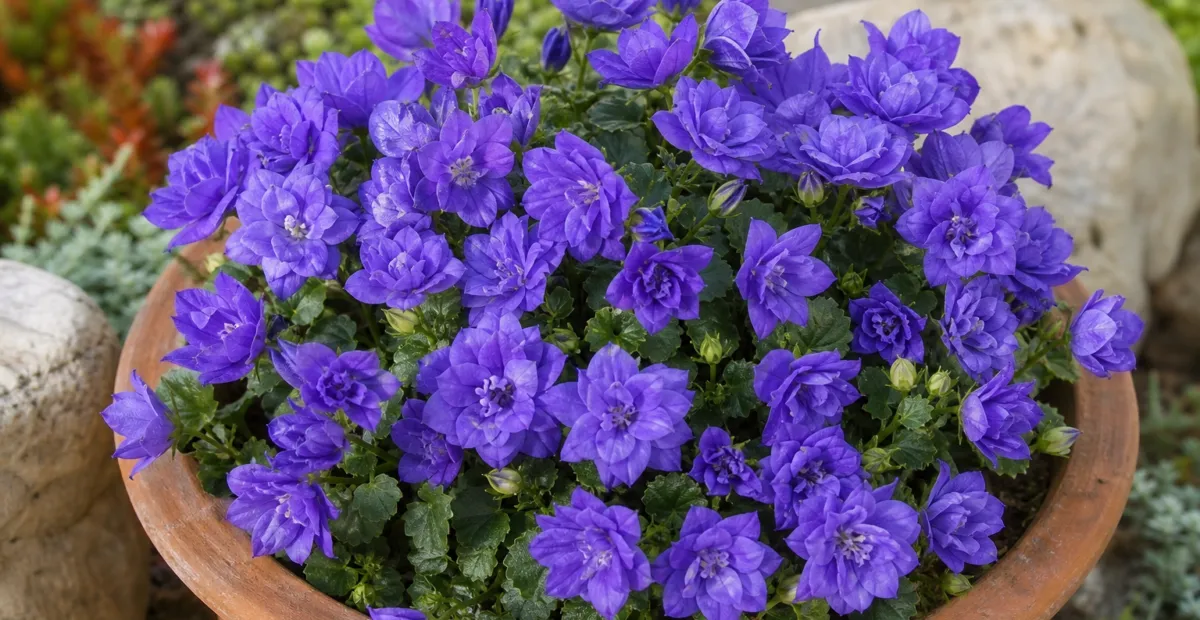
 AI-generated illustration
 Campanula ‘Blue Wonder’ short overview
Campanula 'Blue Wonder' is a compact, double-flowered bellflower cultivar associated with Campanula ×haylodgensis in horticultural production records, although the name has also been used for other Campanula plants. Its rich blue to violet-blue bells rise above small green foliage, creating a colorful display in containers, rock gardens, and sheltered borders. Provide bright light, excellent drainage, and evenly moist soil without waterlogging.
Taxonomic classification
Campanula ‘Blue Wonder’ care guide
Light and placement
Give bright light with morning or late-afternoon sun and shelter from intense reflected heat. In hot-summer regions, partial afternoon shade helps prevent leaf scorch and rapid drying. Too little light produces stretched growth and fewer flowers; excessive hot sun combined with dry soil can cause wilting, bleached foliage, or scorched margins.
Watering and humidity
Water thoroughly when the upper surface begins to dry, allowing excess water to drain freely. Keep the root ball evenly moist during active growth and flowering, but do not leave the pot standing in water. Reduce watering in cool or dormant conditions while preventing complete root-ball desiccation. Humidity is usually not critical outdoors.
Soil and growing medium
Use a fertile but sharply drained mix with plenty of air space around the roots. A loam-based soil amended with grit, coarse sand, or fine gravel is suitable. Keep the root zone evenly moist but never saturated. Neutral to slightly alkaline conditions are generally appropriate; avoid chronically waterlogged or compacted soil.
Feeding
Feed lightly during active growth with a balanced, water-soluble fertilizer at half strength every 3–4 weeks, or top-dress once with mature compost in spring. Avoid heavy nitrogen, which can produce weak foliage and fewer flowers. Do not fertilize drought-stressed, recently divided, or dormant plants.
Growth and habit
This is a compact, clump-forming perennial cultivar with a low, spreading-to-arching presentation. Double flowers can make stems appear heavier and more pendulous than single-flowered forms. Keep the crown open and avoid excessive fertilizer or wet soil, both of which can weaken growth and shorten the display.
Planting and repotting
Plant in spring after severe freezes or in early fall where winter establishment is reliable. Set the crown at soil level rather than burying it. Space plants about 4–6 inches apart for a dense display, allowing extra room where air circulation is poor. Water consistently during establishment, then maintain even moisture while avoiding standing water.
Repot container plants when roots fill the pot or drainage slows, preferably after flowering or in early spring. Move into a pot only slightly larger than the previous one and use a fresh, free-draining mix. Avoid burying the crown deeply, and water lightly until new growth resumes.
Propagation and pruning
Propagation
Use division of established clumps or vegetative cuttings. Division is best carried out during active but non-flowering growth, commonly in spring or early fall. Commercial production records describe vegetative propagation. Seed propagation is not dependable for preserving a named cultivar's double-flowered traits.
Pruning
Remove spent flower stems to improve appearance and potentially encourage additional flowering. Cut back tired growth after the main display or in early spring before fresh shoots emerge. Do not cut into the crown or remove healthy basal foliage unnecessarily.
Overwintering
In Zones 5–6, mulch lightly around—but not over—the crown after the ground cools, and protect containers from repeated freeze-thaw cycles by moving them to a sheltered location. Do not keep the plant warm and wet indoors. In colder or uncertain regions, overwinter it dormant in a cool, bright, protected space.
Uses
Best used as a flowering container plant, window-box subject, edging accent, or sheltered rock-garden perennial. Its compact habit and double blue bells are suited to close viewing. It may be grown outdoors in suitable climates or treated as a seasonal container plant where winter survival is uncertain.
Appearance
Leaves are small, green, ovate to elliptic, and toothed, with basal rosettes and additional leaves along short stems. The plant forms a dense low clump, while the double flowers are fuller than ordinary single bellflowers and may face upward or hang slightly. New growth can show a subtle bronze cast in some descriptions.
Flowering
The cultivar is documented as double-flowered, with five fused corolla lobes forming bell-shaped blooms. Flowers are held upright to pendulous and may be produced abundantly over an extended season. Horticultural records describe mid-season or near-continuous flowering under controlled production; outdoor timing varies with climate and treatment.
Pollination and visitors
No authoritative source located that documents a characteristic pollinator species or reliable visitor assemblage for this exact cultivar. Its open bellflower ancestry suggests possible insect visitation, but that inference is not strong enough to assign pollinator codes or a high attraction rating.
Diseases and pests
Diseases
Watch for crown or root rot in poorly drained soil, especially when plants are kept wet during cool weather. Good drainage, clean containers, adequate spacing, and removal of declining tissue are the main preventive measures. Avoid overhead watering late in the day. No cultivar-specific disease resistance information was found.
Pests
Slugs and snails may damage soft foliage and flowers, particularly in damp, shaded conditions. Check plants at night or after rain, remove hiding places, and use barriers or other proportionate controls where needed. Aphids may occasionally occur on new growth; strong water sprays or labeled insecticidal soap can help when necessary.
Related diseases and pests
Only Plant Doctor profiles whose host data indicate this plant may be affected are shown here.
Toxicity and pollen
No reliable cultivar-specific human or veterinary toxicity assessment was located. Do not treat the plant as edible, and discourage children or pets from chewing ornamental plants. Contact a poison center or veterinarian after a significant ingestion, particularly if symptoms develop.
- Typical season
- Not reliably documented for this cultivar in the United States
- Pollination / pollen
- Insect-associated floral pollen; airborne relevance not established
Campanula flowers release pollen within insect-visited blooms rather than producing large, windborne pollen clouds. However, cultivar-specific airborne-allergy studies were not found, so allergy relevance is recorded as unknown rather than assumed negligible. Sensitive people should avoid rubbing the flowers and wash hands after handling.
Native habitat
The cultivar is a garden selection rather than a wild population with a defined native habitat. Its Campanula background is associated with temperate European perennial plants that generally favor open, rocky or well-drained soils and cool-to-moderate climates. Cultivar performance is strongest where roots remain cool and drainage is reliable.
Interesting fact
The name 'Blue Wonder' is used inconsistently across Campanula horticulture. Canadian variety records compare other cultivars directly with a double-flowered 'Blue Wonder'. Campanula ×haylodgensis is associated with a historic cross involving C. cochlearifolia and C. carpatica.
Frequently asked questions (FAQ)
The most relevant questions about this plant, with short and direct answers.
🌱Quick care
What is Campanula 'Blue Wonder'?⌄
Campanula 'Blue Wonder' is a compact, double-flowered bellflower cultivar grown for its blue to violet-blue blooms. It is commonly sold as a flowering potted plant and may also be grown outdoors as a tender perennial, depending on climate.
How much light does Campanula 'Blue Wonder' need?⌄
Give Campanula 'Blue Wonder' bright light, preferably with morning sun or filtered light. In hot climates, protect it from intense afternoon sun to reduce heat stress and premature fading.
How often should I water Campanula 'Blue Wonder'?⌄
Water when the surface of the potting mix feels slightly dry, keeping the root zone evenly moist. Do not let the pot stand in water because consistently soggy soil can cause root rot.
Is Campanula 'Blue Wonder' an indoor or outdoor plant?⌄
Campanula 'Blue Wonder' can be grown indoors in bright, cool conditions or outdoors in mild weather. After flowering, it often performs better outside if temperatures are suitable and the plant is gradually acclimated.
🌤️Environment and placement
Can Campanula 'Blue Wonder' grow in full sun?⌄
Campanula 'Blue Wonder' can tolerate some full sun in cool climates, but bright partial shade is safer where summers are hot. Avoid harsh afternoon exposure if the leaves wilt, scorch, or the flowers fade quickly.
What temperature is best for Campanula 'Blue Wonder'?⌄
Campanula 'Blue Wonder' generally flowers best in cool to moderate temperatures rather than extreme heat. Keep indoor plants away from heating vents, and provide winter protection outdoors in colder regions.
Can Campanula 'Blue Wonder' survive winter outdoors?⌄
Campanula 'Blue Wonder' is cold-hardy enough for some outdoor settings, but its survival depends on the cultivar's growing conditions, drainage, and local winter temperatures. In colder USDA zones, protect the crown with light mulch and avoid wet winter soil.
What humidity does Campanula 'Blue Wonder' need indoors?⌄
Average household humidity is usually adequate, but Campanula 'Blue Wonder' benefits from moderate humidity and good air circulation. Avoid keeping the foliage constantly wet, especially in poorly ventilated rooms.
💧Care and problems
Why is my Campanula 'Blue Wonder' wilting?⌄
Wilting usually results from dry soil, excessive heat, root damage, or waterlogged roots. Check the soil and drainage first, then move the plant to bright, cooler light if it remains stressed despite adequate moisture.
Why are the leaves of Campanula 'Blue Wonder' turning yellow?⌄
Yellow leaves commonly indicate overwatering, poor drainage, aging foliage, or insufficient light. Allow excess water to drain completely and inspect the roots if the potting mix stays wet for several days.
How do I prevent root rot in Campanula 'Blue Wonder'?⌄
Prevent root rot by using a container with drainage holes and a fertile, well-drained potting mix. Water thoroughly only when needed, and empty any saucer or cachepot after watering.
Should I fertilize Campanula 'Blue Wonder'?⌄
Feed Campanula 'Blue Wonder' lightly during active growth with a balanced or flowering-plant fertilizer. Avoid heavy fertilization because excessive nutrients can produce weak growth and may reduce flowering quality.
What pests affect Campanula 'Blue Wonder'?⌄
Campanula 'Blue Wonder' may be bothered by common soft-bodied pests such as aphids, while outdoor plants can also attract slugs and snails. Inspect new growth regularly and improve air circulation around crowded plants.
🪴Planting and repotting
What soil is best for Campanula 'Blue Wonder'?⌄
Use fertile, well-drained loam for garden planting or a quality potting mix amended with perlite, grit, or coarse sand for containers. The soil should retain some moisture without becoming heavy or waterlogged.
Can Campanula 'Blue Wonder' grow in a container?⌄
Yes, Campanula 'Blue Wonder' is well suited to containers because it remains compact and flowers heavily. Choose a pot with drainage holes and avoid an oversized container that holds excess moisture around the roots.
When should I plant Campanula 'Blue Wonder' outdoors?⌄
Plant Campanula 'Blue Wonder' outdoors after the danger of hard frost has passed and nighttime temperatures are consistently mild. Harden indoor-grown plants gradually over about a week before placing them permanently outside.
How do I repot Campanula 'Blue Wonder'?⌄
Repot Campanula 'Blue Wonder' when roots fill the container or water runs through the pot unusually quickly. Move it into a pot only one size larger, refresh the well-drained mix, and water lightly after repotting.
✂️Propagation and pruning
Can Campanula 'Blue Wonder' be grown from seed?⌄
Campanula 'Blue Wonder' is generally propagated vegetatively because seed may be unavailable or may not reproduce the cultivar reliably. Plants grown from seed can differ from the parent in flower form and color.
How is Campanula 'Blue Wonder' propagated?⌄
Campanula 'Blue Wonder' is primarily propagated from cuttings or by dividing established plants when suitable. Commercial production commonly uses multiple cuttings per pot to create a fuller flowering plant.
Can I divide Campanula 'Blue Wonder'?⌄
You can divide a healthy, established Campanula 'Blue Wonder' when it is actively growing and not in full bloom. Separate rooted portions carefully, replant them at the same depth, and keep the divisions evenly moist while they recover.
Should I cut back Campanula 'Blue Wonder' after flowering?⌄
Yes, remove spent flowers and trim back exhausted flower stems after the main flush. Deadheading improves appearance and may encourage additional blooms, while a more substantial cutback can help refresh an overgrown plant.
⚠️Toxicity and safety
Is Campanula 'Blue Wonder' toxic to cats or dogs?⌄
No reliable cultivar-specific toxicity classification was found for Campanula 'Blue Wonder'. Because plant identification and individual reactions can vary, prevent pets and children from eating it and contact a veterinarian or poison-control service if ingestion causes symptoms.
Is Campanula 'Blue Wonder' safe to touch?⌄
Campanula 'Blue Wonder' is not specifically documented as a skin hazard, but sensitive people can react to plant sap or potting soil. Wear gloves when pruning or repotting if you have sensitive skin, and wash your hands afterward.
🌸Flowering and special interest
When does Campanula 'Blue Wonder' bloom?⌄
Campanula 'Blue Wonder' commonly blooms from late spring through summer, although timing varies with temperature, light, and whether it is grown indoors or outdoors. Flowering plants sold in stores may bloom outside the normal garden season because they were produced under controlled conditions.
How can I make Campanula 'Blue Wonder' bloom longer?⌄
Place it in bright light, keep the soil evenly moist, and remove faded flowers regularly. Cool conditions and light feeding during active growth usually support a longer flowering display than heat, drought, or heavy fertilizer.
Why is my Campanula 'Blue Wonder' not flowering?⌄
Insufficient light, excessive heat, drought stress, overfertilization, or an unsuitable growth stage can prevent Campanula 'Blue Wonder' from flowering. Move it to brighter indirect light or gentle morning sun, maintain even moisture, and avoid high-nitrogen feeding.
Are Campanula 'Blue Wonder' flowers double?⌄
Yes, Campanula 'Blue Wonder' is known for double, bell-shaped blue to violet-blue flowers. The precise color and fullness can vary somewhat with growing conditions and the plant's stage of development.
Similar plants
 Tussock bellflower (Campanula carpatica) care guideCampanula carpatica
 Campanula poscharskyana care guideCampanula poscharskyana
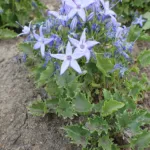 Campanula garganica care guideCampanula garganica
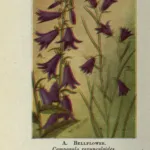 Harebell (Campanula rotundifolia) care guideCampanula rotundifolia
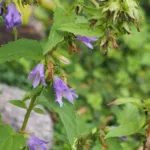 Campanula ‘Trachelium’Campanula 'Trachelium'
 Milky Bellflower (Campanula lactiflora) care guideCampanula lactiflora