
 Source:
 Campanula poscharskyana short overview
Campanula poscharskyana is a low, spreading perennial from the northern Balkans, valued in U.S. gardens for its long display of lavender-blue, star-shaped flowers. It forms a soft mound and sends trailing stems over stone walls, slopes, rock gardens, borders, and container edges. Give it sun or partial shade, fertile but sharply drained soil, and regular moisture, especially during hot, dry weather. Its vigorous runners are easy to trim when they spread too far.
Taxonomic classification
Campanula poscharskyana care guide
Light and placement
Grow in full sun to partial shade. In hot U.S. climates, morning sun with afternoon shade is often the best placement; in cooler regions it can take more sun. Leaning or sparse growth usually indicates insufficient light, while scorched leaves, faded flowers, and rapid wilting suggest excessive heat or reflected afternoon exposure. Provide open air around the foliage.
Watering and humidity
Water deeply when the upper inch of soil begins to dry, then allow excess water to drain. Keep newly planted specimens evenly moist through their first growing season. In summer, increase frequency during heat or drought; reduce watering in cool weather and winter. Avoid frequent shallow sprinkling and saturated crowns. Average outdoor humidity is sufficient.
Soil and growing medium
Use average, fertile soil that drains freely while retaining moderate moisture. Loam, sandy loam, clay amended with organic matter, and many calcareous soils can work if water does not stand around the crown. A broadly tolerant pH range is reported, from acidic through alkaline. Avoid persistently soggy or heavily compacted ground.
Feeding
In fertile garden soil, apply a thin layer of compost in spring rather than relying on heavy feeding. If growth is weak, use a balanced, slow-release fertilizer at the low end of the label rate as growth begins. Do not fertilize drought-stressed, waterlogged, or newly divided plants until they have recovered; excess nitrogen can encourage soft, sprawling growth.
Growth and habit
This perennial forms a low mound and extends prostrate to trailing stems from the crown. It can spread quickly in favorable conditions, especially across wall tops, banks, and open soil. Trim runners after flowering or where they cross paths and neighboring plants. In warm-winter climates, foliage may remain semi-evergreen to evergreen.
Planting and repotting
Plant in spring or early fall, setting the crown at soil level rather than burying it. Space plants about 12–18 inches apart for a connected planting, or allow extra room where a loose cascade is preferred. Water deeply after planting and keep the root zone consistently, not constantly, moist during establishment.
Repot container plants in spring when the root ball is full or growth becomes crowded. Move into a slightly larger pot with a well-drained, peat-free multipurpose mix amended with grit or perlite. Replant at the same depth, water thoroughly, and keep evenly moist while roots re-establish.
Propagation and pruning
Propagation
Sow seed in containers in spring or use division in spring or fall. Division is the most practical method for named garden plants and established clumps. Rooting from spreading crown material is possible in cultivation, but species-level guidance is less consistently documented than seed and division.
Pruning
Cut back after the main flowering period to restore a compact outline and reduce unwanted spread. Remove spent flowering stems and any damaged foliage. A light trim can encourage fresh growth and sometimes a later flush, but avoid severe cutting during drought or immediately before hard winter weather.
Overwintering
Leave plants outdoors in Zones 3–8 when planted in well-drained soil. In colder or exposed sites, a light winter mulch can protect the crown after the ground begins to freeze; remove excess mulch in spring. Container plants are more vulnerable to root freezing, so place pots in a sheltered spot or sink them into the ground for winter insulation.
Uses
Use as a flowering ground cover, rock-garden plant, wall or slope cascade, border edging, and container spiller. It is also listed in pollinator-oriented plant selections. Its rapid spread can be useful for covering gaps but may require trimming in small beds. No culinary or medicinal use is recommended from the evidence reviewed.
Appearance
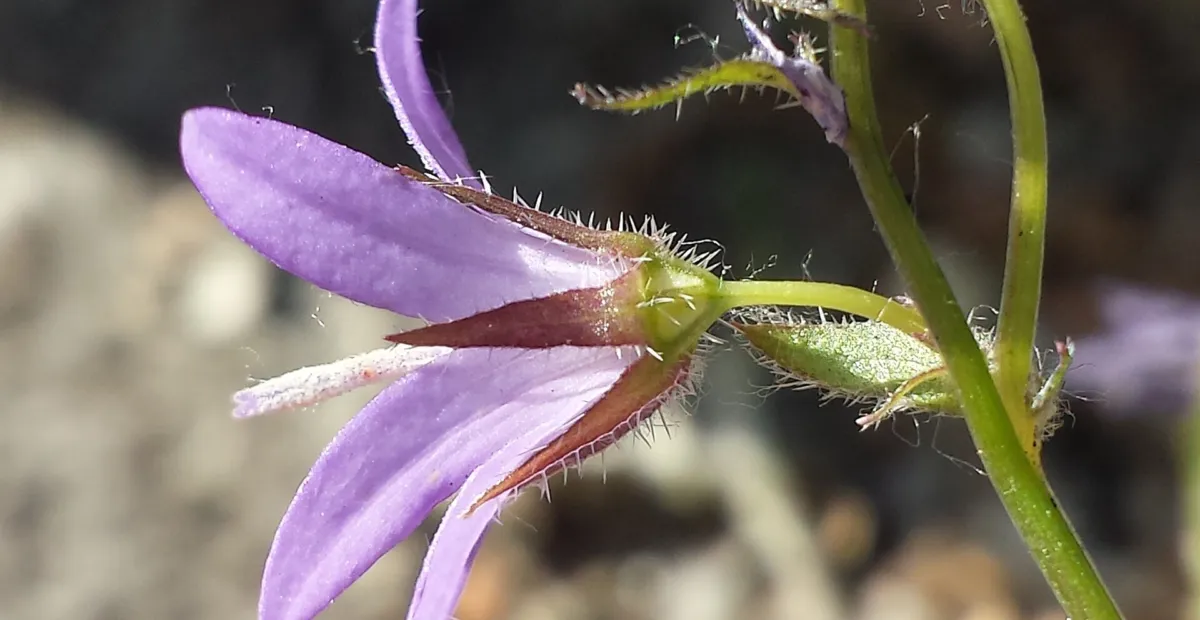
The plant has rounded to oval, sometimes slightly heart-shaped medium-green leaves on a low mound. Slender stems radiate outward and trail over stone, soil, or container rims. The most distinctive feature is the succession of light violet-blue flowers whose broad corolla opens into five pointed, star-like lobes.
Flowering
Flowers are borne in loose sprays along spreading stems. The corolla is bell-like at the base but opens into a distinctive five-lobed, star-shaped face. In U.S. gardens, the main display is usually late spring into summer; flowering may continue or repeat after trimming in favorable conditions.
Pollination and visitors
The open lavender-blue flowers are suitable for pollinator-friendly plantings and are listed in horticultural pollinator resources. Reliable species-specific records identifying one pollinator species were not located, so visitor groups are reported conservatively as bees, bumblebees, and hoverflies.
Campanula poscharskyana photos
Click any photo for a larger view. Source, author and license are shown separately.
Diseases and pests
Diseases
Generally trouble-free, but powdery mildew may appear where foliage stays crowded, shaded, or poorly ventilated. Improve spacing and airflow, water at the soil line, remove badly affected foliage, and avoid excessive nitrogen. Persistent crown or root problems usually indicate poor drainage.
Pests
Slugs and snails may chew young foliage or flowers, particularly in cool, damp gardens. Reduce hiding places, keep surrounding areas free of dense debris, hand-pick where practical, and protect young plants with barriers. Avoid routine broad-spectrum insecticides because they can harm visiting pollinators.
Related diseases and pests
Only Plant Doctor profiles whose host data indicate this plant may be affected are shown here.
Toxicity and pollen
No authoritative source located in this review documented significant toxicity for Campanula poscharskyana in humans or pets. That absence is not proof of edibility or guaranteed safety. Do not consume it, and seek medical or veterinary advice after substantial ingestion or any adverse reaction.
- Typical season
- Late spring through summer in the United States
- Pollination / pollen
- Insect-dispersed pollen; not typically wind-borne in large quantities
This is an insect-pollinated flowering perennial, so its pollen is generally less likely to become broadly airborne than pollen from wind-pollinated plants. It should not be described as allergy-proof: direct contact with flowers or handling plant material may still bother sensitive individuals. Species-specific U.S. aerobiology data were not located.
Native habitat
Native to southeastern Europe, especially the northern Balkan region from Croatia toward Montenegro. It is associated with temperate conditions and is cultivated in sunny to partly shaded, free-draining situations. In gardens it performs particularly well in rocky, gravelly, calcareous, or wall-like niches where stems can cascade.
Interesting fact
The species epithet honors Gustav Adolf Poscharsky, a German head gardener. Its stems can spread from the root crown and trail over walls. The star-like flower lobes help distinguish it from bellflowers with more closed, cup-shaped blooms. Kew records its native range from Croatia to Montenegro.
Frequently asked questions (FAQ)
The most relevant questions about this plant, with short and direct answers.
🌱Quick care
Is Campanula poscharskyana easy to grow?⌄
Yes, Campanula poscharskyana is an easy-care perennial when planted in well-drained soil with moderate moisture. It tolerates a range of light conditions and is hardy in cold climates, although exact performance depends on the cultivar and site.
How much sun does Campanula poscharskyana need?⌄
Campanula poscharskyana grows well in full sun to partial shade. In hot regions, afternoon shade can help reduce stress and keep the foliage from drying too quickly.
How often should I water Campanula poscharskyana?⌄
Water Campanula poscharskyana when the soil begins to dry, keeping moisture moderate but never allowing the roots to sit in water. Established plants generally need less supplemental water than newly planted ones.
Is Campanula poscharskyana perennial?⌄
Yes, Campanula poscharskyana is a hardy perennial that returns for several growing seasons. Its foliage may remain partly evergreen in mild U.S. climates but can die back or look worn in colder areas.
🌤️Environment and placement
What USDA hardiness zones can grow Campanula poscharskyana?⌄
Campanula poscharskyana is commonly grown across approximately USDA Zones 3 through 9, though hardiness can vary by cultivar and winter conditions. Good drainage is especially important where winters are cold and wet.
Where should I plant Campanula poscharskyana?⌄
Plant Campanula poscharskyana in rock gardens, along paths, on slopes, over walls, at the front of borders, or in containers. Its trailing habit makes it useful for covering small spaces and softening edges.
Can Campanula poscharskyana grow in clay soil?⌄
Campanula poscharskyana can grow in clay soil if it is amended to improve drainage. Mix in organic matter and, where appropriate, coarse material to reduce waterlogging rather than planting it in dense, persistently wet clay.
Does Campanula poscharskyana prefer acidic or alkaline soil?⌄
Campanula poscharskyana tolerates neutral to alkaline and calcareous soils, provided they drain well. It is less reliable in acidic, poorly drained conditions, so adjust soil only after testing it.
Can Campanula poscharskyana grow between paving stones or in a wall?⌄
Yes, Campanula poscharskyana can grow in cracks, crevices, and wall pockets when those spaces contain a little well-drained soil. Avoid completely sealed cracks or locations where water collects.
Can Campanula poscharskyana grow in a container?⌄
Yes, Campanula poscharskyana grows well in containers with drainage holes and a loose, well-draining potting mix. Choose a container large enough for its spreading habit and water when the upper layer of mix starts to dry.
💧Care and problems
Why is my Campanula poscharskyana not flowering?⌄
Poor flowering is usually caused by insufficient light, excessive fertilizer, young growth, drought stress, or wet roots. Move the plant toward brighter light if appropriate, avoid high-nitrogen feeding, and maintain even but well-drained moisture.
Why are the leaves of Campanula poscharskyana turning yellow?⌄
Yellow leaves often indicate overwatering, poor drainage, aging foliage, or root stress. Check that the container or garden soil drains freely and reduce watering if the soil remains wet for long periods.
Does Campanula poscharskyana spread aggressively?⌄
Campanula poscharskyana can spread vigorously by trailing stems and may outgrow small rock-garden plants. Control it by edging the planting, removing unwanted runners, and dividing or relocating crowded clumps.
What pests or diseases affect Campanula poscharskyana?⌄
Campanula poscharskyana generally has few serious pest or disease problems when grown in suitable conditions. Wet, crowded sites can still encourage root problems and fungal damage, so provide drainage and adequate air circulation.
Should I fertilize Campanula poscharskyana?⌄
Usually, Campanula poscharskyana needs little fertilizer if the soil is reasonably fertile. A light application of balanced perennial fertilizer in spring is sufficient; excessive nitrogen can produce foliage at the expense of flowers.
🪴Planting and repotting
When is the best time to plant Campanula poscharskyana?⌄
The best planting times are spring or early fall, when temperatures are moderate and roots can establish before severe weather. In cold regions, spring planting gives the plant more time to settle before winter.
How far apart should I plant Campanula poscharskyana?⌄
Space Campanula poscharskyana about 12 to 24 inches apart, depending on the desired coverage and cultivar. Wider spacing improves air circulation, while closer spacing creates a faster groundcover effect.
How do I plant Campanula poscharskyana in the ground?⌄
Plant Campanula poscharskyana at the same depth as it was growing in its nursery container, then water thoroughly. Use well-drained soil and leave enough room for the plant to trail and spread.
How do I overwinter Campanula poscharskyana?⌄
In suitable USDA Zones 3 through 9, Campanula poscharskyana can usually overwinter outdoors without special protection. In containers or exposed cold sites, protect the roots from repeated freezing and thawing and prevent winter wet.
✂️Propagation and pruning
How can I propagate Campanula poscharskyana?⌄
Propagate Campanula poscharskyana by dividing established clumps or by rooting sections of spreading stems. Division is the most predictable method for preserving the characteristics of a named cultivar.
Can Campanula poscharskyana be grown from seed?⌄
Yes, Campanula poscharskyana can be grown from seed, although seedlings may not reproduce a named cultivar exactly. Sow seed in containers and provide the cool, moist conditions often needed for Campanula germination.
When should I divide Campanula poscharskyana?⌄
Divide Campanula poscharskyana in spring or early fall when the weather is mild and the soil is workable. Division is particularly useful when the plant has become crowded or is spreading into unwanted areas.
Should I cut back Campanula poscharskyana after flowering?⌄
Yes, cut back Campanula poscharskyana after its main flowering period to maintain a compact shape and encourage fresh growth. Removing faded flowers can also help extend the display and prevent unwanted self-seeding.
How hard can I prune Campanula poscharskyana?⌄
Campanula poscharskyana tolerates a fairly hard cutback after flowering and usually regrows quickly. Remove damaged or tired foliage in early spring, but avoid pruning into frozen or waterlogged soil.
⚠️Toxicity and safety
Is Campanula poscharskyana toxic to dogs or cats?⌄
No significant toxicity is documented for Campanula poscharskyana, but definitive pet-safety data are limited. Prevent pets from eating large quantities of any ornamental plant and contact a veterinarian if symptoms occur.
Is Campanula poscharskyana edible?⌄
Campanula poscharskyana should not be treated as an edible plant because edibility has not been confirmed for this exact species in ordinary garden use. Do not consume it unless identification and food-safety guidance come from a qualified source.
🌸Flowering and special interest
When does Campanula poscharskyana bloom?⌄
Campanula poscharskyana usually blooms from late spring into summer, often beginning in May or June in much of the United States. The flowering period varies with climate, light, cultivar, and weather.
What color flowers does Campanula poscharskyana have?⌄
Campanula poscharskyana typically produces lavender-blue to pale violet-blue, star-shaped flowers. Individual cultivars may differ in flower color, size, and the length of their blooming period.
How do I get Campanula poscharskyana to bloom a second time?⌄
Remove faded flowers and cut the plant back after the first major flush of bloom. With adequate light, water, and growing time, Campanula poscharskyana may produce a second flush of flowers.
Similar plants
 Giant Bellflower (Campanula latifolia) care guideCampanula latifolia
 Rainer’s Bellflower (Campanula raineri) care guideCampanula raineri
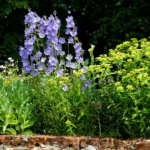 Peach-leaved Bellflower (Campanula persicifolia) care guideCampanula persicifolia
 Spotted Bellflower (Campanula punctata) care guideCampanula punctata
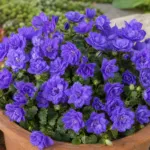 Campanula ‘Blue Wonder’Campanula 'Blue Wonder'
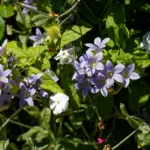 Milky Bellflower (Campanula lactiflora) care guideCampanula lactiflora