
 Source:
 Rainer’s Bellflower (Campanula raineri) short overview
Rainer's Bellflower is a rare alpine perennial native to limestone cliffs and rocky crevices in the northern Italian Prealps. It forms a tiny tuft of gray-green foliage, then sends up short stems carrying unusually large, upright lavender-blue bells in summer. In cultivation it is best suited to a trough, raised alpine bed, or carefully drained rock garden, with protection from prolonged winter moisture rather than from cold itself.
Taxonomic classification
Rainer’s Bellflower (Campanula raineri) care guide
Light and placement
Give full sun, ideally in a south- or east-facing trough, raised bed, or open rock crevice. Bright light keeps stems compact and encourages flowering. Thin, weak growth or sparse blooms may indicate insufficient light; scorched foliage in hot lowland sites suggests the need for afternoon protection, better airflow, or a cooler alpine position rather than deep shade.
Watering and humidity
Water deeply when the upper medium begins to dry, then let excess water drain completely. Keep the root zone lightly and evenly moist during active growth, but reduce watering during cool or dormant periods. The key requirement is not constant wetness but rapid drainage, especially in winter. Avoid leaving pots standing in saucers of water.
Soil and growing medium
Use a gritty, sharply drained alpine substrate with abundant mineral material such as coarse sand, grit, or fine limestone gravel. The species is associated with calcareous rock habitats and tolerates neutral to alkaline conditions; avoid dense, water-retentive soil. A narrow crevice or raised trough helps keep the crown ventilated and prevents winter saturation.
Feeding
Feed sparingly. In spring, top-dress with a thin layer of mature compost or apply a dilute, balanced fertilizer once during active growth. Avoid rich nitrogen feeding, which can produce soft foliage and reduce the compact alpine habit. Do not fertilize drought-stressed, newly divided, or dormant plants.
Growth and habit
This is a compact, slow-forming alpine perennial that develops a tufted or mat-like crown rather than a tall border clump. Growth is naturally restrained, but plants can decline if crowded by vigorous neighbors or kept wet around the crown. Gravel mulching, careful watering, and postflowering trimming help preserve the open, neat habit.
Planting and repotting
Plant in spring or early fall when temperatures are moderate. Set the crown at soil level rather than burying it, and surround the plant with gravel to keep foliage and stems off wet soil. Allow roughly 4–8 inches between plants or position one specimen in a small trough pocket. Water thoroughly after planting, then allow excess moisture to drain away.
Repot container-grown plants only when the root system has filled the pot or the medium has degraded. Move the plant during early spring, disturbing the compact root system as little as possible, and use fresh gritty alpine compost. Re-establish it at the same depth and keep the medium only lightly moist until new growth resumes.
Propagation and pruning
Propagation
Propagate by basal stem cuttings in late spring, inserting them into gritty compost. Seed propagation is possible but may be slow and variable for a specialized alpine. Division can be attempted on established clumps in spring, but minimize root disturbance and replant divisions promptly into gritty, well-drained medium.
Pruning
After flowering, remove spent stems or cut the plant back lightly to maintain a compact appearance and reduce untidy seed stalks. Avoid cutting into the crown or removing healthy basal foliage too early, because the plant needs that growth to rebuild reserves before winter.
Overwintering
The plant is cold-hardy when kept in sharply drained soil, but winter wet is a major risk. In regions with persistent rain, place containers under a transparent alpine-house roof or rain shadow while maintaining ventilation and bright light. Do not bring it into a warm room; cold, dormant conditions are preferable.
Uses
Best used as a specimen for alpine troughs, raised rock gardens, limestone crevices, gravel gardens, and specialist collections. Its large blue bells provide ornamental contrast above a very compact tuft. It is not documented here as a culinary or medicinal plant.
Appearance
The plant forms a low tuft of gray-green, ovate leaves that may appear slightly woolly or softly pubescent. Short, erect, leafy stems rise from the crown and carry conspicuously large, upright lavender-blue bells. The combination of tiny stature, ash-toned foliage, and oversized flowers is distinctive among alpine bellflowers.
Flowering
The species produces one to several short, erect flowering stems, commonly with one to three large, broadly funnel-shaped bells. Flowers are typically held upright above the low foliage and are most prominent in midsummer. Campanula flowers use secondary pollen presentation and generally promote outcrossing through a male phase that precedes stigma receptivity.
Pollination and visitors
Campanula raineri has an insect-pollinated floral syndrome. Research on the species and genus reports bees, including honey bees and other apids, together with hoverflies and other flies as likely or documented visitors. The flower's secondary pollen presentation and staggered male and female phases can encourage cross-pollination.
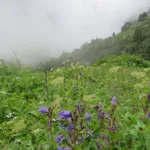
Campanula raineri photos
Click any photo for a larger view. Source, author and license are shown separately.
Diseases and pests
Diseases
Powdery mildew can occur where air movement is poor or foliage stays damp. Improve spacing, avoid overhead watering, and remove badly affected leaves. Good drainage and an open alpine setting are the main preventive measures; discard severely diseased plant material rather than composting it.
Pests
Slugs and snails may damage the low foliage; aphids can colonize young growth, and glasshouse red spider mite may occur under hot, dry protected conditions. Hand-pick mollusks, reduce hiding places, and use targeted controls only when damage is persistent.
Related diseases and pests
Only Plant Doctor profiles whose host data indicate this plant may be affected are shown here.

Toxicity and pollen
No species-specific human or pet poisoning evidence was located in the authoritative sources reviewed. That absence is not proof of complete safety: ornamental plants may still cause stomach upset if eaten, and sap or plant material can irritate sensitive individuals. Do not use this species as food or medicine without authoritative identification and guidance.
- Typical season
- July–August in its outdoor flowering season
- Pollination / pollen
- Insect-dispersed floral pollen
The species is insect-pollinated, so its pollen is not generally dispersed in large airborne clouds like wind-pollinated trees or grasses. However, no species-specific clinical allergy assessment was located, and close handling of flowering plants can still expose sensitive people to pollen. People with strong pollen sensitivity should use ordinary precautions during bloom.
Native habitat
Native populations occupy a restricted area of the northern Italian Prealps, especially calcareous cliffs and rock crevices at roughly 3,300–7,200 feet elevation. It is a specialized chasmophyte adapted to exposed mountain conditions, mineral soils, rapid drainage, seasonal cold, and limited root space.
Interesting fact
This species is a narrow-range alpine chasmophyte of the Italian calcareous Prealps. Its flowers are disproportionately large compared with the plant, reaching roughly 3–4 inches across. The species is also used in reproductive-ecology research because elevation influences its flowering and pollination biology.
Frequently asked questions (FAQ)
The most relevant questions about this plant, with short and direct answers.
🌱Quick care
What is Campanula raineri?⌄
Campanula raineri, commonly called Rainer's Bellflower, is a low-growing alpine perennial from the Swiss and Italian Alps. It forms a compact tuft with gray-green foliage and upright, pale lavender-blue, funnel-shaped flowers.
How tall does Rainer's Bellflower get?⌄
Rainer's Bellflower usually grows about 2 to 4 inches tall, with flowering stems reaching roughly 2 to 6 inches. Its spread is generally modest, although creeping rhizomes can gradually extend the clump.
Is Campanula raineri perennial?⌄
Yes, Campanula raineri is a cold-hardy herbaceous perennial. Its foliage may remain partly evergreen in mild conditions, while growth can retreat during unfavorable winter or summer periods.
What USDA hardiness zone is Campanula raineri?⌄
Campanula raineri is generally considered suitable for cold-climate alpine cultivation, approximately USDA Zones 5 through 8 when drainage is excellent. Local success depends heavily on winter moisture, summer heat, and site protection.
🌤️Environment and placement
Does Campanula raineri need full sun?⌄
Yes, Campanula raineri grows best in full sun, especially where summers are cool. In hot regions, light afternoon shade can reduce heat stress, but the plant still needs bright conditions and strong air circulation.
Where should I plant Rainer's Bellflower?⌄
Plant Rainer's Bellflower in a rock garden, tufa bed, limestone crevice, alpine trough, or raised gravel bed. Choose a site where water drains rapidly and the crown is protected from persistent winter wet.
Can Campanula raineri grow in a container?⌄
Yes, Campanula raineri is well suited to an alpine trough or shallow container with generous drainage holes. Use a gritty mineral mix and avoid placing the pot where it stays saturated after rain or watering.
What soil does Campanula raineri need?⌄
Campanula raineri needs gritty, rocky, sharply drained soil that is neutral to alkaline, with a preference for limestone-based conditions. Heavy clay or rich moisture-retentive soil can cause crown and root rot.
Does Campanula raineri prefer acidic or alkaline soil?⌄
Campanula raineri tolerates neutral soil but generally performs best in alkaline, limestone-rich conditions. If your soil is acidic, a mineral planting mix or limestone-based rock garden pocket is safer than heavily amending ordinary garden soil.
How much water does Rainer's Bellflower need?⌄
Water Rainer's Bellflower moderately, allowing the growing medium to drain quickly between waterings. Keep it from becoming bone-dry during active growth, but reduce watering during cool, wet weather and winter dormancy.
Can Campanula raineri tolerate winter frost?⌄
Yes, Campanula raineri tolerates substantial frost when its roots remain well drained. The main winter risk is prolonged cold moisture around the crown, so use a raised or protected alpine planting rather than poorly drained ground.
💧Care and problems
Why is my Campanula raineri rotting?⌄
The most likely cause is excess moisture around the crown or roots, especially in heavy soil or during winter. Move it to a gritty, rapidly draining mix, keep the crown slightly elevated, and reduce watering during wet conditions.
How often should I fertilize Campanula raineri?⌄
Fertilize sparingly, because overly rich soil can produce foliage at the expense of flowers and may weaken this alpine plant. A light, dilute feeding during spring growth is usually sufficient if the planting medium is poor but well structured.
What pests attack Rainer's Bellflower?⌄
Rainer's Bellflower may be affected by slugs, snails, aphids, and, under protected conditions, spider mites. Inspect new growth regularly and improve airflow and drainage to reduce pest and disease pressure.
Does Campanula raineri get powdery mildew?⌄
Yes, powdery mildew is a possible problem, particularly when airflow is poor and foliage stays humid. Grow the plant in an open sunny position, avoid overhead watering, and remove badly affected leaves.
Why is Campanula raineri not flowering?⌄
Insufficient light, excessive fertility, heat stress, or wet roots can reduce flowering. Give it full sun or bright light, lean gritty soil, moderate water, and excellent drainage; mature plants may also need several seasons to establish.
🪴Planting and repotting
When is the best time to plant Campanula raineri?⌄
Plant Campanula raineri in spring or early fall, when temperatures are moderate and roots can establish without summer heat or frozen soil. In wet-winter areas, spring planting is often safer because it gives the crown time to settle before prolonged rain.
How do I plant Campanula raineri in a rock garden?⌄
Set the plant in a narrow pocket of gritty, sharply drained soil with the crown at or slightly above the surrounding surface. Surrounding the roots with small stones or limestone gravel helps prevent water from pooling at the crown.
How do I repot Campanula raineri?⌄
Repot Campanula raineri when it is actively growing, using a shallow container and a fresh gritty mineral mix. Handle the roots gently, keep the crown from being buried, and water lightly until the plant reestablishes.
Can Campanula raineri grow in ordinary garden soil?⌄
It may survive in ordinary soil only if that soil is naturally gritty and drains very quickly. In most gardens, a raised rockery, crevice planting, or amended mineral pocket is more reliable than an unmodified border.
✂️Propagation and pruning
How do you propagate Campanula raineri?⌄
Campanula raineri can be propagated from basal stem cuttings, seed, or carefully separated rooted pieces. Basal cuttings are a practical method for preserving a desirable plant, while seed may produce variable offspring.
Can Campanula raineri be grown from seed?⌄
Yes, Campanula raineri can be grown from seed, but the seed is very fine and should be sown thinly on the surface of a gritty mix rather than buried deeply. Keep the medium evenly moist but never waterlogged while seedlings develop.
When should I take Campanula raineri cuttings?⌄
Take basal stem cuttings in late spring, using short, healthy nonflowering shoots from the plant’s base. Insert them into a clean gritty rooting medium and keep them lightly moist with good ventilation.
Does Campanula raineri spread aggressively?⌄
No, Campanula raineri is generally restrained rather than invasive, although it can spread slowly by slender rhizomes or stolons. It may remain small and easy to lose among more vigorous alpine plants.
Should I divide Rainer's Bellflower?⌄
You can separate well-rooted marginal pieces, but division should be done carefully because this is a small alpine plant. Propagating from rooted runners or basal cuttings is often less disruptive than splitting the central crown.
Should Campanula raineri be pruned after flowering?⌄
Yes, trim back spent flowering stems after flowering to keep the plant compact and tidy. Avoid cutting into the crown or removing healthy basal foliage unless it is damaged or diseased.
⚠️Toxicity and safety
Is Campanula raineri toxic to dogs or cats?⌄
There is no documented species-specific toxicity information indicating that Campanula raineri is poisonous to dogs or cats. Even so, prevent pets from eating garden plants because individual reactions and plant misidentification are possible.
Is Rainer's Bellflower safe for people to eat?⌄
Rainer's Bellflower should not be treated as an edible plant because species-specific food-safety information is limited. Keep children and pets from ingesting it and seek medical advice if a significant amount is consumed.
🌸Flowering and special interest
When does Campanula raineri bloom?⌄
Campanula raineri usually blooms in late spring or summer, depending on climate and growing conditions. The erect stems commonly carry one to three broad, pale lavender-blue flowers.
What do Campanula raineri flowers look like?⌄
The flowers are broadly funnel-shaped, pale lavender-blue to mid-blue, and typically about 1 to 1.5 inches wide. They rise only a few inches above the compact gray-green foliage, giving the plant a distinctly alpine appearance.
Does Campanula raineri attract pollinators?⌄
Its bell-shaped flowers can provide resources for visiting insect pollinators, although detailed pollinator performance varies by location and elevation. Planting it in an open, sunny alpine setting supports better flowering and access for insects.
Is Campanula raineri rare?⌄
Campanula raineri has a limited natural range in the Alps of northern Italy and Switzerland and is regarded as a specialized alpine species. Its restricted habitat helps explain why it is usually grown by rock-garden and alpine-plant enthusiasts.
Similar plants
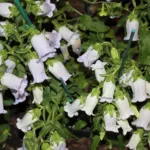 Canterbury bells (Campanula ‘Medium’)Campanula 'Medium'
 Milky Bellflower (Campanula lactiflora) care guideCampanula lactiflora
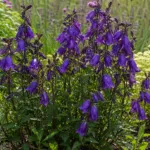 Campanula ‘Purple Sensation’Campanula 'Purple Sensation'
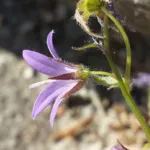 Campanula poscharskyana care guideCampanula poscharskyana
 Spotted Bellflower (Campanula punctata) care guideCampanula punctata
 Giant Bellflower (Campanula latifolia) care guideCampanula latifolia