
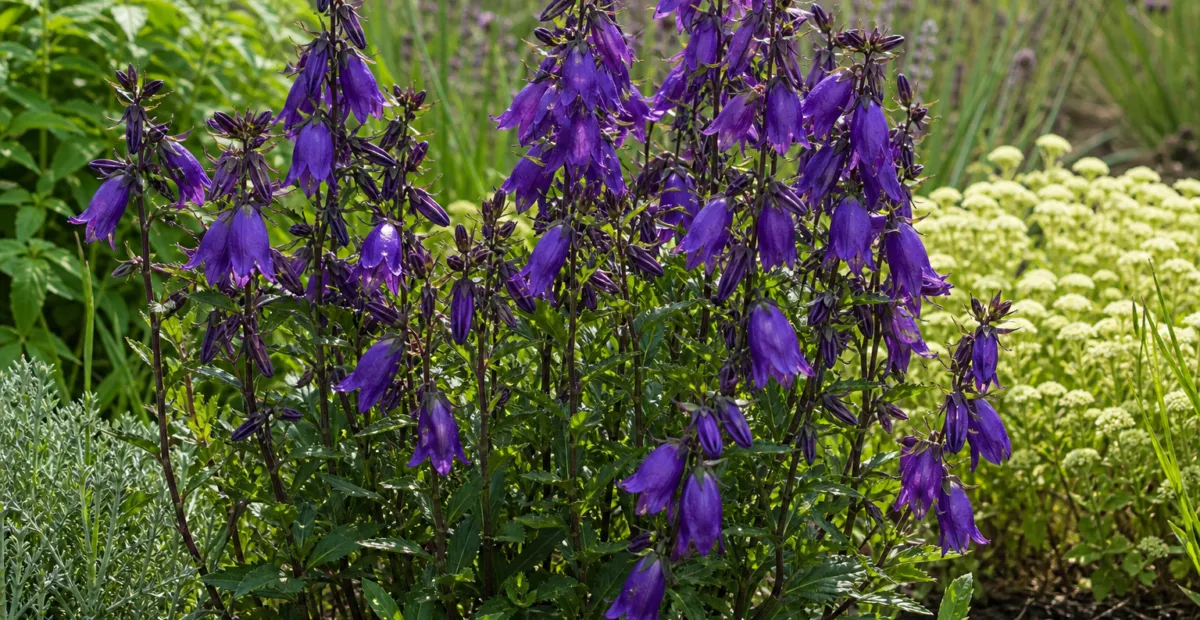
 AI-generated illustration
Campanula ‘Purple Sensation’ short overview
Campanula 'Purple Sensation' is a distinctive hybrid bellflower prized for its nearly black-purple buds, deep violet pendant bells, purple stems, and dark green foliage. This upright, clump-forming herbaceous perennial flowers from early summer into late summer in favorable climates. Give it full sun to partial shade, evenly moist but well-drained soil, and enough room for a broadening clump. It is notably cold hardy and useful in borders, cottage gardens, containers, and wildlife plantings.
Taxonomic classification
Campanula ‘Purple Sensation’ care guide
Light and placement
Grow in full sun for the strongest flowering, or partial shade where summers are hot. An east-, south-, or west-facing border can work if soil moisture is reliable; light afternoon shade is helpful in intense heat. Too little light produces fewer, weaker stems and less bloom, while excessive heat combined with drought can scorch foliage and shorten flowering.
Watering and humidity
Water deeply when the upper inch of soil begins to dry, rather than giving frequent shallow sprinkles. Keep moisture steady during active growth and flowering, especially in containers and hot climates. Reduce watering in fall and winter, but do not allow container roots to remain saturated. Average humidity is adequate; good airflow is more important than misting.
Soil and growing medium
Use fertile, moisture-retentive but well-drained soil with a loamy or sandy structure. The cultivar tolerates neutral to mildly alkaline conditions and can grow in chalky or calcareous ground. Avoid persistently waterlogged soil, especially in winter, because saturated roots encourage crown and root problems.
Feeding
Apply a balanced, slow-release perennial fertilizer or a thin layer of compost in spring as new growth begins. Avoid heavy nitrogen feeding, which can produce soft foliage and reduce flowering. Do not fertilize drought-stressed, newly divided, or dormant plants until they are actively growing.
Growth and habit
Plants form a compact, upright clump with flowering stems rising from basal foliage. The cultivar is shorter than some related tall bellflowers but can broaden with age. Regular deadheading improves appearance and may extend the display; division helps refresh congested clumps.
Planting and repotting
Plant nursery-grown divisions or rooted cuttings in spring or early fall. Set the crown at the same depth as in its container. Space plants about 18–22 inches apart to allow the clump to broaden and air to circulate. Water deeply after planting and maintain consistent moisture during the first growing season.
Repot container plants when roots fill the pot, preferably in spring. Move the clump into fresh, well-drained potting mix and choose a container with drainage holes. Handle the crown gently and water thoroughly after transplanting, then keep the mix lightly and evenly moist while roots re-establish.
Propagation and pruning
Propagation
Propagate by basal or stem cuttings in spring, or divide established clumps in spring or fall. Cuttings and tissue culture have been reported to reproduce the cultivar true to type. Seed is not recommended for maintaining cultivar uniformity because the parentage is hybrid and seedlings may not come true.
Pruning
Cut back spent flowering stems after bloom to tidy the plant and reduce unwanted reseeding. Remove damaged foliage as needed. In late fall or early spring, clear away dead top growth after it has browned, taking care not to injure the crown.
Overwintering
Leave the crown in the ground outdoors in USDA Zones 3–9. After frost blackens the stems, remove dead growth in late fall or early spring. In very cold or exposed locations, apply a light winter mulch after the ground freezes, keeping it away from the crown. Container plants need insulation because roots experience colder temperatures than plants in the ground.
Uses
Use this cultivar for mixed borders, cottage gardens, wildlife-friendly plantings, gravel borders, and large containers. Its long purple bells also have value in cut-flower arrangements. It is ornamental rather than a documented culinary or medicinal crop; do not promote ingestion.
Appearance
The plant is identified by dark green, lance-shaped leaves, purple to reddish stems, very dark flower buds, and long pendant bells in deep purple. Flowering stems rise from basal foliage in a narrow upright arrangement, while the mature plant forms a dense, bushy-looking clump.
Flowering
The cultivar produces abundant, long, pendant bell-shaped flowers on upright flowering stems. Buds are exceptionally dark, becoming deep purple as they open. Bloom begins in late spring or early summer and can continue into late summer, with the exact schedule varying by climate and growing conditions.
Pollination and visitors
Campanula flowers are documented as valuable to bees and other flower-visiting insects. General Campanula evidence supports bee, bumblebee, butterfly, and hoverfly visits, but a cultivar-specific primary pollinator species was not established. The pendant bells provide accessible floral resources during the summer display.
Diseases and pests
Diseases
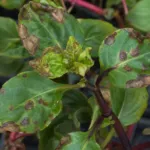
Rust diseases may occur, especially where foliage stays damp and air circulation is poor. Remove and discard badly affected leaves, water at the soil line, thin crowded growth, and clean up diseased debris. Avoid unnecessary overhead irrigation and do not compost infected foliage.
Pests
Slugs and snails may chew young foliage and flowers, particularly in damp or heavily mulched sites. Reduce hiding places, improve drainage and airflow, inspect plants regularly, and use proportionate control methods appropriate for the garden and pets.
Related diseases and pests
Only Plant Doctor profiles whose host data indicate this plant may be affected are shown here.
Toxicity and pollen
No cultivar-specific poisoning evidence was located. Campanula is not generally listed among major toxic garden plants, but the absence of a listing is not proof of absolute safety. Prevent children and pets from eating substantial amounts of plant material, since any vegetation may cause mild gastrointestinal upset.
- Typical season
- Usually June through August in the United States, depending on region and bloom timing
- Pollination / pollen
- Insect-transferred floral pollen
This is an insect-pollinated flowering perennial, so pollen is mainly transferred within flowers by visitors rather than released in large airborne clouds. People with strong seasonal allergies should still avoid assuming zero exposure, especially when handling abundant blooms or cut stems.
Native habitat
The cultivar itself is a cultivated hybrid rather than a wild regional population. Its Campanula heritage is associated with temperate Eurasian herbaceous perennials that commonly occupy open woodland margins, meadows, borders, and well-drained soils. Garden performance is best in temperate conditions with adequate summer moisture.
Interesting fact
The cultivar originated as a chance seedling in the Netherlands, with unknown parentage. Its unusually dark buds, purple stems, and shorter habit distinguish it from the similar 'Kent Belle'. The original patent records stable reproduction by stem cuttings and tissue culture.
Frequently asked questions (FAQ)
The most relevant questions about this plant, with short and direct answers.
🌱Quick care
What is Campanula 'Purple Sensation'?⌄
Campanula 'Purple Sensation' is a compact, upright hybrid bellflower grown for its deep purple, pendulous bell-shaped flowers. It is a herbaceous perennial that is hardy to USDA Zones 3 and warmer.
How much sun does Campanula 'Purple Sensation' need?⌄
Grow Campanula 'Purple Sensation' in full sun to partial shade. In hot summer climates, afternoon shade can help protect the foliage and maintain even moisture.
How often should I water Campanula 'Purple Sensation'?⌄
Water Campanula 'Purple Sensation' when the soil surface begins to dry, keeping the root zone evenly moist. Do not leave it in saturated soil, because poor drainage can cause root problems.
Is Campanula 'Purple Sensation' easy to grow?⌄
Yes, Campanula 'Purple Sensation' is generally an easy-care perennial when planted in moist, well-drained soil with adequate light. Consistent moisture and occasional deadheading are usually sufficient.
🌤️Environment and placement
What soil is best for Campanula 'Purple Sensation'?⌄
Use moist but well-drained loam, sand, or chalk with neutral to slightly alkaline pH. Improve heavy clay with organic matter and drainage amendments rather than allowing the roots to remain waterlogged.
Can Campanula 'Purple Sensation' grow in partial shade?⌄
Yes, Campanula 'Purple Sensation' grows in partial shade as well as full sun. It may flower less heavily in deep shade, especially if the site receives little direct light.
What USDA hardiness zone is Campanula 'Purple Sensation'?⌄
Campanula 'Purple Sensation' is reported as hardy to USDA Zone 3. In colder regions, its crown can still benefit from reliable drainage and a light winter mulch.
How large does Campanula 'Purple Sensation' get?⌄
Campanula 'Purple Sensation' typically reaches about 2 to 2¼ feet tall and approximately 1¼ to 2½ feet wide, depending on growing conditions. Plant spacing should allow room for its clumping habit.
Is Campanula 'Purple Sensation' suitable for hot climates?⌄
Campanula 'Purple Sensation' tolerates some heat, but it performs best where summer nights are not persistently very warm. In hot regions, provide afternoon shade, mulch, and steady moisture without waterlogging.
Can Campanula 'Purple Sensation' grow in a container?⌄
Yes, Campanula 'Purple Sensation' can be grown in a container with drainage holes and a moisture-retentive but well-drained potting mix. Choose a container large enough for its mature clump and protect the roots from extreme winter exposure.
💧Care and problems
Why is my Campanula 'Purple Sensation' not flowering?⌄
Insufficient light, excessive heat, drought, or overly wet soil can reduce flowering in Campanula 'Purple Sensation'. Move container plants to brighter conditions and keep garden soil evenly moist but well drained.
Should I deadhead Campanula 'Purple Sensation'?⌄
Yes, deadheading Campanula 'Purple Sensation' removes fading flowers, improves its appearance, and may encourage additional flowering. It also limits unwanted seed production.
When should I cut back Campanula 'Purple Sensation'?⌄
Cut back Campanula 'Purple Sensation' after flowering has finished or when the stems become untidy. Leave healthy basal foliage in place until it naturally declines, particularly before winter.
Does Campanula 'Purple Sensation' need staking?⌄
Campanula 'Purple Sensation' usually has a compact, upright habit and may not need staking. In rich soil, heavy shade, or exposed locations, pinching young stems or using discreet support can reduce flopping.
What pests affect Campanula 'Purple Sensation'?⌄
Slugs and snails may damage Campanula 'Purple Sensation', especially in cool, damp gardens. Inspect around the foliage and use an appropriate control method if feeding becomes significant.
What diseases affect Campanula 'Purple Sensation'?⌄
Campanula 'Purple Sensation' may occasionally be affected by rust or other fungal problems in crowded, humid conditions. Improve air circulation, avoid wetting the foliage repeatedly, and remove badly affected leaves.
Does Campanula 'Purple Sensation' spread aggressively?⌄
Campanula 'Purple Sensation' is generally described as having a noninvasive habit, although clumps can broaden over time. Remove unwanted seedlings or divide the plant if it begins to occupy more space than intended.
🪴Planting and repotting
When is the best time to plant Campanula 'Purple Sensation'?⌄
Plant Campanula 'Purple Sensation' in spring or early fall, allowing the roots time to establish before severe heat or freezing weather. Water thoroughly after planting and maintain even moisture during establishment.
How far apart should I plant Campanula 'Purple Sensation'?⌄
Space Campanula 'Purple Sensation' about 18 to 24 inches apart for a natural clump with good air circulation. Use wider spacing in humid climates or when planting among other vigorous perennials.
Can Campanula 'Purple Sensation' be grown from seed?⌄
Seed propagation is not the preferred way to reproduce Campanula 'Purple Sensation' true to type. Because it is a named hybrid, seedlings may not retain the parent plant’s flower color, habit, or other traits.
✂️Propagation and pruning
How do you propagate Campanula 'Purple Sensation'?⌄
Propagate Campanula 'Purple Sensation' by stem or basal cuttings, tissue culture, or division where suitable. Stem cuttings and tissue culture are documented methods for maintaining the cultivar accurately.
Can I divide Campanula 'Purple Sensation'?⌄
Yes, an established Campanula 'Purple Sensation' clump can be divided in spring or fall. Replant divisions promptly at the original depth and keep them evenly moist while they establish.
How often should Campanula 'Purple Sensation' be divided?⌄
Divide Campanula 'Purple Sensation' when the clump becomes crowded, weak in the center, or too large for its location rather than on a fixed schedule. Many Campanula clumps benefit from division every few years.
⚠️Toxicity and safety
Is Campanula 'Purple Sensation' toxic to dogs or cats?⌄
No specific toxicity has been established for Campanula 'Purple Sensation'. Because cultivar-specific safety data may be limited, prevent pets and children from consuming substantial amounts of any ornamental plant.
Is Campanula 'Purple Sensation' edible?⌄
Campanula 'Purple Sensation' should not be treated as an edible plant because reliable cultivar-specific food-safety information is not established. Use it only as an ornamental perennial and contact a medical professional or poison-control service after ingestion concerns.
🌸Flowering and special interest
When does Campanula 'Purple Sensation' bloom?⌄
Campanula 'Purple Sensation' generally blooms from early or midsummer, often beginning in June and continuing into August under favorable conditions. Exact timing varies with climate, light, and plant maturity.
What do the flowers of Campanula 'Purple Sensation' look like?⌄
The flowers of Campanula 'Purple Sensation' are deep purple to nearly midnight-purple bells that hang from upright stems. Dark buds, purple stems, and green calyces add ornamental interest before and during flowering.
Does Campanula 'Purple Sensation' rebloom?⌄
Campanula 'Purple Sensation' may produce additional flowers after deadheading, particularly when moisture and temperatures remain favorable. Rebloom is not guaranteed and is usually less substantial than the main flowering period.
Is Campanula 'Purple Sensation' good for pollinators?⌄
The bell-shaped flowers of Campanula 'Purple Sensation' can provide nectar for visiting pollinators such as bees. Its value will vary with local pollinator activity and the availability of other flowering plants.
Similar plants
 Peach-leaved Bellflower (Campanula persicifolia) care guideCampanula persicifolia
 Milky Bellflower (Campanula lactiflora) care guideCampanula lactiflora
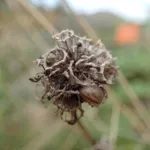 Dane’s Blood (Campanula glomerata) care guideCampanula glomerata
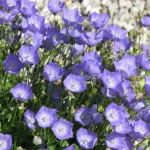 Tussock bellflower (Campanula carpatica) care guideCampanula carpatica
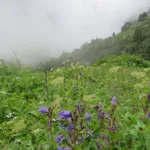 Giant Bellflower (Campanula latifolia) care guideCampanula latifolia
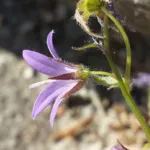 Campanula poscharskyana care guideCampanula poscharskyana